The biblical location of Shiloh is at the archaeological site of Khirbet Seilun, also called Tell Shiloh, in the hill country of the central West Bank. The site lies near the modern Israeli settlement of Shiloh, roughly between Jerusalem and Nablus, in the region historically associated with the tribe of Ephraim.
Ancient Shiloh was a major Israelite religious center before Jerusalem became the permanent capital and worship center. The biblical account places the Tabernacle there during the period of the Judges, and the stories of Hannah, Samuel, Eli, and the capture of the Ark are all connected with the site.
Ancient Shiloh stands at Khirbet Seilun, a hilltop archaeological site in the central highlands. It is near the modern community called Shiloh, north of Jerusalem and south of Nablus. The site is reached through the wider hill-country road network that runs through the central West Bank.
On a modern map, you may see several names for the same general location: Shiloh, Tell Shiloh, Khirbet Seilun, and sometimes Tel Shiloh. “Tell” and “tel” refer to an archaeological mound formed by layers of settlement, while “Khirbet” is an Arabic term commonly used in place names for ruins.
Quick identification: If you are looking for the Shiloh mentioned in the Old Testament, search for Tell Shiloh or Khirbet Seilun in the central West Bank—not Shiloh, Tennessee, the site of the American Civil War battle.
How to identify the biblical location of Shiloh on a map
The easiest way to confirm the site is to compare its biblical setting with the modern landscape. Use these clues in order:
Start in the central hill country. Biblical Shiloh was not on the Mediterranean coast or in the Jordan Valley. It was in the elevated interior of ancient Canaan.
Look north of Jerusalem. The archaeological site is located north of Jerusalem, in the same broad highland corridor leading toward the Nablus area.
Place it in the territory associated with Ephraim. Joshua 18 describes Shiloh as a gathering place for the Israelite community and locates it within the central tribal landscape.
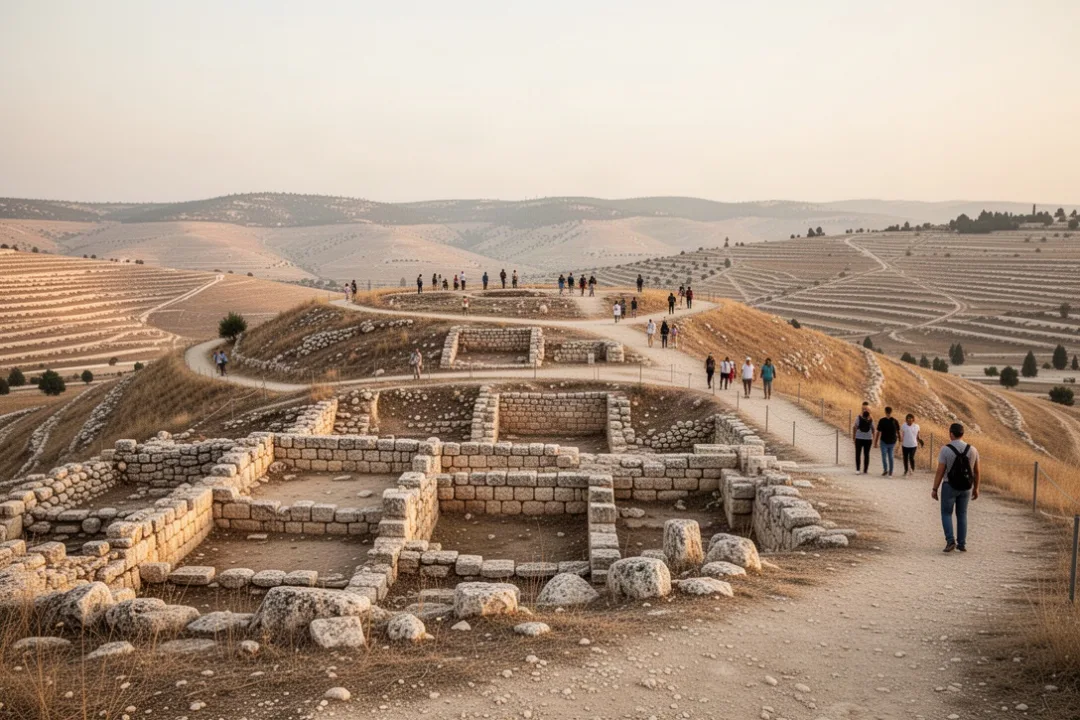
Find the mound called Tell Shiloh. The ancient settlement is identified with Khirbet Seilun, where archaeological remains and a large level area fit the location of a long-lived settlement and worship center.
Separate the ancient site from the modern community. The modern settlement of Shiloh is close to the ancient mound, but it is not the same thing as the biblical town itself.
This location makes sense of the Bible’s travel descriptions. Shiloh was accessible from several central Israelite territories, yet it was elevated and inland. Its position allowed it to serve as a regional religious center during the early settlement period.
Why Shiloh mattered in the Bible
Shiloh’s importance began after the Israelites entered the land. Joshua 18 describes the assembly at Shiloh, where the Tabernacle was set up and the remaining tribal territories were allocated. This makes Shiloh more than a village: it functioned as a national religious gathering place and an administrative center.
The biblical narrative presents Shiloh as the home of the sanctuary for an extended period. The Tabernacle, the portable worship structure associated with Israel’s wilderness period, was kept there before the later centralization of worship in Jerusalem.
Several well-known biblical events are tied to Shiloh:
Division of the land: Joshua 18 connects Shiloh with the distribution of territory among the Israelite tribes.
Hannah’s prayer: In 1 Samuel 1, Hannah goes to Shiloh to worship and pray for a child. Her prayer leads to the birth and dedication of Samuel.
Samuel’s childhood: Samuel serves at the sanctuary under Eli and receives his prophetic calling at Shiloh, as described in 1 Samuel 2–3.
The Ark’s departure: In 1 Samuel 4, the Israelites take the Ark of the Covenant into battle against the Philistines. The Ark is captured, and the biblical story presents this as a devastating turning point.
Later prophetic warnings: Jeremiah refers to Shiloh as an example of a place once associated with God’s presence that later suffered judgment. Jeremiah 7 and 26 use Shiloh to challenge the assumption that a sacred site is automatically protected from destruction.
The story gives Shiloh a distinctive role in biblical history. It was a place of worship and hope, but it also became a warning about the consequences of corruption, injustice, and misplaced confidence in a religious institution.
What the landscape around Shiloh tells you
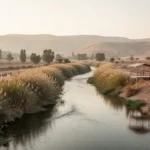
The ancient site occupies a naturally prominent position in the central highlands. A settlement here could be seen from surrounding ridges and could control movement through nearby valleys and routes. The hills are not flat farmland; they are a mixture of slopes, terraces, rocky ground, and narrow valleys.
That setting helps explain why Shiloh could become a regional center. The highlands supported villages and agricultural terraces, while the site’s position offered visibility and defensibility. People traveling to a national gathering place would approach through a landscape of ridges rather than across a broad plain.
The terrain also provides context for the biblical descriptions of travel. Biblical writers often identify places by their relationship to hills, valleys, springs, and neighboring towns. A modern map may make Shiloh look like one point among many, but the ancient setting was defined by the surrounding highland network.
What archaeology has found at Tell Shiloh
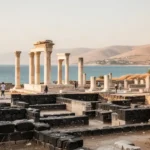
Archaeological work at Tell Shiloh has identified evidence of occupation extending across several periods. Excavators have found remains associated with Bronze Age and Iron Age settlement, along with later Roman, Byzantine, and medieval activity. The site’s long history reflects its continuing importance after the biblical period.
Some discoveries include walls, storage installations, pottery, public or religiously significant areas, and remains from later structures. Archaeologists have also studied a broad, relatively level area near the ancient settlement that some researchers connect with the biblical sanctuary tradition.
The archaeological record, however, does not provide a universally accepted structure labeled “the Tabernacle.” The biblical text describes the Tabernacle as a tented sanctuary, and temporary or perishable elements would leave limited direct evidence. For that reason, claims about its exact position should be presented carefully.
The evidence supports an ancient settlement at the right general place and period, but archaeology cannot confirm every detail of the biblical narrative. Visitors may see features interpreted in light of the biblical account, yet those interpretations should be distinguished from objects or structures that can be securely dated and identified.
How the Bible places Shiloh geographically
The biblical references provide several useful geographic clues. Joshua 18 presents Shiloh as a central gathering point after the land had been surveyed. The place was suitable for a broad assembly and stood within the region later associated with Ephraim.
Judges 21 describes a festival at Shiloh and refers to young women coming out to dance at the annual celebration. Although the passage does not give modern-style directions, it confirms that Shiloh was a recognized community with an established religious festival.
First Samuel places Shiloh in a functioning sanctuary setting. Elkanah’s family travels there regularly to worship and offer sacrifices, showing that the site served people from outside the immediate village. Eli and his sons are associated with the sanctuary, and Samuel grows up serving there.
Jeremiah’s references are also geographically useful because they treat Shiloh as a known historical sanctuary. The prophet points his listeners toward the earlier site and its fate. The argument depends on Shiloh being a real, remembered place whose religious importance had once been widely recognized.
Is Shiloh the same place as the Shiloh battlefield?
No. The location of biblical Shiloh is in the central West Bank, while the Battle of Shiloh took place in southwestern Tennessee during the American Civil War. The battlefield is near Pittsburg Landing and the Tennessee River, in Hardin County.
These places share the name but have completely different histories. The Tennessee battlefield is connected with the Union and Confederate armies and the April 1862 Battle of Shiloh. The ancient site is connected with Israelite worship, the Tabernacle, Samuel, and the Ark.
Search results can combine both locations because “Shiloh” is used in historical, religious, geographic, and personal-name contexts. Check the surrounding terms before choosing directions or travel information:
Shiloh battlefield: Shiloh National Military Park, Tennessee, Pittsburg Landing, Civil War.
Modern Shiloh: the contemporary Israeli community near the ancient archaeological site.
How far is Shiloh from Jerusalem and Nablus?
Shiloh is located north of Jerusalem and south of Nablus, along the central highland route. The exact travel time depends on the starting point, the route selected, road conditions, checkpoints, and current access rules, so a map app should be checked shortly before traveling.
Descriptions such as “between Jerusalem and Nablus” are more useful than treating one fixed mileage as universal. Ancient route distances and modern driving distances are not the same, and modern roads do not always follow the paths people used in biblical times.
From Jerusalem, travelers generally move north through the hill-country corridor. From the Nablus area, they travel south toward the Shiloh region. The ancient site is not located in the city of Nablus or within Jerusalem; it is a separate archaeological destination in the highlands between them.
What you can see at the Shiloh archaeological site
The modern visitor area presents the ancient mound, archaeological remains, and viewpoints across the surrounding hills. Interpretive displays and tours may explain the site’s biblical associations, later history, and excavation findings. The exact visitor experience can change as facilities, exhibitions, and access arrangements are updated.
At the site, look for the features that help connect the landscape with the historical record:
The ancient mound: The settlement’s elevated position shows why the site could serve as a visible regional center.
Exposed architectural remains: Walls and installations reveal successive periods of occupation.
The surrounding valleys and ridges: These make the highland geography easier to understand than a flat map does.
Interpretive areas: Displays may distinguish archaeological evidence from traditions about the Tabernacle and biblical events.
Later-period remains: Roman, Byzantine, and medieval features show that the location remained active long after the biblical period.
A visit is more informative when you read the biblical references alongside the physical setting. Joshua 18 helps explain the site’s national role, 1 Samuel 1–4 connects it with Samuel and the Ark, and Jeremiah 7 and 26 explain why Shiloh later became a symbol of judgment.
Practical considerations for visiting Shiloh today
The archaeological site lies in the West Bank, an area where travel conditions and access arrangements can change. Political developments, road closures, security guidance, religious holidays, and local operating schedules may affect a visit. Confirm current information through official tourism or site channels before setting out.
Wear sturdy shoes and plan for sun exposure, uneven ground, and limited shade. The site is not simply an indoor museum, so water, sun protection, and enough time for walking are useful. Families and visitors with mobility limitations should check the terrain and available facilities in advance.
Keep these practical points in mind:
Use the destination name Tel Shiloh or Khirbet Seilun to distinguish the site from Shiloh battlefield locations.
Check whether guided tours, archaeological areas, and visitor facilities are open on the day you plan to go.
Follow marked paths and posted instructions around excavation areas.
Do not remove pottery, stones, or other objects from the site.
Respect local communities and follow current security guidance for the wider region.
Travel caution: A route that appears straightforward on a map may involve changing access rules or controlled roads. Verify directions and local conditions shortly before departure rather than relying only on an old travel guide.
Why Shiloh was replaced by Jerusalem as Israel’s central sanctuary
The Bible does not describe a single simple administrative transfer from Shiloh to Jerusalem. Instead, the story unfolds through changing political and religious circumstances. Shiloh’s importance declines after the crisis involving the Ark and the priestly leadership described in 1 Samuel.
Jerusalem later becomes the royal capital under David and the site of Solomon’s Temple. This gives Jerusalem a permanent monumental sanctuary, while Shiloh remains an earlier center associated with the portable Tabernacle and the period before the monarchy’s full religious centralization.
Shiloh’s earlier status remained part of Israel’s historical memory. Jeremiah’s use of Shiloh shows that the site could be invoked as a cautionary example: a place once connected with worship could still be abandoned or judged. Its memory therefore had both religious significance and political force.
What “Shiloh” means in other biblical passages
The name Shiloh appears most clearly as a place name in the books of Joshua, Judges, Samuel, and Jeremiah. Genesis 49:10 also contains the term “Shiloh” in many English translations, but that passage is difficult and has been interpreted in different ways. Some translations and scholars understand it as a personal or messianic reference, while others read it differently.
That distinction matters when researching the location. The Shiloh in the historical narratives is a physical settlement identified with Khirbet Seilun. The term in Genesis 49:10 is a separate interpretive question and should not automatically be treated as another map reference to the town.
What happened to Shiloh after the biblical period?
Shiloh did not disappear immediately after the biblical events. Archaeological evidence indicates occupation and activity in later periods, including the Roman, Byzantine, and medieval eras. The site’s name and identity changed across languages and historical settings, but the mound continued to attract settlement and attention.
Later Christian and Jewish traditions also remembered the area because of its biblical associations. Archaeological remains from different periods show that the location cannot be understood only through the stories of Joshua, Eli, and Samuel. It is a layered site whose history continued for centuries.
The modern name Khirbet Seilun preserves a form related to ancient Shiloh. The nearby modern community uses the Hebrew form Shiloh, making the connection easy to see on current maps even though the ancient mound and modern settlement are distinct places.
Why the location of Shiloh matters when reading the Bible
Knowing where Shiloh stood changes how its stories read. The site was not an abstract religious setting; it was a highland settlement with approaches, neighboring villages, agricultural land, and a regional travel network. Families such as Hannah and Elkanah’s traveled to a real sanctuary in a specific part of the land.
The location also clarifies Shiloh’s position between local and national importance. It was rooted in the territory of Ephraim, yet it served people from multiple tribes. That combination helps explain why its destruction or decline could become a national religious memory.
Finally, the site’s geography reinforces the Bible’s contrast between temporary sacred arrangements and later centralized worship in Jerusalem. Shiloh represents an earlier stage in Israel’s history, when the Tabernacle and a highland sanctuary stood at the center of communal worship.
The direct answer to the location of Shiloh
The biblical Shiloh is located at Tell Shiloh, or Khirbet Seilun, in the central highlands of the West Bank. It is near the modern Israeli settlement of Shiloh, north of Jerusalem and south of Nablus, in the area historically associated with Ephraim.
If you are using a map, search for “Tel Shiloh archaeological site” or “Khirbet Seilun”. Those terms point to the ancient biblical location rather than the Civil War battlefield in Tennessee or another modern place named Shiloh.
Frequently asked questions
Is Shiloh in Israel or the West Bank?
Ancient Shiloh is in the central West Bank, near the modern Israeli settlement of Shiloh. The site is commonly identified with Tell Shiloh, also called Khirbet Seilun. Political and administrative descriptions can vary depending on the source, so travelers should consult current official maps and local guidance when planning a visit.
Was the Tabernacle really located at Shiloh?
The biblical books of Joshua and Samuel describe the Tabernacle as being set up at Shiloh. Archaeology confirms an ancient settlement and a suitable central area, but no structure has been conclusively identified as the Tabernacle itself. Since the biblical sanctuary was described as a tented structure, direct physical evidence would be difficult to preserve.
How far is biblical Shiloh from Jerusalem?
Shiloh lies north of Jerusalem in the central highlands, along the route toward the Nablus area. The exact driving distance and travel time depend on the route, road conditions, checkpoints, and current access rules. A current navigation service and official local information provide the most reliable journey details.
Is biblical Shiloh the same as Shiloh National Military Park?
No. Shiloh National Military Park is in southwestern Tennessee and preserves the site of the 1862 American Civil War battle. Biblical Shiloh is the ancient archaeological site of Tell Shiloh, or Khirbet Seilun, in the central West Bank. The shared name is the main connection between the two places.


Leave a Reply