The tabernacle in the Bible: Meaning and significance
The tabernacle in the Bible: Meaning and significance
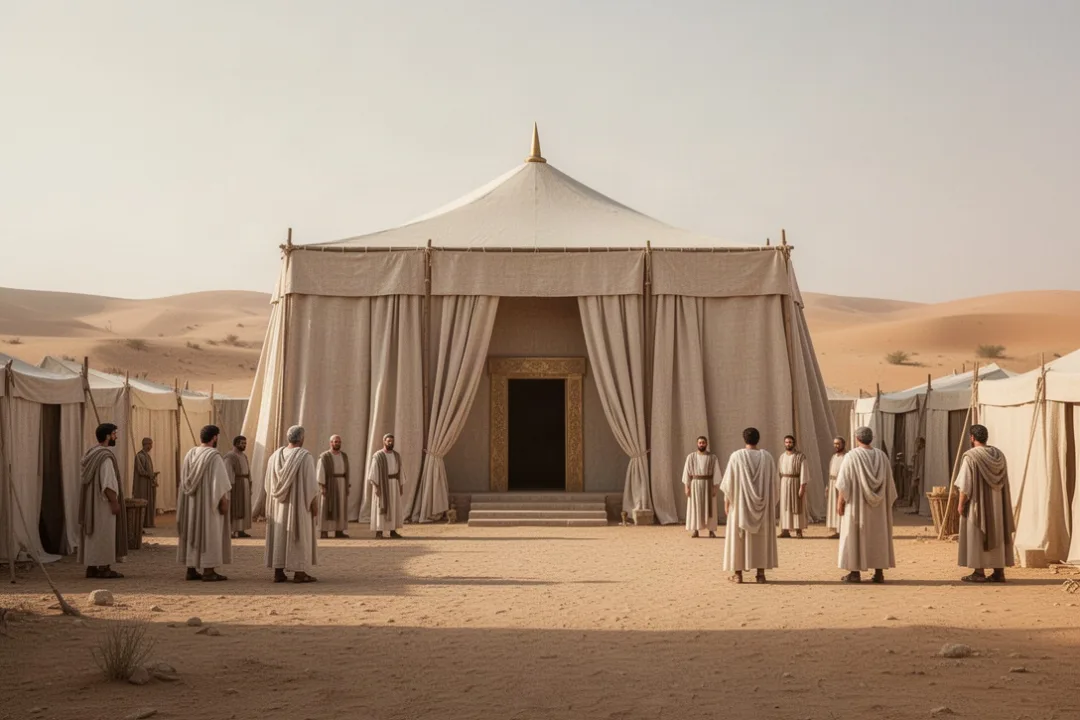
The tabernacle in the Bible was the portable sanctuary God commanded the Israelites to build after the Exodus. It served as the central place of worship during Israel’s wilderness years and later accompanied the nation before Solomon’s temple was built.
More than a tent, the tabernacle represented God dwelling among his people. It contained sacred furnishings, an altar for sacrifices, and an inner room called the Most Holy Place. The high priest entered that innermost room in a restricted ceremony, while the wider community worshiped around the courtyard.
Direct answer: The tabernacle was Israel’s temporary, movable sanctuary. It taught that God was holy, that sin required atonement, and that access to God was provided according to his covenant instructions.
The English word tabernacle comes through Latin from a word meaning tent or dwelling. In the Old Testament, the Hebrew terms often translated as “tabernacle” include mishkan, meaning dwelling place, and phrases connected with the “tent of meeting.” These names emphasize both the structure itself and its purpose as the place where God met with Israel.
God gave Moses the instructions for the tabernacle at Mount Sinai after rescuing Israel from slavery in Egypt. The main instructions appear in Exodus 25–31, while the construction and arrangement are described in Exodus 35–40. The people contributed materials, skilled workers made the furnishings, and the completed sanctuary was set up in the wilderness.
The tabernacle traveled with Israel during the wilderness journey. Levites took it down, carried its parts, and set it up again when the people camped. A cloud covered it, and the biblical account describes God’s glory filling it after it was completed. The cloud also signaled when Israel should remain in place or continue traveling.
After Israel entered Canaan, the tabernacle was established at different worship centers during the period of the judges and the early monarchy. Shiloh became an especially significant location. Later, the tabernacle and its altar were associated with Gibeon, while the ark was brought to Jerusalem by King David. Solomon eventually replaced the tabernacle system with the temple in Jerusalem.
How to understand the tabernacle step by step
The easiest way to understand the tabernacle is to move from the outside toward the center. Each area became more restricted, and the objects within it were connected with worship, holiness, sacrifice, and God’s covenant with Israel.
Enter the courtyard. The courtyard marked off the sacred area from the ordinary camp. It contained the bronze altar and the bronze basin.
Approach through the altar. Sacrifices were offered on the bronze altar. This showed that worship involved atonement and that sinful people could not treat God’s holiness casually.
Pass the basin. Priests washed at the bronze basin before carrying out their duties. The washing represented ceremonial cleansing for service.
Enter the Holy Place. Only priests entered this first room of the tent. It contained the lampstand, the table for the bread of the Presence, and the altar of incense.
Stand before the veil. A curtain separated the Holy Place from the Most Holy Place, signifying a boundary between ordinary priestly service and the innermost sacred space.
Consider the ark. The Most Holy Place contained the ark of the covenant and its cover, often called the mercy seat in older English translations. The high priest entered this room only at the appointed time on the Day of Atonement.
This movement from the courtyard to the inner room highlights a central biblical pattern: God was near to Israel, yet his holiness required boundaries. The tabernacle provided a way for the covenant people to worship while also teaching them that access to God required cleansing, sacrifice, and obedience.
The courtyard showed how worship began with sacrifice
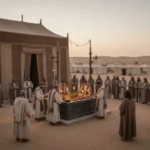
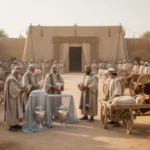
The tabernacle courtyard was an open rectangular area surrounded by linen curtains. An entrance on the eastern side led into the courtyard. The space created a clear distinction between the Israelite camp and the place set apart for worship.
The largest object in the courtyard was the bronze altar, also called the altar of burnt offering. Priests offered animals and other sacrifices there according to the instructions in Leviticus. Different offerings expressed different purposes, including atonement, thanksgiving, dedication, and fellowship with God.
The altar was not a decorative feature. It was the first major object encountered by anyone approaching the sanctuary, and it showed that coming near to a holy God involved the problem of sin. The sacrificial system did not mean that God simply desired bloodshed. It provided a covenant framework for confession, purification, restitution, thanksgiving, and restored fellowship.
Near the entrance of the tent stood the bronze basin, where Aaron and the priests washed. Exodus describes it as being made from bronze mirrors donated by women who served at the entrance of the tent of meeting. Priestly washing reinforced the need for ritual purity before service.
The courtyard therefore communicated three connected ideas: God welcomed worship, worshipers needed atonement, and those who served in the sanctuary had to be ceremonially clean. These ideas shaped Israel’s worship long after the people stopped carrying the tabernacle through the wilderness.
The Holy Place contained three objects for priestly service
The tent itself was divided into two rooms. The first was the Holy Place. Priests entered it regularly to maintain the sacred objects and carry out their responsibilities. The second room, the Most Holy Place, was separated by a veil and had much more restricted access.
The golden lampstand represented light in the sanctuary
The lampstand, often called the menorah, stood on the south side of the Holy Place. It was made of gold and had branches, cups, and decorative almond-blossom designs. It provided light inside the tent, where there were no ordinary windows.
The lampstand’s practical function was essential, but its design also carried meaning. Light is repeatedly associated in Scripture with life, guidance, revelation, and God’s presence. The priests were responsible for tending its lamps so that they continued burning according to the sanctuary regulations.
The table of the bread of the Presence represented covenant fellowship
On the north side stood the table of the bread of the Presence. Bread was placed on it in an appointed arrangement, and the priests replaced it regularly. The bread was connected with the twelve tribes of Israel and symbolized the people being represented before God.
The table also suggested provision and fellowship. In the ancient world, sharing a meal could express a relationship between people. The sanctuary bread did not mean that God needed food. Rather, it represented Israel’s continued dependence on God and the people’s place before him within the covenant.
The incense altar represented prayer and holy service
Near the veil was the altar of incense, made of wood overlaid with gold. Priests burned specially prepared incense on it according to God’s instructions. The smoke and fragrance filled the Holy Place as part of the daily worship routine.
In later biblical poetry and visions, incense becomes associated with prayer. That association helps explain why the altar is often understood as a picture of worship rising toward God. Its position near the Most Holy Place also showed that priestly service was intended to bring Israel before God in reverence and intercession.
The Most Holy Place contained the ark of the covenant
The Most Holy Place was the innermost room of the tabernacle. A richly made veil separated it from the Holy Place. Only the high priest could enter, and he did so once a year on the Day of Atonement, following the detailed instructions in Leviticus 16.
The room contained the ark of the covenant. The ark was a chest made of acacia wood and covered with gold. It held the stone tablets associated with the covenant, and Scripture also connects it with Aaron’s staff and a container of manna in the broader testimony of Israel’s wilderness experience.
The cover of the ark was called the mercy seat in many English translations. Two cherubim were placed above it, with their wings extended over the cover. The ark was not a god or an idol. It was a sacred sign of God’s covenant and royal presence among Israel.
God’s presence was especially associated with the space above the ark’s cover, between the cherubim. This did not mean that God was confined to a box or a tent. The biblical writers consistently present him as the Creator who cannot be contained by human structures. The tabernacle signified his chosen presence with Israel without limiting his authority.
The tabernacle showed that God could dwell among his people while remaining the holy King they were called to honor.
The veil and restricted access explained the seriousness of holiness
The veil between the Holy Place and the Most Holy Place was one of the clearest visual boundaries in the sanctuary. Priests could carry out regular duties in the first room, but the innermost room was not open for ordinary access. The high priest entered it only under the conditions God established.
On the Day of Atonement, the high priest brought sacrificial blood into the Most Holy Place and performed rites for the cleansing of the sanctuary and the people. He also confessed Israel’s sins over a live goat that was sent away into the wilderness. These ceremonies are described in Leviticus 16 and formed the center of Israel’s annual atonement observance.
The restricted access did not communicate that God was unwilling to receive his people. It communicated that God’s holiness was real and that sin damaged the relationship between God and humanity. The priesthood and sacrifices provided a divinely established way for Israel to remain in covenant fellowship.
The New Testament later uses the tabernacle’s veil and sacrificial system when explaining Jesus’ death and priesthood. Hebrews presents Jesus as the great high priest and interprets his work as bringing a fuller and lasting access to God. The details of that interpretation are part of Christian theology, but the connection depends on understanding the original tabernacle system first.
Who built and served in the tabernacle
The construction of the tabernacle involved the entire covenant community. The Israelites gave gold, silver, bronze, fabric, animal skins, wood, oil, spices, and precious stones. The account in Exodus emphasizes both generosity and skilled craftsmanship.
Bezalel from the tribe of Judah and Oholiab from the tribe of Dan are named as leading craftsmen. They worked with other skilled people to make the structure, furnishings, priestly garments, and decorative elements. Their work shows that the biblical account treats practical skill as valuable in the service of worship.
The tribe of Levi was set apart to care for the tabernacle. The descendants of Aaron served as priests, while other Levites had responsibilities connected with transporting and maintaining the sanctuary. During travel, the sacred objects were covered before the designated Levites carried them, underscoring the seriousness of their duties.
Aaron served as Israel’s first high priest, and his sons served as priests. Their clothing included a breastpiece, an ephod, a robe, a tunic, a sash, and a turban, with materials and designs described in Exodus 28. The garments represented dignity, holiness, and the priest’s representative role before God and the people.
The high priest carried out the most restricted duties, especially on the Day of Atonement.
Other priests offered sacrifices, maintained the lamps, burned incense, and cared for the Holy Place.
The Levites assisted with transport, guarding, and other sanctuary responsibilities.
The wider community supplied materials and brought sacrifices according to the covenant instructions.
Why the tabernacle mattered during Israel’s wilderness years
The tabernacle gave Israel a visible center while the nation was traveling through the wilderness. The people did not worship at scattered private shrines as their main pattern. The sanctuary represented the unity of the tribes around God’s covenant presence.
Its portability also mattered. Israel had not yet settled in its permanent land, so worship needed to travel with the community. The tabernacle demonstrated that God was not limited to a single mountain or city. He accompanied Israel through the wilderness while guiding the nation toward the land promised to its ancestors.
The cloud above the tabernacle marked God’s direction and presence. When the cloud remained, Israel stayed camped; when it lifted, the people traveled. This arrangement connected ordinary movement, national decisions, and worship to God’s guidance.
The sanctuary also gave Israel a shared pattern for holiness. It taught the people how priests served, how sacrifices were offered, how sacred objects were treated, and how the community dealt with impurity. These instructions shaped Israel’s religious life and prepared the way for later biblical discussions of sin, forgiveness, priesthood, and atonement.
Helpful distinction: The tabernacle was not simply “a church in a tent.” It was a covenant sanctuary with a carefully ordered priesthood, sacrificial system, sacred furnishings, and restricted zones that expressed Israel’s relationship with a holy God.
How the tabernacle relates to the temple
The tabernacle and Solomon’s temple served similar purposes, but they were not the same building. The tabernacle was designed for movement and was constructed from portable materials. The temple was a permanent structure in Jerusalem, built during Solomon’s reign after David had established Jerusalem as Israel’s royal center.
Both had an outer court, a Holy Place, and a Most Holy Place. Both included an altar, a lampstand or lampstands, a table for sacred bread, an incense altar, and a central place associated with the ark. The temple was larger and more elaborate, but it continued the basic sanctuary pattern established in the wilderness.
When Solomon dedicated the temple, the biblical account describes God’s glory filling it. This echoes the earlier moment when the tabernacle was completed and filled with God’s glory. The continuity showed that the permanent temple continued the worship pattern God had given through Moses.
At the same time, the biblical prophets warned that a sanctuary could not protect people who practiced injustice and disobedience. Jeremiah 7, for example, challenges those who treated the temple as a guarantee of safety while refusing to change their conduct. The tabernacle and temple were signs of God’s presence, not substitutes for faithful covenant living.
What the tabernacle symbolizes in Christian interpretation
Christians commonly read the tabernacle as part of the Bible’s larger story about God dwelling with humanity. John 1:14 uses language that can be understood as saying that the Word became flesh and “tabernacled” among people. Rather than reproducing the verse, its meaning is that Jesus’ human life displayed God’s presence in a personal and direct way.
The Gospel of John also presents Jesus as the fulfillment of themes connected with the tabernacle. He is associated with life, light, bread, glory, and God’s presence. These connections do not erase the historical meaning of the wilderness sanctuary; they show how the Gospel interprets that earlier imagery in relation to Jesus.
Hebrews discusses the tabernacle’s priesthood, sacrifices, and inner sanctuary at length. It argues that the earthly sanctuary was a copy or pattern pointing beyond itself and presents Jesus as a superior high priest. Christians therefore understand the tabernacle as both a real part of Israel’s worship and a pattern that anticipates a more complete work of redemption.
Christian teaching also connects the tabernacle with the church and the believer’s life, although different traditions explain these applications differently. Paul describes believers collectively as God’s temple in passages such as 1 Corinthians 3:16 and 2 Corinthians 6:16. Revelation 21 presents the ultimate hope as God dwelling with humanity, with no separate temple building because God and the Lamb are its temple.
Common mistakes about the tabernacle in the Bible
Several misunderstandings can make the tabernacle harder to read. Keeping these distinctions clear helps you follow the biblical text without forcing every detail into a symbolic interpretation.
The tabernacle was not the ark alone. The ark was the central object in the Most Holy Place, but the tabernacle included the tent, courtyard, altar, basin, furnishings, priesthood, and regulations.
The tabernacle was not the same as the temple. The temple continued many of its functions but was a permanent building in Jerusalem.
The ark was not an idol. Israel was forbidden to make images of gods. The ark represented God’s covenant and presence; it was not itself a deity.
God was not physically confined to the sanctuary. The tabernacle marked his covenant presence without suggesting that the Creator could be contained by a human structure.
The sacrifices were not random rituals. They addressed specific matters such as atonement, purification, thanksgiving, dedication, and fellowship.
The tabernacle was not open to everyone in the same way. The courtyard, Holy Place, and Most Holy Place had different levels of access and responsibility.
Where to read about the tabernacle
The most important passages are concentrated in several sections of the Old Testament. Exodus 25–31 gives the initial instructions, including the ark, table, lampstand, curtains, altar, priestly garments, and covenant purpose. Exodus 35–40 describes the people’s contributions, the construction, and the completion of the sanctuary.
Leviticus explains how priests, sacrifices, purity, and holy days operated within the sanctuary system. Leviticus 16 is especially important for understanding the Day of Atonement and the high priest’s entrance into the Most Holy Place.
Numbers describes the organization and responsibilities of the Levites during Israel’s wilderness travel. Joshua, Judges, 1 Samuel, 1 Chronicles, and 2 Chronicles trace the tabernacle’s later history and its relationship to Shiloh, the ark, Gibeon, Jerusalem, and the temple.
For Christian interpretation, Hebrews 8–10 develops the relationship between the earthly sanctuary, the priesthood, sacrifice, and Jesus’ work. John’s Gospel, 1 Corinthians, 2 Corinthians, and Revelation also use dwelling and temple imagery to describe God’s presence with his people.
When reading these passages, pay attention to both the physical details and the covenant purpose. The curtains, vessels, garments, and rituals matter because they create a theological picture: God dwells among his people, holiness cannot be ignored, sin requires atonement, and God provides a way for worshipers to approach him.
Why the tabernacle still matters when you read the Bible
The tabernacle gives essential background for many later biblical images. Without it, references to priests, sacrifices, the veil, the mercy seat, incense, the Most Holy Place, and God dwelling among his people can seem disconnected. Understanding the sanctuary turns those references into parts of one continuing story.
It also balances two truths that the Bible repeatedly holds together. God is near enough to dwell with his people, yet he is holy enough that approach requires reverence and atonement. The tabernacle does not reduce God to a manageable object; it shows his gracious decision to be present with a particular people under a covenant.
For Christians, the tabernacle provides the framework for understanding New Testament teaching about Jesus as priest, sacrifice, mediator, and the living expression of God’s presence. For readers of the Old Testament, it reveals how worship shaped Israel’s identity before the nation had a permanent city or temple.
The tabernacle’s central message can be stated simply: God desired to dwell among Israel, and the sanctuary taught the people how to live in relation to his holiness. Its portable structure, sacred furnishings, priestly service, and sacrificial system all served that purpose.
Frequently asked questions
What was the main purpose of the tabernacle?
The tabernacle provided Israel with a central place for worship, sacrifice, priestly service, and covenant fellowship with God. Because it was portable, it traveled with the nation during the wilderness period. It also represented God’s presence among Israel while teaching that approaching a holy God required atonement, cleansing, reverence, and obedience to the covenant instructions.
Who was allowed to enter the Most Holy Place?
The high priest was the only person permitted to enter the Most Holy Place, and he did so once each year on the Day of Atonement. He followed specific rituals involving sacrifice, cleansing, and blood. This restricted access reflected the sacredness of the room and the seriousness of entering the symbolic place of God’s covenant presence.
What was inside the tabernacle?
The courtyard contained the bronze altar and bronze basin. Inside the Holy Place were the golden lampstand, the table of the bread of the Presence, and the altar of incense. The Most Holy Place contained the ark of the covenant and its cover, often called the mercy seat. The arrangement moved from public worship toward increasingly restricted holiness.
Is the tabernacle the same as Solomon’s temple?
No. The tabernacle was a portable sanctuary used during Israel’s wilderness years and later at several worship locations. Solomon’s temple was a permanent building in Jerusalem that continued many of the tabernacle’s functions and patterns. Both had courts, a Holy Place, a Most Holy Place, priestly service, sacrifices, and sacred furnishings, but they were separate structures.





Leave a Reply