Dan was the fifth son of Jacob and the first son born to Jacob through Bilhah, Rachel’s servant. His name is associated with judgment, because Rachel understood his birth as God judging or vindicating her situation. The name “Dan” can also refer to the Israelite tribe descended from him, a territory in the promised land, or the northern city of Dan.
The Bible presents Dan through several connected stories rather than a long personal biography. His family line became one of the twelve tribes of Israel, produced the judge Samson, received land in Canaan, moved north after struggling to secure its original territory, and later became associated with an unauthorized center of worship. Understanding these different uses of “Dan” helps make the biblical references easier to follow.
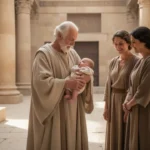
Dan’s name comes from the Hebrew idea of judging or obtaining justice. In Genesis 30, Rachel gives Bilhah to Jacob because she is unable to have children. When Bilhah bears a son, Rachel names him Dan and explains the name in connection with God’s judgment on her behalf.
The naming reflects the family tensions surrounding Jacob’s household. Rachel and her sister Leah are competing for affection and children, while their servants become mothers of sons attributed to the family. Dan’s name therefore carries both a personal meaning and a reminder of the complicated relationships that shaped the beginnings of Israel’s tribes.
Dan was Jacob’s son through Bilhah, but the Bible counts him fully among Jacob’s sons. His mother was Rachel’s servant, and his full brother was Naphtali, who was also born through Bilhah. Dan’s position in the family is significant because his descendants later form one of the recognized tribes of Israel.
Key distinction: “Dan” may mean Jacob’s son, the tribe descended from him, the tribe’s territory, or the city of Dan. The surrounding passage usually shows which meaning is intended.
Dan’s place among Jacob’s twelve sons
Jacob’s sons became the ancestors of the tribes of Israel. Dan appears in the family lists in Genesis, along with Reuben, Simeon, Levi, Judah, Issachar, Zebulun, Gad, Asher, Naphtali, Joseph, and Benjamin. Joseph’s sons, Ephraim and Manasseh, later receive tribal status in ways that affect how the twelve tribes are counted in different passages.
Dan’s birth belongs to the period when Jacob was living in the household of Laban. The family had not yet returned to Canaan, and the children were being born amid rivalry between Rachel and Leah. Dan’s story begins with that domestic conflict, but it eventually becomes part of the larger account of Israel’s growth from one family into a people.
Dan is mentioned in Jacob’s final blessings and predictions in Genesis 49. Jacob describes Dan as one who will judge his people and compares him to a serpent or viper that can strike an opponent unexpectedly. The language is brief and poetic, so it should not be treated as a complete biography of every person in the tribe.
The passage may connect the tribe’s name with its role as a source of judgment. It also suggests that Dan could succeed through cleverness or a less direct approach. Later biblical narratives portray the tribe with both strength and serious spiritual failures, which makes the image more complex than a simple statement of praise or criticism.
How to follow every major reference to Dan
When you encounter “Dan” in a Bible passage, use the surrounding details to identify the reference. A simple reading process can prevent confusion between the person and the tribe:
Check the family setting. If the passage discusses Jacob, Rachel, Bilhah, or the birth of sons, Dan probably means Jacob’s son.
Look for military or census language. References to thousands of men, tribal leaders, camps, or inheritance usually concern the tribe.
Look for geographical clues. Expressions such as “from Beersheba to Dan” or references to a northern border may identify a location.
Notice the worship context. A shrine, carved image, or northern sanctuary often points to the city of Dan and the tribe’s later religious history.
Compare parallel passages. Numbers, Joshua, Judges, 1 Kings, and Chronicles provide different details about Dan’s people and territory.
Several passages use Dan as a geographical marker. The phrase “from Dan to Beersheba” describes the reach of the land or people from the northern end to the southern end. Dan can therefore function almost like a biblical shorthand for the whole land of Israel, even though the city and tribe occupy only one part of it.
How Dan’s tribe was counted and organized
During Israel’s wilderness years, the tribe of Dan was organized as one of the major tribal groups. In the census material of Numbers, Dan is listed among the tribes able to provide fighting men. Its leader, Ahiezer son of Ammishaddai, represents the tribe in the arrangement of the camp and in the presentation of offerings for the tabernacle.
Dan camped on the north side of the tabernacle, together with Asher and Naphtali. When the Israelites traveled, the tribes moved in an ordered formation rather than as an unorganized crowd. These details show that Dan had a defined place in Israel’s national and religious structure before the settlement in Canaan.
The tribe also appears in the list of leaders connected with the division of the land. Oholiab, son of Ahisamach from the tribe of Dan, worked with Bezalel on the tabernacle’s construction. Exodus describes Oholiab as a skilled craftsman, especially in areas involving embroidery, weaving, and artistic work.
That detail adds an important dimension to Dan’s identity. The tribe was not known only for warriors or later idolatry. One of its members played a respected role in creating the sacred furnishings and materials used in Israel’s worship.
What land was assigned to the tribe of Dan?
Joshua 19 describes Dan’s original inheritance in the central-western part of Canaan. The territory included areas near the coastal plain and towns such as Zorah, Eshtaol, Aijalon, Ekron, and Timnah. The exact boundaries can be difficult to reconstruct because ancient place names and regional borders are not always certain, but the broad location is clear.
Dan’s land lay near powerful neighboring groups, including the Philistines. Some of the tribe’s towns were also close to territory controlled by Amorites or other Canaanite populations. The coastal plain contained productive land and important routes, but it was politically and militarily contested.
Judges 1 says that the Amorites pressed the descendants of Dan into the hill country and did not allow them to occupy parts of their assigned territory. This helps explain why Dan later searched for a new settlement. The problem was not simply that the tribe had no land; rather, it struggled to control and retain the land it had received.
The story illustrates a recurring theme in the book of Judges: Israel’s tribes received an inheritance, but possession required faithfulness, cooperation, and sustained effort. Dan’s later move north reflects that unresolved tension between a promised inheritance and the practical reality of living among hostile or stronger neighbors.
Why the tribe of Dan moved north
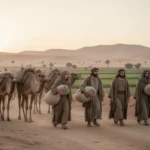
Judges 18 tells how Dan sent five scouts to search for additional territory. The scouts traveled through the hill country and reached Laish, a quiet and isolated city in the far north. They reported that the area appeared vulnerable because its inhabitants lived with little outside protection and were separated from nearby powers.
The Danites then sent a larger force. Along the way, they took a carved image and other objects from the household of Micah, whose private shrine employed a Levite as priest. The Danites persuaded or pressured that Levite to join them, taking both the religious objects and the priestly figure to their new settlement.
After conquering Laish, the Danites rebuilt the city and renamed it Dan. The city stood near the northern border of the land and became one of Israel’s best-known northern locations. Its name later appears in geographical expressions that stretch from Dan in the north to Beersheba in the south.
The migration solved a territorial problem, but the narrative does not present it as a model of faithful behavior. The Danites took advantage of an isolated community, appropriated a private shrine, and established worship centered on an image. The account shows how a tribe could gain security and territory while moving further away from the worship prescribed in the law of Moses.
Reading caution: The fact that the Danites succeeded militarily does not mean the book of Judges approves their actions. Biblical narratives often report what people did while also showing the moral disorder surrounding those actions.
What happened at the sanctuary in Dan?
The sanctuary at Dan became one of the most important examples of unauthorized worship in Israel’s later history. Judges 18 says that the image taken from Micah’s house remained there during the period when the tabernacle was at Shiloh. The tribe maintained this shrine for generations, and the Levite’s descendants served there.
The story is connected to the repeated assessment in Judges that Israel lacked a stable, faithful standard of leadership. The book ends by describing a society in which people did what seemed right to them. Dan’s shrine represents more than one tribe’s private mistake; it reflects how religious practice could be reshaped by local preference and political convenience.
King Jeroboam later established worship centers at Bethel and Dan after the kingdom divided. According to 1 Kings 12, he placed golden calves at both sites and presented them as alternative places for the northern kingdom to worship. This allowed people in the north to worship without traveling to Jerusalem, but the biblical writers condemn the arrangement as a serious departure from proper worship.
Because Dan already had a northern sanctuary, its location was politically useful. Bethel served the southern part of the northern kingdom, while Dan served the north. The city’s earlier association with an image and private priesthood made it especially significant in the history of Israel’s religious decline.
How Samson connects to the tribe of Dan
Samson was one of the most famous members of Dan’s tribe. Judges 13 identifies his family as belonging to the clan of the Danites and places them in Zorah, within the tribe’s original territory. An angel announces that Samson will begin to deliver Israel from Philistine control.
Samson’s story includes extraordinary physical strength, conflict with the Philistines, personal vows, and repeated moral failures. He is set apart as a Nazirite from before birth, which involves special restrictions described in the law. Yet his life also includes reckless relationships, anger, violence, and decisions that create serious consequences.
The final episode takes place after the Philistines capture him, blind him, and imprison him. At a public gathering in a temple, Samson prays for strength and pulls down the building’s supporting structure. He kills many Philistines in his death, but his story ends with a mixture of deliverance, judgment, sacrifice, and tragedy.
Samson should not be treated as a complete picture of every Danite. He is a particular judge raised up during a specific crisis. Still, his story shows how Dan remained involved in Israel’s struggle with the Philistines, especially in the region where the tribe’s original inheritance was contested.
Dan in the prophetic books
Several prophets mention Dan when describing judgment on Israel or the surrounding nations. Jeremiah refers to Dan in connection with the sound of an invading force coming from the north. The reference uses Dan’s geographic position to create a picture of danger approaching from that direction.
Amos also refers to Dan in a context criticizing Israel’s false worship. The mention links the city with the northern kingdom’s religious practices. These prophetic references assume that readers already understand Dan as both a real northern location and a symbol of the kingdom’s broader religious problems.
Dan also appears in lists of places or tribes in other prophetic passages. These references can be difficult because biblical books use tribal names, town names, and regional descriptions in different ways. Reading the entire paragraph usually matters more than assigning one fixed meaning to the name.
The prophetic material reinforces a central pattern in Dan’s biblical history: the tribe had a legitimate place among Israel’s people, but its public identity became entangled with practices the prophets regarded as disobedient. The Bible does not erase Dan from Israel’s history, yet it records the consequences of its decisions.
Why Dan is absent from Revelation 7
Revelation 7 lists twelve tribes connected with the sealing of God’s servants, but Dan is not included in that particular list. Joseph appears in the list, and Manasseh is also named, while Ephraim is not. Levi, which is sometimes excluded from territorial lists because of its priestly role, appears in Revelation’s list.
The passage does not directly explain why Dan is absent. Some readers connect the omission with Dan’s association with idolatry, especially the shrine described in Judges and the worship center established under Jeroboam. That interpretation is possible, but it should be stated as an inference rather than as an explicit explanation given by Revelation.
Other explanations focus on the way biblical lists vary according to their purpose. Tribal lists are not always identical because they may emphasize genealogy, military organization, land inheritance, priestly service, or symbolic completeness. Revelation’s list should therefore be read in its own literary and theological setting.
Dan’s absence from Revelation 7 does not mean the tribe disappears from every later biblical reference. The name appears elsewhere in the Bible, and Ezekiel 48 includes a future land arrangement that names Dan among the tribes. These passages show why a single list should not be used to make a broader claim than the text supports.
What Dan teaches about identity, inheritance, and worship
Dan’s story brings together several themes that appear throughout the Old Testament. A person’s place in the covenant family does not prevent that person’s descendants from making damaging choices. Dan belongs to Israel by family and tribal identity, yet the tribe’s actions still receive moral evaluation.
The tribe also demonstrates the difference between receiving an inheritance and living faithfully within it. Dan’s original territory was difficult to hold, and the tribe responded by moving north. The move shows initiative and courage, but the way it was carried out involved violence, opportunism, and religious compromise.
Another lesson concerns the danger of treating convenience as authority. The northern sanctuary at Dan made worship more accessible to people in that region, but convenience did not make the practice faithful. In the biblical account, the location became part of a political system that encouraged worship apart from the standards associated with Jerusalem and the law.
At the same time, Dan’s history should not be reduced to failure. The tribe produced Oholiab, who contributed to the tabernacle, and Samson, who played a major role in resisting Philistine oppression. Biblical genealogies and tribal histories often preserve both honorable and troubling elements, allowing readers to see a community in its full complexity.
Useful Bible passages for studying Dan
If you want to study Dan in context, read the passages in groups rather than relying on one isolated verse. Each group answers a different question about the person, tribe, territory, or city:
Genesis 30: Dan’s birth through Bilhah and the meaning Rachel gives to his name.
Genesis 49: Jacob’s final words about Dan and his role among the tribes.
Exodus 31 and 35: Oholiab’s work on the tabernacle.
Numbers 1, 2, 7, and 10: Dan’s census, camp position, offerings, and travel order.
Joshua 19: The original land assigned to the tribe of Dan.
Judges 1: Dan’s difficulty controlling its inheritance.
Judges 13–16: Samson’s life and his connection to Dan.
Judges 18: The migration to Laish and the establishment of the city of Dan.
1 Kings 12: Jeroboam’s establishment of worship centers at Bethel and Dan.
Revelation 7: The tribal list in which Dan is not named.
Ezekiel 48: A later tribal arrangement that includes Dan.
As you read, mark whether “Dan” refers to a person, a tribe, or a place. Then ask what the passage is emphasizing: family origins, military organization, land, worship, prophecy, or symbolic identity. This method keeps separate stories from being blended into one account.
How the name Dan is used today
Dan remains a familiar personal name in Jewish and Christian settings, largely because it belongs to one of Jacob’s sons and one of Israel’s tribes. People who choose the name may associate it with justice, biblical heritage, or the idea of being judged or vindicated by God.
The biblical name should not be confused with Daniel, although both names are connected to the Hebrew idea of God’s judgment. Daniel is a different biblical person, best known from the book bearing his name and from the stories of his life in exile. “Dan Bible” searches may sometimes reflect confusion between Dan and Daniel, so the distinction matters when locating passages.
Dan’s biblical legacy is best understood as a combination of origin, opportunity, achievement, and failure. He was part of Jacob’s family, his tribe received an inheritance, and members of the tribe served Israel in important ways. Yet the tribe also became associated with unauthorized worship and choices that the biblical writers present as warnings.
That combination makes Dan a useful subject for careful Bible study. The name points to judgment, but the stories raise broader questions about how people respond to difficulty, how communities use power, and how religious identity can be preserved or distorted over time.
Frequently asked questions
Was Dan one of Jacob’s sons?
Yes. Dan was Jacob’s fifth son and the first son born through Bilhah, Rachel’s servant. His full brother was Naphtali. Dan became the ancestor of one of Israel’s twelve tribes, so the name later refers not only to the individual but also to his descendants, their territory, and the northern city they established.
Where was the tribe of Dan located?
Dan’s original inheritance lay in central-western Canaan near the coastal plain, including the area around Zorah and Eshtaol. Because the tribe faced pressure from neighboring peoples, part of it later migrated north and captured Laish, renaming the city Dan. This northern settlement became one of Israel’s major geographic landmarks.
Why did the Danites move to Laish?
The Danites struggled to control portions of their assigned territory, especially because of opposition from neighboring peoples. Scouts found Laish isolated and vulnerable, so the tribe attacked and settled there. The account in Judges also describes the Danites taking a carved image and establishing an unauthorized shrine, making the migration both a territorial and religious turning point.
Is Dan mentioned in the New Testament?
Dan is not named in the New Testament as a prominent individual or in the Gospel narratives. Revelation 7 includes a list of Israel’s tribes that omits Dan, although the passage does not explain the omission. Dan appears in other biblical tribal lists, including Ezekiel’s later land arrangement, so one list should not be treated as the complete history of the tribe.


Leave a Reply