Biblical Damascus: history, meaning, and key passages
Biblical Damascus: history, meaning, and key passages
Biblical Damascus was a powerful ancient city north of Israel that appears in Scripture as a center of trade, warfare, prophecy, healing, and Christian mission.
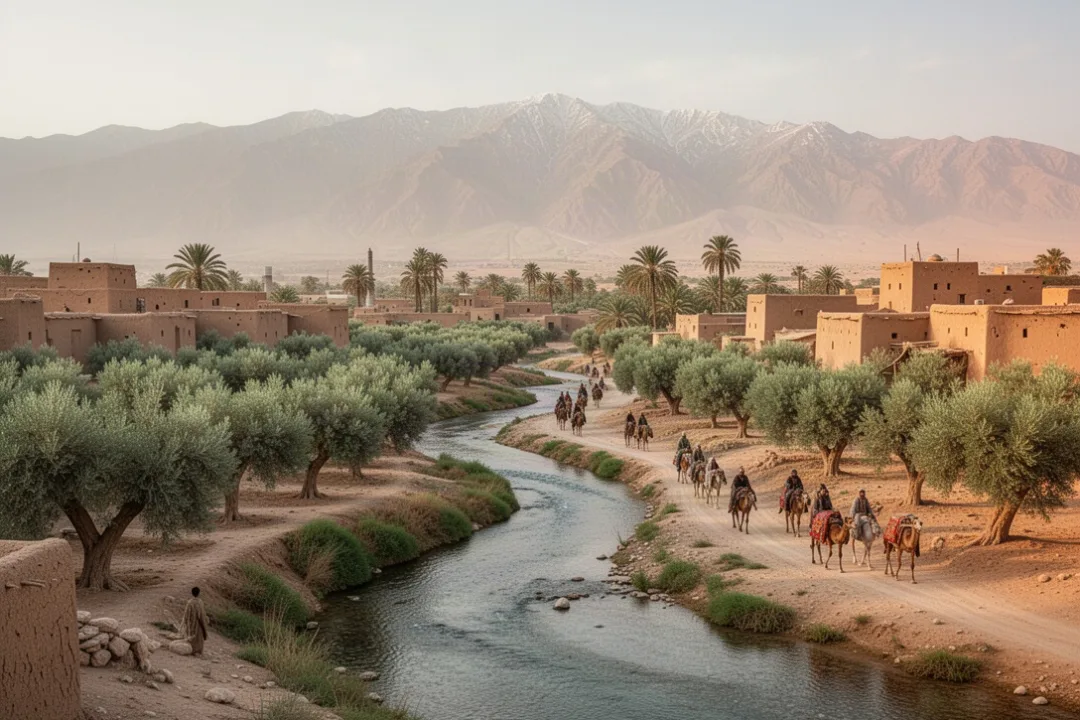
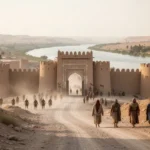
Located in the fertile plain east of the Anti-Lebanon Mountains, Damascus stood near important routes connecting Mesopotamia, Syria, Arabia, and the lands of Israel and Judah. Its access to dependable water, especially from the Barada River and nearby springs, supported agriculture and helped the city become a major regional capital.
The Bible does not present Damascus through one single story. Instead, the city appears across different periods and genres: early patriarchal narratives, accounts of Israel’s kings, prophetic warnings, the story of Naaman, and the New Testament account of Saul’s transformation into the apostle Paul. Reading these references together shows why Damascus mattered so much in biblical history.
Damascus is usually associated with the ancient Aramean kingdom centered in Syria. The people of that kingdom are often called Arameans, while some English Bible translations use the older term Syrians. The city was not part of Israel, but its rulers repeatedly interacted with Israel and Judah through treaties, trade, raids, and war.
The earliest biblical references connect Damascus with the time of Abram, later called Abraham. In Genesis 14, Abram pursues invading kings as far as Hobah, north of Damascus. The passage does not describe Abram entering the city, but it places Damascus within the geographical world of the patriarchal narratives.
In Genesis 15:2, Abram refers to Eliezer of Damascus when expressing his concern that a household servant might become his heir. This brief statement suggests that Damascus was already familiar to the people represented in the story. It also shows that the city’s name was used as a personal or regional identifier long before the later conflicts between Israel and Aram.
Damascus becomes much more prominent during the period of the Israelite monarchy. Its rulers formed the political center of Aram-Damascus, a kingdom that could threaten Israel from the north and east. The city’s location made it strategically valuable: armies could move from Syria toward the Jordan Valley, Galilee, and the northern approaches to Jerusalem.
Why Damascus was strategically important in biblical times
Damascus prospered because it occupied a natural crossroads. Routes from the Mediterranean coast, northern Syria, the Euphrates region, and desert trade networks converged near the city. Goods, armies, messengers, and ideas moved through the same corridors, making Damascus both commercially valuable and militarily exposed.
Water was another major advantage. The Barada River and surrounding springs allowed the plain around Damascus to support gardens, orchards, and fields. This explains why Naaman, in 2 Kings 5, speaks positively about the rivers of Damascus when he questions whether the waters of Israel are truly superior.
The city’s strength created a recurring tension in the biblical record. Damascus could pressure Israel, yet it could also become an ally when both kingdoms faced a stronger enemy. Its rulers were not simply background figures; they influenced royal decisions in Jerusalem and Samaria and helped shape the political conditions addressed by Israel’s prophets.
Trade: Damascus connected several major routes across the ancient Near East.
Water and agriculture: Its rivers and springs supported a productive oasis.
Military position: The city could project power toward Israel’s northern territories.
Political influence: Its kings negotiated, fought, and sometimes allied themselves with Israel and Judah.
Religious significance: Biblical writers used Damascus to discuss God’s rule over foreign nations as well as Israel.
Damascus and the kings of Israel and Judah
The relationship between Damascus and the Israelite kingdoms changed from one generation to the next. During the reign of David, Aramean forces from Damascus fought against him. Second Samuel 8:5-6 describes David defeating Arameans who came to support Israel’s enemies and placing garrisons in Aram-Damascus. The passage presents David’s kingdom as temporarily dominant over the region.
That dominance did not last permanently. During Solomon’s reign, political opponents connected with Aram helped establish a renewed threat. First Kings 11 describes Rezon, who became an adversary of Solomon and later ruled in Damascus. The narrative links this pressure with the broader pattern of instability that followed David’s expansion.
After the kingdom divided into Israel in the north and Judah in the south, Damascus became a frequent opponent of the northern kingdom. Ben-Hadad, one of the best-known Aramean rulers in the biblical narrative, fought against Israel during the reign of Baasha. King Asa of Judah appealed to Ben-Hadad for help against Israel, using treasures from the temple and royal palace to secure the alliance, as recorded in 1 Kings 15.
Asa’s decision illustrates the complicated politics of the period. Judah and Israel were related kingdoms, but they often competed with one another. A king in Jerusalem might seek help from Damascus against Samaria, even though Damascus itself could later threaten Judah.
During the reign of Ahab, the conflict between Israel and Aram continued. First Kings 20 recounts battles involving Ben-Hadad and describes negotiations, military reversals, and an agreement between the two kings. Ahab’s actions are judged within the larger moral and political framework of the book of Kings, where military success does not automatically prove a ruler’s faithfulness.
Another major episode appears in 2 Kings 6–7. The Aramean king sends forces to besiege Samaria, and the city suffers severe famine. The siege ends unexpectedly when the Aramean army hears what seems to be the sound of a larger approaching force and abandons its camp. The story emphasizes divine intervention rather than Israel’s military ability.
Reading tip: Biblical references to “Syria” and “Aram” often describe the same general political world. Check the translation and surrounding verses before assuming that two different nations are being discussed.
Naaman, Elisha, and the healing story in Damascus
One of the most memorable Damascus-related narratives is the healing of Naaman in 2 Kings 5. Naaman is described as the commander of the army of the king of Aram. He is respected and successful, but he has a serious skin disease that his position cannot cure.
A young Israelite servant girl tells Naaman’s wife that the prophet in Samaria could help him. Naaman then receives permission from his king to travel to Israel, carrying a letter and valuable gifts. The mission begins as a diplomatic encounter, but it soon reveals tensions between political power, prophetic authority, and personal pride.
Elisha does not come out to meet Naaman. Instead, he sends a messenger instructing Naaman to wash seven times in the Jordan River. Naaman becomes angry because he expects a more dramatic response and because he considers the rivers of Damascus, Abana and Pharpar, better than the waters of Israel.
His servants persuade him to follow the simple instruction. After he washes in the Jordan, the biblical account says that his skin is restored. The story then moves beyond physical healing: Naaman acknowledges the God of Israel and asks for guidance about how to live faithfully while returning to his responsibilities in Aram.
Damascus matters in this episode because it represents Naaman’s home, status, and assumptions. He arrives from a powerful capital with official authority and valuable gifts, yet the healing comes through humble obedience to a word delivered by a prophet. The narrative also places an Aramean outsider at the center of a revelation about Israel’s God.
The story should not be reduced to a simple contrast between “good Israel” and “bad Damascus.” A servant from Israel initiates the encounter, an Aramean commander responds to the prophet, and the king of Israel initially misunderstands the request. The account gives significant spiritual insight to people on both sides of the border.
Elisha, Hazael, and the future of Damascus
Damascus also appears in a troubling prophecy involving Hazael. In 2 Kings 8, the Aramean official Hazael visits Elisha while his king is ill. Elisha tells him that the king will recover from one illness but will nevertheless die. Hazael later becomes king, and the narrative portrays him as a devastating enemy of Israel.
Elisha’s interaction with Hazael is emotionally complex. The prophet looks at him until Hazael feels embarrassed, then begins to weep. When Hazael asks why, Elisha describes the suffering Hazael will bring upon the Israelites. Hazael initially presents himself as incapable of such cruelty, but he later kills his king and takes the throne.
Hazael’s reign brings major losses to Israel. Second Kings 10 and 12 describe his campaigns against Israelite territory and his pressure on Judah. During the reign of Jehoash of Judah, Hazael captures Gath and turns toward Jerusalem; Jehoash gives him treasures from the temple and palace, and Hazael withdraws.
These accounts portray Damascus as a serious regional power, but they do not present its success as outside God’s authority. In the theology of Kings, foreign nations can be used to discipline Israel, yet those nations remain accountable for their own violence and ambition.
What the prophets said about Damascus
Several biblical prophets announce judgment against Damascus. Their messages show that God’s concern extends beyond the borders of Israel and Judah. Damascus is judged not because it is foreign alone, but because of its violence, aggression, and treatment of neighboring peoples.
Amos 1:3-5 condemns Damascus for repeatedly threshing Gilead with iron tools. The image communicates ruthless destruction of a population. The prophecy announces that the people of Aram will be exiled and that Damascus will lose its defenses and royal authority.
Isaiah also speaks about Damascus. Isaiah 7 places the city in the context of the Syro-Ephraimite crisis, when the king of Aram and the king of Israel threaten Judah. Isaiah 8 warns that the plans of Aram and Israel will not ultimately succeed against Jerusalem. These passages address fear, political alliances, and the limits of human power.
Isaiah 17 describes the coming downfall of Damascus while also linking that judgment with the weakening of the northern kingdom of Israel. The prophecy is not only a prediction about one city; it is part of a wider message about nations that trust in military strength and forget their dependence on God.
Jeremiah 49:23-27 also announces trouble for Damascus. The city is pictured as anxious, fleeing, and surrounded by fear. The language is poetic and forceful, so readers should avoid treating every image as a literal military timetable. The central point is clear: a famous and fortified city is not beyond judgment.
These prophetic texts provide an important balance. Damascus was wealthy, old, and politically influential, but biblical writers refuse to treat its power as permanent. The city’s fate becomes a sign that human institutions, however impressive, remain accountable to justice.
How Damascus appears in the New Testament
Damascus takes on a new role in the book of Acts through the story of Saul, later known as Paul. Before becoming a Christian missionary, Saul viewed the followers of Jesus as a serious religious threat. He received authority to travel to Damascus and arrest believers there, bringing them back to Jerusalem.
On the road, Saul experiences a heavenly encounter with the risen Jesus. Acts 9 describes a bright light, Saul’s fall, and a voice asking why he is persecuting Jesus’ followers. Saul becomes blind and is led into Damascus, where he spends several days without sight, food, or drink.
A disciple named Ananias is then instructed to visit Saul. Ananias is understandably hesitant because he knows Saul’s reputation, but he obeys. He lays hands on Saul, who regains his sight, is baptized, and begins to proclaim that Jesus is the Son of God.
The setting is significant. Damascus is not merely a place Saul passes through; it is where his purpose changes. He arrives intending to imprison Christians and leaves as one of their most important witnesses. The city becomes the first major setting for his new public ministry.
Acts 9 says that Saul spends time with the disciples in Damascus and begins preaching in the synagogues. His message surprises those who hear him because they know he had previously attacked the church. The account highlights a dramatic reversal in identity, allegiance, and vocation.
Paul later retells the experience in Acts 22 and Acts 26, with each account emphasizing different details for its audience. In Galatians 1:15-17, Paul also refers to his call and mentions going away toward Arabia before returning to Damascus. The New Testament does not provide enough information to reconstruct every movement with certainty, so claims about an exact route or location should be treated cautiously.
Second Corinthians 11:32-33 recalls another Damascus episode. Paul says that the governor under King Aretas guarded the city to arrest him, but believers lowered him in a basket through an opening in the wall. This event shows that Damascus remained politically connected to wider regional powers and that Paul’s ministry brought real danger.
Key distinction: The Damascus of Paul’s conversion and the Damascus of the Old Testament are the same ancient city in the broad biblical setting, but the political circumstances had changed considerably over the centuries.
What Damascus symbolizes in biblical interpretation
Damascus carries several meanings across Scripture, and no single symbol explains every passage. Its significance depends on the story or prophecy in which it appears.
A neighboring power: In Kings, Damascus often represents an external force capable of threatening Israel or Judah.
A place of international contact: The city connects kings, merchants, soldiers, servants, prophets, and travelers from different cultures.
An unexpected setting for faith: Naaman and Saul both encounter the God of Israel in ways they did not anticipate.
A symbol of political pride: Prophets use Damascus to show that military strength and established defenses cannot guarantee permanence.
A place of transformation: In Acts, the road to Damascus marks Saul’s transition from persecutor to apostle.
These themes should not be forced into every reference. For example, a military report about Damascus has a different purpose from a prophetic oracle or a conversion narrative. Careful interpretation begins by asking what the passage is doing before assigning the city a larger symbolic meaning.
Common mistakes when studying biblical Damascus
Damascus is familiar to many readers, but several misunderstandings can make its biblical references harder to interpret. The following habits help keep the historical and theological details in place.
Do not treat every reference as the same political period. Abram, David, Naaman, Isaiah, and Paul lived in different eras. Damascus changed rulers, alliances, and regional relationships over time.
Do not assume “Syria” always means the modern nation-state. Biblical translations may use Syria for Aram, while modern Syria has different borders and political definitions.
Do not confuse Damascus with Samaria. Damascus was the Aramean capital; Samaria was the capital of the northern kingdom of Israel. The two cities frequently appear in the same stories but are not interchangeable.
Do not claim that Paul converted inside the city itself. Acts places the heavenly encounter on the road to Damascus, followed by Saul’s blindness and restoration within the city.
Do not ignore the prophetic context. When Amos, Isaiah, or Jeremiah speaks against Damascus, read the surrounding oracle to see what violence, alliance, or national crisis is being addressed.
Do not treat Naaman’s healing as a simple river comparison. His complaint about Abana and Pharpar reveals his pride and expectations, while the miracle centers on obedience and recognition of God’s authority.
Do not assume every archaeological claim proves a specific biblical event. The city has a long and complex history, but connecting a physical site to a particular episode requires evidence and caution.
Practical tips for studying Damascus passages
A focused reading plan can help you see the city’s changing role without losing the details of each passage. Begin with the short references and then move into the longer narratives.
Start with the earliest mentions. Read Genesis 14:15 and Genesis 15:2 to see how Damascus enters the patriarchal story.
Trace the monarchy period. Compare 2 Samuel 8, 1 Kings 11, 1 Kings 15, 1 Kings 20, and 2 Kings 6–8.
Read Naaman’s story in full. Pay attention to the servant girl, the king of Israel, Elisha’s messenger, Naaman’s servants, and Naaman’s response after healing.
Compare prophetic perspectives. Read Amos 1:3-5, Isaiah 7, Isaiah 17, and Jeremiah 49:23-27 rather than relying on one isolated verse.
Read all three accounts of Saul’s experience. Compare Acts 9, Acts 22, and Acts 26, then add Galatians 1 and 2 Corinthians 11.
Mark the roles people play. Notice how servants, kings, prophets, soldiers, and persecuted believers all contribute to the Damascus narratives.
Separate geography from theology. Identify where the text gives a location, then ask what the author is communicating about power, obedience, judgment, or grace.
A Bible atlas can clarify the distance between Damascus, Samaria, Jerusalem, the Jordan Valley, and Gilead. A historical study can add information about Aramean kingdoms and Assyrian expansion, but the biblical text should remain the starting point for understanding its own claims.
How biblical Damascus connects the Old and New Testaments
The city provides a strong geographical thread across the Bible. In the Old Testament, Damascus is primarily a neighboring capital whose rulers compete with Israel and Judah. In the New Testament, it becomes the setting for a personal reversal that affects the spread of Christianity far beyond Syria.
There is also a shared theme of unexpected encounters. Naaman comes seeking physical healing and receives a deeper recognition of Israel’s God. Saul comes seeking Christians to arrest and receives a new calling. In both stories, the person with social standing must respond to a word that comes through people he would not naturally regard as powerful.
The narratives also challenge assumptions about where God’s work can occur. Damascus is outside Israel’s political territory, yet it appears in stories of revelation, healing, judgment, and mission. Biblical geography is therefore more than a map of familiar holy sites; it shows divine activity crossing borders and confronting the ambitions of nations.
At the same time, Scripture does not romanticize Damascus. Its rulers wage war, its armies cause suffering, and its power is repeatedly judged. The city can be beautiful and productive while also being associated with violence and political pride. Holding those themes together gives a more accurate picture than treating Damascus as either wholly negative or purely symbolic.
Why biblical Damascus still matters for readers
Damascus helps readers understand how the Bible portrays international relationships. Israel’s story does not unfold in isolation. It is shaped by neighboring kingdoms, economic routes, military threats, diplomatic decisions, and people who cross cultural boundaries.
The city also invites careful attention to the difference between power and faithfulness. David may defeat Damascus, Ben-Hadad may besiege Samaria, Naaman may command an army, and Saul may carry official authority, but none of these forms of power controls the outcome of the biblical stories.
Finally, Damascus becomes a reminder that a place can carry several layers of meaning at once. It can be the home of a servant, the capital of an enemy, the source of rivers, the target of prophetic judgment, the destination of a persecutor, and the setting of a transformed life. Its significance comes from the many people and events connected with it across Scripture.
For a well-rounded study, read Damascus not as a disconnected list of references but as a city that changes with the biblical storyline. Its history brings together geography, politics, prophecy, healing, judgment, and mission, making it one of the most important non-Israelite cities in the Bible.
Frequently asked questions
Is Damascus mentioned in the Bible before the time of King David?
Yes. Genesis 14:15 places Abram’s pursuit of invading kings near Damascus, and Genesis 15:2 mentions Eliezer as being from Damascus. These early references are brief and do not describe the city’s government or culture in detail, but they show that Damascus was already a recognized place in the biblical world before Israel became a monarchy.
What happened to Paul in Damascus?
Saul traveled toward Damascus intending to arrest followers of Jesus. On the road, he encountered the risen Jesus and temporarily lost his sight. In the city, a disciple named Ananias prayed for him, his sight returned, and he was baptized. Saul then began proclaiming Jesus, beginning his transformation into the apostle Paul.
Are Abana and Pharpar real rivers?
The rivers are named in the account of Naaman in 2 Kings 5. Abana is commonly associated with the Barada River, the principal river flowing through the Damascus oasis. Pharpar is less certain, and proposed identifications vary. The story’s main emphasis is not modern geographic precision but Naaman’s resistance to a humble instruction.
Why did the prophets condemn Damascus?
The prophets condemned Damascus for violence against neighboring peoples, especially the brutal treatment of Gilead described in Amos 1. Isaiah and Jeremiah also announce judgment against the city in the context of regional conflict and political pride. Their messages present Damascus as accountable to God despite its military strength, wealth, and long history.




Leave a Reply