Samaria in the Bible: history, people, and meaning
Samaria in the Bible: history, people, and meaning
Samaria in the Bible refers both to a city and to the surrounding central region of ancient Israel. The city became the capital of the northern kingdom of Israel, while the region later became associated with the Samaritan people. In the New Testament, Samaria is the setting for Jesus’ conversation with a Samaritan woman, the parable of the Good Samaritan, and the spread of the gospel beyond Jerusalem.
Samaria’s biblical importance comes from its complicated history. It was a political capital, a center of worship that competed with Jerusalem, a region judged by Israel’s prophets, and a place where Jesus showed that God’s mercy reaches across deep religious and ethnic divisions.
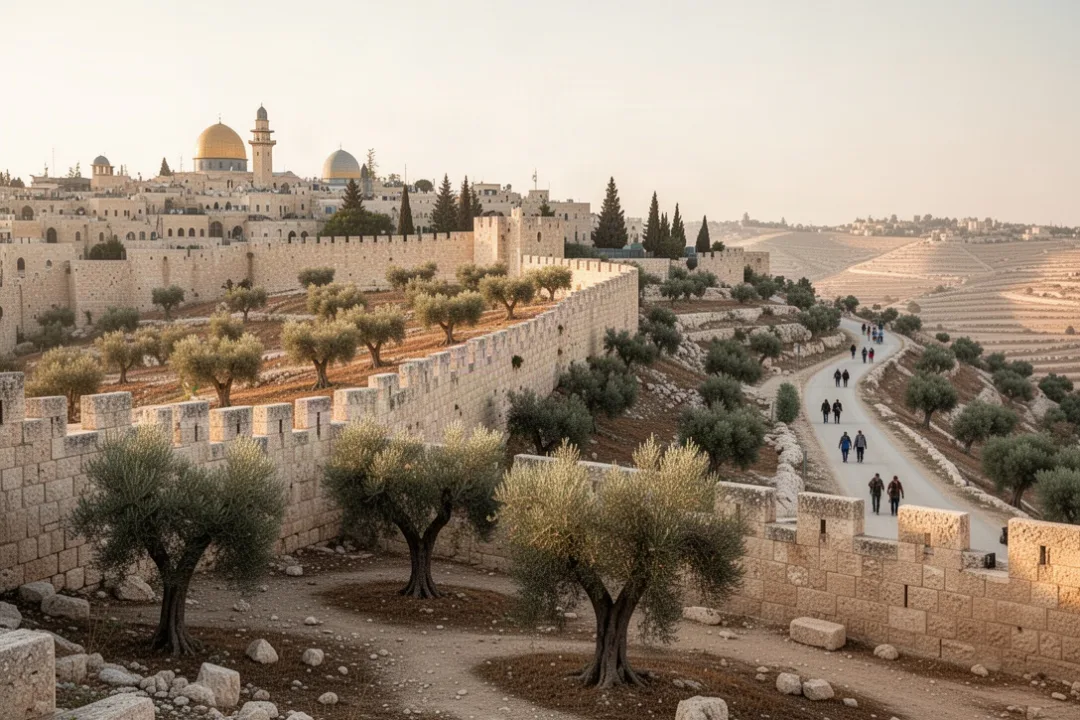
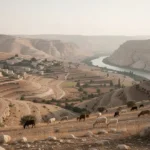
Ancient Samaria stood in the hill country of central Israel, between the regions traditionally associated with Galilee to the north and Judea to the south. The city was built on a hill that gave it natural defenses and a commanding view of the surrounding countryside. The wider area took its name from the city and was also called Samaria.
The city was located near important routes running through the central highlands. Those routes connected northern and southern parts of the land and allowed movement between the Mediterranean coast, the Jordan Valley, and the interior. Samaria’s position made it a practical capital, but it also placed the city in a region exposed to military pressure from neighboring powers.
In biblical geography, the name can therefore mean different things depending on the passage. A reference to the city of Samaria may concern the royal capital itself, while a reference to the land of Samaria may describe the larger territory around it. The distinction helps explain why Samaria appears in accounts of kings, wars, prophetic warnings, and travel.
Geographical distinction: Samaria was not originally the name of all Israel. It became the capital of the northern kingdom, and the surrounding region later inherited the city’s name.
Samaria was also part of a larger political division within the biblical story. After the kingdom united under David and Solomon split into two kingdoms, the northern kingdom was called Israel, while the southern kingdom was called Judah. Jerusalem remained Judah’s capital. Samaria became the northern kingdom’s capital under the reign of Omri.
How Samaria became the capital of the northern kingdom
The city of Samaria was founded by King Omri, who ruled the northern kingdom of Israel in the ninth century BCE. According to 1 Kings 16:24, Omri purchased the hill from a man named Shemer and built a city there. He named it Samaria, apparently after the former owner, and established it as his royal capital.
Omri’s decision gave the northern kingdom a capital that was centrally located and strongly positioned. The city became the administrative and military center of Israel. Its royal buildings, defenses, and strategic setting reflected the kingdom’s growing political ambitions.
Samaria continued as the capital during the reign of King Ahab, Omri’s son. Ahab’s reign is closely connected with the prophet Elijah in 1 Kings. The royal court in Samaria promoted the worship of Baal alongside or against the worship of the Lord, particularly through the influence of Ahab’s wife, Jezebel. The conflict on Mount Carmel in 1 Kings 18 is part of the larger struggle over Israel’s loyalty to God.
The city also appears in stories about prophetic ministry and royal injustice. In 1 Kings 21, Ahab and Jezebel arrange the death of Naboth so that Ahab can take possession of Naboth’s vineyard. Elijah confronts the king and announces judgment on the royal house. The story shows that Samaria was not merely a location on a map; it represented the power of the northern monarchy and the moral responsibility of its rulers.
Several northern kings ruled from Samaria, including Jehu, Jehoahaz, Jehoash, Jeroboam II, Menahem, Pekah, and Hoshea. The city’s history included periods of military success, economic growth, political instability, and religious unfaithfulness. During the prosperous reign of Jeroboam II, the prophets Amos and Hosea criticized the kingdom’s wealth, exploitation, and divided worship.
Amos addressed the complacency of wealthy people in Samaria and warned that military defeat would overturn their security. Hosea used Samaria as a symbol of Israel’s unfaithfulness to God, describing the kingdom as unstable and politically entangled with foreign powers. Their messages connect social injustice and religious compromise with the coming collapse of the northern kingdom.
Political role: Samaria served as the northern kingdom’s capital and royal headquarters.
Military role: Its hilltop position helped protect the city and control nearby routes.
Religious role: It became associated with the northern kingdom’s rival worship centers and prophetic criticism.
Symbolic role: Biblical prophets used Samaria to represent Israel’s corruption, pride, and rejection of covenant faithfulness.
Why the northern kingdom fell and Samaria was conquered
The northern kingdom of Israel faced increasing pressure from the Assyrian Empire. Assyria was one of the dominant powers of the ancient Near East, and its armies expanded westward during the eighth century BCE. Israel’s kings attempted different political strategies, including alliances and resistance, but the kingdom became increasingly vulnerable.
Second Kings 17 describes the fall of Samaria during the reign of King Hoshea. The account connects the disaster with Israel’s persistent worship of other gods, rejection of God’s commands, and failure to listen to the prophets. Assyria besieged Samaria, and the city fell after a prolonged campaign.
The biblical account places the conquest around 722 BCE, during the reign of the Assyrian king. The Assyrians deported many inhabitants and resettled people from other parts of their empire in the region. This imperial policy weakened local resistance and integrated conquered territories into the Assyrian system.
Assyrian records also connect the conquest with the fall of Samaria, although ancient royal inscriptions often present events in ways that emphasize the king’s power. The biblical and Assyrian accounts together show that Samaria was not destroyed in a minor local conflict. Its fall marked the end of the northern kingdom as an independent political state.
The conquest had long-term consequences for the identity of the region. Some Israelites were deported, while other inhabitants remained. New populations were brought into the land, and communities developed through a mixture of ancestry, local traditions, and imperial resettlement. Later Jewish and Samaritan traditions interpreted this history differently.
Historical caution: The Bible describes the Assyrian resettlement, but Samaritan origins should not be reduced to the idea that Samaritans were simply foreign colonists. Their identity developed through a complex history involving people who remained in the land, later communities, and distinct religious traditions.
After the Assyrian conquest, Samaria continued to have regional significance even though the northern kingdom had disappeared. Later empires controlled the area, including Babylon, Persia, and the Hellenistic kingdoms. The city and region remained part of the changing political landscape of the land between Judea and Galilee.
How Samaritans differed from Jews in the Bible
By the time of the New Testament, Samaritans formed a distinct community with its own religious identity. The relationship between Samaritans and Jews was marked by historical hostility, disagreement over worship, and competing claims about the proper center of God’s presence. The tension was real, but it varied across different periods and settings.
The Jewish-Samaritan disagreement involved more than ethnicity. Samaritans recognized the authority of the Torah, the first five books of the Bible, but their religious tradition developed separately from the Jewish tradition centered in Jerusalem. Samaritans regarded Mount Gerizim as the chosen place of worship, while Jews worshiped at the temple in Jerusalem.
Mount Gerizim stood near the Samaritan city of Shechem, in the central hill country. The mountain’s importance appears in the setting of John 4, where a Samaritan woman speaks with Jesus about the correct place to worship. Jesus acknowledges the dispute but directs attention toward worship shaped by truth and the Spirit rather than treating the geographical argument as the final issue.
Later Jewish writings sometimes used “Samaritan” as a hostile label, and the Gospels show that ordinary interactions could be tense. Luke 9 records that a Samaritan village did not receive Jesus because he was traveling toward Jerusalem. James and John respond harshly, but Jesus rebukes their desire for destruction. The episode reveals both the depth of the division and Jesus’ refusal to endorse vengeance.
At the same time, the New Testament does not portray every Samaritan in the same way. Some Samaritans respond positively to Jesus, while others do not. The biblical writers present individuals and communities rather than a single stereotype.
The dispute between Jews and Samaritans also explains why several Gospel stories would have sounded surprising to their first audiences. A Samaritan could be viewed as a religious outsider, a social rival, or someone whose worship was considered defective. Jesus’ actions and teaching repeatedly challenge the assumption that religious or ethnic boundaries determine who can receive compassion from God.
What Jesus taught through Samaria and its people
One of the best-known Samaritan passages is John 4. Jesus travels through Samaria and speaks with a woman near a well associated with Jacob. The conversation crosses several boundaries at once: Jew and Samaritan, man and woman, teacher and socially vulnerable person.
Jesus discusses the woman’s personal history, the disagreement over worship, and the coming work of God. He presents himself as the one who brings God’s promised salvation, and the woman returns to her community to tell others about the encounter. Many Samaritans then believe because of her testimony and because they hear Jesus for themselves.
The account emphasizes that faith is not limited by ancestry or by the location of a traditional sanctuary. It also gives a Samaritan woman an important role as a witness. Her community’s response shows how testimony can lead people to investigate Jesus personally rather than relying only on another person’s report.
Luke 10 contains the parable commonly called the Good Samaritan. A legal expert asks Jesus about inheriting eternal life and then asks who should count as his neighbor. Jesus tells of a wounded traveler ignored by a priest and a Levite but helped by a Samaritan.
The Samaritan provides practical care, transports the injured man, and pays for his continuing treatment. Jesus does not use the Samaritan as a harmless example of general kindness. He makes a person regarded by many listeners as an outsider the model of neighborly mercy.
The parable changes the question from “Who qualifies as my neighbor?” to “Will I act as a neighbor to the person who needs help?” Its force comes from the Samaritan’s identity. The story requires listeners to recognize that compassion may come from someone they distrust and that religious status means little without merciful action.
Luke 17 adds another Samaritan encounter. Jesus heals ten men with a serious skin disease, but only one returns to give thanks, and that man is a Samaritan. The passage highlights the contrast between receiving God’s mercy and recognizing its source. Again, a Samaritan is presented positively at a moment when first-century Jewish hearers might not expect it.
These passages do not erase the historical differences between Jews and Samaritans. Instead, they show Jesus engaging those differences directly. He does not pretend the conflict never existed, but he refuses to let hostility define the limits of mercy, faith, gratitude, and neighbor love.
How Samaria became a starting point for Christian witness
Samaria also plays a major role in the book of Acts. Before his ascension, Jesus tells his disciples that they will be witnesses in Jerusalem, throughout Judea and Samaria, and to the ends of the earth. The sequence is significant: the mission moves outward from the city where Jesus was crucified, through neighboring regions, and eventually to the wider world.
Acts 8 describes persecution in Jerusalem that causes believers to scatter. Philip goes to a city in Samaria and proclaims the Messiah. Many people listen, see signs of healing, and respond to the message. The apostles in Jerusalem later hear about this development and send Peter and John.
This account shows that the Christian mission did not remain confined to one ethnic or geographical center. Samaria became an early test of whether the church would welcome people from a community with a long history of separation from Judea. The positive response in Samaria demonstrates the expanding scope of the gospel.
The story also contains a significant contrast with Simon, a local man known for practicing magic. Simon responds to Philip’s preaching and is baptized, but his later attempt to obtain spiritual power for money is strongly rebuked by Peter. The episode distinguishes genuine faith from the desire to control or purchase God’s power.
Acts 8 does not present Samaritans merely as objects of missionary activity. They become participants in the growing Christian community. Their reception of the message confirms that God’s promise extends beyond the original circle of Jesus’ Jewish disciples.
Samaria therefore links several major biblical themes:
Judgment and restoration: The northern kingdom falls because of persistent unfaithfulness, yet the region later becomes receptive to the message about Jesus.
Division and reconciliation: A territory marked by hostility becomes a place where people from different communities encounter one another.
Religious identity and worship: Disputes about sacred places give way to a broader understanding of worship centered on God’s truth and Spirit.
Outsiders and inclusion: Samaritans are repeatedly placed at the center of stories about mercy, faith, gratitude, and mission.
For readers of the Bible, Samaria is more than an ancient location. Its story traces the consequences of political ambition, divided worship, injustice, conquest, and exclusion. It also shows God’s work reaching people across boundaries that human communities have treated as permanent.
The city that once symbolized the northern kingdom’s power became a reminder of judgment. The people who were often treated as religious outsiders became examples in Jesus’ teaching and early recipients of Christian preaching. Taken together, the passages about Samaria call for careful attention to history while emphasizing that God’s mercy is wider than inherited hostility.
Frequently asked questions
Is Samaria the same as Israel in the Bible?
Not exactly. Israel can refer to the united people descended from Jacob, the northern kingdom after the monarchy divided, or the broader land. Samaria began as the capital city of the northern kingdom and later became the name of the surrounding central region. The northern kingdom was also commonly called Israel, so the terms overlap in historical passages but are not identical.
Did Jesus avoid Samaria?
No. John 4 specifically describes Jesus traveling through Samaria and speaking with a Samaritan woman. Some Jews did avoid the region because of longstanding tensions, but Jesus crossed that boundary. The Gospels also record Samaritan villages, a Samaritan leper, and the parable of the Good Samaritan, showing that Samaria was an important part of his teaching and ministry.
What was wrong with Samaritan worship?
The central dispute concerned authority, tradition, and the proper place of worship. Samaritans worshiped at Mount Gerizim and followed their own religious tradition centered on the Torah, while Jews recognized Jerusalem as the proper worship center. The New Testament presents this conflict historically, but Jesus shifts the focus toward worship shaped by God’s truth and Spirit.
Why is the Good Samaritan important?
The parable challenges narrow definitions of who deserves compassion. Jesus makes a Samaritan—the kind of person many listeners would have regarded with suspicion—the one who gives generous, practical care to an injured stranger. The story teaches that being a neighbor is demonstrated through mercy, especially when helping someone outside your own social, religious, or ethnic group.







Leave a Reply