Ammonites in the Bible: History, conflicts, and meaning
Ammonites in the Bible: History, conflicts, and meaning
If you have come across the word Ammonites while reading the Old Testament, you may wonder who these people were and why they appear so often in stories about Israel. The Ammonites were an ancient people who lived east of the Jordan River, in territory that is part of modern-day Jordan. They were related to the Israelites through Abraham’s nephew Lot, yet their relationship with Israel was often marked by conflict.
The Bible presents the Ammonites as a real neighboring nation with its own kings, cities, religious practices, and political interests. Their story includes wars, border disputes, family connections, acts of hostility, and moments when individuals from Ammon entered Israel’s royal history. Understanding that background makes references to Ammon much easier to follow.
According to Genesis 19, the Ammonites traced their ancestry to Ben-ammi, the son of Lot’s younger daughter. The account describes Lot’s daughters as having children by their father after the destruction of Sodom and Gomorrah. Ben-ammi is presented as the ancestor of the people later called the Ammonites.
The same passage connects Lot’s older daughter with the origin of the Moabites. This makes the Moabites and Ammonites closely related in the biblical story. Both groups were considered kin to Israel because Lot was Abraham’s nephew, but kinship did not prevent serious political and religious conflict.
The name Ammon appears in several forms in biblical translations, including “Ammonites,” “sons of Ammon,” and “people of Ammon.” The Hebrew expression often translated “sons of Ammon” can refer to the nation as a whole, not only to male descendants. Their main city was Rabbah, also called Rabbah of the Ammonites. This city later became associated with the area of modern Amman, Jordan, although the ancient settlement and the modern city belong to different historical periods.
The Bible sometimes distinguishes the Ammonites from neighboring peoples such as the Moabites, Edomites, Arameans, and Israelites. These nations interacted through trade, migration, treaties, raids, and warfare. The Ammonites were not a minor background group; they were one of the recurring powers east of Israel.
Basic identification: In the biblical narrative, the Ammonites were Lot’s descendants, neighbors of Israel east of the Jordan, and inhabitants of a kingdom centered around Rabbah.
Their territory was generally located east of the Jordan River and north or northeast of Moab. The exact boundaries changed over time because of warfare and shifting control. The region included highlands, valleys, and routes connecting the Transjordan with areas farther east. That location gave Ammon strategic value and placed it close to Israelite settlements in Gilead.
Where the Ammonites lived and how their territory developed
The Bible describes Ammonite territory as part of the land east of the Jordan. Numbers 21 and Deuteronomy 2 refer to earlier populations and territorial changes in the region. The Israelites were told not to seize the land of the Ammonites because it had been given to the descendants of Lot. This instruction shows that the biblical authors treated Ammon as a distinct nation with a recognized territorial claim.
That boundary was not always respected in practice. The Ammonites expanded into areas associated with the Gilead, especially during periods when Israel had weak leadership. Their pressure on Israelite communities in Gilead becomes a major issue in the book of Judges and later in the reign of Saul.
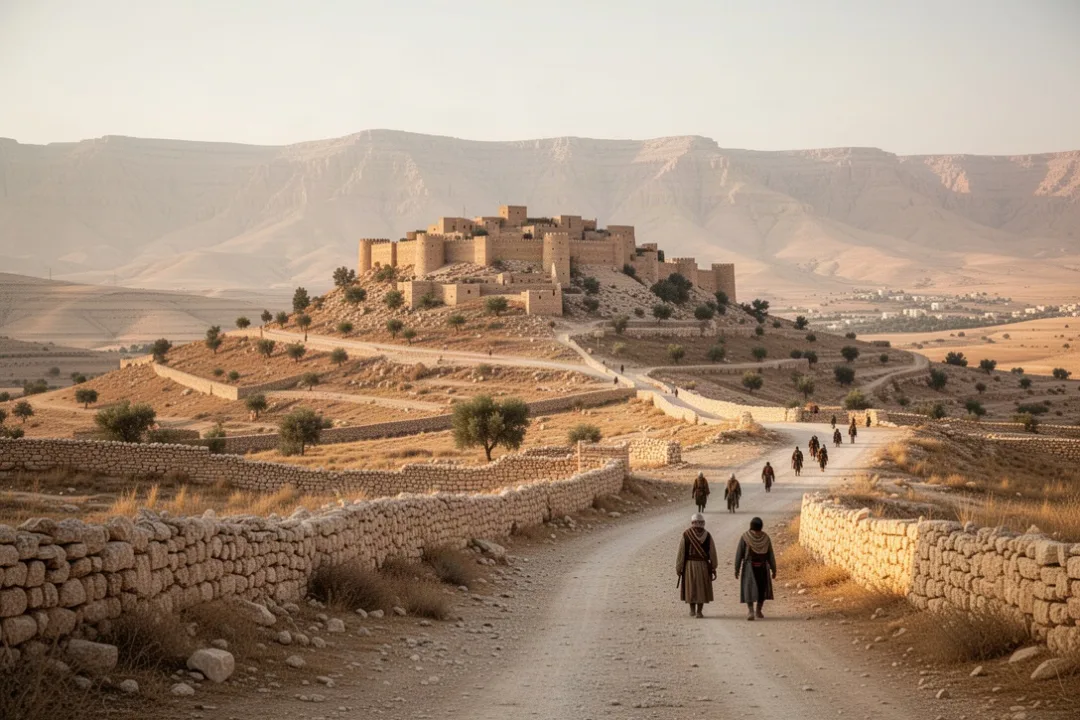
Rabbah was the best-known Ammonite city and served as a royal center. It appears prominently in the account of David’s war with Ammon in 2 Samuel 10–12. The city had defensive importance, and its capture represented more than the loss of a single town: it meant the defeat of the Ammonite kingdom’s central stronghold.
Archaeological evidence from the Transjordan shows that ancient kingdoms occupied fortified sites and maintained regional trade networks. Material remains can help establish the broader setting, but they do not independently confirm every detail in the biblical accounts. It is better to distinguish between what the biblical text says and what archaeology can establish about the wider region.
The Ammonites were also connected with a national deity called Milcom, sometimes written as Molech or associated with the name Malcam depending on the passage and translation. The precise relationship among these names is debated, but the Bible clearly presents Ammonite worship as distinct from worship of the God of Israel.
Jeremiah 49 and Amos 1 refer to Ammonite wrongdoing against neighboring populations. These prophetic passages reflect a world in which territorial expansion could involve violence against civilians and the seizure of land. The prophets condemn those actions while also announcing judgment against Ammon for its arrogance and hostility.
How Ammon first appears in Israel’s national story
During the Israelites’ movement toward the land of Canaan, Moses’ instructions distinguished Ammonite territory from lands that Israel was allowed to conquer. Deuteronomy 2 presents Ammon as a nation descended from Lot and therefore under divine protection in the account’s framework. This is a significant detail because it shows that Israel’s relationship with neighboring peoples was not described simply as unrestricted conquest.
After Israel settled in Canaan, the Ammonites became one of the powers that threatened Israelite communities. The book of Judges describes a repeated pattern: Israel turned away from God, came under foreign oppression, cried out for help, and received deliverance through a judge. Ammon appears within this cycle, especially in the eastern tribes.
Judges 10 says that Ammonite pressure affected Israelites in Gilead and also extended west of the Jordan. The text describes conflict with several Israelite tribal areas. The threat became serious enough that the Israelites gathered to resist Ammonite forces.
The deliverer in this episode was Jephthah, a warrior from Gilead. Before fighting, Jephthah argued that Israel had not stolen Ammonite land. In Judges 11, he reviewed the history of Israel’s journey and claimed that the disputed territory had been taken from the Amorite king Sihon rather than from Ammon. He sent messengers to the Ammonite king, but the dispute was not settled diplomatically.
Jephthah’s speech is important because it presents the conflict as a disagreement about history and land rights, not merely as an unexplained attack. The Ammonite king claimed that Israel had taken territory from Ammon, while Jephthah argued that the land had belonged to the Amorites and had already been granted to Israel after victory over Sihon.
The story then turns to battle. Jephthah defeated the Ammonites, but the account also includes his rash vow and the troubling episode involving his daughter. That part of the narrative has generated extensive discussion because the text does not present the event in a simple or comfortable way. It demonstrates the moral complexity found throughout Judges, where military deliverance can occur alongside destructive decisions and spiritual confusion.
The conflict with Ammon also triggered a civil dispute between Jephthah and the tribe of Ephraim. The famous identification test at the Jordan appears in Judges 12, although the word commonly associated with that test concerns Ephraimite speech rather than the Ammonites themselves. Keeping the episodes separate prevents the Ammonite war from being confused with the later Israelite conflict.
What happened between Ammon and Israel under the kings
Ammon remained a major threat during the transition from the judges to the monarchy. In 1 Samuel 11, Nahash king of the Ammonites attacked Jabesh-gilead. The Ammonite king offered terms that would leave the inhabitants humiliated and permanently marked, a demand that reveals the harsh nature of the conflict.
The people of Jabesh-gilead asked for time to seek help. Saul responded by summoning the Israelite tribes, gathering an army, and defeating the Ammonite forces. This victory helped establish Saul’s authority as Israel’s first king. It also showed why control of Gilead mattered: the region was vulnerable to pressure from Ammon across the Jordan.
Nahash does not appear only as an enemy. In 2 Samuel 10, David recalls that the king of Ammon had shown kindness to him, or at least had treated him favorably, though the passage does not explain the earlier circumstances in detail. After Nahash died, David sent representatives to express sympathy to his son Hanun.
Hanun’s advisers persuaded him that David’s delegation was spying rather than offering condolences. The Ammonite king humiliated the messengers by shaving them and cutting their garments. This act turned a diplomatic visit into a military crisis. The Ammonites hired Aramean troops, while David sent Joab and the Israelite army to meet the combined force.
Joab divided Israel’s army to face the Arameans and the Ammonites. The allied forces retreated after the battle, and the Arameans later returned but were defeated again. The conflict eventually led to an extended campaign against Rabbah, the Ammonite capital.
Second Samuel 11 places David at Jerusalem while his army was fighting at Rabbah. During that period, David saw Bathsheba, arranged for her husband Uriah to be placed in a dangerous part of the battle, and later took Bathsheba as his wife. The Ammonite war therefore forms the setting for one of the Bible’s most serious accounts of royal abuse of power.
David’s forces eventually captured Rabbah. The text mentions the city’s water supply and royal crown, although translations differ in how they render some details. The account emphasizes David’s victory and the submission of the Ammonite population, but it also leaves readers with the moral consequences of what happened during the campaign.
Ammonite connections continued into Israel’s royal family. Solomon married foreign women, including Naamah the Ammonite, who became the mother of Rehoboam, Solomon’s successor. First Kings 11 associates Solomon’s foreign marriages with the introduction or support of other gods, including the Ammonite deity Milcom. The passage criticizes Solomon not simply for having foreign political relationships, but for allowing worship contrary to Israel’s covenant obligations.
Saul’s reign: Saul defeated Nahash and relieved Jabesh-gilead.
David’s reign: A diplomatic insult led to war with Hanun and the Ammonites.
Solomon’s reign: Naamah the Ammonite became the mother of Rehoboam.
Later monarchy: Ammon continued to appear as a neighboring kingdom and religious rival.
Why the Bible speaks so strongly about the Ammonites
Some readers notice severe statements about Ammon in Deuteronomy 23 and wonder how they fit with the fact that Ammon was related to Israel through Lot. Deuteronomy refers to the Ammonites and Moabites in connection with their refusal to provide food and water to Israel during its journey, and with the hiring of Balaam. The passage gives a communal restriction concerning participation in Israel’s assembly.
This restriction belongs to the legal and covenant setting of ancient Israel. It should not be turned into a general command for hostility toward every person of Ammonite ancestry. The biblical narrative itself includes individual relationships that do not fit a simplistic picture of permanent personal hatred, and it distinguishes national wrongdoing from the value of every human being.
The prophets focus on specific acts and attitudes. Amos 1 condemns Ammon for violence against Gilead and describes that violence as an expression of territorial greed. Jeremiah 49 announces judgment because Ammon trusted in its valleys and treasures and because its king and deity could not protect it. Ezekiel 21 and 25 likewise present Ammon as accountable for hostility and rejoicing over Judah’s suffering.
Zephaniah 2 groups Ammon with Moab in a message of judgment. The reason is not ethnic difference alone. The prophetic accusations include pride, insult, territorial aggression, and contempt for God’s people. These themes are central to the prophetic criticism.
The Bible also portrays judgment as something that can reach Israel and Judah themselves. The same prophetic books that condemn Ammon condemn the sins of God’s own people. That balance matters: the Ammonites are not criticized because they were outsiders while Israel was beyond accountability. Israel’s kings, priests, and communities also faced divine evaluation.
Read the condemnations in context: The prophets criticize particular national actions, especially violence, arrogance, and hostility. Their words should not be used to justify prejudice against modern people from Jordan or against anyone identified with an ancient nation.
Ammonite religion also appears in warnings about idolatry. Solomon’s support for Ammonite worship is presented as part of his departure from wholehearted faithfulness to the God of Israel. The concern is theological allegiance and covenant loyalty, not merely exposure to a foreign culture.
What the Ammonites teach readers of the Bible today
The Ammonite story shows how family connection does not guarantee peace. Israel and Ammon were related through Lot, but shared ancestry did not erase competition over land, security, political influence, and religious identity. Neighboring nations could be connected by tradition while still becoming enemies.
The story also warns against reducing international conflict to a single cause. The disputes involving Ammon included contested historical claims, strategic territory, failed diplomacy, military alliances, revenge, and questions of honor. In 2 Samuel 10, a mistaken interpretation of a diplomatic mission helped produce a much larger war.
Another recurring theme is the danger of leaders using public conflict to serve private interests. David’s conduct during the war with Ammon demonstrates that military success does not make a ruler morally trustworthy. The placement of his misconduct within the narrative challenges readers to separate political achievement from personal righteousness.
The accounts involving Jephthah and Saul also show the cost of living in a region where communities were repeatedly threatened. Ordinary people in Gilead faced raids, coercion, and the possibility of siege. Biblical descriptions of kings and judges should not make the human consequences of war disappear.
Ammon’s story gives a clear example of how the Bible treats pride. The prophets repeatedly connect Ammonite judgment with confidence in military position, natural defenses, wealth, or national identity. Those resources can provide temporary security, but they cannot make a nation morally unaccountable.
At the same time, the Bible does not portray Ammon only as a symbol of evil. Ammonites appear as historical people in changing circumstances. Nahash showed kindness to David at one point, Naamah became part of Israel’s royal family, and the nation interacted with Israel through diplomacy as well as war. Recognizing this variety produces a more accurate reading than treating every Ammonite reference as identical.
When you encounter Ammon in a particular passage, ask several practical questions:
Which period is being described? The Ammonites in Judges are not automatically in the same political situation as those in David’s reign or the prophetic books.
Is the passage describing a nation, a king, or an individual? A biblical judgment on a kingdom should not be applied mechanically to every person associated with it.
What is the stated reason for the conflict? Look for land disputes, violence, diplomatic actions, idolatry, pride, or military alliances.
How does the passage treat Israel’s own behavior? The biblical writers often place foreign judgment alongside criticism of Israel.
What genre are you reading? Law, historical narrative, prophecy, and genealogy communicate their claims in different ways.
For many Christian readers, the central lesson is that God’s standards apply across national boundaries. The Ammonites were judged for cruelty and arrogance, but Israel was also judged when it acted unjustly or turned away from God. The story therefore supports humility rather than national self-congratulation.
The Ammonites were an ancient kingdom east of the Jordan, associated in Genesis with Lot’s family and centered around Rabbah. They played recurring roles in Israel’s history, from the oppression of Gilead to the reigns of Saul and David, and they remained a subject of prophetic warning. Their place in the Bible becomes clearer when you read their genealogy, geography, political conflicts, and religious significance together.
Frequently asked questions
Were the Ammonites the same people as the Moabites?
No. The Bible presents them as separate nations with a shared family connection through Lot. Genesis 19 associates Moab with Lot’s older daughter and Ben-ammi, the ancestor of Ammon, with his younger daughter. Their territories also differed: Moab generally lay farther south, while Ammon was centered east and northeast of the Dead Sea, around Rabbah.
Did the Ammonites still exist after the Old Testament period?
The Ammonite kingdom appears to have lost its distinct political identity over time as larger empires controlled the region. Later peoples lived in the same general area, but the Bible’s Ammonites should not be equated automatically with modern Jordanians or with every later population around Amman. Ancient ethnic and political identities changed across centuries.
What god did the Ammonites worship?
Biblical passages associate Ammon with a deity called Milcom, with related forms such as Molech or Malcam appearing in different translations and contexts. The exact relationship among these names is debated. The main biblical concern is that Ammonite worship represented religious practices distinct from Israel’s worship of the God of Israel.
Was Jephthah’s daughter actually sacrificed?
Judges 11 describes Jephthah’s vow and what happened afterward, but interpreters disagree about whether the daughter was literally killed or dedicated to lifelong service. The passage does not present Jephthah’s vow as a model to imitate. Its placement in Judges, a book filled with morally troubling actions, invites careful reading rather than a simple endorsement.





Leave a Reply