If you keep postponing something important because work, money, or daily responsibilities seem more urgent, you may recognize the problem addressed in Haggai. The people of Judah had returned from exile, but the temple in Jerusalem remained unfinished while many focused on improving their own homes and circumstances.
The book of Haggai is about putting God first after a period of spiritual neglect. Through four messages delivered in 520 BC, the prophet urges Judah’s leaders and people to rebuild the temple, consider why their efforts have produced so little, and trust that God is with them. The book also points beyond the immediate rebuilding project to God’s future rule and blessing.
Haggai spoke to the Jewish community in Jerusalem after the Babylonian exile. Babylon had destroyed Jerusalem and Solomon’s temple, and many people from Judah had been taken away. Later, the Persian Empire conquered Babylon and allowed exiled peoples, including the Jews, to return to their ancestral lands.
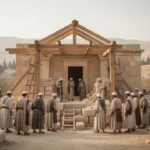
The first group of returning Jews began rebuilding the temple, but the work stopped. Opposition from surrounding groups, political pressure, and discouragement contributed to the delay. Over time, the people settled into ordinary life while the temple remained in ruins.
Haggai’s ministry took place during the reign of Darius I of Persia. The book gives specific dates in the second year of Darius, placing the messages in 520 BC. The governor Zerubbabel represented the Persian-appointed leadership of Judah, while Joshua the high priest represented the nation’s religious leadership.
This setting explains why the temple mattered so much. It was not simply a construction project or a beautiful public building. The temple was the central place associated with worship, sacrifice, priestly service, and God’s covenant presence among his people. Rebuilding it signaled that Judah was returning to faithful worship after judgment and exile.
Historical setting: Haggai preached to a small, struggling postexilic community in Jerusalem, not to a powerful kingdom. His message addresses both their practical discouragement and their deeper spiritual priorities.
What happens in the book of Haggai?
Haggai is short, but its four messages follow a clear movement. The prophet first confronts the people’s excuses, then encourages them when the rebuilding begins, explains how holiness and obedience affect the community, and finally gives Zerubbabel a promise about God’s future purposes.
Haggai calls the people to rebuild the temple. He challenges their claim that the right time has not yet arrived and asks them to examine their priorities.
The people begin working. Zerubbabel, Joshua, and the remnant of the people respond to Haggai’s message because they recognize God’s authority behind it.
God encourages those who remember the former temple. Older people may see the new structure as unimpressive compared with Solomon’s temple, but God promises his presence and future glory.
Haggai explains the difference between ritual contact and true holiness. The people’s uncleanness has affected their work, but obedience changes the direction of the community.
God speaks to Zerubbabel about shaking the nations. The governor receives a sign of God’s continuing purpose, connected with the imagery of a chosen signet ring.
These messages are not four unrelated sermons. Together, they show that renewed worship begins with honest self-examination, continues through obedient action, and rests on God’s presence rather than human strength or impressive results.
Why does Haggai tell the people to consider their ways?
Haggai’s first message asks the people to look carefully at the results of their lives. They have planted much but harvested little, eaten without satisfaction, and earned wages that seem to disappear. The point is not that every financial problem proves personal sin. Rather, Haggai interprets the community’s repeated frustration in light of its misplaced priorities.
The people have found time and resources to build their own houses while saying the temple is not yet ready to be rebuilt. Their homes may be comfortable or paneled, while God’s house remains neglected. Haggai exposes the contradiction: they claim to care about worship, but their actions reveal that their own security and comfort have taken precedence.
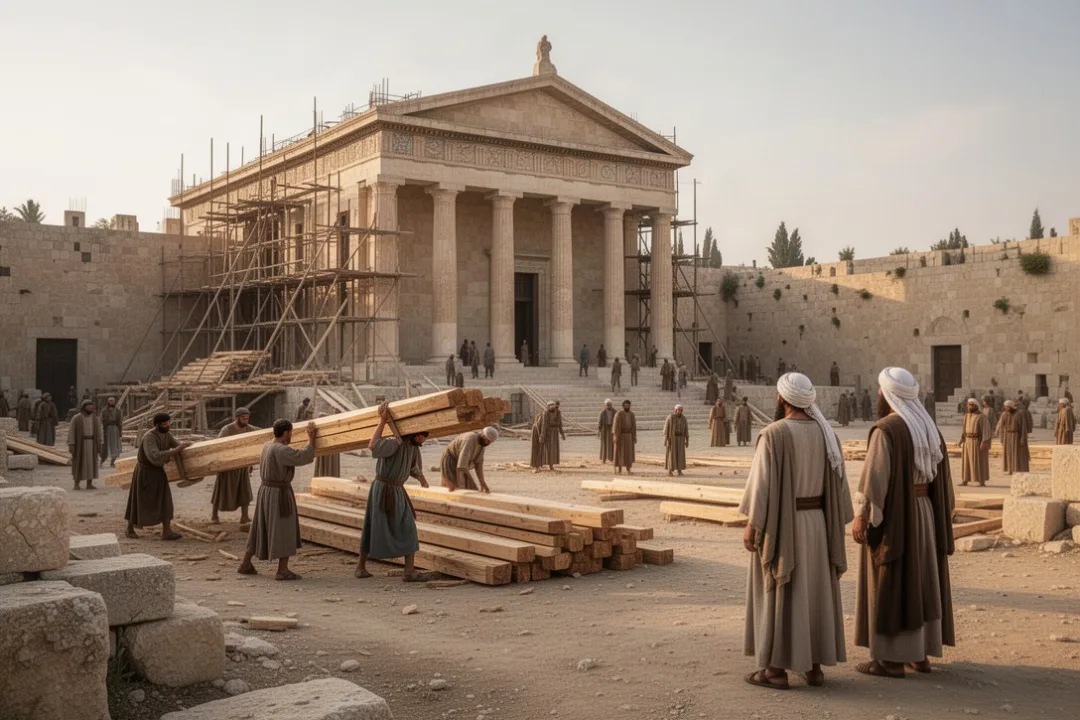
The prophet tells them to go up into the hills, bring wood, and build the temple. The command is practical, but its meaning is spiritual. They must stop waiting for ideal conditions and begin obeying with the resources available to them.
Haggai also connects the community’s difficulties with the land’s lack of productivity. Drought and poor harvests have affected Judah. The prophet presents these conditions as a covenant-related discipline, showing that the people’s relationship with God cannot be separated from the health of their communal life.
“Consider your ways” means more than feeling guilty. It means examining patterns, comparing professed priorities with actual choices, and asking whether convenience has replaced obedience. Haggai wants the people to see their circumstances clearly enough to respond faithfully.
How did the people respond to Haggai?
The response to Haggai is one of the most encouraging features of the book. The leaders and people listen to the prophet, receive his message with reverence, and begin rebuilding the temple. The text emphasizes that their obedience follows because God stirs their spirit.
This detail holds together two truths. The people are responsible for their response, yet their renewed willingness is also the result of God’s active work among them. Haggai does not portray restoration as a human self-improvement program. God calls, strengthens, and accompanies his people as they obey.
The rebuilding begins about three weeks after Haggai’s first message. The book does not present a dramatic change in the nation’s political power or financial situation. The key change is that the people start doing what they had postponed.
God then gives them a direct assurance: he is with them. That promise addresses the fear and uncertainty surrounding the project. The builders do not need to believe that their work will immediately look impressive. They need to know that their obedience takes place in God’s presence.
They listen instead of dismissing the prophet’s criticism.
They fear God in the sense of recognizing his authority.
They work together under the leadership of Zerubbabel and Joshua.
They begin before every problem is solved or every ideal condition is restored.
That pattern applies beyond construction. Many forms of faithfulness begin when people respond to what they already understand rather than waiting for perfect clarity, abundant resources, or universal approval.
What does Haggai mean by the glory of the later temple?
When the rebuilding begins, some older members of the community remember Solomon’s temple. The new temple appears less impressive by comparison. The people may wonder whether their efforts can really restore what was lost.
Haggai acknowledges the discouragement directly. He asks who among them remembers the former temple and whether the present building seems like nothing in comparison. Then he tells Zerubbabel, Joshua, and the people to be strong and work because God is with them.
The promise that follows looks beyond the appearance of the building. God declares that he will shake the heavens, the earth, the sea, and the dry land, and that the nations will be shaken. Haggai describes the future in expansive language, showing that God’s purposes reach far beyond the small province of Judah.
The statement that the latter glory of the house will be greater than the former has received different interpretations. Some readers understand it as a promise about the second temple itself and the peace associated with God’s future work. Others see it as pointing beyond that building to a fuller, later expression of God’s presence and kingdom. The book itself emphasizes that God controls the future glory, not the community’s present resources.
Haggai does not tell the builders that the new temple will match Solomon’s temple in wealth, size, or splendor. His encouragement is deeper: the significance of the temple depends on God’s presence and purpose. A modest beginning can participate in something much larger than the people can currently see.
For discouraged workers: Haggai does not measure faithfulness by visible grandeur. The people are told to work because God is with them, even when the result seems smaller than what came before.
What does Haggai teach about holiness and obedience?
Haggai’s third message uses questions directed to the priests. He asks whether holiness can be transferred from consecrated meat to other objects through ordinary contact. The priests answer that holiness is not passed along in that way. He then asks whether something unclean can make another object unclean through contact, and the answer is different.
The exact priestly reasoning may seem unfamiliar, but the central point is clear: holiness is not automatic. Being near sacred things does not make a person faithful. The people cannot assume that rebuilding a temple will erase the consequences of their disobedience or transform their motives without repentance.
Haggai then applies the lesson to the community. Before they began rebuilding, their work and offerings were affected by their uncleanness. Their religious activity did not compensate for neglected obedience. The temple project needed to be part of a genuine return to God rather than a way to create a religious appearance.
At the same time, Haggai gives the people a hopeful message. From the day they recommit themselves to the work, God promises to bless them. This does not mean they will never face hardship again or that obedience guarantees immediate prosperity. It means the community’s relationship with God is being restored, and their future is no longer defined only by past judgment.
The passage warns against a common mistake: treating sacred objects, routines, or associations as substitutes for a changed life. Attending worship, using religious language, or serving in a church does not automatically make someone spiritually healthy. Haggai joins right worship with right priorities and obedient conduct.
What does Haggai say about Zerubbabel?
The final message is addressed specifically to Zerubbabel, Judah’s governor. Haggai repeats the imagery of shaking the heavens and earth, overthrowing the power of kingdoms, and overturning military strength. God declares that he will take Zerubbabel and make him like a signet ring.
A signet ring represented authority and identity. A ruler used it to authenticate documents, so the image suggests that Zerubbabel has a special role in God’s purposes. This is striking because Zerubbabel is not an independent king. He governs a small Persian province under imperial authority.
The promise does not mean that Zerubbabel immediately becomes a reigning king or that Judah quickly regains political independence. Instead, it assures him that the apparent weakness of the present community does not cancel God’s covenant purposes. God can preserve and advance his plan through a leader who seems insignificant by the standards of surrounding empires.
Zerubbabel’s role also connects Haggai with the broader biblical hope for a restored Davidic line. The book does not explain every later development, and it should not be treated as a simple prediction of a political revolution. Its emphasis is that God chooses and preserves his servant while he shakes the structures that appear permanent.
For Christian readers, later New Testament writers connect Jesus with the Davidic promises and the temple’s fulfillment in ways that go beyond Haggai’s immediate historical setting. Those connections should be made with care: Haggai first speaks to postexilic Judah, its leaders, its temple, and its hope for restoration.
What are the main themes in Haggai?
God must come before personal comfort
The people’s houses are not condemned simply because they have homes. The problem is that they have prioritized private comfort while neglecting the community’s worship. Haggai asks whether it makes sense to improve individual living conditions while the central sign of covenant life lies in ruins.
That challenge can reach modern readers without being reduced to a rule about owning property or enjoying ordinary comforts. The question is whether your use of time, money, attention, and ability shows that God’s purposes matter. Priorities become visible through repeated decisions, not only through stated beliefs.
Delayed obedience can become settled disobedience
At first, the people may have viewed the temple project as temporarily postponed. Opposition and uncertainty gave them understandable reasons to wait. But a delay that continues for years can begin to feel normal, and normality can hide disobedience.
Haggai helps you ask whether “later” has become a permanent answer. Some responsibilities genuinely require patience, planning, or wise timing. The warning is against using difficult circumstances as a permanent excuse when the next faithful step is already clear.
God’s presence matters more than impressive results
The rebuilt temple did not begin with the wealth or visual splendor associated with Solomon’s temple. Haggai does not deny the difference. Instead, he directs attention to God’s presence with the people.
Faithful work may look small, especially when compared with an earlier generation or a more successful organization. Haggai teaches that the worth of obedience is not determined only by scale. God’s presence gives meaning to work that seems modest.
God can restore a community through ordinary obedience
The people do not rebuild the nation in one dramatic act. They hear a message, gather materials, organize labor, and continue working. Restoration takes shape through concrete actions shared by leaders and ordinary members of the community.
This does not make the work merely human. Haggai repeatedly shows God stirring, strengthening, and blessing his people. Yet divine help does not remove the need for effort. God’s people participate in restoration by doing what faithfulness requires.
Present weakness does not determine the future
Judah is small, politically dependent, and surrounded by the memory of catastrophe. The temple appears unimpressive, and the people’s harvests have suffered. Haggai nevertheless describes a future in which God shakes the nations and establishes his purposes.
The book therefore refuses two opposite errors. It does not tell the people to ignore their present failures, and it does not let those failures define what God can still do. Honest repentance and confident hope belong together.
How should you read Haggai’s promises about blessing?
Haggai connects obedience with blessing, but the book should not be turned into a formula promising immediate wealth to every faithful person. The original audience was a covenant community in a particular historical setting, and the prophet interpreted drought and harvest failure within that covenant relationship.
The promise of blessing comes after the people respond to God’s word and resume the temple work. It concerns the restoration of the community’s relationship with God and the renewed productivity of the land. It does not teach that every financial hardship results from personal disobedience.
A careful reading avoids two extremes. One extreme ignores the connection between choices and spiritual consequences. The other blames people for suffering without considering injustice, illness, economic conditions, or the many causes of hardship that Scripture addresses elsewhere.
Haggai’s message is better applied by asking questions such as these:
Have I allowed a valid difficulty to become an excuse for indefinite delay?
Do my actual choices support the priorities I say I hold?
Am I treating religious activity as a substitute for repentance and obedience?
Can I continue faithful work even when the visible results seem small?
Am I expecting God to honor his purposes without taking the next responsible step?
How is Haggai organized?
The book’s dated messages make its structure easy to follow. Each section moves from a divine word through a human response or spiritual explanation toward a renewed promise.
Haggai 1:1–15: The prophet confronts the people’s misplaced priorities and calls them to rebuild the temple. The leaders and people respond, and construction begins.
Haggai 2:1–9: The prophet encourages those who are discouraged by the new temple’s apparent inferiority. God promises his presence and future glory.
Haggai 2:10–19: Haggai uses priestly questions to explain uncleanness, then announces that God will bless the community as it turns toward obedience.
Haggai 2:20–23: God gives Zerubbabel a promise of significance and security amid the shaking of nations and kingdoms.
The repeated dates show that Haggai’s ministry unfolded over a relatively brief period. The book highlights how a few carefully delivered messages can redirect a community when people listen and act.
What can Haggai mean for your priorities today?
Haggai does not give a checklist for managing every modern decision, but it provides a framework for examining the order of your life. Begin by identifying what consistently receives your best attention. Your calendar, spending, conversations, and private habits may reveal priorities more accurately than your intentions do.
Next, distinguish between a genuine obstacle and an excuse. The people of Judah faced real opposition and limited resources, yet they had allowed those realities to become a reason for doing nothing. A wise response may involve seeking counsel, creating a plan, or taking a small first step rather than waiting for every uncertainty to disappear.
Then consider whether your outward religious actions match your inner direction. Haggai’s teaching about holiness challenges the assumption that proximity to worship automatically produces faithfulness. The goal is not simply to complete a project or appear committed, but to return to God with integrity.
Finally, measure success by faithfulness rather than comparison. The builders were tempted to compare their temple with the former one. You may compare your service, family, church, career, or spiritual life with someone else’s. Haggai allows honest grief over what has been lost while still calling you to work faithfully with what God has placed in front of you.
The central message of Haggai is straightforward: God’s people must not let personal comfort, fear, disappointment, or delay push worship and obedience to the margins. When they turn back and act, God assures them of his presence, promises blessing, and reminds them that his purposes are larger than what they can see.
Frequently asked questions
How long did Haggai’s ministry last?
Haggai’s recorded messages span several months in 520 BC, during the second year of the Persian king Darius I. The book identifies the dates of four prophetic messages, showing that his ministry was concentrated and focused. His preaching helped motivate the returned Jewish community to resume work on the temple, which was eventually completed during the Persian period.
Who were Zerubbabel and Joshua in Haggai?
Zerubbabel was the governor of Judah under Persian rule, and Joshua was the high priest. They represented the community’s civil and religious leadership. Haggai addressed both men because restoring the temple required cooperation between public leadership, priestly worship, and the wider population. The prophet’s message also gave them encouragement while Judah remained politically weak.
Is Haggai mainly about building a church or religious facility?
No. The temple was uniquely connected with Israel’s covenant worship and God’s appointed presence, so it should not be equated directly with a modern building project. Haggai’s broader lesson concerns priorities: God’s people had neglected worship while pursuing personal comfort. Modern application should focus on faithful obedience and communal worship rather than assuming every construction project has the same biblical status.
What book comes after Haggai?
In the usual order of the Old Testament, Zechariah follows Haggai. Both prophets ministered to the postexilic community around the time the temple was being rebuilt, although their messages have different emphases. Haggai strongly stresses priorities and action, while Zechariah includes extensive visions and symbolic material about Jerusalem, leadership, restoration, and God’s future work.




Leave a Reply