Biblical prophets: who they were and what they taught
Biblical prophets: who they were and what they taught
Biblical prophets were people called to deliver a message from God to a particular audience and historical situation. They confronted idolatry, injustice, political wrongdoing, and covenant unfaithfulness, while also proclaiming hope, judgment, restoration, and God’s faithfulness.
Some prophets wrote books that bear their names, such as Isaiah and Jeremiah. Others, including Nathan, Elijah, Elisha, and Huldah, appear mainly in the historical narratives. Their central task was not simply to predict the future. They spoke God’s word into the present, sometimes revealing future events to show where a people’s choices were leading.
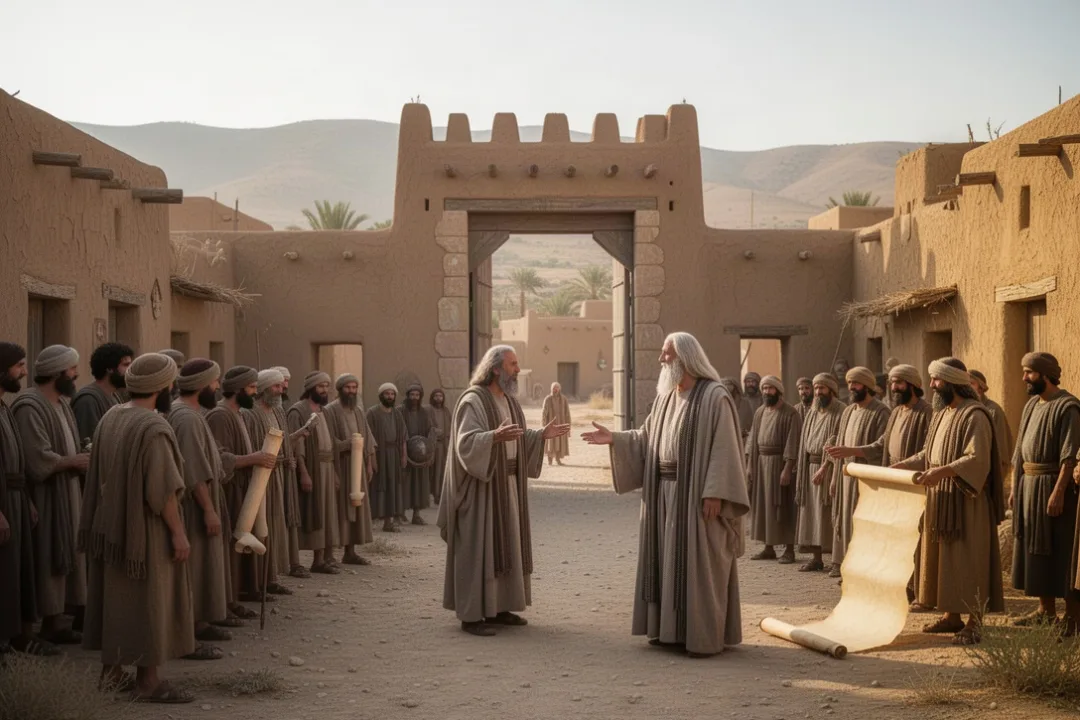
A prophet served as a messenger and covenant witness. The prophet did not usually offer personal opinions or private spiritual advice. Instead, the prophet addressed kings, priests, communities, and sometimes foreign nations with a message understood to come from God.
The Hebrew Bible often presents prophets as people who stood before God and then spoke to the people. Their calling could involve courage, loneliness, public opposition, and personal cost. Jeremiah faced rejection and imprisonment, Amos challenged religious and economic elites, and Elijah confronted royal power connected with Baal worship.
Prophets addressed several recurring concerns:
Worship: They opposed idolatry and empty religious performance disconnected from faithful living.
Justice: They defended the poor, widows, orphans, immigrants, and others vulnerable to exploitation.
Covenant loyalty: They called Israel and Judah back to the obligations expressed in the Law.
Leadership: They challenged kings, priests, judges, merchants, and other influential people.
Repentance: They warned that persistent rebellion would bring consequences but often offered a path back to God.
Hope: They promised restoration, renewed worship, a faithful remnant, or a future ruled by God’s justice.
The prophets’ messages were often directed at specific conditions rather than abstract religious ideas. Amos spoke against wealthy people who benefited from dishonest practices and the mistreatment of the poor. Micah condemned leaders who used authority for personal gain. Isaiah challenged political alliances that expressed misplaced trust, while Jeremiah warned Jerusalem that religious symbols could not protect a society committed to injustice.
Central idea: A biblical prophet was primarily a spokesperson for God’s covenant purposes. Prediction was one part of prophetic ministry, but calling people to faithful obedience was usually the immediate concern.
Prophets were also not identical in personality or method. Some delivered short public speeches; others recorded extended visions and prayers. Some served near royal courts, while others worked outside official institutions. Their differences make it risky to reduce prophecy to a single style or formula.
Major prophets, minor prophets, and other prophetic figures
The labels Major Prophets and Minor Prophets come from the Christian Old Testament. “Major” refers mainly to the length and scope of the books, not to greater spiritual importance. Isaiah, Jeremiah, Ezekiel, and Daniel are commonly grouped as Major Prophets, although the exact arrangement varies among Christian traditions.
The Minor Prophets are the twelve shorter books from Hosea through Malachi. In the Hebrew Bible, these works are often treated as one collection called the Book of the Twelve. Their shorter length does not make their messages less significant. Amos, Habakkuk, Zephaniah, Haggai, and the others address distinct historical and theological issues.
Prophets whose books carry their names
Many prophetic books preserve sermons, visions, prayers, symbolic actions, or accounts of opposition connected with a named prophet. The books are not all organized as modern biographies. They may combine material from different moments in the prophet’s ministry, and some include editorial shaping that places individual messages within a larger account of God’s dealings with Israel and the nations.
Isaiah speaks to Judah and Jerusalem during periods of political danger and spiritual failure. His messages include judgment against injustice and pride, as well as powerful visions of holiness, comfort, restoration, and a future reign marked by peace.
Jeremiah warned Judah before and during the Babylonian crisis. He challenged false confidence in the temple, grieved over the nation’s rebellion, and announced judgment. At the same time, he looked toward a renewed covenant and a restored relationship with God.
Ezekiel ministered among Judeans living in exile. His dramatic visions and symbolic actions explain the seriousness of Jerusalem’s sin, defend God’s justice, and offer hope through themes such as a cleansed people, a renewed heart, and restored communal life.
Daniel combines stories of faithful people living under foreign rule with visions concerning kingdoms, oppression, judgment, and God’s lasting authority. Its form is closely associated with apocalyptic literature, which uses symbolic images to reveal heavenly and historical realities.
The twelve shorter prophetic books cover a wide range of settings. Hosea uses the pain of a broken marriage as a sign of Israel’s unfaithfulness. Joel reflects on a devastating crisis and calls the people to return to God. Obadiah focuses on judgment against Edom. Haggai and Zechariah encourage the returned exiles to rebuild the temple and renew their communal life.
Prophets who appear in biblical narratives
Some of the most influential prophets do not have books named after them. Samuel guided Israel during the transition from the period of the judges to the monarchy and confronted King Saul’s disobedience. Nathan challenged David after his abuse of royal power, showing that a king remained accountable to God’s justice.
Elijah opposed King Ahab and Queen Jezebel’s support for Baal worship. His ministry emphasized that Israel could not treat devotion to the Lord as compatible with allegiance to rival gods. Elisha continued that prophetic work and is associated with acts of healing, provision, deliverance, and political significance.
Huldah, consulted during the reforms of King Josiah, confirmed the seriousness of Judah’s covenant violations while recognizing the king’s humble response. Miriam is called a prophet in Exodus, and Deborah is presented as both a prophet and a judge in the book of Judges.
These examples show that prophetic ministry was not restricted to one gender, social class, or public setting. The Bible also mentions groups of prophets and false prophets, making clear that the title alone did not guarantee faithfulness.
The main messages repeated by the biblical prophets
Although the prophets spoke in different periods, their messages share several strong themes. They interpreted national events through the relationship between God, the covenant community, and moral responsibility. Military defeat, prosperity, exile, or political stability could not be understood merely as accidents of history.
Idolatry and divided loyalty
The prophets repeatedly opposed worship of idols and dependence on foreign gods. Their concern was not only that people used the wrong religious objects. Idolatry represented a deeper refusal to trust God and a willingness to organize public and private life around competing loyalties.
Hosea, Isaiah, Jeremiah, and Ezekiel use different images to describe this betrayal. Their language can be intense because they view idolatry as a violation of a committed relationship. The warning is directed at both visible worship and the hidden sources of security that replace God.
Justice for people harmed by power
Justice is one of the clearest marks of prophetic preaching. The prophets criticized dishonest courts, fraudulent business practices, land seizure, forced labor, violence, and the abuse of the poor. They rejected the idea that elaborate worship could compensate for oppression.
Amos is especially direct in connecting worship with economic conduct. Micah describes God’s requirements in terms of justice, faithful love, and humble fellowship with God. Isaiah condemns religious assemblies that coexist with violence and exploitation. These passages do not dismiss worship; they expose worship that has been separated from ethical obedience.
The prophets also held rulers accountable. A king’s position did not place him beyond correction. Nathan confronted David, Elijah confronted Ahab, and several prophetic books address the failures of national leaders, priests, and wealthy citizens.
Judgment and the consequences of rebellion
Prophetic judgment speeches explain that persistent injustice and idolatry have consequences. The threatened consequences include military invasion, famine, disease, exile, the loss of political independence, and the destruction of cities. These warnings were often connected to actual crises facing Israel, Judah, and neighboring nations.
Judgment is not presented as arbitrary anger. The prophets describe it as a response to long-standing covenant violation. They also challenge the assumption that God judges only other nations. Israel and Judah are accountable precisely because they have received revelation and entered a covenant relationship.
Prophetic announcements can include conditional elements. A warning may be intended to provoke repentance rather than announce an unavoidable outcome. The book of Jonah illustrates this tension: Nineveh responds to the warning, and the threatened disaster does not occur in the way the audience expected.
Repentance, restoration, and future hope
Warnings are not the whole of prophecy. Even books centered on catastrophe often include promises of mercy, return, healing, or renewed worship. The prophets speak of a faithful remnant, a restored people, a purified community, a rebuilt Jerusalem, or a future in which God’s justice reaches the nations.
Hope does not always mean an immediate escape from suffering. Jeremiah told exiles to build lives in Babylon while also preserving hope for eventual return. Haggai and Zechariah encouraged a community facing limited resources and discouragement. Their promises gave present obedience a place within a larger story.
Christian readers often connect several prophetic passages with Jesus, the Messiah, the new covenant, or the expansion of God’s people. Jewish interpretation reads these texts within the continuing story of Israel, the covenant, and the hoped-for redemption. Responsible reading recognizes these interpretive traditions rather than assuming every passage has only one universally accepted application.
How biblical prophets communicated their messages
Prophetic speech took many forms. A prophet might deliver an oracle, meaning a formal message concerning judgment, blessing, or a particular nation. Other material appears as a vision report, a prophetic lawsuit, a lament, a promise of restoration, a symbolic action, or a heavenly throne-room scene.
The prophets often used vivid images because images could communicate complex truths quickly. A ruined vineyard, a boiling pot, a basket of summer fruit, dry bones, a measuring line, or a marriage relationship could represent spiritual and political realities. These images should be interpreted within the surrounding passage rather than treated as an isolated code.
Symbolic actions made the message visible. Jeremiah wore a yoke to represent submission to Babylon’s power for a season. Ezekiel performed unusual public actions to portray the siege and exile of Jerusalem. Hosea’s family life became part of the prophetic sign concerning Israel’s unfaithfulness.
Prophets also used poetry. Hebrew prophetic writing relies on parallel lines, repetition, contrast, metaphor, and sound patterns. A poetic statement may intensify an idea through imagery rather than provide a technical prediction with every detail specified.
Several common forms appear across the prophetic books:
Woe oracles: denunciations of people or institutions marked by arrogance, violence, or exploitation.
Judgment speeches: announcements explaining why disaster is coming and what form it may take.
Salvation oracles: promises of protection, return, renewal, or blessing.
Prophetic lawsuits: presentations of God’s case against a covenant-breaking people.
Vision reports: symbolic scenes that reveal heavenly authority or future conflict.
Sign acts: physical actions designed to embody the prophet’s message.
Reading tip: Ask who is speaking, who is being addressed, what historical crisis is present, and whether the passage is poetry, vision, narrative, warning, or promise before applying its message.
The phrase “thus says the Lord” or its equivalent signals prophetic authority, but not every line in a prophetic book has the same literary function. A prophet may report a vision, pray in anguish, quote an opponent, describe a historical event, or announce God’s message. Careful interpretation pays attention to those changes.
How to read biblical prophecy responsibly
Prophetic books can be difficult because they move between past events, immediate warnings, and future hope. They also use unfamiliar political settings and symbolic language. A sound reading begins with the original audience rather than starting with a modern headline or a prediction chart.
Identify the historical setting. Find out whether the prophet addressed the northern kingdom of Israel, the southern kingdom of Judah, exiles in Babylon, the restored community, or a foreign nation.
Locate the immediate problem. Look for idolatry, injustice, political fear, false worship, leadership failure, or another issue named in the passage.
Read the surrounding chapters. A promise may follow a judgment speech, and a symbolic vision may be explained later in the same book.
Recognize the literary form. Poetry, narrative, apocalypse, and direct speech communicate in different ways.
Distinguish audience and application. A message spoken to ancient Judah may reveal enduring principles without being a direct prediction about a modern country or event.
Compare related passages carefully. Use the wider biblical context, but do not erase the meaning of the original passage by forcing every image into a later interpretation.
One frequent mistake is treating every prophetic statement as a prediction of a distant event. The prophets often announced something about their own generation: an approaching invasion, a corrupt ruler, a coming exile, or a needed reform. A later biblical writer or religious tradition may see additional fulfillment, but that does not remove the first historical meaning.
Another mistake is separating promise from responsibility. Prophetic hope is not permission to ignore injustice or disobedience. The promised restoration usually includes repentance, renewed worship, moral transformation, and communal faithfulness.
It is also wise to avoid assigning modern identities to symbolic animals, political powers, or named nations without strong textual support. Some passages clearly identify their symbols; others remain debated. Humility is part of responsible interpretation, especially with apocalyptic visions.
Where the biblical prophets fit in the Bible’s larger story
The prophets belong to a continuing biblical story that begins with creation, covenant, exodus, kingship, and the calling of Israel. They remind the nation that election is a responsibility, not a guarantee of immunity from judgment. The people are chosen to live as a community that reflects God’s holiness and justice.
In the historical books, prophets interpret events that might otherwise appear to be ordinary political changes. They explain why a king succeeds or fails, why a nation faces invasion, and why worship cannot be separated from obedience. In the prophetic books, these interpretations become sustained poetic and theological reflection.
The prophetic message also reaches beyond Israel’s internal life. Many prophets speak about Egypt, Assyria, Babylon, Edom, Moab, Tyre, and other nations. These oracles express the conviction that God’s authority extends over all peoples and that powerful nations are accountable for violence and pride.
The New Testament frequently refers to Israel’s prophets and presents Jesus within that scriptural story. Christian writers connect Jesus with themes such as the coming kingdom, restoration, suffering, the new covenant, and the inclusion of the nations. These connections should be read with attention to both the original prophetic setting and the later Christian claim.
For Jewish readers, the prophets remain central witnesses to covenant faithfulness, ethical responsibility, repentance, and the hope of redemption. For Christian readers, they provide essential context for understanding the life and mission of Jesus. For any reader, their voices raise enduring questions about power, worship, justice, responsibility, and hope.
The biblical prophets therefore speak most clearly when their warnings and promises are held together. They expose the damage caused by unfaithfulness, insist that God sees those harmed by injustice, and keep open the possibility of restoration. Their message is both historically grounded and morally searching: communities reveal what they worship by how they use power and how they treat people with less of it.
Frequently asked questions
Were biblical prophets only people who predicted the future?
No. Prediction was one part of prophetic ministry, but prophets primarily communicated God’s message to people in a specific situation. They confronted idolatry, injustice, corrupt leadership, and covenant disobedience. They also interpreted current events and called listeners to repentance. When they spoke about the future, those promises or warnings often explained the consequences of present choices or offered hope beyond an immediate crisis.
Who was the first biblical prophet?
The answer depends on how “prophet” is defined and which biblical tradition is being discussed. Abraham is called a prophet in Genesis, while Moses is portrayed as a uniquely important prophetic figure. Miriam, Deborah, Samuel, and others are also identified or presented as prophets. If the question concerns the first writer of a prophetic book, the Bible does not provide a simple, universally agreed answer.
What is the difference between a true prophet and a false prophet?
Biblical tests include faithfulness to the Lord, agreement with the covenant, moral integrity, and whether the prophet’s message proves reliable. False prophets may offer reassuring messages that contradict God’s revealed purposes or minimize sin and impending judgment. The books also show that popularity, institutional status, or confident predictions do not by themselves establish a prophet’s authority.
Why are some prophets called major and others minor?
The terms describe the length of their books, not their importance or authority. Isaiah, Jeremiah, Ezekiel, and Daniel are usually called Major Prophets because their books are longer or more extensive. The twelve shorter books from Hosea through Malachi are called the Minor Prophets. Their messages can be just as theologically significant and historically specific as those in the longer books.







Leave a Reply