The battle is not yours scripture: meaning and context
The battle is not yours scripture: meaning and context
The phrase “the battle is not yours” comes from 2 Chronicles 20:15, where God assures Judah that an approaching enemy will not be defeated by human strength alone. The message is not that you should ignore every responsibility; it is that God remains the true source of victory when a situation is beyond your control.
Where “the battle is not yours” appears in Scripture
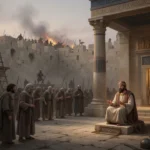
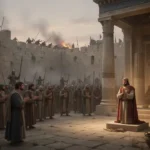
In 2 Chronicles 20, King Jehoshaphat learns that a large coalition of enemies is moving against Judah. The danger is serious, and the king does not pretend that military preparation will solve everything. He seeks God publicly, calls the nation to fast, and admits that the people do not know what to do but are looking to God for help.
During that gathering, the Spirit of the Lord speaks through Jahaziel. The message tells Judah not to be afraid, because the conflict belongs to God. The people will still go out to face the threat, but they will not need to create the victory through their own power. The account reaches its turning point when Judah worships, advances, and finds that its enemies have already turned against one another.
The familiar wording is often connected with the King James Version of 2 Chronicles 20:15, while other translations express the same idea with slightly different wording. Since English Bible translations vary, the central meaning is more important than memorizing one particular phrasing: God sees the battle, God directs the response, and God can accomplish what his people cannot accomplish alone.
Central meaning: “The battle is not yours” is a call to trust God with the outcome, not an excuse to avoid wise action, prayer, obedience, or responsibility.
What happened before God gave this promise
The setting matters because the statement was not offered as a vague slogan. Jehoshaphat was facing a specific national crisis. Reports came that forces from several surrounding territories were approaching Judah, creating a threat too large for the king to dismiss.
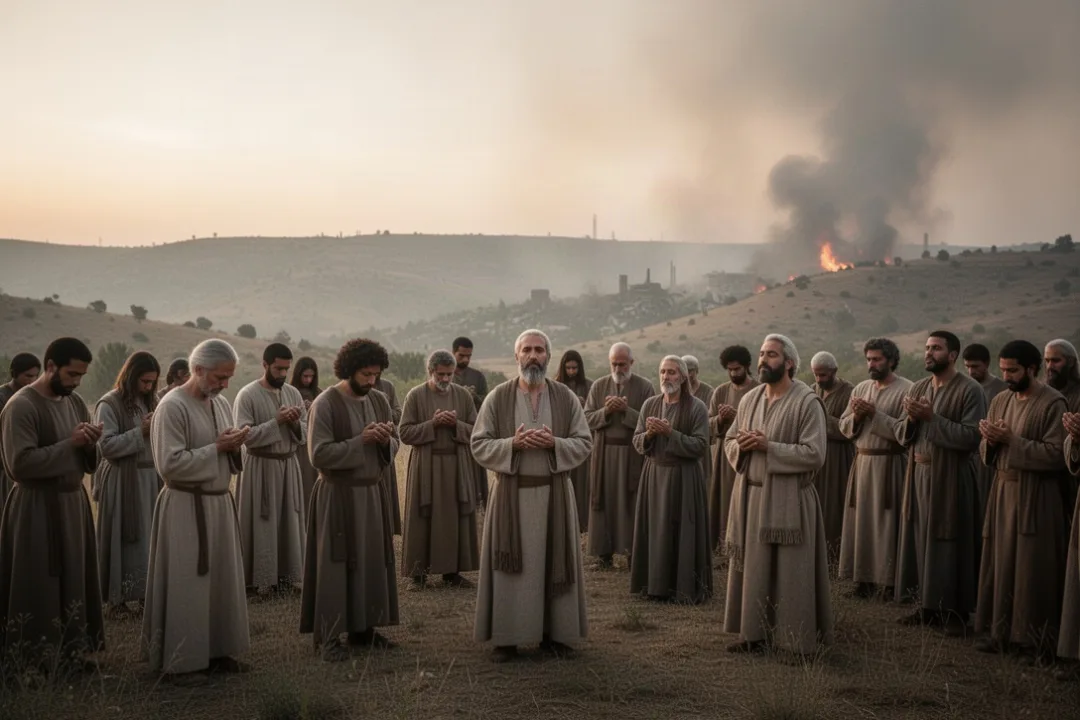
Jehoshaphat was afraid, but fear moved him toward God rather than away from him. He proclaimed a fast and gathered the people in Jerusalem. Men, women, and children stood before the Lord while the king prayed about God’s past faithfulness, the temple, the covenant, and the danger facing the nation.
His prayer includes a candid admission: Judah did not have the strength to face the invading army, and the people did not know what to do. Their response was to keep their eyes on God. That admission shows the difference between faith and denial. Faith does not require you to claim that the problem is small; it allows you to bring the full size of the problem to God.
The prophetic message then gives Judah direction. The people are told not to panic, because the battle belongs to God. They are also told where to go and encouraged to stand firm. God’s promise does not remove every instruction. Instead, it gives them confidence to obey the instructions they receive.
How to apply the passage step by step
The response of Judah offers a practical pattern for moments when you feel overwhelmed. You should not copy every national or military detail, but you can learn from the spiritual posture shown in the chapter.
Face the threat honestly. Jehoshaphat did not minimize the danger or hide it from the people. Name the problem clearly, whether it involves conflict, grief, financial pressure, illness, temptation, or an uncertain decision.
Turn toward God before fear controls your choices. Prayer was not Judah’s last ritual after every human option failed. It was the first serious response to the report they received.
Remember God’s character and past faithfulness. Jehoshaphat based his prayer on what God had already done and promised. Recalling God’s faithfulness can steady you when current circumstances are confusing.
Admit your limits. Saying “I do not know what to do” can be an honest act of faith when it leads you to seek God rather than surrender to despair.
Look for faithful guidance. The people received direction through a prophetic message. Today, wise counsel should be tested against Scripture, godly character, sound judgment, and the responsibilities of your situation.
Take the next obedient step. Judah still went out to meet the situation. Trust does not always mean waiting passively; it often means acting carefully after placing the result in God’s hands.
Give God credit for the outcome. When the crisis passes, resist the temptation to treat the result as proof of your own control. Gratitude keeps deliverance from becoming self-congratulation.
This sequence can help you distinguish dependence on God from helplessness. You may need to make a phone call, set a boundary, seek medical care, ask for legal or financial advice, apologize, leave an unsafe situation, or complete a difficult assignment. Prayer and practical wisdom belong together.
What “the battle” means for a Christian today
In the original passage, “the battle” refers to Judah’s military crisis. It should not automatically be applied to every disagreement as though every opponent were an enemy sent for destruction. The Bible’s language about spiritual conflict can be meaningful without turning ordinary relationships into battlefields.
For a Christian reader today, the phrase may describe circumstances in which the outcome is larger than personal ability. These can include a family crisis, a long period of uncertainty, persecution, a destructive habit, injustice, or a burden that has exhausted your resources. It can also refer to inner struggles where you need God’s grace, wisdom, and strength rather than confidence in willpower alone.
The phrase does not mean that every desired result is guaranteed. Judah received a specific promise in a specific historical moment. Christians can trust God’s presence, wisdom, and ultimate faithfulness without claiming that every hardship will end in the exact way they request.
That distinction protects you from two opposite errors. One error is self-reliance: believing that everything depends on your ability to control people and events. The other is presumption: assuming that your preferred outcome must be God’s promise. Biblical trust rests in God himself, not in a demand that circumstances follow a chosen script.
Why the passage begins with prayer and fasting
Prayer and fasting show that Judah understood its dependence. Fasting did not function as a way to pressure God into granting a request. It helped the people set aside ordinary routines, focus their attention, and seek God together during a serious crisis.
Prayer also changed the focus of the gathering. The people did not begin by listing the enemy’s size or discussing their own military weakness. Jehoshaphat remembered who God is, what God had done, and what God had promised. Then he described the threat and asked for help.
You can follow that pattern without treating fasting as a formula. A simple prayer might move through four points:
Recognition: “God, you know exactly what is happening.”
Remembering: “You have been faithful, wise, and present before.”
Confession: “I cannot control this outcome, and I need your help.”
Request: “Give me wisdom for my responsibilities and strength to trust you with what I cannot control.”
Fasting may be appropriate for some believers, but it should be practiced wisely. People with certain medical conditions, those who are pregnant or nursing, and anyone with a history of disordered eating should seek appropriate professional guidance rather than assuming fasting is required. The spiritual purpose is focused dependence, not physical harm.
How worship fits into the meaning of the verse
One striking feature of 2 Chronicles 20 is that Judah worships before the visible result is secured. Singers go ahead of the army, praising God’s enduring mercy. Their worship is not a denial that danger exists. It is a declaration that God is worthy of trust before circumstances are resolved.
Worship can correct the way fear narrows your attention. Anxiety may make the threat appear to be the only reality. Worship does not require you to feel cheerful or pretend that you are untroubled. It gives you a way to acknowledge God’s goodness, authority, and presence while still grieving or asking hard questions.
This is why worship should not be reduced to a technique for obtaining a victory. Judah praised God because of who he is, and the reported deliverance followed God’s action. If worship becomes a transaction—praise in exchange for a specific result—it stops reflecting the trust shown in the passage.
Jehoshaphat’s prayer models honest dependence: Judah does not know what to do, but the people deliberately look to God.
What the passage does not mean
Because the phrase is short and memorable, it can be used in ways that go beyond the biblical account. Reading the surrounding chapter helps prevent several common misunderstandings.
It does not mean you should do nothing. Judah sought God, received direction, went out to the place named, and remained attentive. Trust included movement and obedience.
It does not mean every conflict is a holy war. Personal irritation, workplace disagreement, or a political dispute should not automatically be described as a battle against God’s enemies.
It does not promise a painless outcome. The passage records a particular act of deliverance. It does not guarantee that every believer will receive immediate relief from every problem.
It does not eliminate wise counsel. Seeking help from mature Christians, doctors, counselors, attorneys, financial professionals, or safety resources can be consistent with faith.
It does not justify neglecting repentance. If your own harmful choices contributed to a crisis, trusting God includes accepting responsibility and making changes.
It does not authorize revenge. Giving the battle to God means releasing personal vengeance, not seeking creative ways to punish another person.
These safeguards are especially important when someone uses the phrase to encourage passivity in an unsafe situation. If you face abuse, threats, stalking, or immediate danger, seeking protection and contacting appropriate authorities or support services is not a failure to trust God.
Safety matters: “Let God fight for you” should never be used to pressure someone to remain in danger, conceal abuse, refuse medical care, or avoid legitimate help.
How related Bible passages clarify the message
Several other passages develop themes that complement 2 Chronicles 20, although they do not all describe the same event or promise the same outcome.
In Exodus 14:14, Moses tells Israel that the Lord will fight for them while they remain calm. The setting is the Red Sea, where Israel is trapped between the Egyptian army and the water. The passage emphasizes God’s deliverance, but the story soon gives the people a command to move forward. Together, the verses show that divine action and obedient movement are not opposites.
Deuteronomy 20 gives Israel instructions for approaching warfare and repeatedly tells the people not to be afraid because God is with them. This context concerns Israel’s national life under the old covenant, so it should not be transferred mechanically to modern political or military situations. Its broader spiritual theme is that fear does not have final authority when God is present.
Psalm 46 portrays God as a refuge amid upheaval and calls his people to stop striving for control and recognize his sovereignty. The psalm does not teach emotional indifference. It places human instability beside God’s dependable presence.
In the New Testament, Ephesians 6 describes spiritual resistance through truth, righteousness, faith, salvation, prayer, and God’s word. The conflict is framed spiritually rather than as permission to attack people. Romans 12 instructs believers to reject personal revenge and overcome evil with good, which helps explain what surrendering a battle to God should look like in relationships.
These passages support a balanced understanding: God is the defender, but believers still practice courage, discernment, prayer, truth, and love.
How to pray when the battle feels bigger than you
A prayer based on 2 Chronicles 20 does not need to sound dramatic. Honest, specific language can be more helpful than trying to create a feeling of certainty. Begin by naming the situation and acknowledging what you cannot control.
You might pray: “God, you see this situation more clearly than I do. I am afraid, and I do not have the strength or wisdom to manage every part of it. Help me recognize what you are asking me to do today. Protect me from fear, pride, and revenge. Give me courage to take the right next step, and help me entrust the outcome to you.”
Then make the prayer specific. Ask for wisdom before a difficult conversation, patience while waiting for an answer, courage to seek help, strength to resist temptation, or compassion when you feel angry. Specific requests help you notice the difference between what you are responsible for and what remains outside your control.
It can also help to write two lists:
My responsibilities: honest communication, wise preparation, seeking help, keeping boundaries, making amends, following medical or legal advice, and praying.
What I must release: another person’s response, the timing of events, public opinion, hidden motives, and the final outcome.
This exercise is not a way to guarantee success. It is a practical way to turn a general statement of faith into a disciplined response. You may need to revisit the lists as circumstances change.
How to tell whether you are trusting God or avoiding responsibility
Trust usually produces clarity, humility, and faithful action. Avoidance often uses spiritual language to conceal fear, resentment, or unwillingness to do what is right. The difference may not be obvious immediately, but several questions can expose it.
Ask yourself whether you have taken the reasonable steps available to you. Have you told the truth? Have you asked forgiveness where needed? Have you gathered reliable information? Have you sought counsel from someone mature and trustworthy? Have you protected vulnerable people? Have you allowed another person to make a free choice rather than trying to control the result?
Trust also makes room for correction. If a trusted believer, professional, or counselor points out that your behavior is contributing to the conflict, a posture of faith should be willing to listen. Saying that “the battle is not mine” does not mean that your actions never matter.
At the same time, responsibility has limits. You cannot force reconciliation, make someone become honest, control a judge’s decision, guarantee a diagnosis, or manage every future consequence. Faithful action means doing what love and wisdom require, then refusing to pretend that you are God.
How the verse can encourage you during a long struggle
Some battles do not resolve quickly. A chronic illness, complicated family conflict, legal process, grief, or repeated temptation may continue long after the first prayer. In those situations, the phrase can become less a prediction of immediate victory and more a reminder that you are not carrying the burden alone.
God’s help may appear through endurance, supportive people, medical treatment, wise boundaries, gradual healing, or a new understanding of what faithfulness looks like. Sometimes the answer is deliverance from a circumstance; at other times, it is strength and presence within the circumstance. Scripture allows room for both confidence in God’s power and lament over ongoing pain.
Do not measure your faith solely by how calm you feel. Fear, sadness, and exhaustion can coexist with trust. Returning to prayer after you have become discouraged is itself a form of dependence. You can ask God for daily strength rather than demanding that you feel strong enough for the entire future.
It may also help to remember that biblical victory is not always defined by winning an argument, defeating an opponent, or receiving the outcome you planned. Sometimes victory means refusing hatred, telling the truth, remaining faithful, accepting needed help, or keeping your heart from being shaped by the conflict.
What to remember when you say “the battle is not yours”
Use the phrase as a reminder of God’s sovereignty and your dependence, not as a shortcut around discernment. Read 2 Chronicles 20 in context, pray honestly, seek wise guidance, and take the next responsible step.
The passage gives you permission to admit that a problem is too large for you. It also gives you a pattern for responding: gather in prayer, remember God’s faithfulness, listen for wise direction, reject fear, act obediently, and worship without making the outcome your god.
You may not know how the situation will unfold. You can still know where to place your trust. The battle is not yours to control, but your response—your honesty, courage, wisdom, compassion, and faithfulness—still matters before God.
Frequently asked questions
What is the exact Bible reference for “the battle is not yours”?
The phrase is most closely associated with 2 Chronicles 20:15. In that passage, Jahaziel tells King Jehoshaphat and the people of Judah that they should not fear the approaching army because the conflict belongs to God. Different English translations use different wording, so you may see the verse expressed as God fighting on Judah’s behalf rather than with the familiar phrasing.
Does “the battle is not yours” mean I should stop trying?
No. Judah still listened, traveled to the appointed location, and faced the crisis. The message means you cannot control the entire outcome through human strength, not that you have no responsibilities. You can pray, seek wise advice, set appropriate boundaries, tell the truth, pursue safety, and take faithful action while entrusting the results to God.
How can I use this scripture when someone is hurting me?
Apply it with wisdom rather than using it to justify silence or continued exposure to danger. Trusting God can include documenting harm, contacting supportive people, seeking counseling, making a safety plan, and involving appropriate authorities. The verse addresses dependence on God; it does not require you to tolerate abuse, reject professional help, or abandon reasonable protection.
Is 2 Chronicles 20:15 a promise that God will always give me the outcome I want?
No. The verse records a specific message to Judah during a particular national crisis. It assures believers of God’s presence and power, but it does not guarantee that every personal conflict will end in immediate victory. Christian trust includes bringing your desired outcome to God while remaining open to his timing, wisdom, and purposes.






Leave a Reply