David became king in stages: Samuel anointed him while Saul still ruled, he survived years of persecution, and the people eventually recognized him as their king.
His rise was not an immediate replacement of Saul. David first served in Saul’s court, gained a reputation as a warrior, and became popular among Israel’s soldiers. After Saul’s death, David ruled Judah from Hebron for seven and a half years. Only later did the elders of the other tribes come to him, making him king over all Israel.
David’s story begins with Saul’s failure as king. According to 1 Samuel, Saul repeatedly disobeyed God’s instructions. The prophet Samuel eventually told Saul that his royal dynasty would not continue because Saul had rejected the divine command entrusted to him.
God then sent Samuel to Bethlehem, to the family of Jesse. Jesse presented several of his older sons, but none was chosen. David, the youngest, was still tending the sheep. When he was brought before Samuel, God identified him as the one to anoint, and Samuel poured oil over David’s head in the presence of his family (1 Samuel 16).
The anointing marked David as God’s chosen future king, but it did not give him immediate political authority. Saul remained on the throne, and David returned to ordinary responsibilities before entering public life. The ceremony established a calling; it did not erase Saul’s existing rule.
The central distinction: David was anointed as Saul’s successor long before he possessed the throne. His kingship unfolded through service, testing, military leadership, and the recognition of Israel’s people.
How David entered Saul’s royal court
After David’s anointing, Saul began suffering from troubling episodes described in 1 Samuel. His attendants looked for someone who could play the lyre, and David was recommended as a skilled musician. David came to Saul’s court and played for him, bringing temporary relief.
This first connection with Saul mattered because David entered the royal household as a servant rather than a challenger. He was known for several qualities: musical ability, courage, military skill, wise speech, and a strong presence. The biblical account presents these traits as part of why David gained Saul’s trust at first.
David’s position at court also placed him close to the center of Israel’s political and military life. He could learn how the kingdom functioned, build relationships with soldiers and officials, and become familiar to the people. His path to the throne began with faithful service inside the existing kingdom.
How defeating Goliath changed David’s reputation
David became widely known after confronting Goliath, the Philistine champion. The Israelite army had been intimidated by Goliath’s size and challenge. David, who had come to the camp to bring supplies to his brothers, objected to the idea that Israel’s army should remain paralyzed by fear.
He rejected Saul’s armor because it was unfamiliar and instead went toward Goliath with a sling and stones. David’s victory showed that he trusted God rather than military equipment or physical size. The story is told in 1 Samuel 17, which describes David striking Goliath with a stone and using the Philistine’s own sword afterward.
The victory had immediate public consequences. Israel’s soldiers gained confidence and pursued the Philistines, while David became a celebrated warrior. His success also made him more visible to Saul and more admired by the people.
David’s popularity created a serious problem. A song celebrating the victories of Saul and David credited David with more battlefield success than Saul. Saul became jealous and suspicious, fearing that David’s popularity might lead to a threat against his throne. From that point forward, David’s relationship with Saul deteriorated.
Why Saul tried to stop David from becoming king
Saul’s opposition grew from jealousy, fear, and the knowledge that David had been favored by God. David had not publicly claimed the throne, but his military achievements and public support made him appear increasingly dangerous to Saul.
Saul attempted to kill David with a spear while David played music for him. He also sent men to watch David’s house and pursued him in different parts of the kingdom. David had to leave the court and live as a fugitive, gathering a group of followers around him.
During these years, David lived in wilderness areas, caves, towns, and border regions. He was no longer simply a young court musician or rising soldier. He became the leader of a mobile band that included distressed and indebted men, as described in 1 Samuel 22.
This period developed David’s leadership, but it also tested his conduct. He had opportunities to kill Saul, yet he refused to seize the throne by murdering the man who still held the office. Two major episodes in 1 Samuel 24 and 26 describe David sparing Saul when Saul was vulnerable.
David’s restraint did not mean he accepted Saul’s persecution as justified. He continued to protect himself and moved away when necessary. His position was that God would decide when and how he would receive the kingdom, rather than David taking it through assassination.
What David’s relationship with Jonathan contributed
Jonathan, Saul’s son, became one of David’s closest friends and strongest supporters. Their relationship was politically significant because Jonathan was the natural heir to Saul’s throne. Yet Jonathan recognized David’s calling and protected him from Saul’s hostility.
Jonathan warned David when Saul intended to harm him and helped him escape. The two men made commitments to show loyalty to each other and to protect their families. Their friendship demonstrated that David’s rise did not depend only on military success; it also involved personal relationships built on trust.
Jonathan could have viewed David as a rival who threatened his own future. Instead, he accepted that David would become king. This acceptance gave David moral support during the years when he had the anointing but no throne.
David later honored his relationship with Jonathan by showing kindness to Jonathan’s surviving son, Mephibosheth. That action, described in 2 Samuel 9, reflected David’s promise to Jonathan and helped establish the image of a king who could preserve loyalty beyond a former political alliance.
How David became king of Judah at Hebron
Saul and Jonathan died in battle against the Philistines at Mount Gilboa. Their deaths created a leadership crisis. David did not immediately march into Saul’s capital and claim the entire kingdom. Instead, he asked God where he should go and was directed to Hebron in Judah (2 Samuel 2).
At Hebron, the men of Judah anointed David king over their own tribe. This was the first actual stage of his reign. David was now a king, but only over Judah in the south, not over all the tribes of Israel.
The people of Jabesh-gilead had recovered and buried Saul’s body after the battle. David thanked them for honoring Saul and Jonathan. He also invited the people of the northern tribes to recognize him. His message treated Saul as the Lord’s anointed and encouraged the northern population to support David rather than seek revenge.
David’s approach was politically careful. He did not condemn every person who had served Saul, and he did not portray Saul’s death as a victory to celebrate. By honoring Saul and Jonathan, David reduced the appearance that he had arranged or welcomed their deaths.
Why David initially ruled only part of Israel
Saul’s commander, Abner, supported Ish-bosheth, one of Saul’s surviving sons. Abner made Ish-bosheth king over the northern tribes, while David ruled Judah from Hebron. This produced a divided kingdom and a prolonged conflict between the supporters of David and the supporters of Saul’s house.
The conflict was not simply a personal disagreement between two men. It involved competing claims to Saul’s royal legacy, military influence, tribal loyalties, and control of the kingdom. The biblical narrative says that David’s house grew stronger while Saul’s house became weaker.
David’s forces were led by Joab, while Abner commanded the opposing army. Fighting continued for a long period, but David’s side gradually gained the advantage. The division ended after Abner quarreled with Ish-bosheth and withdrew his support.
Abner then contacted David and offered to help bring the northern tribes under David’s rule. David agreed, but Joab later killed Abner in retaliation for the death of Joab’s brother Asahel. David publicly mourned Abner and made clear that he had not ordered the killing.
Soon afterward, Ish-bosheth was assassinated by two of his own men. They brought his head to David, expecting a reward. David instead condemned them for murdering a defenseless man and ordered their execution. This response reinforced a major pattern in the account: David refused to present treachery as the proper way to obtain the throne.
How David became king over all Israel
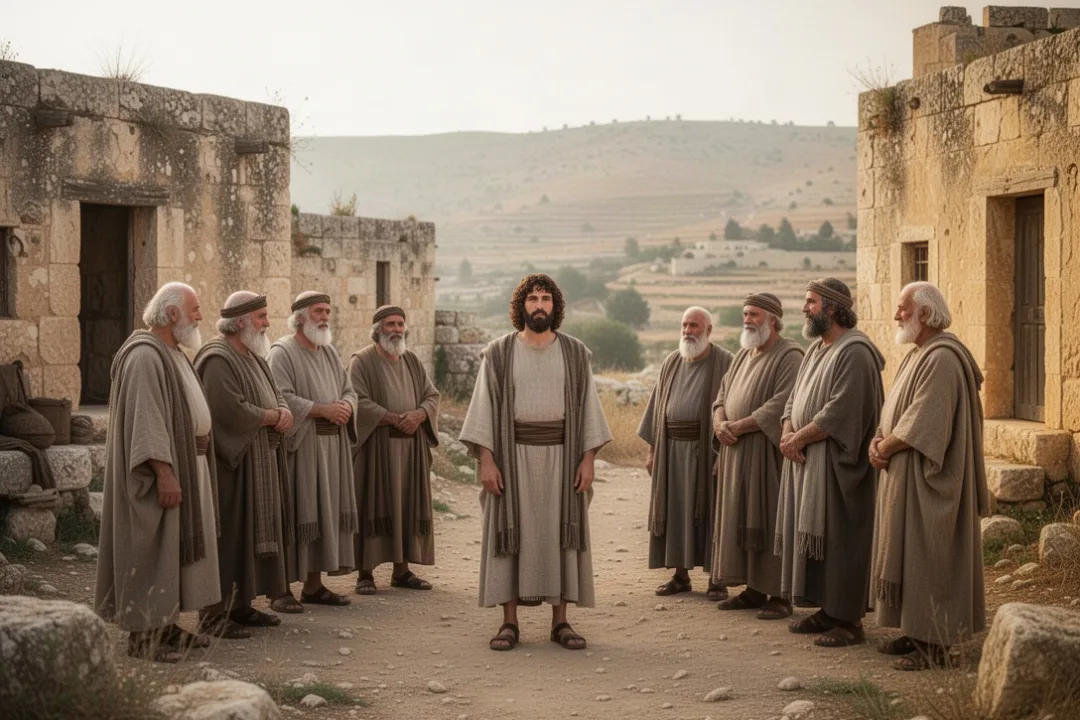
After Ish-bosheth’s death, the elders of all the tribes came to David at Hebron. They recognized that David belonged to their own people, had led Israel’s armies successfully, and had been chosen by God to shepherd the nation. They made a covenant with him, and David was anointed king over Israel (2 Samuel 5).
This was David’s third recorded anointing. He had first been anointed privately by Samuel, then publicly by Judah at Hebron, and finally by the representatives of all Israel. The repeated anointings show the difference between divine designation and public political recognition.
David was about thirty years old when he began to reign, according to 2 Samuel 5. He ruled Judah from Hebron for seven and a half years, then ruled the united kingdom from Jerusalem for thirty-three years. The account gives him a total reign of forty years, though the exact chronology of the surrounding events is interpreted within the biblical narrative.
His accession over all Israel was therefore not one sudden event. It was a gradual process that moved through private anointing, service under Saul, life as a fugitive, kingship over Judah, and finally national recognition.
Why David captured Jerusalem as his capital
After the tribes recognized David, he attacked the Jebusite stronghold of Jerusalem and captured it. The city was strategically important because it sat between the northern and southern tribal territories. It was not identified exclusively with either Judah or the northern tribes, making it a useful capital for a newly united kingdom.
David called the city the City of David and established his royal center there. Moving the capital from Hebron to Jerusalem strengthened the unity of the kingdom and gave David a location that was less tied to one tribe’s local identity.
Jerusalem also became central to Israel’s worship when David brought the ark of the covenant into the city. The first attempt ended badly when Uzzah died after touching the ark, according to 2 Samuel 6. David later brought it to Jerusalem with careful preparation and celebration.
The ark’s arrival connected David’s political capital with Israel’s religious life. David wanted Jerusalem to be more than a military headquarters; he wanted it to represent the presence of God among the people. His son Solomon would later build the temple there.
What David had to do after becoming king
Receiving the crown did not end David’s difficulties. He still had to defend the kingdom against surrounding enemies, build a stable administration, and manage relationships among the tribes. He fought the Philistines and other neighboring peoples, extending Israel’s influence and securing its borders.
David also organized military leaders, officials, priests, and administrators. The biblical books describe a kingdom becoming more centralized under his rule. His reign brought greater political unity than the divided years immediately after Saul’s death.
At the same time, David’s kingship included serious failures. He committed adultery with Bathsheba and arranged for her husband, Uriah, to die in battle (2 Samuel 11). The prophet Nathan confronted him, and David confessed his wrongdoing. The consequences affected his family and kingdom, including later conflict involving his sons.
These events matter because becoming king did not make David morally flawless. The biblical account presents him as a chosen and gifted ruler who could also abuse power. His success at gaining the throne should not be confused with approval of every decision he made afterward.
How the Bible explains David’s path to the throne
The biblical account presents several explanations for David’s rise. First, David was chosen and anointed by God through Samuel. Second, he demonstrated courage and leadership in public life. Third, he endured persecution without killing Saul or manipulating events to seize the crown.
Fourth, David built support among Judah and later among all the tribes. Finally, he established Jerusalem as a political and religious center. These elements work together rather than replacing one another.
David’s story also emphasizes timing. He had the promise of kingship before he had the authority of kingship. The years between those two points were filled with uncertainty, danger, and decisions that shaped his character and reputation.
David was a shepherd when Samuel anointed him, a fugitive while Saul lived, king of Judah after Saul’s death, and king of all Israel only after the tribes gathered at Hebron.
Common mistakes when explaining how David became king
Do not say David replaced Saul immediately. Saul remained king for years after David’s anointing, and David continued serving him before fleeing.
Do not describe David as king over all Israel right after defeating Goliath. The victory made him famous, but national kingship came much later.
Do not skip David’s reign in Hebron. He first ruled Judah for seven and a half years before the northern tribes accepted him.
Do not treat David’s anointing and coronation as the same event. Samuel’s anointing identified David as the future king; the later public anointings established his political rule.
Do not claim David killed Saul. Saul died in battle against the Philistines, and David punished a man who claimed to have killed him.
Do not portray the transition as completely peaceful. David’s rise involved civil conflict, Abner’s death, Ish-bosheth’s assassination, and disputes between rival factions.
Do not ignore David’s own wrongdoing. The biblical narrative praises his dependence on God while also describing his abuse of royal power and its consequences.
A simple timeline of David’s rise
Samuel anoints David: David is chosen from Jesse’s sons while Saul is still king (1 Samuel 16).
David serves in Saul’s court: He plays music for Saul and becomes part of the royal household.
David defeats Goliath: His victory over the Philistine champion makes him a national hero (1 Samuel 17).
Saul persecutes David: Jealousy leads Saul to pursue David, who survives as a fugitive.
David spares Saul: David refuses opportunities to assassinate Saul and seize the throne by force.
Saul and Jonathan die: The Philistines defeat Israel at Mount Gilboa, creating a succession crisis.
Judah anoints David: David becomes king over Judah and establishes his court at Hebron (2 Samuel 2).
The kingdom remains divided: Ish-bosheth rules the northern tribes with Abner’s support.
The tribes anoint David: After Ish-bosheth’s death, Israel’s elders recognize David as king over the whole nation (2 Samuel 5).
David captures Jerusalem: He makes it the capital of the united kingdom and brings the ark there.
What David’s succession teaches about biblical kingship
David’s succession shows that biblical kingship involved more than possessing military power. A claimant needed legitimacy, loyalty, public recognition, and the ability to unite a divided people. David’s anointing gave his rise a theological meaning, while his years of service and leadership gave him practical credibility.
The story also distinguishes waiting from passivity. David did not sit still while waiting for the throne. He served Saul, defended Israel, protected his followers, negotiated with local leaders, and made difficult choices while living under threat.
At the same time, the account does not suggest that every event occurred without human conflict. David’s rise included political maneuvering, military struggle, assassination, and grief. The biblical narrative keeps divine purpose and human responsibility together rather than presenting kingship as a simple reward for being talented.
For readers studying the Old Testament, the most accurate answer is therefore layered: David became king because he was chosen and anointed by God, because he developed into a respected leader, because he survived Saul’s opposition, and because Judah and then all Israel accepted him as their ruler.
Where to read the account of David becoming king
The main passages are found in 1 Samuel 16 through 31 and 2 Samuel 1 through 5. First Samuel 16 describes the anointing, chapter 17 tells of Goliath, and chapters 18 through 26 cover David’s growing conflict with Saul.
Second Samuel 1 records David’s response to Saul’s death. Chapter 2 describes his anointing as king over Judah, while chapters 3 and 4 explain the weakening of Saul’s house. Chapter 5 records the elders’ recognition of David as king over all Israel and his capture of Jerusalem.
Reading these chapters in sequence makes the gradual nature of David’s rise clear. The story is not simply about a shepherd becoming a hero; it is about a future king learning to lead while living through danger, divided loyalties, and the consequences of power.
Frequently asked questions
Was David king before Saul died?
David had been anointed as Saul’s future successor, but he was not ruling Israel while Saul lived. He became king over Judah only after Saul’s death. The northern tribes initially followed Ish-bosheth, Saul’s son, so David’s rule over the entire nation came later, after the elders of Israel gathered at Hebron.
How many times was David anointed as king?
The biblical narrative records three important anointings. Samuel first anointed David privately as Saul’s future successor. After Saul died, Judah anointed David king at Hebron. Later, representatives of all Israel anointed him over the united kingdom. These events mark separate stages of his rise.
Did David kill Saul to take the throne?
No. Saul died during a battle with the Philistines at Mount Gilboa. David had opportunities to kill Saul but refused to do so. When a man later claimed responsibility for Saul’s death, David ordered him punished. David’s response showed that he did not regard assassination as a legitimate way to claim the kingdom.
Why did David make Jerusalem his capital?
Jerusalem was a strategically located city between the major tribal regions and was not identified exclusively with one tribe. Capturing it gave David a neutral-looking political center for the united kingdom. He also brought the ark there, making Jerusalem an important religious center as well as the seat of government.










Leave a Reply