Shekel of Tyre: Meaning, Weight, and Biblical Context
Shekel of Tyre: Meaning, Weight, and Biblical Context
A shekel of Tyre was a silver coin minted in the Phoenician city of Tyre and widely used in the eastern Mediterranean during the late Second Temple period. It weighed about 14 grams and was valued for its consistently high silver content.
In Jewish history, the coin is best known for paying the annual Temple tax in Jerusalem. Although its design showed the pagan god Melqart and a Roman-era eagle, its reliable weight and purity made it acceptable for sacred payments. The term can describe both the actual coin and, more loosely, the monetary standard used for the Temple contribution.
The shekel of Tyre was a silver tetradrachm, meaning it was worth four drachmas within the Greek-influenced monetary system of the region. Its name does not mean that every coin was struck during a single period or at exactly the same weight. Rather, it refers to a recognizable series of silver coins associated with Tyre and its mint.
Most examples weigh approximately 13.5 to 14.5 grams, although surviving coins vary because of minting tolerances, wear, clipping, corrosion, and later damage. The coin’s silver purity was unusually dependable compared with many other circulating coins. That consistency helped it function as a trusted unit for payments that required a specific amount of precious metal.
Tyre was a major commercial city on the eastern Mediterranean coast. Its merchants, shipping connections, and regional influence helped its coinage circulate far beyond the city itself. By the late Second Temple period, shekels of Tyre could be found in Judea, Galilee, Phoenicia, and other parts of the eastern Mediterranean.
The word shekel originally referred to a unit of weight, not necessarily to a coin. In the Hebrew Bible, shekels are often used to measure silver, gold, or other valuable goods. Over time, the word also became associated with coins whose value was based on a standard weight of precious metal.
Essential distinction: a biblical shekel could mean a weight, while a shekel of Tyre usually means a particular high-purity silver coin. The two ideas are related, but they are not automatically identical.
The coin’s importance came from the combination of weight, silver content, and public trust. Ancient users did not have modern banking records or standardized paper currency. A coin that repeatedly met an expected standard was easier to accept in trade, taxation, and religious contributions.
How much a shekel of Tyre weighed
A shekel of Tyre generally weighed around 14 grams of silver, or slightly less than half a modern troy ounce. A troy ounce contains about 31.1 grams, so two Tyrian shekels would contain somewhat less than one troy ounce before accounting for wear or variations in the original minting.
Ancient weight systems were not perfectly uniform. Different cities and periods used standards that could differ by small amounts, and individual coins were not all identical. As a result, it is more accurate to say that a Tyrian shekel normally fell near the 14-gram range than to assign one exact weight to every specimen.
The half-shekel used for the Temple tax was approximately half the weight of a full Tyrian shekel. In practice, people could pay with a half-shekel coin, two smaller pieces, or another accepted combination of coins. The money changers mentioned in the New Testament helped people exchange local or foreign currency into an amount suitable for the required contribution.
Several related denominations help explain ancient references to this coin:
One shekel: approximately 14 grams of silver in the Tyrian standard.
Half-shekel: approximately 7 grams, associated with the annual Temple contribution.
Tetradrachm: a four-drachma coin, the denomination commonly used for the Tyrian shekel.
Stater: a term that could refer to a larger silver coin and, in some New Testament contexts, a coin worth two drachmas or two half-shekels.
These relationships should be treated as practical approximations rather than a modern decimal conversion. Ancient monetary systems were based on weights and local standards, and the same denomination name could be used differently in different places.
The Tyrian shekel was also valuable because it contained a high proportion of silver. The exact fineness of individual issues can vary, but the series is often described as having roughly 94 percent silver. That purity was a major reason the coin remained desirable even when its imagery raised religious or political objections.
What the coin looks like and what its images mean
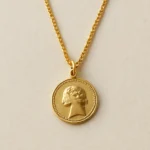
A typical shekel of Tyre has the head of Melqart on the obverse. Melqart was the chief god of Tyre and was associated with the city’s royal and civic identity. On the reverse, the coin usually shows an eagle standing on the prow of a ship, along with inscriptions and symbols connected to the issuing authority.
For Jewish users, the imagery presented an obvious tension. The coin was used to support the Jerusalem Temple, yet it displayed the image of a deity worshiped outside Jewish tradition. The concern was not simply aesthetic. Jewish law strongly rejected idolatrous images, and the Temple itself was dedicated to worship of the God of Israel.
Despite that problem, the coin remained widely accepted for the Temple tax. Its consistent silver content appears to have outweighed objections to the design in the practical administration of the payment. The exchange system also allowed people to convert other coins into the accepted amount.
The inscriptions on surviving examples can vary by issue. They commonly identify the coin with Tyre and include a date based on the city’s local era. Some examples also carry letters, monograms, or other marks connected with the minting process. These small differences help specialists identify when and where particular coins were produced.
Common visual features include:
A laureate male head representing Melqart on the front.
An eagle on the reverse, often shown standing on a ship’s prow.
Greek inscriptions referring to Tyre and the authority responsible for the coin.
Control marks, dates, or symbols that distinguish one issue from another.
A relatively broad, substantial silver flan compared with many smaller ancient coins.
Wear can make the design difficult to read. Melqart’s head may appear as a worn profile, and the eagle may be reduced to a few raised lines. A coin with sharp details is not automatically ancient or genuine, however. Modern reproductions can imitate the strongest visible features, which is why weight, diameter, metal composition, style, and provenance all matter.
When the shekels of Tyre were minted
The familiar Tyrian shekel series began in the late second century BCE and continued into the first century CE. Numismatists generally place the beginning of the series around 126 or 125 BCE, although precise dating and classification can depend on the issue being discussed.
Tyre eventually came under Roman control, but the city retained permission to produce its own silver coinage for a time. The coins therefore belong to a period of political change: they were made in a city with a long Phoenician identity while circulating under the growing power of Rome.
Production continued into the era when the Second Temple still stood in Jerusalem. Many surviving specimens were struck during the decades immediately before the Roman destruction of the Temple in 70 CE. The exact end of the series is discussed by specialists, but it is generally placed around the middle of the first century CE, often near 65 or 66 CE.
That dating makes the coin especially relevant to the New Testament period. It was not an ancient relic from a distant, unrelated age. People in Judea and Galilee could have encountered these coins in ordinary commercial transactions and in religious payments.
The continued use of Tyrian silver shows that political control and monetary practice did not always change at the same speed. A coin could carry older local imagery while serving practical needs under a newer imperial administration. In this case, the coin’s trusted metal standard helped preserve its use even as Tyre’s political circumstances shifted.
Researchers identify different groups of Tyrian shekels by studying their style, inscriptions, dates, weight patterns, and production characteristics. This work can help distinguish earlier and later issues, identify unusual varieties, and determine whether a coin belongs to the historical series at all.
Historical caution: dates printed in ancient Greek or Phoenician-influenced coin inscriptions may belong to Tyre’s local dating system. They should not be read automatically as modern BCE or CE dates.
How the shekel of Tyre connects to the Temple tax
The connection between this coin and the Jerusalem Temple comes from the half-shekel contribution described in Jewish law and practice. Exodus 30:11–16 establishes a half-shekel payment associated with the community and the sanctuary. Later Jewish tradition connected this contribution with the ongoing support of the Temple and its services.
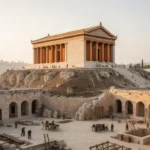
By the late Second Temple period, Jewish communities inside and outside Judea sent money to Jerusalem. The annual contribution helped fund sacrifices, maintenance, and other Temple expenses. Because the payment had to follow a recognized standard, people needed access to coins that matched the expected weight and silver quality.
The shekel of Tyre became the practical choice for this purpose. A person who possessed another kind of currency could take it to a money changer and exchange it for a half-shekel or an equivalent amount. The money changers were therefore part of the financial system surrounding the Temple, not simply random merchants operating near it.
The Gospels mention money changers in the Temple precincts. In Matthew 21:12–13, Mark 11:15–17, Luke 19:45–46, and John 2:13–16, Jesus drives out or confronts money changers and sellers. The accounts emphasize the religious meaning of the Temple and criticize the misuse of a place intended for prayer. They do not provide a complete technical description of every exchange rate or coin involved.
Matthew 17:24–27 describes a discussion about the Temple tax. Jesus instructs Peter to find a coin in a fish’s mouth, commonly translated as a stater. The passage indicates that the coin would cover the tax for two people. Because a stater could correspond to two half-shekels in the relevant monetary system, interpreters often connect this episode with the payment standard associated with Tyrian silver.
That connection is plausible, but the passage itself does not name the coin as a shekel of Tyre. Ancient terms could be used with some flexibility, and translations may choose different English equivalents. The safest statement is that the story concerns a coin worth the amount needed for two Temple-tax payments.
The Temple-tax system explains why a coin bearing a pagan image could circulate in a Jewish religious setting. Its use was driven by monetary reliability and institutional practice. The coin’s religious imagery remained a genuine point of tension, but its accepted value made it useful for a required contribution.
Did Judas receive shekels of Tyre for betraying Jesus?
The Gospel of Matthew says that Judas was paid thirty pieces of silver for betraying Jesus, as described in Matthew 26:14–16. The text does not identify the denomination or mint of those pieces. For that reason, it is not historically certain that the payment consisted of Tyrian shekels.
Some writers connect the thirty pieces with the shekel of Tyre because those coins were prominent silver currency in Judea during the first century. They also fit the general idea of a valuable silver payment. Other interpretations propose different denominations or understand the phrase more broadly as a reference to silver coins rather than a precisely specified type.
The Book of Zechariah, especially the passage in Zechariah 11:12–13, describes thirty pieces of silver in a symbolic context. Matthew presents Judas’s payment as fulfilling or echoing Scripture, so the number has theological and literary significance as well as a possible monetary meaning.
A careful explanation should therefore avoid saying that archaeologists have identified the exact coins Judas received. No surviving hoard can be securely labeled as that payment. The strongest historical claim is that Tyrian shekels were available in the region and could have been among the silver coins in circulation, but the Gospel does not provide enough information to prove their use in this event.
How to identify and value an authentic shekel of Tyre
A genuine shekel of Tyre should be assessed as an ancient coin, not just as a lump of silver. Its market value depends on factors such as authenticity, date, condition, style, rarity, provenance, and the strength of the portrait and eagle. Two coins with similar weight can have very different values if one has clearer details or a better documented history.
The first checks are basic but useful:
Weight: compare the coin with the expected range, allowing for wear and damage.
Diameter and thickness: examine whether the proportions fit known examples.
Design style: compare the portrait, eagle, inscriptions, and symbols with authenticated coins.
Metal and surface: look for characteristics consistent with ancient silver rather than modern casting or plating.
Edge: inspect for casting seams, filing, unusual holes, or signs of alteration.
Provenance: seek a documented ownership or sales history when possible.
Weight alone cannot establish authenticity. A counterfeit can be made to the correct weight, while a genuine ancient coin may fall outside the expected range because of clipping, corrosion, or ancient damage. Professional examination may involve magnification, die comparison, surface study, and metal analysis.
Modern replicas are widely available for educational, decorative, and religious purposes. A replica may be perfectly legitimate as a reproduction, but it should never be represented as an ancient coin without clear labeling. Be especially cautious when a seller offers an unusually cheap example described as a rare biblical coin.
Silver value provides only a rough lower reference for an authentic coin. The amount of recoverable metal is usually less important than the coin’s numismatic value. Cleaning, polishing, mounting in jewelry, harsh scratches, and artificial toning can reduce collector interest even when the coin remains genuine.
If you own a possible shekel of Tyre, avoid cleaning it with chemicals, abrasive cloths, or household silver polish. Cleaning can remove the original surface and damage details that help establish authenticity. Photograph both sides and the edge, record the weight and diameter with suitable tools, and consult a reputable ancient-coin specialist or established auction house before selling it.
Why the shekel of Tyre still attracts attention
The shekel of Tyre brings together several subjects that are often studied separately: ancient economics, Jewish religious practice, Phoenician identity, Roman administration, and New Testament history. Its value as evidence comes from that combination. A single coin can show how trade, politics, religious obligations, and local traditions interacted.
It also demonstrates why ancient money cannot be understood only by converting it into modern dollars. A coin’s significance depended on what it could purchase, which authorities accepted it, how much silver it contained, and what institutions required it. The Temple tax gave the Tyrian shekel a role that was larger than its face value.
The coin’s imagery makes the story especially revealing. A Jewish religious payment was commonly made with silver carrying a foreign god’s portrait, yet the same silver was trusted because its weight and purity were dependable. That tension illustrates the practical compromises that appear in many ancient monetary systems.
For readers studying the Bible, the most accurate approach is to keep three ideas separate:
The shekel as a biblical weight: a unit used to measure precious materials.
The shekel of Tyre as a coin: a specific silver tetradrachm associated with Tyre.
The Temple tax as a religious obligation: a payment that used an accepted monetary standard in the late Second Temple period.
Once those distinctions are clear, references to money in the Gospels and other ancient sources become easier to interpret. The shekel of Tyre was not merely a coin found in an archaeological case. It was a practical tool of commerce and worship, circulating through a region where local traditions and imperial power constantly overlapped.
Frequently asked questions
Was a shekel of Tyre made of pure silver?
No ancient coin should automatically be described as completely pure silver. Tyrian shekels were valued because they usually contained a very high proportion of silver, commonly estimated at about 94 percent. The exact composition could vary between issues and individual coins, so “high-purity silver” is more accurate than “pure silver.”
Is a shekel of Tyre the same as a modern Israeli shekel?
No. The ancient Tyrian shekel was a silver coin used during the late Second Temple period. The modern Israeli shekel is a contemporary national currency with a different history, monetary system, denomination structure, and physical composition. They share a name derived from an ancient weight term, but they are not the same currency.
How can I tell whether my coin is a real shekel of Tyre?
Start by recording its weight, diameter, thickness, and edge appearance, then compare its portrait, eagle, inscriptions, and style with authenticated examples. These checks cannot prove authenticity by themselves. A qualified ancient-coin dealer, numismatist, or auction house should examine the coin, especially if it may be valuable.
Why did Jews use a coin with a pagan image for the Temple tax?
The Tyrian shekel was accepted because its weight and silver content were considered dependable for the required contribution. Its imagery still created a religious tension, but the monetary standard was practical and widely recognized. Money changers helped convert other currencies into the amount needed for the Temple payment.







Leave a Reply