Mount of Calvary: Meaning, location, and significance
Mount of Calvary: Meaning, location, and significance
Mount of Calvary is the traditional name for the place where Jesus was crucified in Jerusalem. The New Testament calls it Golgotha, a name associated with a skull, while “Calvary” comes from the Latin word for skull.
Although Christians commonly speak of a “mount,” Calvary was probably a rocky elevation or exposed rise near Jerusalem rather than a large mountain. Its importance comes from the event connected with it: Jesus’ crucifixion, described in all four Gospels and understood by Christians as central to salvation.
The word Calvary appears mainly in Christian tradition and in translations influenced by the Latin Bible. The Gospel writers use the name Golgotha, explaining it as “Place of the Skull” or a similar expression. Because Bible translations differ in how they render the term, you may see Golgotha, Calvary, or both names referring to the same place.
Matthew 27, Mark 15, Luke 23, and John 19 all place Jesus’ crucifixion at Golgotha. The accounts describe a location outside Jerusalem, where Jesus was executed alongside other condemned men. Each Gospel emphasizes different details, but together they establish the site as a public place connected with Roman crucifixion.
The name may have described the physical appearance of the location, a traditional association with death, or a local place-name whose original meaning is uncertain. Scripture does not give enough information to determine exactly why the site was called the Place of the Skull.
Key distinction: Calvary is not the name of a separate event from Golgotha. Calvary is the Latin-derived name commonly used for Golgotha, the traditional site of Jesus’ crucifixion.
Why the crucifixion site was outside Jerusalem
The Gospel accounts place Golgotha outside the city, close enough for people passing by to see the executions. This setting fits the Roman practice of carrying out crucifixions in visible locations, where the punishment could serve as a warning to the public.
Hebrews 13:12 connects Jesus’ suffering outside the city gate with the pattern of sacrifice and exclusion found in the Old Testament. The passage does not provide a modern map reference, but it gives the location theological meaning: Jesus suffered beyond the recognized center of the city and its religious life.
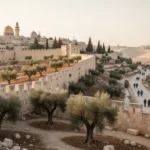
Jerusalem’s boundaries changed over time, making the phrase “outside the city” difficult to use as a simple location marker. A site that lay outside the walls in the first century could later be enclosed by expanding city defenses. This is one reason the modern location of Calvary must be considered alongside Jerusalem’s ancient history.
Where Mount of Calvary may have been located
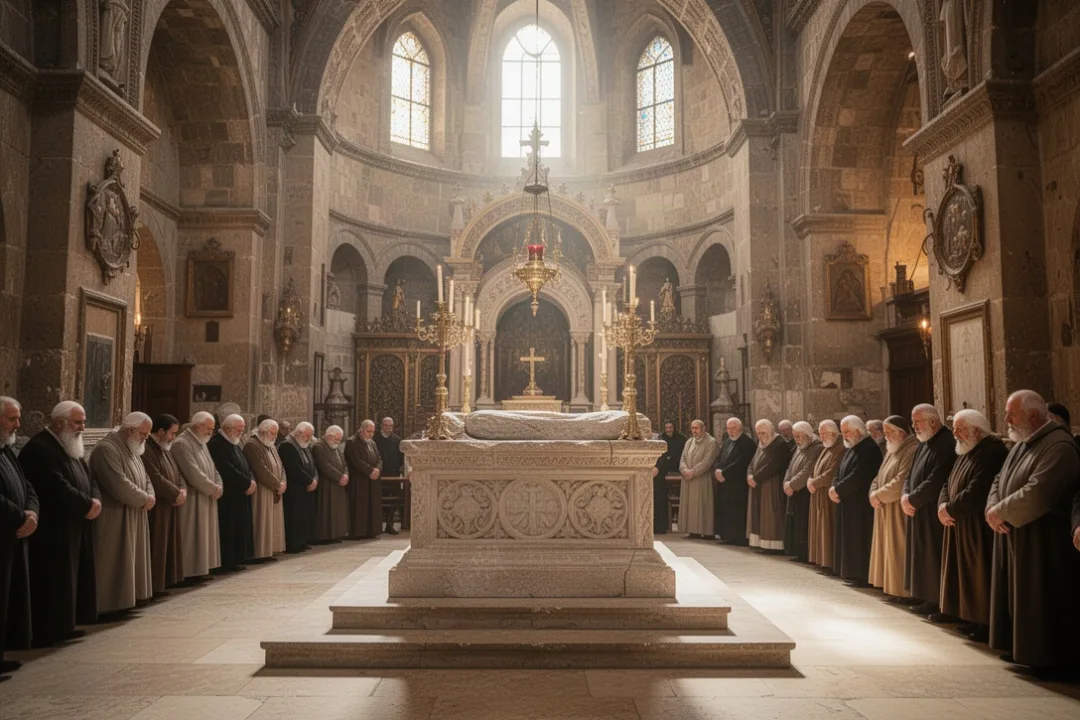
Christian tradition identifies Calvary with a site now enclosed within the Church of the Holy Sepulchre in Jerusalem’s Old City. The church contains a raised rock associated with the crucifixion and a nearby area traditionally linked with Jesus’ burial. For many centuries, pilgrims have come there to pray, worship, and remember the Passion.
The traditional location was not always accepted by every Christian group. Some Protestants and other visitors have favored the Garden Tomb, a rock-cut tomb north of the Old City near a rocky escarpment that resembles a skull. The Garden Tomb offers a quiet setting for prayer and reflection, but many archaeologists and historians do not regard it as the most likely location of Jesus’ burial.
The central difficulty is that the exact position of Jerusalem’s walls in the first century remains part of the debate. The Church of the Holy Sepulchre is inside today’s Old City, but historical and archaeological evidence suggests that the area may have been outside the city walls at the time of Jesus’ crucifixion. That possibility supports the traditional identification.
The Holy Sepulchre tradition also has greater historical continuity than the Garden Tomb tradition. The site was identified as Calvary and the tomb associated with Jesus during the early Christian period, although Jerusalem experienced destruction, rebuilding, and changes in religious control. The tradition cannot provide absolute proof, but it is grounded in a long-standing memory of the location.
What the Church of the Holy Sepulchre contains
The Church of the Holy Sepulchre is a large, complex building shared by several Christian communities. Within it, visitors encounter places traditionally associated with Jesus’ crucifixion, the removal of his body from the cross, and his burial and resurrection.
A staircase leads to the upper area traditionally identified as Calvary. One section is associated with the place where the cross stood, while another is linked with the location where Jesus’ body was prepared. Beneath parts of the church, the visible rock can be seen through openings and glass, reminding visitors that the current building surrounds an ancient landscape.
The church is not arranged like a modern museum with a single, clearly marked exhibit. Chapels, shrines, processional routes, and devotional practices reflect centuries of Christian use. Different communities maintain different areas, and worship services follow traditions that may be unfamiliar to visitors from another denomination.
For Christians, the setting is not valuable because the stone itself has magical power. Its significance comes from the event it commemorates. The site functions as a place of memory, prayer, and worship centered on the death and resurrection of Jesus.
How the Gospels describe Jesus at Calvary
The four Gospels present the crucifixion with overlapping details and distinct emphases. Jesus is taken to Golgotha, crucified, and placed in a tomb. The accounts also mention darkness, public mockery, the presence of women disciples, and the later discovery that the tomb was empty.
Matthew 27 and Mark 15 highlight the humiliation Jesus endured and the reaction of those watching. Luke 23 emphasizes Jesus’ mercy, innocence, and willingness to forgive. John 19 presents the crucifixion as the completion of Jesus’ mission and includes details about his mother, the beloved disciple, and the handling of his body after death.
Because Bible translations use different wording, it is better to refer to the passages than to depend on a single English phrasing. The main point shared by the accounts is clear: Jesus was crucified at a place called Golgotha, and his death was followed by burial and resurrection claims central to Christian faith.
“They crucified him” is the brief, repeated reality at the center of the Gospel accounts of Calvary.
Christians interpret this death in several connected ways. Jesus’ crucifixion is understood as an act of self-giving love, the fulfillment of Scripture, the bearing of sin, and the decisive work through which God reconciles people to himself. Different churches explain the relationship among these ideas in different theological language, but Calvary remains central across historic Christian traditions.
Why Calvary matters in Christian theology
Calvary is inseparable from the Christian understanding of atonement. The word describes how Jesus’ death addresses human sin and restores the relationship between God and humanity. Christian traditions do not all use one identical model, but they generally agree that the cross is not merely an example of courage or an unfortunate political execution.
The cross also demonstrates the depth of Jesus’ identification with human suffering. Christians see in Calvary the suffering of an innocent person under unjust power, while also confessing that Jesus’ death has a saving purpose. This combination gives the cross both moral and spiritual significance.
In Christian worship, the cross is often connected with humility, repentance, forgiveness, and hope. Good Friday focuses especially on Jesus’ passion and death, while Easter proclaims that death did not have the final word. Calvary therefore cannot be separated from the resurrection; Christian faith treats these events as closely related rather than as isolated episodes.
The cross has also shaped Christian art, architecture, music, preaching, and personal prayer. Images of Calvary may show the cross on a hill, the crowd gathered below, or the empty tomb nearby. These images are devotional interpretations rather than detailed maps of the original site.
How the name Calvary developed in Christian language
“Calvary” comes through Latin calvaria, meaning skull or skull-like place. The Latin term influenced English Christian vocabulary, especially through older Bible translations and traditional hymns. “Golgotha” comes from the Semitic term used in the Gospel tradition and is closer to the name preserved in the New Testament accounts.
Both terms became familiar in Christian speech, but their use varies by denomination, country, and translation. Some churches refer almost exclusively to Golgotha, while others commonly speak of Mount Calvary or simply Calvary. The difference is linguistic, not a claim that two separate crucifixion sites existed.
The phrase Mount Calvary can also be used symbolically. A church may build a hill or outdoor station representing the Passion, and Christians may describe personal suffering as a “Calvary” in a devotional sense. That figurative use should not be confused with the historical place in Jerusalem.
Calvary and the ancient practice of crucifixion
Roman crucifixion was a public form of execution intended to cause intense suffering and shame. It was commonly used against people whom Roman authorities considered threats, rebels, or serious criminals, particularly those without the social status that might protect them from the punishment.
The Gospel accounts mention the sign placed above Jesus, identifying the charge associated with his execution. John 19 gives special attention to the wording of that sign and to the dispute over how it should be written. The accounts also describe soldiers, bystanders, and the two other men crucified near Jesus.
Archaeological discoveries have confirmed that crucifixion was practiced in the Roman period, although the evidence does not recreate every detail of Jesus’ execution. The Gospel descriptions should be read with care rather than supplemented by unsupported claims about the exact method, shape of the cross, or physical landscape.
Calvary’s meaning is not reduced to the mechanics of crucifixion. The brutality of the execution explains the seriousness of the event, while the Christian message interprets that suffering through Jesus’ identity, mission, death, and resurrection.
What visitors should know before visiting Calvary
Visitors who want to see the traditional site should plan for a religious building that is active, crowded, and shared by multiple communities. The experience may involve waiting, standing in line, observing worship, and adapting to the customs of the church rather than moving through a quiet historical attraction.
Dress modestly: Shoulders and knees may need to be covered, especially when entering sacred areas.
Expect security and crowds: Access conditions can change, and popular prayer sites may have long lines.
Silence your phone: Services and private prayers may take place close to the visitor route.
Follow local instructions: Staff and clergy may direct visitors around active ceremonies or restricted areas.
Allow time for reflection: The church contains several significant locations, not only the traditional Calvary shrine.
Check current access information: Opening hours, religious observances, and local conditions can change.
The Garden Tomb is also visited by Christians who prefer an outdoor setting for prayer and worship. It is separate from the Church of the Holy Sepulchre and should be presented as an alternative devotional location, not automatically as the proven site of Jesus’ crucifixion or burial.
Respect matters: Calvary is a place of active worship. Photography, group conversations, and sightseeing should never interrupt prayer, processions, or the observance of other visitors.
Common mistakes when explaining Mount of Calvary
Simple explanations can accidentally create confusion about geography, history, or Christian belief. These are the mistakes most likely to mislead readers:
Calling Calvary a large mountain: The word “mount” reflects traditional religious language; the original site was likely a modest rocky elevation.
Treating Golgotha and Calvary as separate places: They are different language forms for the traditional crucifixion site.
Claiming the exact location is proven: The Church of the Holy Sepulchre is the leading traditional site, but absolute certainty is not possible.
Assuming the Garden Tomb is universally accepted: It is meaningful to many visitors, but its identification is disputed.
Separating the cross from the resurrection: Christian theology understands Calvary in light of the resurrection, not as the final event in the story.
Using one Gospel detail as the complete account: Matthew, Mark, Luke, and John present complementary accounts with different emphases.
Inventing details about the name “Place of the Skull”: The Bible does not explain with certainty whether the name referred to the terrain, a local tradition, or something else.
How different Christian traditions approach Calvary
Roman Catholic, Eastern Orthodox, Anglican, and many other Christian traditions honor the Church of the Holy Sepulchre as the principal traditional location of Calvary. Their liturgies and devotional practices differ, but all connect the site with Jesus’ Passion and death.
Many Protestants accept the historic importance of Jerusalem’s traditional sites while placing less emphasis on physical shrines. Some prefer the Garden Tomb for worship because its open-air setting makes the resurrection message especially vivid. Others do not insist on identifying a precise location, arguing that the biblical event matters more than the surviving landmark.
These approaches need not be treated as a choice between faith and history. A visitor may value the ancient tradition of the Holy Sepulchre while acknowledging uncertainty about every detail. Another visitor may pray at the Garden Tomb while recognizing that its archaeological identification remains debated.
The shared Christian focus is Jesus’ death and resurrection. The physical site supports memory and devotion, but Christian faith does not depend on proving that a particular stone or chapel marks the exact point of the cross.
How to study Calvary through Scripture and history
A careful study begins with the four crucifixion accounts: Matthew 27, Mark 15, Luke 23, and John 19. Read each account in its own setting, then compare the details that appear in more than one Gospel. Acts and the letters of the New Testament also show how the earliest Christians understood Jesus’ death and resurrection.
Next, distinguish three kinds of information: biblical statements, later Christian traditions, and modern historical or archaeological proposals. The Bible identifies Golgotha and describes the crucifixion. Later tradition connects that event with particular locations in Jerusalem. Archaeology can test whether a proposed location fits the city’s ancient geography, but it cannot prove every theological claim.
When studying images or pilgrimage descriptions, ask whether they are historical reconstructions, devotional art, or eyewitness observations. Many familiar pictures of Calvary combine Gospel details with later artistic conventions. They can communicate religious meaning without serving as precise records of the original landscape.
A balanced approach allows room for conviction and uncertainty. You can recognize the strong and ancient tradition surrounding the Church of the Holy Sepulchre while avoiding claims that go beyond the evidence.
Questions Calvary raises for personal reflection
For Christians, Calvary invites reflection on the cost of forgiveness and the character of sacrificial love. The cross raises questions about guilt, injustice, suffering, mercy, and the possibility of reconciliation with God. These questions are not limited to travelers who can visit Jerusalem; they are part of Christian prayer and worship everywhere.
Some people approach Calvary through the Stations of the Cross, a series of meditations on Jesus’ path to crucifixion. Others read the Passion narratives during Holy Week, pray before a cross, or consider how the cross changes their treatment of people who suffer. These practices differ, but each treats Calvary as more than a location on a map.
The historical setting remains significant: a rocky place outside ancient Jerusalem, a Roman execution, and a burial nearby. The spiritual meaning extends beyond that setting. For Christianity, Calvary is where the public shame of crucifixion is interpreted as the place of Jesus’ self-giving, and where the darkness of death is held together with the promise of resurrection.
Frequently asked questions
Is Mount Calvary the same as Golgotha?
Yes. Golgotha is the name used in the New Testament tradition, while Calvary comes from the Latin word associated with a skull. “Mount Calvary” is a traditional Christian expression for the place of Jesus’ crucifixion. The names do not refer to two different locations.
Can tourists visit the actual Mount of Calvary?
Visitors can enter the Church of the Holy Sepulchre in Jerusalem, which contains the traditional site of Calvary. However, no location can be proven with complete certainty. The Garden Tomb is another place visited for prayer and reflection, but its identification with Jesus’ crucifixion and burial remains disputed.
Why is Calvary called the Place of the Skull?
The Gospels associate Golgotha with a skull, but they do not explain precisely why the location had that name. It may have referred to the shape of the terrain, a local place-name, or a tradition connected with death. Claims that identify one definite reason go beyond what the biblical text establishes.
Why does Calvary matter if the exact location is uncertain?
Christian belief centers on Jesus’ crucifixion and resurrection, not on proving the identity of a particular stone or hillside. A traditional site can help people remember and pray, but uncertainty about the exact location does not remove the theological importance Christians attach to the cross.




Leave a Reply