Haman was a high-ranking official in the Persian Empire and the main antagonist in the Book of Esther. He served under King Ahasuerus and became enraged when the Jewish man Mordecai would not bow or show him honor. Haman then planned to destroy all the Jews in the empire, but his scheme collapsed, and he was executed on the gallows he had prepared for Mordecai.
His story appears mainly in Esther chapters 3 through 9. The narrative presents Haman as proud, manipulative, and willing to use government power for personal revenge. It also shows a dramatic reversal: the man Haman intended to humiliate is honored, while Haman receives the punishment he designed for someone else.
Haman’s identity and position in the Book of Esther
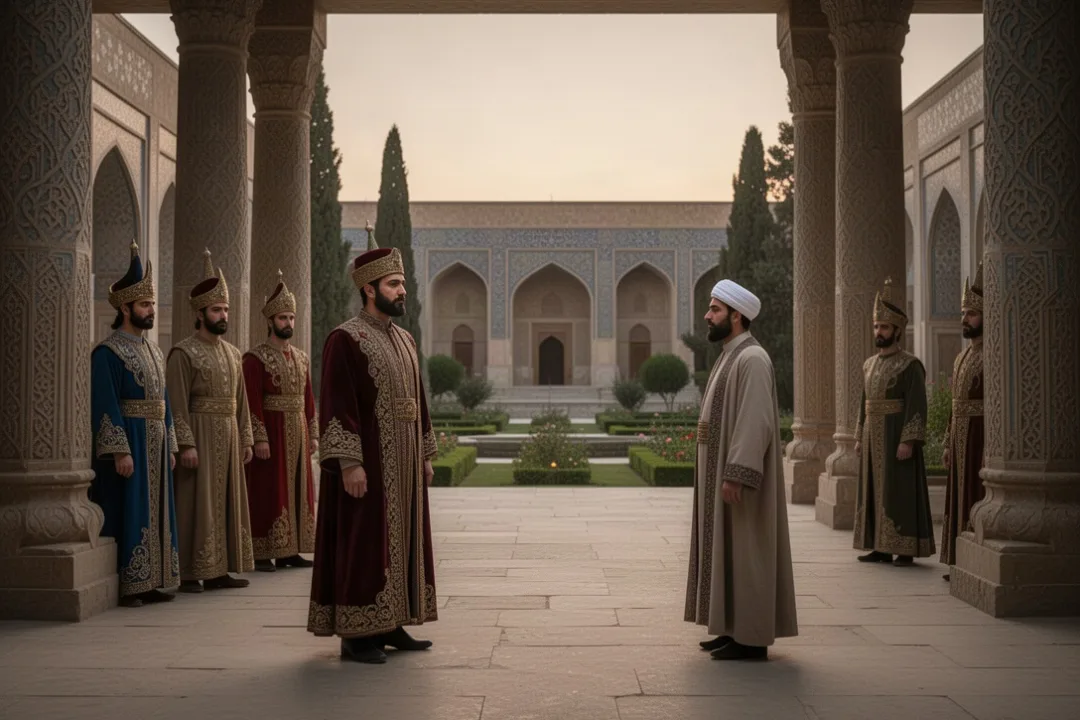
Esther 3:1 introduces Haman as the son of Hammedatha and identifies him as an Agagite. The king promotes him above the other officials, giving him unusual authority at the royal court. Haman’s exact ethnic background is debated, but the title “Agagite” connects him in the biblical story with the memory of Agag, an enemy king associated with the Amalekites in 1 Samuel 15.
The Book of Esther does not provide a complete family history for Haman. It does, however, place him in a setting where old hostility toward Israel appears to resurface. Readers familiar with the Hebrew Bible may see a connection between Haman’s attack and the earlier conflict between Israel and Amalek, although the text does not spell out every part of that connection.
Haman’s office appears to have been similar to that of a chief minister or senior adviser. The king trusted him enough to issue royal orders through him, and other officials were expected to honor him. His authority was therefore not merely social. He had access to the king, influence over policy, and the ability to use the empire’s communication system to send decrees throughout its provinces.
Direct answer: Haman was a Persian court official who plotted the destruction of the Jewish people after Mordecai refused to bow to him. Esther and Mordecai exposed the plot, and the king ordered Haman’s execution.
How Haman’s plot developed step by step
Haman’s story can be followed through a sequence of decisions. Each step shows how a private grievance became a political crisis affecting an entire people.
The king promoted Haman. Ahasuerus elevated him above the other officials and commanded the people at the gate to honor him.
Mordecai refused to bow. Mordecai, a Jew who served at the king’s gate, would not comply with the expected gesture of honor.
Haman chose revenge. Instead of punishing only Mordecai, Haman decided to attack all the Jews in the empire.
Haman cast lots. He used pur, a method of casting lots, to choose the date for the proposed massacre.
He persuaded the king. Haman described the Jews as a distinct people whose laws were different from those of other groups, and he offered money connected with the plan.
The king authorized the decree. Haman used the royal seal to send orders for the Jews to be destroyed on a set day.
Esther and Mordecai responded. Through courage, fasting, and carefully timed appeals, they brought the danger before the king.
Haman’s plan turned against him. He was forced to honor Mordecai publicly and later died on the gallows built for Mordecai.
This progression matters because Haman does not begin with an official order to attack the Jews. The crisis grows from injured pride, unchecked access to power, and a ruler’s careless approval. The narrative shows how a personal obsession can become deadly when a powerful person turns it into public policy.
Why Haman hated Mordecai
When Haman passed through the king’s gate, the other officials and servants bowed before him. Mordecai did not. Esther 3 says the officials questioned Mordecai repeatedly, but he explained that he was a Jew. The passage does not give a long explanation of why Mordecai considered bowing unacceptable, so readers should avoid adding motives that the text does not provide.
Haman’s response reveals the scale of his pride. He considered it beneath him to punish only Mordecai. Once he learned Mordecai’s Jewish identity, Haman looked for a way to destroy all the Jews throughout the kingdom. A single refusal to honor him became, in his mind, evidence that an entire population should be eliminated.
The contrast between the two men is central to the story. Mordecai refuses to let social pressure determine his conduct, while Haman measures his worth by public recognition. Haman already possesses rank, wealth, and access to the king, yet one man’s refusal makes him feel powerless. His response shows that status has not made him secure.
Was Mordecai refusing to worship Haman?
The text says Mordecai would not bow or pay homage, but it does not use a simple explanation that settles every question about the gesture. Bowing in an ancient royal setting could express respect, submission, or official honor without necessarily meaning worship. Some readers understand Mordecai’s refusal as a religious conviction; others emphasize the political or ethnic tensions surrounding the court.
What the story clearly establishes is that Haman interpreted Mordecai’s refusal as an intolerable insult. His reaction was far greater than the offense he believed he had received. The narrative directs attention less toward the precise mechanics of the bow and more toward Haman’s disproportionate response.
How Haman persuaded King Ahasuerus
Haman approached the king with a proposal designed to sound like a matter of public security rather than personal revenge. He described a scattered people whose customs differed from those of other groups and suggested that allowing them to remain was not in the king’s interest. He did not begin by naming his personal conflict with Mordecai.
Haman also offered a large payment to the royal treasury. Esther 3 records the offer, although the exact financial arrangement can be understood in different ways. The king then gave Haman his signet ring, a symbol of delegated authority, and allowed him to issue the decree in the king’s name.
The king’s willingness to approve the proposal without a careful investigation is part of the book’s criticism of royal leadership. Ahasuerus repeatedly depends on advisers and reacts to events without fully understanding their consequences. Haman exploits that weakness by presenting a destructive plan in official language.
The resulting decree ordered the destruction of the Jews—men, women, and children—and the seizure of their property. Couriers carried the order throughout the empire. Esther 3 describes the capital as confused, while Haman and the king sat down to drink. That contrast makes the decree especially disturbing: the people face an existential threat while the men responsible behave as though nothing serious has happened.
Important distinction: Haman’s hostility begins with Mordecai, but his plan targets an entire ethnic and religious community. The Book of Esther portrays this collective punishment as a grave abuse of power, not as a reasonable response to a court dispute.
How Esther and Mordecai stopped Haman
Mordecai responds to the decree with mourning, torn clothing, and public grief. Esther initially does not know the full reason for his distress because she lives within the palace. Once Mordecai sends her information about the decree, he urges her to seek the king’s help.
Esther faces a serious risk. Under the court’s rules, approaching the king without being summoned could result in death unless he extended his golden scepter. Her position as queen did not guarantee access or safety. Mordecai’s appeal in Esther 4 makes clear that Esther may have become queen precisely so she could act at this moment, although the statement is presented as a challenge and moral appeal rather than a simple prediction.
Before approaching the king, Esther asks Mordecai and the Jews in Susa to fast for three days. She and her attendants also fast. The book does not explicitly say that they pray, and it does not directly name God anywhere in the narrative. Nevertheless, fasting, deliverance, and unexpected reversals have led many readers to understand the story as describing hidden providence—divine action that is present without being openly announced.
Esther does not accuse Haman immediately. Instead, she invites the king and Haman to a banquet, then invites them to a second banquet. This careful timing gives her an opportunity to gain the king’s attention while allowing Haman’s confidence to grow. Her strategy combines courage with patience and precise knowledge of court politics.
Why Haman built the gallows for Mordecai
After the first banquet, Haman leaves delighted by his position. He has been invited privately with the king and queen, but his satisfaction disappears when he sees Mordecai at the gate. Mordecai still does not stand or tremble before him.
Haman tells his family and friends that his wealth, many children, promotion, and access to the queen have not made him happy because Mordecai continues to deny him the honor he wants. His wife Zeresh and his friends advise him to build a tall structure and ask the king to have Mordecai executed on it. Haman follows their advice and prepares it immediately.
The object is often called a gallows in English translations, but the underlying setting may refer to a stake or an elevated execution structure. The exact form is less important to the plot than its purpose: Haman intends a public and humiliating death for Mordecai.
Haman’s eagerness to carry out the execution exposes his lack of restraint. He has not yet received permission, but he assumes that the king will approve. His confidence depends on a belief that royal favor will always protect him.
How Haman was forced to honor Mordecai
That night, the king cannot sleep. He orders the royal records to be read and discovers that Mordecai previously exposed a plot against the king by two guards. Mordecai had not received a reward for this service.
When Haman enters the court, the king asks him what should be done for a man whom the king wishes to honor. Haman assumes the king means him. He recommends royal clothing, the king’s horse, and a public procession led by a prominent official. The king then tells Haman to do exactly this for Mordecai.
This is the story’s most striking reversal. Haman must publicly honor the man he hates, wearing out his own pride through an act of service. The episode also shows how apparently small details—an old record, one sleepless night, an unrecognized act of loyalty—can alter the entire course of events.
After leading Mordecai through the city, Haman returns home in humiliation. His advisers recognize that Mordecai’s Jewish identity may signal the beginning of Haman’s defeat. Before he can recover, palace officials arrive to take him to Esther’s second banquet.
How Esther exposed Haman’s plan
At the second banquet, the king asks Esther what she wants. She identifies herself with the threatened people and tells the king that she and her people have been sold to destruction. Only then does she name Haman as the adversary responsible for the plot.
The king reacts with anger. When he returns from the palace garden, he sees Haman near Esther. The king interprets Haman’s position as another threat against the queen, although Haman may have been pleading for his life. This misunderstanding leads the officials to identify the structure Haman built for Mordecai.
The king then orders Haman to be executed on that same structure. Esther 7 gives the reversal in direct narrative form: Haman dies by the instrument he prepared for Mordecai. The punishment fits both his crime and his arrogance, and it publicly removes the threat he created.
The king gives Haman’s estate to Esther, and Mordecai receives Haman’s position. Yet Haman’s death does not automatically cancel the decree against the Jews. Persian royal orders could not simply be revoked, so Esther and Mordecai must work with the king to issue a second decree allowing the Jews to defend themselves.
What happened to Haman’s family
Esther 9 names Haman’s ten sons among those killed during the Jews’ defense. The passage later records that their bodies were displayed at Esther’s request. This detail underscores the complete collapse of Haman’s household and public power.
The text does not describe a private trial in modern legal terms. It presents the events as part of a royal and communal crisis in which the Jewish population receives permission to defend itself against those who attack it. Careful readers should distinguish between the ancient story’s setting and modern assumptions about courts, due process, or executive authority.
Haman’s family connection also explains why the narrative treats his defeat as more than the removal of one official. Haman has attempted to create a lasting policy of destruction. His household, authority, and reputation all disappear, while Mordecai becomes a leading figure in the empire.
What the name “Agagite” may mean
The term Agagite is one of the most discussed details in Haman’s identity. In 1 Samuel 15, Agag is the king of the Amalekites who is captured by Saul and later killed by Samuel. Amalek is remembered in the Hebrew Bible as an enemy of Israel, and Deuteronomy 25 calls for Israel to remember that conflict.
Because of this background, many Jewish and Christian interpreters understand Haman as an Amalekite or as a symbolic continuation of Amalek’s opposition to Israel. That interpretation makes the conflict between Haman and the Jews part of a much older pattern in the biblical story.
However, the Book of Esther does not give enough genealogical information to prove every historical detail about Haman’s ancestry. “Agagite” may identify his lineage, preserve an ethnic designation, or intentionally connect him with the earlier enemy figure. It is safest to say that the title invokes the memory of Agag and Amalek without claiming more certainty than the text allows.
How Haman differs from other biblical villains
Haman is not described as a foreign king invading Israel or as a religious teacher leading people into false worship. He is a court official who uses an established government to pursue personal revenge. His danger comes from the combination of access, pride, persuasion, and administrative power.
His character also differs from villains who hide their intentions for the entire story. Haman openly celebrates his influence among his household and friends. He talks about his achievements, complains about Mordecai, and confidently predicts that the king will support him. His self-importance makes him vulnerable to misjudging both Esther and the king.
Another distinctive feature is the reversal of honor. Haman wants Mordecai to bow before him, but Haman is eventually made to lead Mordecai in a royal procession. He seeks Mordecai’s death, but dies on the structure he prepared for him. He wants to destroy the Jews, but his own family and position are destroyed instead.
What Haman’s story teaches about pride and power
Haman’s central weakness is not simply anger. It is the belief that he deserves universal recognition. His wealth, rank, family, and invitation to the royal banquet are all real advantages, yet none of them satisfy him while Mordecai refuses to honor him.
The story presents several practical warnings about that kind of pride:
Public status does not create inner security. Haman has an impressive position but remains controlled by one person’s refusal to praise him.
Personal resentment can become institutional harm. Haman turns a private grievance into an empire-wide decree.
Flattery can strengthen bad decisions. His household and advisers encourage his plan instead of challenging his obsession.
Power without scrutiny invites injustice. The king authorizes a devastating decree without examining Haman’s claims carefully.
Plans built on arrogance can reverse unexpectedly. Haman’s own recommendations and preparations become part of his downfall.
These lessons do not require treating every detail as a simple one-to-one analogy for modern life. The story is set in an ancient monarchy, but its concern with prejudice, propaganda, favoritism, and abuse of authority remains recognizable.
Why Haman matters to the festival of Purim
The Book of Esther explains the origin of Purim, a Jewish festival connected with the deliverance of the Jews from Haman’s planned destruction. The name comes from pur, the lot Haman cast to determine the date of the attack. What Haman intended as a day of death becomes a time of celebration, remembrance, gifts, and generosity.
Esther 9 describes the Jews establishing days of feasting and gladness and sending portions to one another. Later Jewish tradition developed Purim customs that include reading the Megillah, the Hebrew form of Esther, giving food gifts, supporting people in need, and sharing a festive meal.
Haman’s name is therefore remembered in a setting that emphasizes the failure of his plan. In many Purim traditions, the reading of Esther includes responses to Haman’s name, reflecting the community’s rejection of his memory as a persecutor. The festival keeps the danger in view while celebrating survival and communal responsibility.
Is God mentioned in the Book of Esther?
The Book of Esther is unusual because it does not explicitly mention God. That omission has shaped centuries of interpretation. Some readers focus on the hidden pattern of events: Esther reaches the throne, Mordecai learns of the assassination plot, the king loses sleep, and Haman arrives at the exact moment when his downfall begins.
Others emphasize the human decisions in the narrative. Esther fasts, plans, and risks her life. Mordecai urges action and communicates with the Jewish community. The king makes choices, often poorly, and Haman actively constructs his own downfall. The book allows readers to consider providence without removing human responsibility.
For many Jewish and Christian readers, Haman’s defeat illustrates that deliverance may operate through ordinary events and courageous people rather than through an openly described miracle. The lack of a direct divine name does not make the story spiritually empty; it makes the question of hidden presence especially significant.
How Haman’s downfall completes the story’s reversal
Haman begins as the king’s favored official and ends as a condemned enemy. He expects others to honor him, but must honor Mordecai. He plans to seize the property of the Jews, but Esther receives his estate. He wants to erase Mordecai’s name, but Mordecai inherits his public position.
The reversal extends to the date Haman selected. The Jews’ enemies expect to attack them on the appointed day, but the new royal decree permits the Jews to defend themselves. The day associated with Haman’s intended victory becomes a day of survival and celebration, later remembered through Purim.
This pattern gives Haman’s story its lasting force. He is not merely an unpleasant official who makes a bad decision. He represents the danger of allowing wounded pride and prejudice to control public authority. His defeat shows the narrative’s conviction that oppressive schemes can be exposed and reversed, even when they appear to have the full weight of government behind them.
Where to read Haman’s story in the Bible
Readers who want to follow the complete account should read the Book of Esther as a whole, but these passages provide the main stages:
Esther 3:1-15: Haman is promoted, becomes angry at Mordecai, and arranges the decree against the Jews.
Esther 4:1-17: Mordecai challenges Esther to act, and Esther prepares by calling for a fast.
Esther 5:1-14: Esther holds her banquets, while Haman prepares the structure for Mordecai.
Esther 6:1-14: Mordecai is honored, and Haman is forced to lead the public ceremony.
Esther 7:1-10: Esther exposes Haman, and the king orders his execution.
Esther 8:1-17: Mordecai receives Haman’s position, and a new decree permits Jewish self-defense.
Esther 9:1-32: The Jews survive the attacks, Haman’s sons are mentioned, and Purim is established.
Reading these passages together prevents a common misunderstanding: Haman’s death ends his personal plot, but the wider threat requires another royal decree. Esther and Mordecai must continue working after Haman is removed because the first law remains in force.
Frequently asked questions
Was Haman a real historical person?
The Book of Esther presents Haman as a Persian official under King Ahasuerus, commonly associated with Xerxes I, but scholars continue to debate the book’s historical details. The biblical text itself is the primary source for Haman’s character and actions. It is best to distinguish between the narrative’s clear claims and modern attempts to identify every person or event outside the story.
Was Haman an Amalekite?
Haman is called an “Agagite,” which many interpreters connect with Agag, the Amalekite king in 1 Samuel 15. This connection may intentionally place Haman within the Bible’s older memory of conflict between Amalek and Israel. However, Esther does not provide a complete genealogy, so his exact ancestry cannot be established with complete certainty.
Why did Mordecai refuse to bow to Haman?
Esther says Mordecai would not bow or pay homage and identifies him as a Jew, but it does not explain every aspect of his reasoning. Some readers understand the refusal as a matter of religious conviction, while others emphasize the political and cultural setting. The narrative’s clear focus is Haman’s extreme response: he turns the offense into a plan against an entire people.
What is the main lesson of Haman’s story?
Haman’s story warns about the destructive combination of pride, prejudice, and unchecked authority. He converts a personal grievance into government policy and assumes that royal favor will protect him. The story also emphasizes reversal and courage: Esther risks approaching the king, Mordecai remains firm, and Haman ultimately suffers the fate he intended for his enemy.






Leave a Reply