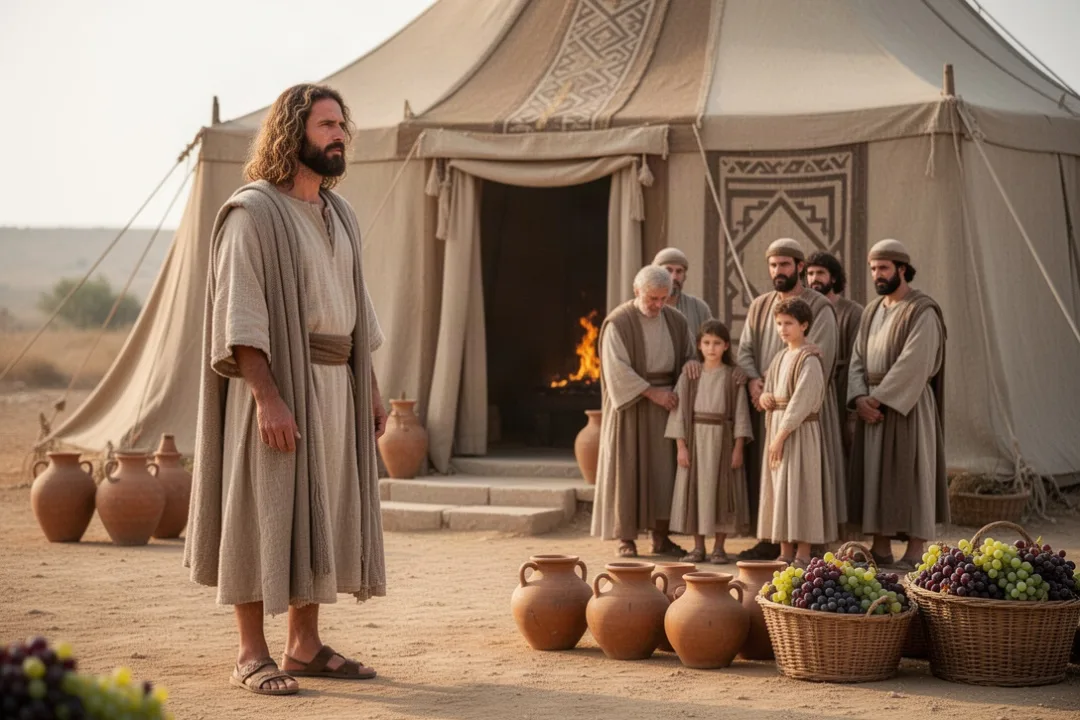
A Nazarite—more commonly spelled Nazirite in many modern Bible translations—was an Israelite who made a special vow to be set apart for God. The vow required three visible commitments: avoiding wine and other grape products, refusing to cut the hair, and staying away from contact with a dead body.
The rules appear in Numbers 6:1-21. A Nazarite vow could be made by a man or a woman for a specific period, and the person brought prescribed offerings when the vow ended. Samson is the best-known biblical example of someone connected with this kind of dedication, although his consecration began before birth and had unusual features.
The English word Nazarite comes from a Hebrew term related to being separated, consecrated, or set apart. The idea is not that the person became a different kind of human being. Instead, the person accepted a public pattern of life that marked a special commitment to God.
The term is sometimes confused with Nazarene, but the two words describe different things. A Nazarene was someone associated with Nazareth, the town where Jesus grew up. A Nazarite was someone who had taken, or had been placed under, a religious vow of dedication. Jesus is called a Nazarene because of his connection with Nazareth; the Gospels do not describe him as a Nazarite.
The Nazarite vow was not the same as becoming a priest. Priests belonged to the family line of Aaron and served in the tabernacle or temple according to Israel’s worship laws. A Nazarite could come from any Israelite family and did not receive priestly authority simply by making the vow.
Numbers 6 presents the vow as a voluntary act for an ordinary Israelite. A person could choose a period of unusual devotion, placing ordinary pleasures and social customs under clear limits. The restrictions made the commitment visible to the community and required the person to practice self-control in daily life.
Terminology tip: “Nazarite” and “Nazirite” refer to the same biblical practice. “Nazarene,” however, usually refers to someone from Nazareth and should not be treated as another spelling of Nazarite.
What the Nazarite vow required
Numbers 6 identifies three central restrictions. They were not random rules; each one expressed separation from ordinary patterns of life. A person under the vow had to pay attention to food and drink, personal appearance, and physical contact with death.
No grape products: The Nazarite could not drink wine or other fermented drink and also avoided vinegar made from wine. The rule extended to grapes, raisins, and products made from the grapevine.
No cutting the hair: The person was not to use a razor on the head during the vow. The growing hair served as an outward sign that the period of dedication was still in progress.
No contact with the dead: The Nazarite could not approach a corpse, even when the dead person was a close relative such as a parent, sibling, or child.
The prohibition on grape products went beyond avoiding intoxication. Wine and grapes were common parts of food, celebration, hospitality, and agricultural life, so abstaining from the entire product group made the commitment more comprehensive. The text specifically includes fresh and dried grapes, showing that the restriction was not limited to alcoholic beverages.
The uncut hair was another public sign. Hair itself was not presented as magical or spiritually powerful. It functioned as a visible reminder that the person was living under a special vow. When the vow ended, the hair was cut and used as part of the completion ceremony described in Numbers 6.
The rule about corpses made the vow stricter than many ordinary purity practices. Even an unexpected death in the Nazarite’s presence could affect the vow. If the person became ceremonially defiled by contact with a dead body, the text required a purification process, a new shaving of the head, and a restart of the designated period.
These requirements show that the vow affected more than private thoughts. It shaped what the Nazarite consumed, how the person appeared, and where the person could go. The restrictions also created practical costs, especially when family responsibilities, community gatherings, or sudden deaths made strict observance difficult.
How a Nazarite vow began and ended
A Nazarite vow could be made by either a man or a woman. Numbers 6 does not set one universal length for every vow. The passage describes what happened when the period of separation was completed, which indicates that at least some vows lasted for a defined time chosen by the person making the commitment.
Some biblical examples suggest that vows could be connected with specific prayers or urgent circumstances. Hannah’s promise concerning Samuel in 1 Samuel 1:11 includes the commitment that no razor would touch the child’s head. The passage strongly connects Samuel with a lifelong dedication, though it does not present every detail of the standard Numbers 6 ceremony in his story.
When a normal Nazarite period ended, the person came to the entrance of the tent of meeting with offerings. Numbers 6 lists a male lamb for a burnt offering, a female lamb for a sin offering, a ram for a fellowship offering, a basket of unleavened bread, grain offerings, drink offerings, and other accompanying sacrifices.
The priest then helped complete the process. The Nazarite shaved the consecrated hair at the entrance of the tent of meeting, and the hair was placed in the fire beneath the fellowship offering. The ceremony formally ended the special period and returned the person to ordinary life.
The offerings show that ending the vow was not treated casually. The Nazarite did not simply cut the hair at home and resume normal habits. The completion involved worship, thanksgiving, reconciliation, and a public acknowledgment that the period of dedication had reached its appointed end.
A person who broke the vow by contact with a corpse had to follow a different procedure. Numbers 6 describes waiting through a purification period, shaving the head, bringing offerings, and beginning the days of separation again. This reset demonstrates how seriously the law treated the vow’s integrity.
The person made or received a commitment to live under the Nazarite restrictions.
The person avoided grape products, cutting the hair, and contact with corpses during the vow.
If accidental corpse contamination occurred, the person completed the required purification process.
At the appointed end, the person brought offerings and shaved the consecrated hair.
The person then returned to ordinary life after the completion ceremony.
The text does not say that every Nazarite had to remain separate for life. A temporary vow and a lifelong dedication should therefore be distinguished. Samson’s story belongs to the second category, while the instructions in Numbers 6 describe the general pattern most clearly.
What Samson shows about Nazarites
Samson is the Bible’s most famous Nazarite figure. Before his birth, an angel told his mother that the child would be dedicated to God and that no razor should be used on his head. Judges 13:5 connects his lifelong calling with separation from the womb.
Samson’s story also includes restrictions on wine and strong drink. His mother was told to avoid them during her pregnancy, and Samson’s own calling was associated with special separation. The narrative later emphasizes his uncut hair, particularly in the account of Delilah and the cutting of his hair in Judges 16.
Samson should not be used as a simple picture of perfect Nazarite obedience. His life is marked by repeated conflict, impulsive decisions, violence, and disregard for boundaries. The story presents him as someone empowered by God for Israel’s deliverance while also showing the consequences of his failures.
His hair was not a charm that automatically gave him strength. The narrative links his strength to God’s empowerment and treats the uncut hair as a sign of his consecration. When his hair was cut, the central issue was not merely the loss of hair but the violation of the dedication represented by it.
Samson also illustrates why the Nazarite vow should not be reduced to a hairstyle. The vow included self-control, separation, and loyalty to a calling. Hair was the most visible sign, but the complete commitment involved the person’s conduct and relationship with God.
Other biblical passages may refer to similar vows. In Acts 18:18, Paul has his hair cut because of a vow, and Acts 21:23-24 describes several men who had taken a vow. These passages may reflect Nazarite practices, but they do not provide enough detail to assume that every vow mentioned in the New Testament followed every rule in Numbers 6.
John the Baptist is also sometimes called a Nazarite in popular explanations. Luke 1:15 says that he would not drink wine or strong drink, which resembles one Nazarite restriction. However, the New Testament does not explicitly call John a Nazarite or state that he observed all three requirements. It is safer to say that his life showed a comparable form of special dedication.
Why Nazarites avoided grapes, haircuts, and corpses
The Bible gives the rules more clearly than it explains their symbolism. Readers should avoid claiming that each restriction has one certain hidden meaning. Still, the pattern allows several careful observations about how the vow expressed belonging to God.
Abstaining from grape products separated the Nazarite from ordinary celebration and agricultural abundance. Wine could be associated with feasting, hospitality, and daily prosperity. Avoiding it, along with grapes and raisins, meant that the person accepted a deliberate limitation rather than merely avoiding drunkenness.
Uncut hair made the vow easy to recognize. In a society where people normally managed their appearance in familiar ways, the growing hair communicated that a special period was underway. The sign was public, but it was not designed to make the person superior to everyone else.
Contact with the dead involved Israel’s purity regulations and the seriousness of death. Even honorable grief for a close family member could interrupt the vow. This restriction placed the Nazarite’s dedication above ordinary obligations during the designated period, although the law did not imply that mourning or caring for family was wrong in itself.
The three restrictions also affected different parts of life:
Food and drink represented daily habits and celebrations.
Hair represented personal appearance and a visible public identity.
Corpses represented contact with death and the demands of family and community life.
Together, the rules created a disciplined way to mark special devotion. The vow was not a general command for all Israelites, and the Bible does not instruct every believer to imitate it. Its purpose was to provide a defined form of consecration for those who entered it.
Practical reading principle: The Nazarite rules describe a specific Old Testament vow, not a universal requirement that Christians must avoid all wine, grow their hair, or avoid funerals. Their direct meaning belongs to the covenant laws given to Israel.
What Nazarites teach about dedication to God
The Nazarite vow presents dedication as something that can shape ordinary decisions. A person did not express commitment only through worship at a sanctuary. The vow reached into meals, appearance, travel, family events, and responses to death.
It also shows that religious devotion in the Bible could be both personal and public. The vow began with an individual commitment, but its visible signs affected how other people recognized and treated the person. The community could see that the Nazarite had accepted a distinct set of obligations.
At the same time, the vow was not a claim to moral superiority. A person with long hair or a history of abstaining from wine was not automatically faithful in every area. Samson’s life makes that warning especially clear. External signs matter, but they do not replace obedience, wisdom, or trust in God.
The rules also teach that dedication involves limits. The Nazarite did not simply promise to “try harder” or to feel more religious. The person accepted concrete boundaries that made the commitment measurable. That feature explains why the vow could be meaningful: it translated intention into repeated choices.
For Christians reading the passage today, the most direct lesson is not to recreate the ancient vow without context. The New Testament does not command Christians to become Nazarites. Instead, the passage can prompt reflection on intentional devotion, responsible self-control, and the difference between an outward religious sign and a genuinely faithful life.
The clearest biblical definition remains simple: a Nazarite was a person set apart to God under a special vow. The vow ordinarily involved abstaining from grape products, leaving the hair uncut, and avoiding contact with the dead. Numbers 6 provides the main instructions, while Samson’s story shows how a lifelong dedication could become part of a person’s calling and struggle.
Frequently asked questions
Is a Nazarite the same as a Nazarene?
No. A Nazarite, or Nazirite, was someone dedicated to God under a special vow described in Numbers 6. A Nazarene was a person associated with Nazareth. Jesus is called a Nazarene because of his connection with that town, not because the Bible identifies him as a Nazarite.
Could women take the Nazarite vow?
Yes. Numbers 6 presents the vow as available to both men and women. The passage focuses on the requirements and completion ceremony rather than limiting the practice to one sex. Family and household circumstances could affect a woman’s vow, especially under the legal provisions described in Numbers 30.
Did every Nazarite have to remain unmarried?
No. The Nazarite regulations do not require celibacy or permanent unmarried life. The main restrictions concern grape products, cutting the hair, and contact with corpses. A Nazarite vow was a form of consecration, not a rule requiring a person to leave marriage or ordinary society.
Was John the Baptist definitely a Nazarite?
The Bible does not explicitly call John the Baptist a Nazarite. Luke 1:15 says he would avoid wine and strong drink, which resembles one Nazarite restriction, but the text does not mention the uncut-hair and corpse-contact rules. It is more accurate to describe John as specially dedicated to God.







Leave a Reply