Numbers 7: The offerings at the tabernacle explained
Numbers 7: The offerings at the tabernacle explained
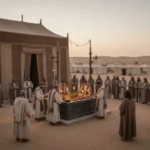
Numbers 7 records the offerings brought by Israel’s tribal leaders when the tabernacle altar was dedicated. Each of the 12 leaders presents the same combination of vessels, grain, incense, and animals over 12 days. The chapter closes by describing Moses hearing God’s voice from above the ark’s cover, connecting the people’s worship with divine presence and guidance.
At first glance, the chapter can seem repetitive because the same offering appears again and again. Its repetition, however, emphasizes that every tribe participates equally in the dedication. Numbers 7 is not merely a list of gifts; it presents an orderly community offering itself and its resources to God.
The chapter begins after Moses has finished setting up and consecrating the tabernacle. The altar and everything associated with it have been dedicated for Israel’s worship. At that point, the leaders of the tribes bring gifts to support the work of transporting the sacred tent and its furnishings.
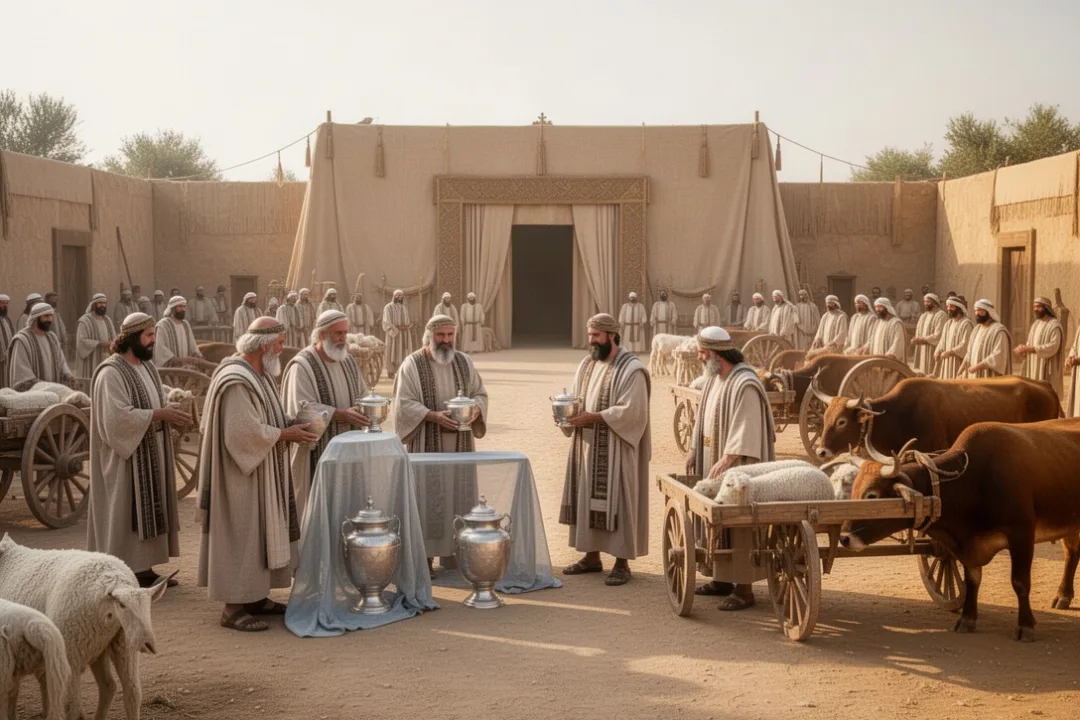
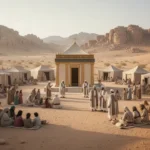
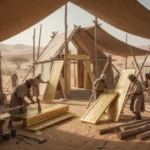
The first gifts are six covered carts and twelve oxen. Two leaders provide each cart, while each leader provides one ox. The Levites receive these animals and carts according to their responsibilities: the Gershonite families receive two carts and four oxen, and the Merarite families receive four carts and eight oxen. The Kohathites receive none because they carry their assigned holy objects by hand.
This distribution reflects the different duties of the Levite clans. The Gershonites transport curtains and coverings, while the Merarites carry the heavier frames, posts, bases, and related equipment. The Kohathites carry the most sacred furnishings, including objects that are handled in a distinct way. The chapter therefore combines generosity with practical stewardship: the gifts are assigned according to actual needs rather than divided mechanically.
Central idea: The carts and oxen show that worship involved practical service as well as ceremony. Sacred work still required planning, transportation, labor, and shared responsibility.
After the transportation gifts, the leaders bring their individual offerings for the altar. One leader presents an offering each day, beginning with Nahshon son of Amminadab from the tribe of Judah. The sequence continues through all 12 tribes and ends with Ahira son of Enan from Naphtali.
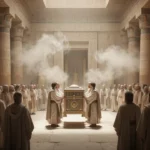
Every leader brings the same set of gifts. The vessels include a silver platter, a silver basin, and a gold pan. The platter and basin contain fine flour mixed with oil for a grain offering. The gold pan contains incense. The animals include offerings for burnt offerings, a sin offering, and fellowship or peace offerings.
What each tribal leader offered
The repeated offering has several parts, and each part has a distinct function in Israel’s worship. The exact weights can vary slightly by translation because ancient units are rendered differently, but the pattern remains consistent.
A silver platter: it weighs 130 shekels and holds fine flour mixed with oil.
A silver basin: it weighs 70 shekels and also holds flour mixed with oil.
A gold pan: it weighs 10 shekels and contains incense.
A young bull: it is offered as a burnt offering.
A ram and a male lamb: they are also offered as burnt offerings.
A male goat: it is offered as a sin offering.
Two oxen, five rams, five male goats, and five male lambs: these are offered as fellowship or peace offerings.
The grain offering uses fine flour and oil, two valuable provisions that represent the fruit of the land and the work of the people. The incense represents a fragrant offering presented in worship. The animals represent several dimensions of sacrifice: dedication, atonement, and shared fellowship before God.
The burnt offering is associated with complete surrender. Because the whole animal was offered on the altar, it expressed total dedication rather than a meal shared by worshipers. The sin offering addressed the problem of impurity and wrongdoing within the community. The fellowship offering had a more communal character, since portions could be eaten in a sacred setting after the offering was made.
Numbers 7 does not pause to give a separate explanation of each item. Instead, it places the offerings within the larger dedication of the tabernacle. The important point is that the leaders bring substantial and carefully ordered gifts to establish worship at the center of Israel’s life.
The names and order of the leaders
The chapter identifies every leader by name and tribe. The list begins with Judah, followed by Issachar, Zebulun, Reuben, Simeon, Gad, Ephraim, Manasseh, Benjamin, Dan, Asher, and Naphtali. This order corresponds to the arrangement of the tribes around the tabernacle described in the surrounding chapters of Numbers.
Several observations matter here. First, the leaders are not anonymous representatives. Their names are preserved because their participation matters. Second, the tribes give equivalent offerings, so no tribe is presented as more generous or more acceptable than another. Third, the list joins individual accountability with collective identity: each leader acts for a tribe, but each leader is separately named.
The repeated wording also creates a deliberate rhythm. The reader encounters one leader, one tribe, and one identical gift after another. That rhythm may feel long, but it communicates stability and equality. Israel’s worship is not based on one celebrated donor or one especially powerful tribe. Each tribe has a recognized place in the dedication.
Why Numbers 7 repeats the same offering 12 times
The repetition is the chapter’s most noticeable feature, and it is also its main literary emphasis. Numbers 7 could have said that all 12 leaders brought identical offerings, but it chooses to record each offering separately. That choice gives every tribe equal narrative space.
Repeated gifts can seem less meaningful than unique gifts, yet the chapter presents sameness as a strength. The leaders do not compete by bringing increasingly impressive offerings. They bring the same offering in the same pattern, showing shared participation rather than rivalry.
The repetition also slows the reader down. A quick summary would make the dedication sound like an administrative detail. The extended record makes the act feel substantial. Day after day, tribe after tribe, the community contributes to the worship of God.
Numbers 7 also balances two ideas that can sometimes seem opposed:
Unity: every tribal leader gives the same offering, affirming the equal place of the tribes in the dedication.
Distinct identity: every tribe and leader is named, showing that unity does not erase particular people or communities.
Order: the offerings follow a clear sequence rather than arriving randomly.
Generosity: the gifts include valuable metals, animals, grain, oil, and incense.
Responsibility: the offerings support both worship at the altar and the practical transportation of the tabernacle.
This pattern offers a useful way to read other biblical lists. A passage that repeats names or objects may be emphasizing recognition, order, completeness, or equality rather than providing information that should be compressed. In Numbers 7, the length itself communicates value.
Reading tip: Do not treat the repeated sections as twelve unrelated sacrifices. Read them as one communal act made visible through twelve named representatives.
How Numbers 7 connects worship with community life
The chapter presents worship as something the whole nation supports. The altar is not dedicated by priests alone, even though priests have specific responsibilities. Tribal leaders bring the resources, the Levites transport the tabernacle, and the entire community is represented through its tribes.
The opening gifts make this especially clear. Carts and oxen are not altar offerings in the same sense as animals, grain, or incense. They are equipment for carrying the tabernacle. Their inclusion shows that ordinary logistical work belongs within the life of worship.
The distinction between the Levite clans is also significant. The gifts are not distributed according to status or personal preference. The Gershonites and Merarites receive transportation assistance because their assigned loads can be carried on carts. The Kohathites do not receive carts because their sacred objects are carried by hand according to their instructions.
This arrangement shows that equal treatment does not always mean identical treatment. The leaders give the same number of oxen individually, but the Levite clans receive different resources because their tasks differ. Numbers 7 therefore presents a practical principle: fair support takes real responsibilities into account.
The offerings at the altar add another layer. The leaders do not simply give money or materials and then disappear. Their gifts become part of the ritual dedication. Their resources are placed within a shared system of worship, where the offerings represent the tribes before God.
For readers applying the chapter today, the emphasis is not on reproducing ancient animal sacrifices. The tabernacle system belongs to Israel’s covenant worship and should be read within the larger biblical story. The enduring themes are the community’s shared responsibility, the careful use of resources, and the recognition that visible acts of service can support spiritual life.
What the totals reveal about Israel’s dedication
After the twelve daily accounts, the chapter gives the combined totals. Together, the leaders provide 12 silver platters, 12 silver basins, and 12 gold pans. They also bring 12 bulls, 12 rams, 12 male lambs, and 12 male goats for the burnt and sin offerings. The fellowship offerings add 12 oxen, 60 rams, 60 male goats, and 60 male lambs.
These totals confirm the scale of the dedication. The ceremony is not a symbolic gesture involving one small gift. It represents a major investment by the whole tribal community. The total also reinforces the number 12, which corresponds to the tribes of Israel and conveys completeness within the structure of the nation.
The chapter’s accounting has a theological effect as well as an administrative one. The gifts are counted because they matter. The names are preserved because the givers matter. The animals and vessels are listed because worship is presented as a concrete act requiring real resources.
Numbers 7 also places generosity within boundaries. The leaders give generously, but they do not invent their own rituals. Their offerings follow the pattern established for the altar. This combination of generosity and obedience is central to the chapter: devotion is expressed freely, but it is shaped by God’s instructions.
The offerings also show that leadership carries public responsibility. These men do not give only on their own behalf. They represent their tribes, and their offerings help establish the worshiping life of the entire nation. Their role is therefore more than ceremonial. It includes stewardship, representation, and participation in the community’s covenant obligations.
Why the ending of Numbers 7 matters
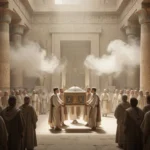
The chapter ends in a striking way. After listing the offerings, it says that Moses entered the tent of meeting to speak with God. He heard a voice speaking to him from above the cover of the ark, from between the cherubim. The final scene shifts attention from what Israel brings to how God responds.
This ending gives the chapter its deepest focus. The offerings are not an end in themselves. The tabernacle exists as the place where God makes his presence known and communicates with Moses. The dedication of the altar leads toward relationship, revelation, and guidance.
The location of the voice matters. The ark’s cover is associated with the meeting place between God and his people, and the cherubim are connected with the sacred space of divine presence. Numbers 7 therefore closes by showing that ordered worship is directed toward hearing and obeying God, not merely completing a ceremony.
The final verse also provides a quiet contrast to the long list. Most of the chapter consists of human names, objects, measurements, and animals. The last scene centers on God’s voice. This structure suggests that the gifts and rituals have their proper purpose only when they serve communion with God and attentive obedience.
For personal or congregational reflection, Numbers 7 raises several practical questions:
Are responsibilities shared across the whole community, or left to a small group?
Are people recognized by name for their service, or treated as invisible labor?
Are resources assigned according to genuine needs and responsibilities?
Does generosity support worship and service, or become a source of competition?
Do acts of worship lead to attentive listening and faithful action?
Numbers 7 is therefore a chapter about more than ancient offerings. It portrays a people organized around sacred worship, supported by leaders who contribute equally, served by workers whose needs are considered, and directed toward the presence of God. Its repeated details teach that faithfulness can be patient, orderly, communal, and concrete.
Frequently asked questions
Why is Numbers 7 so repetitive?
The repetition gives each tribe and leader equal recognition. Instead of summarizing the offerings in one sentence, the chapter records them individually to show that every tribe participates in the tabernacle’s dedication. The repeated pattern also emphasizes unity, order, and the absence of competition among the leaders.
What does the number 12 represent in Numbers 7?
The twelve offerings correspond to the twelve tribes of Israel. In this setting, the number represents the complete tribal community participating in worship. Each tribe is named and assigned the same basic offering, so the chapter uses twelve to express both national completeness and equal representation.
Why did some Levites receive carts and oxen while others did not?
The carts and oxen were distributed according to the type of work each Levite clan performed. Gershonites and Merarites transported materials suited to carts, while the Kohathites carried their sacred objects by hand. The arrangement shows that fair provision considers actual responsibilities rather than treating every task identically.
What is the main spiritual message of Numbers 7?
Numbers 7 shows that worship involves the whole community, not only its priests or most visible leaders. It highlights equal participation, responsible stewardship, generous giving, and careful obedience. Its ending directs attention beyond the offerings themselves to God’s presence and the need to listen for divine guidance.



Leave a Reply