Have you ever finished preparing a meaningful place or event and then wondered what should happen next? 1 Kings 8 answers that question through the dedication of Solomon’s temple. The building is complete, but its purpose is not merely architectural. Israel gathers to bring the ark of the covenant into the temple, worship God, hear Solomon’s prayer, and receive a reminder that God’s presence cannot be contained by any human structure.
The chapter is one of the longest and most significant scenes in the early history of Israel’s monarchy. It brings together the temple, the covenant, national worship, confession, forgiveness, and prayer. Solomon celebrates the fulfillment of God’s promise to David, yet he also recognizes that even the highest heavens cannot contain God. That tension—God truly present with his people, yet far greater than any building—shapes the entire chapter.
Solomon gathers Israel’s elders, tribal leaders, and family heads in Jerusalem. The occasion is the temple dedication, held during the religious festival in the seventh month, traditionally associated with the Feast of Booths. This is not a private ceremony for the royal household. The whole nation is represented as the temple becomes the central place of Israel’s worship.
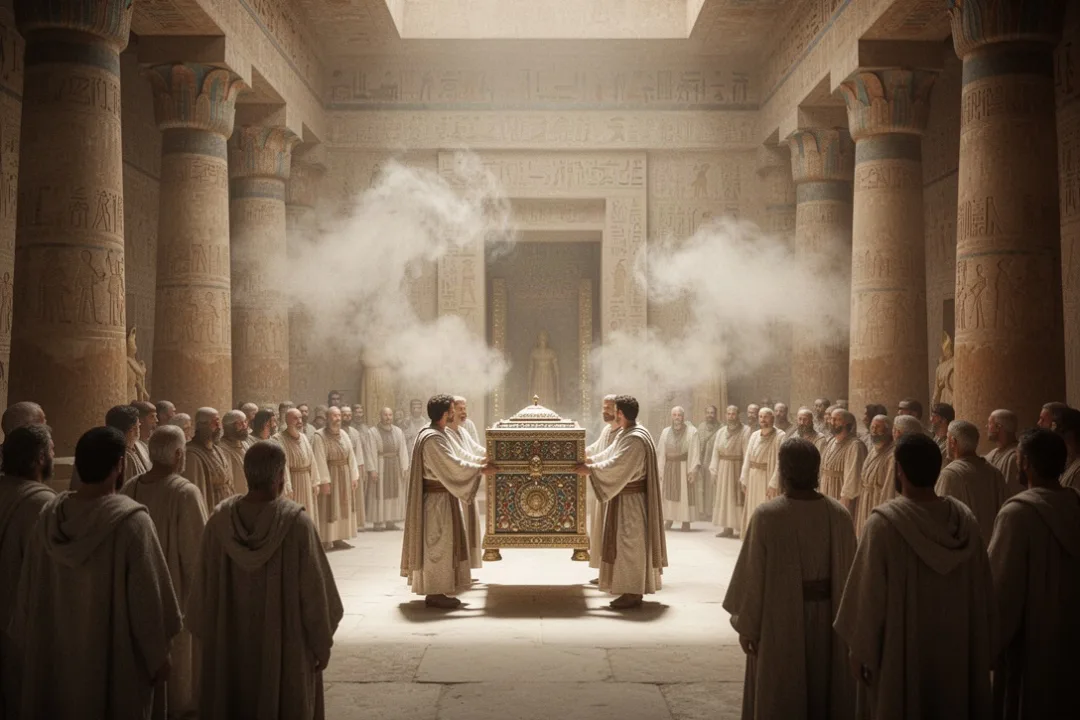
The priests and Levites bring the ark of the covenant from the city of David, also called Zion, into the inner sanctuary of the temple. The ark contains the covenant tablets given through Moses. Its movement into the Most Holy Place symbolizes the transition from the earlier tabernacle-centered arrangement to a permanent temple in Jerusalem.
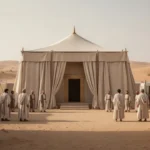
Along with the ark, the priests bring the tent of meeting and the sacred furnishings that had been associated with Israel’s worship in the wilderness and afterward. Solomon and the assembly offer sacrifices in such abundance that they cannot be counted easily. The ceremony shows that the new temple is not creating a new religion; it is continuing the worship of the God who rescued Israel and established a covenant with the nation.
When the priests come out of the sanctuary, a cloud fills the temple. The priests cannot continue their service because the glory of the Lord fills the house. The cloud recalls earlier moments when God’s presence was revealed to Israel, especially the cloud associated with the tabernacle. It signals divine approval and presence, not because the building has controlled God, but because God has chosen to meet his people there.
Solomon responds by recognizing the meaning of the moment. He explains that he has built a house for God’s name, a place connected with worship, prayer, and remembrance. He then turns toward the congregation and blesses them before addressing God directly.
The central idea: The temple is a designated place for God’s name and for Israel’s prayers, but 1 Kings 8 never treats the building as a container that limits God’s presence.
Why the ark and the temple matter
The ark is the focal point of the dedication because it represents God’s covenant relationship with Israel. It is not presented as a magical object or an idol. Rather, it reminds the people of God’s promises, his commands, and the relationship established with the nation through Moses.
The placement of the ark in the Most Holy Place also emphasizes the holiness of God. The innermost room is not an ordinary meeting room. It is separated from the rest of the temple, and access to it is restricted within Israel’s worship system. The arrangement teaches that God is near to his people but must not be approached carelessly.
First Kings 8 says that the tablets are in the ark. This detail connects the temple dedication with Israel’s earlier history. The nation’s worship is grounded in a covenant that includes both grace and responsibility. God has acted for Israel, but the people are also called to listen, obey, and return to him when they fail.
The chapter describes the ark as being under the wings of the cherubim in the inner sanctuary. These symbolic figures are part of the temple’s sacred design and reflect biblical imagery connected with God’s heavenly rule. Their presence does not mean Israel is worshiping angels. Instead, the imagery points to the majesty of the God whose covenant presence is associated with the ark.
Solomon’s words carefully distinguish the temple from God himself. He asks whether God would truly dwell on earth, since even the highest heavens cannot contain him. The question is not a denial of God’s presence. It is a confession that God is greater than the temple, even while he graciously hears prayers directed toward it.
That distinction protects the people from treating religious space as a substitute for faithfulness. A sacred place can help a community worship, remember, gather, and pray. It cannot make disobedience acceptable or force God to act according to human wishes.
What Solomon asks God to do in his prayer
Solomon’s prayer is the theological center of 1 Kings 8. He praises God for keeping the promise made to David: David’s son would build the temple. Solomon also recognizes that the fulfillment is connected with the larger history of Israel, including the exodus from Egypt and God’s covenant with Moses.
The prayer repeatedly asks God to hear from heaven. The temple is the earthly direction toward which people pray, but Solomon understands that the true source of judgment, mercy, and restoration is heaven. The building serves as a visible focal point for a relationship that reaches beyond the building itself.
Solomon presents several situations in which the people may pray. Each one reveals something about the life of a covenant community and about the kind of response Solomon seeks from God.
When one person is accused: Solomon asks God to judge fairly when disputes arise and guilt or innocence must be determined.
When Israel is defeated: He asks God to hear the people when they confess their sin and turn back to him.
When drought comes: He asks God to forgive his people and teach them the right way to live.
When famine, disease, or disaster strikes: He asks God to respond to each person according to the condition of the heart.
When a foreigner prays: He asks that God hear those who come because of God’s reputation and name.
When Israel goes to war: He asks God to uphold the nation’s cause and remain with his people.
When Israel is taken captive: He asks God to hear repentance and restore the people if they return to him wholeheartedly.
These requests show that the temple is meant to be connected with ordinary and severe circumstances alike. Prayer is not limited to festivals. It addresses conflict, drought, illness, military danger, exile, and the inner condition of the worshiper.
The prayer also has a strong understanding of human weakness. Solomon does not assume that Israel will always obey. He specifically imagines future failure and asks God to respond to sincere repentance. This does not make sin unimportant. It shows that the covenant relationship includes a path back through confession and renewed obedience.
At the same time, Solomon does not ask for automatic forgiveness without change. His prayer frequently joins hearing with forgiving, and forgiveness with turning from wrongdoing. The people are not merely asking for relief from consequences; they are asking to be taught the good path and restored to faithful living.
The prayer’s reference to foreigners is especially significant. Solomon asks that people from outside Israel may hear of God’s great name, come toward the temple, and be heard when they pray. Israel’s worship has a national setting, but its purpose is not meant to end with Israel. God’s reputation is presented as reaching beyond the nation.
“There is no God like you” is the substance of Solomon’s praise: God keeps covenant promises, shows steadfast love, and remains incomparable.
Solomon’s prayer ends by asking God to keep the people’s hearts loyal and to help them walk in his commands. He also asks that the nations may know that the Lord alone is God. The prayer therefore moves from Israel’s immediate needs to a wider hope: faithful worship should make God known.
How the dedication ceremony unfolds
After praying, Solomon turns toward the people and blesses them. He declares that God has given Israel rest and has kept the promises made to the nation. The language of rest refers to security from enemies and the settled condition Israel experiences under Solomon’s rule.
Solomon then urges the people to remain fully devoted to God. The dedication is not complete simply because the ceremony has taken place or the temple has been filled with glory. The people must continue to follow God’s statutes and commands. Worship reaches its intended purpose through obedient lives, not through impressive surroundings alone.
The king offers a large number of sacrifices, including offerings associated with fellowship and peace. The scale of the celebration reflects the national importance of the event. Israel is not merely opening a building; it is publicly recognizing God’s faithfulness and dedicating the center of its worship.
The people celebrate for an extended period connected with the festival and the dedication. The final assembly is dismissed with joy, and the people return to their homes aware of the good God has shown to David, Solomon, and Israel. The chapter closes with communal celebration rather than private religious experience.
Several elements of the ceremony work together:
Gathering: Israel’s leaders and representatives assemble before God.
Remembering: The ark and covenant tablets recall God’s past actions and promises.
Hearing: Solomon’s prayer gives the nation language for confession, need, thanksgiving, and hope.
Offering: Sacrifices express worship, fellowship, and dedication.
Blessing: The king sends the people home with a renewed awareness of God’s faithfulness.
The chapter also gives a balanced picture of public worship. There is reverence when the cloud fills the temple, seriousness when Solomon discusses sin and judgment, and joy when the people return home. Biblical worship can include awe, honest repentance, celebration, and practical commitment without reducing any one of these elements.
What 1 Kings 8 teaches about God’s presence
The most memorable theological tension in the chapter is that God fills the temple, yet the temple cannot contain him. This protects two truths at once. First, God is not distant or indifferent; he chooses to hear and meet his people. Second, God is not controlled by a location, institution, ruler, or ritual.
For ancient Israel, this mattered greatly. Temples in the surrounding cultures could be treated as the residence of a deity, with the deity imagined as dependent on the building and its offerings. Solomon’s prayer presents a different picture. The Lord is sovereign over heaven and earth and does not need a house as though he were limited or dependent.
The temple is instead a place associated with God’s name. In biblical language, God’s name represents his revealed character and reputation. The temple points people toward who God is: faithful, holy, merciful, just, and committed to his covenant.
This helps explain why Solomon’s prayer repeatedly asks God to hear from heaven. Prayer directed toward the temple is not an attempt to place God inside Jerusalem. It is a way for the people to turn their attention toward the God who has chosen Jerusalem as a center of covenant worship.
The chapter also connects God’s presence with moral seriousness. If God hears prayers about injustice, defeat, drought, and exile, the people cannot separate worship from conduct. A person cannot appeal to the temple while refusing the repentance and obedience that Solomon’s prayer describes.
For personal reflection: A meaningful place of worship can direct your attention to God, but it cannot replace confession, obedience, mercy, or trust. The response God seeks is not merely attendance; it is a heart turned toward him.
For Christian readers, 1 Kings 8 is often read alongside later biblical teaching about God’s presence with his people. Different Christian traditions connect the temple’s themes with Jesus, the church, and believers as God’s dwelling place. Those later interpretations should not erase the original meaning of the chapter: Solomon is dedicating Israel’s temple and asking God to hear the prayers associated with it.
How to read 1 Kings 8 in its wider biblical setting
First Kings 8 follows the account of the temple’s construction in the preceding chapters and prepares readers for the later history of Israel. At this point, the dedication looks like a high point: David’s desire has been fulfilled through Solomon, the temple is complete, and the nation is celebrating peace.
Yet the prayer quietly anticipates problems that will appear later. Solomon mentions defeat, drought, famine, disease, war, sin, and exile before those events become the dominant story. His prayer understands that a beautiful temple and a successful kingdom do not remove the need for faithfulness.
This forward-looking quality is one reason the chapter is so important. It does not treat the dedication as a guarantee that Israel can never fall. Instead, it establishes the standards by which Israel’s future will be understood: Did the people turn toward God? Did they listen? Did they repent? Did they rely on the temple while ignoring the God to whom it pointed?
The chapter also connects with the promise to David. God has allowed Solomon to build the temple, but the fulfillment is still framed as God’s work. Solomon is not presented as an independent religious founder. He is a king who has received responsibility within a story that began before him.
Reading 1 Kings 8 carefully therefore keeps the focus in the right order:
God acts first: He brought Israel out of Egypt, made covenant promises, and established the royal line.
Solomon responds: He builds the temple and leads the dedication.
The people worship: They gather, sacrifice, pray, and receive a blessing.
The future remains conditional: Continued blessing is tied to faithfulness, repentance, and obedience.
The chapter can also shape the way you pray. Solomon includes praise, remembrance, confession, requests for help, concern for outsiders, and hope for restoration. His prayer does not pretend that life will remain free from crisis. It teaches people to bring crisis before God while asking for the wisdom to return to the right path.
When you read 1 Kings 8, pay attention to the repeated movement between earth and heaven, building and presence, sin and forgiveness, Israel and the nations, celebration and future danger. Those contrasts are not distractions. They show why the dedication matters: the temple is a visible sign of an invisible God who keeps promises, hears prayer, judges rightly, and invites people to return.
Frequently asked questions
Why was the ark brought into Solomon’s temple?
The ark represented God’s covenant with Israel and contained the tablets associated with that covenant. Bringing it into the temple connected Solomon’s new building with Israel’s earlier worship through Moses and the wilderness tabernacle. Its placement in the Most Holy Place also emphasized that the temple was dedicated to the holy God who had chosen to dwell among his people.
Did Solomon believe God literally lived inside the temple?
No. Solomon explicitly recognized that even the highest heavens could not contain God. He viewed the temple as a place associated with God’s name, where people could direct their prayers and worship. The chapter presents God as truly present with Israel while remaining far greater than any building or human institution.
What is the main message of Solomon’s prayer in 1 Kings 8?
Solomon asks God to hear prayers connected with the temple, respond to injustice and national crises, forgive repentant people, and guide Israel back to faithful living. He also asks that foreigners who seek God may be heard. The prayer joins God’s mercy with the need for sincere repentance and obedience.
How does 1 Kings 8 apply to personal prayer today?
The chapter encourages prayer that includes praise, gratitude, confession, requests for help, and concern for others. It also warns against treating religious places or ceremonies as substitutes for faithfulness. Solomon’s prayer assumes that people will face failure and trouble, but it points them toward honest repentance and confidence in God’s willingness to hear.




Leave a Reply