When you read about Israel leaving Egypt, you may expect the next part of the story to describe a direct journey into the promised land. Instead, the book of Numbers follows a long, difficult period in the wilderness. It asks a practical and spiritual question: How can a newly freed people become a faithful community while facing fear, conflict, scarcity, and uncertainty?
The book of Numbers is about Israel’s journey from Mount Sinai to the plains of Moab, just outside Canaan. It includes censuses, laws, camp arrangements, travel records, rebellions, military preparations, and promises about the future. These details support a larger message: God remains faithful to his covenant, even when the people repeatedly fail to trust and obey him.
Numbers is the fourth book of the Bible’s first five books, traditionally called the Pentateuch or Torah. In Jewish tradition, the book is known as Bemidbar, meaning “in the wilderness,” a name that highlights its central setting more clearly than the English title does.
The English name comes from the two censuses recorded in the book. The first census takes place at Mount Sinai near the beginning, and the second occurs near the end on the plains of Moab. These lists count Israelite men available for military service, while other passages organize the tribes, priests, Levites, and camp responsibilities.
Numbers begins after the Israelites have escaped slavery in Egypt and received the covenant at Sinai. They have the tabernacle, the visible center of worship, and instructions for living as God’s people. They are no longer slaves, but they are not yet settled in the land promised to Abraham, Isaac, and Jacob.
That in-between situation shapes the entire book. Israel must learn how to travel as a holy community, follow divine direction, respond to leadership, and trust God when the future looks threatening. The wilderness is both a physical location and a testing ground for the people’s identity.
The central idea: Numbers shows the tension between human unfaithfulness and God’s continuing faithfulness during Israel’s wilderness years.
How the book of Numbers unfolds from Sinai to Moab
A helpful way to read Numbers is to follow its movement through four major stages. The structure shifts from preparation, to failure, to renewed preparation, and finally to life on the edge of the promised land.
Israel prepares at Mount Sinai: The people are counted, arranged around the tabernacle, and instructed for worship and travel.
Israel travels and rebels: Complaints, disputes, fear, and open disobedience disrupt the journey toward Canaan.
A new generation emerges: After judgment on the older generation, Israel continues through the wilderness under renewed leadership.
Israel prepares to enter the land: A second census, inheritance instructions, military victories, and tribal arrangements point toward settlement in Canaan.
These sections are not isolated episodes. The first generation’s refusal to enter the land explains why the journey becomes so long. The second census shows that God has preserved a people who can move forward, even though the generation that left Egypt will not receive the promised inheritance in the same way.
Why the first census and camp arrangement matter
Numbers 1–4 describes the first census and assigns responsibilities to the tribes and Levites. The census is not merely a population count. It prepares the community for organized travel and defense, while the Levites receive duties connected with the tabernacle.
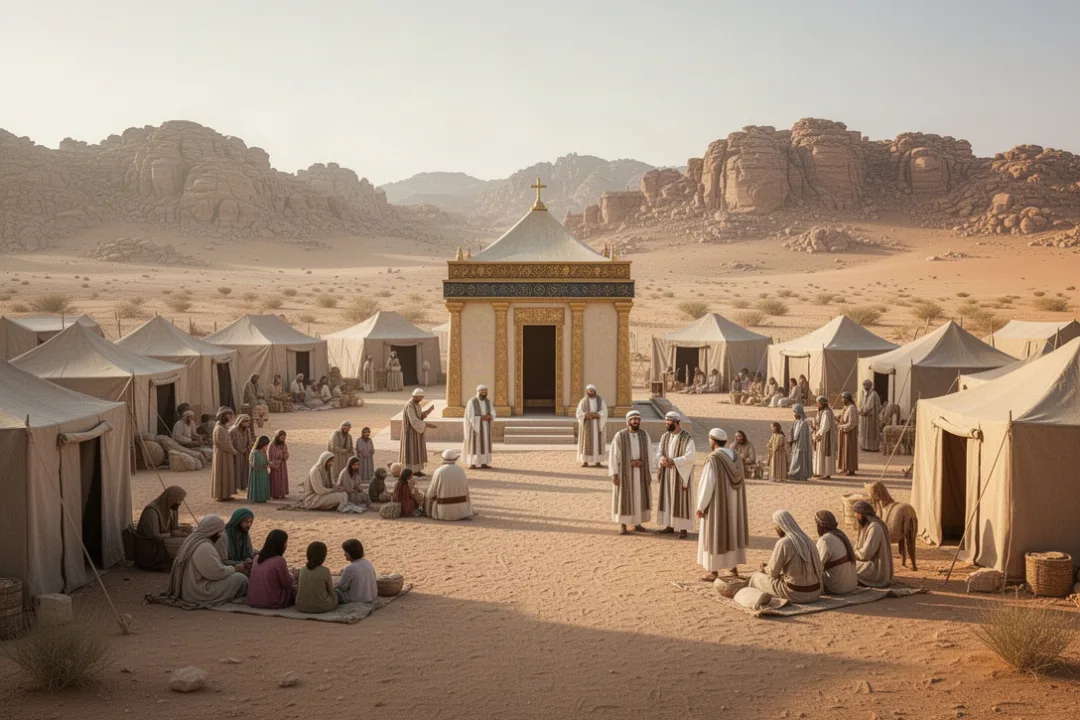
The tribes camp around the tabernacle according to an orderly arrangement. The placement communicates that worship is at the center of Israel’s communal life. The tabernacle is not a decorative building at the edge of camp; it represents God’s presence among the people.
The Levites are set apart to transport and care for the tabernacle furnishings. Different Levitical families receive different responsibilities, and the sacred objects are handled according to specific instructions. These details reinforce the distinction between ordinary camp life and the holiness associated with worship.
Numbers also records procedures for protecting the community’s holiness. Laws address suspected marital unfaithfulness, Nazirite vows, priestly blessing, restitution, and the removal of serious impurity from the camp. The message is that life with God involves both worship and daily conduct.
The priestly blessing in Numbers 6 is especially well known because it asks God to bless, keep, show favor to, and give peace to his people. Rather than quoting the wording of a particular Bible translation, it is enough to see its purpose: Israel’s security depends on God’s gracious attention, not only on military strength or human organization.
What the wilderness journey reveals about Israel’s struggles
Numbers 10–21 follows Israel as the people leave Sinai and begin moving toward Canaan. The journey exposes recurring problems: complaining, distrust, resentment, impatience, and resistance to authority. The people have seen God’s power in the exodus, yet they often interpret wilderness hardship as evidence that returning to Egypt would be safer.
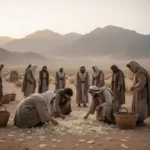
One early episode involves complaints about food and hardship. The people become dissatisfied with the manna God provides, and their craving reveals a deeper problem than hunger: they are judging God’s provision and longing for the life they once endured as slaves. Moses also becomes overwhelmed by the weight of leadership, leading to the appointment of elders who help share the responsibility.
Other conflicts involve Moses’ own family and the wider community. Miriam and Aaron challenge Moses’ unique role, while later Korah and his allies challenge the authority of Moses and Aaron. These stories do not present leadership as a route to personal privilege. They show how disputes over authority can threaten the unity and worship of the whole community.
The book does not portray Moses as flawless. He becomes discouraged, angry, and at one point disobeys God’s command when providing water for the people. Numbers 20 explains that Moses and Aaron will not lead the people into the land. Their failure demonstrates that even central leaders remain accountable to God.
Why the spies’ report becomes the book’s turning point
Numbers 13–14 contains one of the book’s defining events. Moses sends representatives from the tribes to explore Canaan. They return with evidence that the land is fertile, but most of the spies focus on fortified cities and powerful inhabitants. The people accept the fearful report and talk about returning to Egypt.
Caleb and Joshua respond differently. They do not deny the danger, but they believe God can bring Israel into the land. Their faith is not based on the claim that the obstacles are small. It rests on God’s promise and presence being greater than the threat.
The people’s reaction leads to judgment. The generation that refused to trust God will not take possession of Canaan; the wilderness journey will continue until a new generation is ready. This is one of the book’s clearest explanations for the delay between the exodus and the conquest.
Numbers presents the judgment as serious, but not as the cancellation of the covenant. God does not abandon the entire people or erase the promise to their descendants. Instead, the promise moves through a period of discipline and transition. Unbelief has consequences, yet God’s purposes continue beyond one generation’s failure.
How rebellion and judgment function in Numbers
Several rebellion stories appear in Numbers, and they share a basic pattern. A person or group challenges God’s appointed order, the community faces danger or disorder, and God responds with judgment or corrective action. These accounts can feel severe, but they reflect the book’s understanding of Israel as a covenant community whose choices affect everyone.
Korah’s rebellion is one example. Korah and other leaders object to Moses and Aaron’s roles, arguing that the whole community is holy. Numbers does affirm that Israel belongs to God, but it also distinguishes different responsibilities within worship and leadership. The conflict shows that a true statement about communal holiness does not automatically justify taking authority that God has not assigned.
Another episode occurs when the people speak against God and Moses during the journey. They are afflicted by venomous snakes, and God provides a means of healing through a bronze serpent lifted in the camp. Those who look toward it live. The event combines judgment, repentance, and mercy, and later biblical writers use the image in theological reflection.
These stories should not be read as saying that every hardship is a direct punishment for a particular sin. Within Numbers, however, the linked rebellions are clearly interpreted as covenant violations. The larger lesson is that freedom requires faithful responsibility; leaving Egypt does not automatically make Israel ready to live well in God’s presence.
What Numbers teaches about God’s presence and holiness
God’s presence is central to the book. The cloud over the tabernacle guides Israel’s movements, and the people are expected to travel when the cloud lifts and remain when it stays. This creates a picture of a community that must depend on divine direction rather than personal timing.
Holiness in Numbers is not limited to private religious feelings. It affects the camp, worship, leadership, relationships, vows, property, warfare, and treatment of impurity. The regulations can seem distant from modern life, but they communicate that God’s presence changes how the community understands space, responsibility, and behavior.
The book also balances holiness with mercy. When the people fail, intercession matters. Moses repeatedly appeals to God’s character and reputation, and God continues to preserve the nation even after judgment. The priestly blessing and the later instructions about offerings both emphasize that the relationship with God depends on grace as well as obedience.
Reading tip: When a law or ritual detail seems unfamiliar, ask what it says about God’s presence, the community’s responsibility, or the need for restoration.
What the Balaam and Balak story means
Numbers 22–24 tells the story of Balak, king of Moab, and Balaam, a diviner whom Balak wants to hire against Israel. Balak fears Israel’s growing presence and seeks a curse. Instead, Balaam repeatedly speaks blessings because God does not allow him to pronounce the requested curse.
The story stands out because Israel is not the one initiating the action. While the Israelites are camped nearby, God protects them from a threat they cannot see and cannot control. The narrative also contains the unusual episode of Balaam’s donkey, which perceives danger before Balaam does and becomes part of the story’s exposure of Balaam’s blindness.
Balaam is a complicated figure. He recognizes that he cannot simply speak whatever he wants, yet later passages connect him with advice that led Israel toward idolatry and sexual immorality at Peor. Numbers therefore presents a warning about religious knowledge without faithful character.
The blessings over Israel emphasize that God’s purposes cannot be overturned by political power or ritual manipulation. Balak has wealth, authority, and a plan, but none of these can defeat God’s commitment to the people. The account also reminds readers that external enemies are not Israel’s only danger; compromise within the community can be just as destructive.
How the Baal of Peor episode changes the story
Immediately after the Balaam narratives, Numbers 25 describes Israel’s involvement with Moabite and Midianite religious practices at Baal of Peor. The people participate in worship that violates their covenant with God, and a plague follows. This episode reveals how quickly a community can abandon its identity through attraction, pressure, or accommodation.
The response is severe because idolatry is treated as a direct rejection of the covenant. Yet the account also leads into a new stage of organization. After the crisis, Israel is counted again, and the second census prepares the community for the land that the earlier generation refused to enter.
That placement matters. The second census is not simply a repeated statistic. It marks the emergence of a new generation. The people have suffered judgment, but God has not left them without a future. Numbers holds together the seriousness of sin and the possibility of renewed obedience.
Why the second census and inheritance laws matter
Numbers 26 records the second major census. It lists the tribes according to their clans and provides a basis for dividing the land. The population figures and family records connect the future settlement with the people’s identity as descendants of Jacob’s sons.
The census also sets up questions about inheritance. The daughters of Zelophehad appeal for a portion of their father’s inheritance because he died without sons. God instructs Moses to establish a broader order of inheritance that includes daughters in such a situation, while later provisions address how tribal land should remain within the appropriate tribe.
This episode shows that biblical law sometimes develops through a concrete question brought by members of the community. The women are not erased from the story; their request is heard and incorporated into the legal framework. The issue is both family justice and preservation of tribal inheritance.
Numbers also announces Joshua as Moses’ successor. Moses is told to appoint and commission him before the community, ensuring that leadership will continue after Moses’ death. The transition reinforces a central theme: the promise does not depend on one human leader, even though good leadership matters greatly.
What the offerings and appointed festivals contribute
Numbers 28–29 lists regular offerings, Sabbath offerings, monthly offerings, and sacrifices connected with annual festivals. These instructions appear after the older generation has been judged and before Israel enters the land. Their placement links the future life in Canaan with continuing worship and communal remembrance.
The people are not merely preparing for military occupation or economic settlement. They are preparing to live as a worshiping society. The calendar of offerings gives shape to time and reminds Israel that the land, harvest, rest, and community all belong within the covenant relationship.
Numbers also addresses vows in chapter 30. A vow is treated as a serious promise rather than casual speech. The instructions recognize different household situations while emphasizing that commitments made before God carry responsibility. The broader principle is clear: faithfulness includes keeping one’s word.
How the final chapters prepare Israel for life in the land
The final part of Numbers records conflict with Midian, settlement east of the Jordan, and instructions about boundaries, cities, and inheritance. The tribes of Reuben and Gad, along with part of Manasseh, request land east of the Jordan because it suits their large herds.
Moses initially worries that their request could discourage the other tribes, recalling how the spies’ report weakened Israel’s courage. The tribes agree to send their fighting men across the Jordan with the rest of Israel until the land is secured. Their arrangement shows that private prosperity cannot replace shared responsibility.
Numbers 33 lists the stages of Israel’s journey from Egypt through the wilderness. The list may seem repetitive, but it turns travel into a record of God’s ongoing care and Israel’s long formation. The community has not arrived by a simple route, and the remembered stops preserve the story of how it was shaped.
The book also describes cities for the Levites and cities of refuge. These arrangements address the practical need to provide for the Levites and to distinguish accidental killing from intentional murder. The cities of refuge offer protection while a case is examined, showing that justice should not be driven by uncontrolled revenge.
The final inheritance instructions return to the concern raised by the daughters of Zelophehad. Land is more than private property in Numbers; it is part of the covenant gift assigned to tribes and families. The book ends with Israel still waiting to cross the Jordan, but the community is organized, instructed, and positioned to receive what God promised.
What the book of Numbers means for Christian readers
Christians commonly read Numbers as part of the larger biblical story that leads from the exodus to Israel’s settlement and later history. The New Testament refers to wilderness events as warnings about unbelief, grumbling, idolatry, and testing God. Those references do not make Numbers irrelevant to its original setting; they draw attention to its recurring spiritual patterns.
The book warns that past religious experiences do not guarantee present faithfulness. Israel had witnessed the exodus and received God’s commands, yet the people still had to choose trust in each new crisis. For Christian readers, the same principle encourages steady faith rather than reliance on a past conversion experience, answered prayer, or season of spiritual strength.
Numbers also offers a realistic account of leadership. Moses intercedes, organizes, teaches, and perseveres, but he also fails and faces consequences. Aaron serves as high priest, yet his leadership is tested by family and national conflict. Joshua is appointed before he takes over. These examples encourage respect for leadership while rejecting the idea that leaders are beyond accountability.
The book’s treatment of wilderness seasons can also speak to experiences of delay. Israel’s prolonged journey was not meaningless, even though it involved judgment and loss. The people were being formed as a community, and a new generation was being prepared. That does not make suffering good in itself, but it shows that God can continue his purposes during seasons that feel directionless.
How to read difficult passages in Numbers responsibly
Numbers includes violence, judgment, ritual rules, gender-related laws, and ancient military practices. These passages deserve careful reading rather than quick application. First, identify who is speaking, what crisis is occurring, and whether the passage describes an event, commands an action, or records a later legal arrangement.
Second, read each episode in its covenant setting. Israel is portrayed as a particular people called to represent God in a specific historical period. Not every action recorded in Numbers is a general command for later communities, and not every narrative detail is presented as a model for personal behavior.
Third, compare the difficult passage with the book’s larger themes. Ask how it relates to holiness, mercy, justice, leadership, communal responsibility, and the promise of land. A single dramatic scene should not be allowed to erase the repeated emphasis on God’s patience, intercession, provision, and faithfulness.
Read the surrounding chapters: The context often explains why a judgment or law appears.
Separate description from instruction: A recorded event is not automatically a command to imitate it.
Notice the community dimension: Many decisions in Numbers affect the entire camp, not only one individual.
Use a reliable study Bible or commentary: Historical and literary notes can clarify customs, geography, and ancient legal practices.
Keep the whole biblical story in view: Later passages may reflect on Numbers without removing its original setting.
What to look for when studying Numbers
A productive reading does not require treating every census or travel list as equally easy to understand. Instead, look for patterns that connect the book’s narrative and laws. Repeatedly ask what the people are learning, where trust breaks down, and how God responds.
Presence: Where is the tabernacle, and how does God guide the camp?
Trust: Does Israel respond to danger with confidence or fear?
Leadership: Who carries responsibility, and how are leaders corrected or replaced?
Holiness: What actions protect worship and the community’s relationship with God?
Generational change: How does the new generation differ from the one that left Egypt?
Promise: How does God preserve the future of Israel despite repeated failures?
Read this way, Numbers is more than a collection of ancient counts and regulations. It is a story about a redeemed people learning how to live together under God’s direction. The book shows that freedom is the beginning of formation, not the end of the story.
So, what is the book of Numbers about in the Bible? It is about Israel’s wilderness journey from Sinai toward the promised land, but its deeper subject is the relationship between God’s faithful presence and human distrust. The book remembers failure honestly, takes holiness seriously, protects the vulnerable through practical laws, and continues to point toward the fulfillment of God’s promise.
Frequently asked questions
Why is the book called Numbers?
The English name comes from the two major censuses recorded in the book. One occurs near Mount Sinai at the beginning, and another takes place near the end on the plains of Moab. These counts help organize tribes, military responsibilities, Levites, and land inheritance. The Hebrew name, Bemidbar, emphasizes the wilderness setting instead.
How long did Israel stay in the wilderness in the book of Numbers?
Numbers covers the wilderness period that followed the exodus and includes Israel’s arrival near the Jordan River. The broader biblical account describes this period as forty years. The delay follows the people’s refusal to enter Canaan after hearing the spies’ report, allowing a new generation to become the community that moves toward the land.
Who are the main people in Numbers?
Moses, Aaron, Miriam, Joshua, Caleb, Balaam, and Balak are among the most prominent figures. Moses leads and intercedes but also faces discipline. Joshua and Caleb represent faithful trust after the spies’ mission. Balaam and Balak appear in a major story about attempted cursing, while Zelophehad’s daughters play an important role in inheritance law.
Is Numbers only about laws and census lists?
No. Although it contains many laws, lists, and organizational instructions, it also includes major narratives about travel, rebellion, fear, leadership, judgment, healing, prophecy, and preparation for settlement. The administrative material supports the larger story of how a group of former slaves becomes an ordered covenant community prepared to enter the promised land.





Leave a Reply