David and Saul in the Bible: Their story and meaning
David and Saul in the Bible: Their story and meaning
David and Saul are central figures in the Bible’s account of Israel’s transition from its first king to the dynasty God promised to David. Saul begins as a capable and chosen king, but repeated disobedience leads to his rejection. David is then anointed as Saul’s successor, yet he spends years fleeing from Saul’s attempts to kill him.
The story is found mainly in 1 Samuel 16–31, with David’s rise and kingship continuing through 2 Samuel. David refuses to take Saul’s life when he has the opportunity, while Saul’s fear and jealousy steadily damage his leadership, family, and relationship with God.
Saul was Israel’s first king. The people had asked for a king to lead them like the surrounding nations, and God directed the prophet Samuel to anoint Saul, from the tribe of Benjamin. Saul initially appeared well suited to the role: he was physically impressive, publicly humble, and able to rally Israel in battle.
His early reign included military victories over enemies such as the Ammonites. However, Saul’s success did not produce lasting obedience. He repeatedly acted without waiting for God’s direction or altered commands he had received through Samuel. These choices revealed a deeper problem: Saul wanted the appearance of faithful leadership without consistently submitting to God’s authority.
In 1 Samuel 13, Saul offered a sacrifice before Samuel arrived, even though Samuel had instructed him to wait. Saul explained that he feared the army would scatter and that the enemy was approaching. Samuel rebuked him because Saul had taken authority that did not belong to him.
Later, in 1 Samuel 15, Saul was commanded to devote the Amalekites and their possessions to destruction. Saul spared King Agag and kept the best animals, claiming that the animals were intended for sacrifice. Samuel responded that obedience matters more than religious performance and announced that God had rejected Saul as king.
“To obey is better than sacrifice” is the central idea Samuel delivers in 1 Samuel 15:22, expressed here in paraphrase rather than a direct Bible quotation.
Saul’s rejection did not mean that David immediately replaced him on the throne. Saul continued ruling for years, while David was privately prepared for the future. That gap creates much of the tension in the story: David had been chosen, but he had not yet been given permission to seize the kingdom.
Why David was chosen and anointed as Saul’s successor
After Saul’s rejection, God sent Samuel to the town of Bethlehem, to the house of Jesse. Jesse presented several of his older sons, but God did not choose them. David, the youngest, was still tending the sheep when Samuel asked for him.
David’s selection teaches that God’s evaluation differs from human judgment. Samuel was reminded that people tend to judge by outward appearance, while God looks at the heart; see 1 Samuel 16:7. David was not chosen because the Bible presents him as flawless. He was chosen as a person who would respond to God with faith, repentance, and trust, even though he would later commit serious sins.
Samuel anointed David in the presence of his family. The anointing marked David as the future king, but it did not give him immediate political control. The Spirit of the Lord came upon David, while Saul experienced distress and was troubled by a harmful spirit, as described in the biblical narrative.
David then entered Saul’s service as a musician. His skill on the lyre brought relief to Saul when the king was troubled. This creates a striking contrast: David first served the man whose throne he would eventually inherit. Saul recognized David’s ability and made him one of his armor-bearers, but he did not yet understand the full significance of David’s anointing.
David’s courage became widely known after his encounter with Goliath in 1 Samuel 17. The Philistine warrior challenged Israel’s army, and the soldiers were afraid to respond. David, still described as a young man, trusted that God could rescue Israel and defeated Goliath with a sling and a stone.
The victory changed David’s public standing. The women of Israel celebrated Saul’s military success but credited David with even greater victories. Their song became the trigger for Saul’s jealousy. From that point, Saul began to see David not as a loyal servant but as a threat to his crown.
Context matters: David’s anointing was a promise about God’s future purpose, not a license to overthrow Saul. The story repeatedly distinguishes between being chosen for a role and taking that role by force.
How Saul’s jealousy turned into persecution
Saul’s reaction to David developed from suspicion into open violence. The king became angry when people praised David’s victories, and he feared that David would take the kingdom. On more than one occasion, Saul threw a spear at David while David was playing music for him.
David escaped and became a military commander. Saul initially placed him in dangerous positions, hoping the Philistines would kill him. Yet David continued to succeed, and the people respected him. Saul’s fear deepened because David’s success appeared to confirm that God was with him.
David also married Saul’s daughter Michal, who loved him and helped him escape through a window when Saul’s men came to arrest him. Saul’s son Jonathan formed a close covenant friendship with David as well. Jonathan recognized that David was not acting as an enemy of the nation, even though David’s future kingship could threaten Jonathan’s own prospects.
In 1 Samuel 20, Jonathan tested Saul’s attitude and learned that the king intended to kill David. Jonathan warned David through an arranged signal, and the two friends parted in grief. Their relationship shows that loyalty to God and truth can require resisting even a parent or ruler when that person is acting unjustly.
David fled from Saul and gathered a group of followers around him. He moved through wilderness areas and strongholds, seeking safety while trying not to provoke a civil war. Saul used soldiers and informants to search for him, turning the king’s military power against one of his own most faithful servants.
Saul’s persecution also harmed other people. At Nob, Saul accused the priests of helping David. Although the priest Ahimelech had acted without knowing of David’s conflict with Saul, Saul ordered the priests killed. This episode, recorded in 1 Samuel 22, reveals how unchecked fear can expand into injustice against innocent communities.
David’s situation was morally and emotionally complicated. He had been anointed to become king, but he was living like a fugitive. He had opportunities to retaliate, yet he repeatedly sought guidance before acting. Some of the Psalms are traditionally associated with David’s flight from Saul, including Psalm 59 and Psalm 142, though the narratives in Samuel remain the primary source for the events.
Why David refused to kill Saul
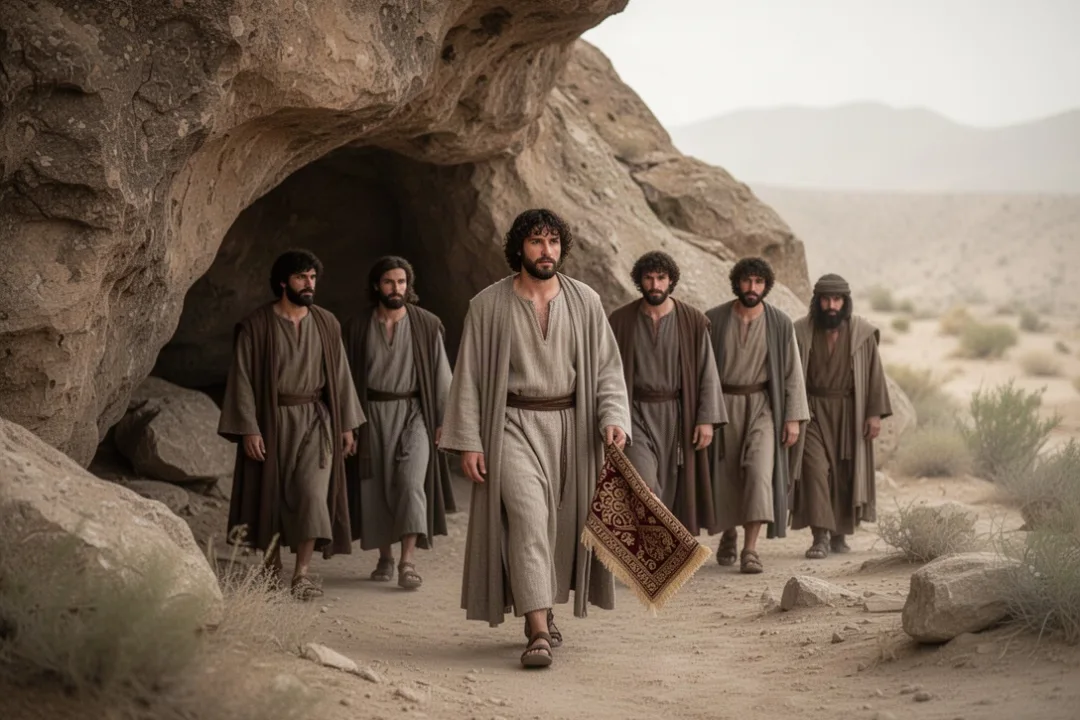
David had two major opportunities to kill Saul. The first occurred in the wilderness of En-gedi, described in 1 Samuel 24. Saul entered a cave while David and his men were hiding farther inside. David’s followers saw the moment as God’s delivery of Saul into David’s hands, but David secretly cut off part of Saul’s robe and refused to attack him.
After Saul left the cave, David called out and showed him the piece of cloth. David insisted that he had no desire to harm “the Lord’s anointed,” meaning the king God had permitted to rule. He also appealed to Saul’s conscience, asking why Saul believed the reports that David wanted to kill him.
David’s restraint did not mean he approved of Saul’s actions. He clearly identified Saul’s persecution as wrong and maintained a safe distance. His position was that God, not David, should decide when and how Saul’s reign would end.
The second opportunity came in 1 Samuel 26. David and Abishai entered Saul’s camp at night and found Saul sleeping, with his spear beside his head. Abishai wanted permission to kill Saul, but David refused. Instead, they took Saul’s spear and water jug as evidence that they could have attacked him but chose not to.
Again, David appealed to Saul from a distance. He challenged Saul’s behavior while declining to take revenge. Saul admitted that David had acted more righteously than he had, yet the reconciliation did not last. David understood that Saul’s moment of remorse was not the same as a permanent change of character, so he continued to protect himself.
David did not confuse patience with passivity: he escaped danger and maintained boundaries.
He did not treat personal anointing as permission for private revenge.
He confronted Saul’s wrongdoing without becoming Saul’s executioner.
He trusted that justice could come through God’s timing rather than his own violence.
David’s response is often presented as a model of respect for legitimate authority. It should not be used to excuse abuse or demand that victims remain in immediate danger. David did not stay within reach of Saul simply to demonstrate submission; he fled, hid, and built a support network. The narrative holds together two principles: respect for authority and the responsibility to seek safety from wrongdoing.
Practical reading principle: David’s refusal to kill Saul is not a command to tolerate violence. It describes David refusing revenge while still taking wise steps to escape a dangerous ruler.
How Jonathan’s friendship shaped David’s relationship with Saul
Jonathan is essential to understanding the conflict between David and Saul. As Saul’s son, Jonathan could have viewed David as a rival to his own inheritance. Instead, he recognized David’s character and formed a covenant with him, giving David his robe, armor, sword, bow, and belt in 1 Samuel 18:1–4.
The gifts symbolized deep affection and solidarity, although the passage does not require every item to be read as a formal transfer of royal authority. Jonathan’s conduct showed that he valued God’s purposes and his friend’s life more than personal ambition.
Jonathan repeatedly tried to restrain Saul. He reminded his father that David had served Israel, risked his life against Goliath, and committed no offense deserving death. Saul briefly listened and swore that David would not be killed, but his anger returned whenever fear took control.
This pattern illustrates the difference between temporary remorse and genuine repentance. Saul could acknowledge that David was righteous after being confronted, yet he continued to pursue him. His emotional words did not produce consistent obedience or repair the danger he created.
Jonathan and David eventually met one final time in the wilderness. They strengthened each other and renewed their commitment to friendship. Jonathan later died with Saul in battle against the Philistines on Mount Gilboa, as recorded in 1 Samuel 31. David mourned both men, despite Saul’s attempts to destroy him.
David’s lament in 2 Samuel 1 honors Saul and Jonathan together. He remembers their courage and dignity as warriors and commands that the people be taught the song of the bow. David does not use Saul’s death to celebrate his own vindication. His grief shows that rejecting Saul’s actions did not require denying Saul’s humanity or the complicated bond between them.
What happened after Saul’s death
Saul and Jonathan died when the Philistines defeated Israel in battle. Saul was critically wounded and asked his armor-bearer to kill him, but the armor-bearer refused. Saul then fell on his own sword. An Amalekite later told David that he had killed Saul, but the details of his report do not align neatly with the account in 1 Samuel 31. David had him executed for claiming to have killed the Lord’s anointed.
David did not immediately become undisputed king over all Israel. He went to Hebron, where the men of Judah anointed him king over Judah. Saul’s son Ish-bosheth was made king over the remaining tribes, and a period of conflict followed between the house of Saul and the house of David.
After Ish-bosheth’s death, the elders of Israel came to David. They recognized that David had led Israel in battle and that God had appointed him shepherd and ruler over the nation. David was then anointed king over all Israel, as recorded in 2 Samuel 5.
This gradual transition reinforces a central feature of the story: David’s kingship develops through waiting, service, suffering, and public recognition. He does not need to manufacture the fulfillment of God’s promise through assassination. His accession still involves political conflict, but the narrative distinguishes David’s long restraint from a self-directed seizure of power.
David’s later reign was not morally perfect. He committed adultery with Bathsheba and arranged circumstances that led to the death of her husband, Uriah, in 2 Samuel 11. The prophet Nathan confronted him, and David confessed his sin. His failure prevents readers from reducing the story to “good David versus bad Saul.” Both men sinned, but their responses to confrontation differed in important ways.
Saul often defended himself, shifted blame, or prioritized public approval. David also made excuses at times, but when Nathan exposed his sin, David admitted that he had sinned against the Lord. The Bible honors David’s faith while still recording his wrongdoing and its serious consequences for his family and kingdom.
What the David and Saul story teaches about leadership
The contrast between David and Saul is not simply a comparison between a successful king and a failed king. It examines what happens when leaders allow fear, pride, and public opinion to govern their choices. Saul’s deepest problem was not one isolated mistake. It was a repeated pattern of resisting correction and treating God’s command as something he could revise.
David’s life presents a different pattern, although not a sinless one. He sought God’s direction, accepted correction, and waited for authority to be established rather than taking revenge. His faith was visible not only in dramatic moments such as the fight with Goliath, but also in less celebrated decisions to spare Saul and leave judgment to God.
The story also shows that being chosen does not remove the need for character. David had a calling, but he still faced fear, loneliness, temptation, and consequences. A position or promise does not make a person automatically wise. Faithfulness must be practiced through ordinary decisions, especially when no immediate reward is visible.
Readers can also see several practical principles in the way David responded to Saul:
Separate a promise from a timetable. A future responsibility does not justify forcing immediate results.
Use distance when a relationship becomes dangerous. David avoided Saul rather than repeatedly placing himself in reach of attack.
Reject revenge without ignoring injustice. David named Saul’s wrongdoing and asked God to judge it.
Test remorse by its fruit. Saul’s emotional admissions did not reliably change his conduct.
Accept correction honestly. David’s later repentance shows that a faithful leader must still confess serious sin.
For Christian readers, the David-Saul narrative also contributes to the Bible’s larger story about the promised king. David’s dynasty becomes central to Israel’s hopes for a future ruler. The New Testament identifies Jesus as descended from David, especially in genealogies such as Matthew 1 and Luke 3, while presenting Jesus as the fulfillment of the royal hope in a way David himself did not fully achieve.
Reading David and Saul together prevents simplistic conclusions. Saul’s decline warns against disobedient leadership, insecurity, and refusal to repent. David’s conduct toward Saul highlights patience, restraint, and trust in God’s justice, while David’s later sins remind readers that even a favored king remains accountable.
The relationship between these two men is therefore one of the Bible’s most searching studies of power. Saul had the throne but lost his spiritual direction. David had the promise but had to wait. Between them, the narrative asks whether a leader will protect personal status at any cost or submit ambition to God, truth, and the well-being of others.
Frequently asked questions
Did David ever fight Saul directly?
David did not engage Saul in a personal battle or attempt to kill him. He fought Israel’s enemies and led his own supporters while fleeing Saul, but twice refused opportunities to attack the king. David did, however, confront Saul verbally and expose the injustice of Saul’s pursuit.
Why did Saul want David dead?
Saul feared that David would replace him as king, especially after people praised David’s military victories. His fear became jealousy and then suspicion. Saul also knew that Samuel had announced the loss of his dynasty, so David’s rising popularity appeared to confirm that God’s favor had moved away from him.
Was David right to spare Saul?
Within the story’s theological framework, David was right to refuse personal revenge and leave judgment to God. He did not excuse Saul or remain unprotected. David fled, hid, confronted Saul’s wrongdoing, and accepted that Saul’s reign would end in God’s timing rather than through David’s assassination.
Where should I read the story of David and Saul?
Begin with 1 Samuel 16, where David is chosen and anointed. Continue through chapters 17–26 for Goliath, David’s rise, Saul’s jealousy, and the two occasions when David spares Saul. Read 1 Samuel 31 and 2 Samuel 1 for Saul’s death and David’s lament.










Leave a Reply