Holy Land Sites: Top Religious Landmarks You Must Visit
Across the landscapes of Israel and the Palestinian territories, a handful of holy land sites stand out as anchors of faith for billions of people. These sacred places are not only architectural marvels but also living witnesses to millennia of prayer, ritual, and pilgrimage. Whether you approach them as a student of history, a devotee seeking a moment of quiet, or a curious traveler eager to understand the world’s great religions, you will find that these religious landmarks offer insight into belief, culture, and the human search for meaning. This article acts as a practical guide and a cultural overview of the most significant holy land sites you should consider visiting.
Throughout the region, the term holy sites in the Holy Land is used to describe places revered by Judaism, Christianity, and Islam. While each faith has its own sacred geography, these locations often overlap in on-site memory, shared legends, and historic layers. The following sections organize the list into geographic clusters and highlight what makes each destination unique — from iconic rituals and iconic horizons to the quiet corners where visitors can reflect on the span of human devotion.
Jerusalem: The Nexus of Faith and the World’s Sacred Geography
Jerusalem stands as a unique convergence of Jewish, Christian, and Muslim sacred spaces. Visiting this city offers a multi-sensory encounter with ancient stones, prayers carried by the wind, and the enduring idea that certain places carry a durable memory of the divine. Below are the prime holy places in Jerusalem that every traveler should know, along with guidance on etiquette and context.
The Western Wall (Kotel)
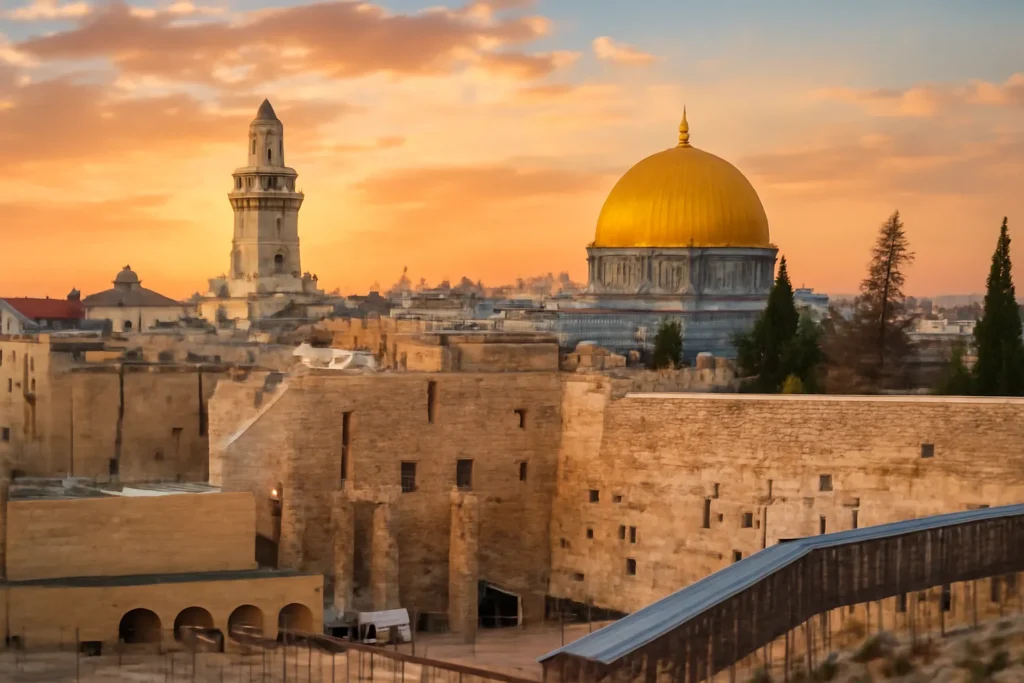
The Western Wall is the remaining retaining wall of the Second Temple period and the holiest accessible site in Judaism. Pilgrims and visitors come to pray, insert notes into the crevices, and reflect on the continuity of Jewish tradition. While the wall itself is a secularly accessible plaza above, the adjacent prayer sections are dedicated spaces where traditional attire, modest behavior, and quiet reverence are encouraged. Some practical notes:
Dress modestly: shoulders and knees covered for all participants, with men and women separated in prayer areas of the plaza.
Avoid loud conversations or photography in the most sacred lanes; ask before photographing individuals.
Respect the rhythm of the space, especially during Shabbat and Jewish holidays when crowds are heavier.
Beyond its function as a place to pray, the Kotel stands as a living link to biblical narratives and centuries of scholarship. It is closely connected to the Temple Mount complex, which remains a sensitive and restricted area.
The Church of the Holy Sepulchre
Situated within the Christian Quarter, the Church of the Holy Sepulchre is revered by Christians as the site of the crucifixion, burial, and resurrection of Jesus Christ. The church itself is a mosaic of chapels and sacred spaces, maintained by several Christian denominations. Visitors should expect a complex, sometimes crowded, but profoundly meaningful atmosphere where history and faith converge. Notable features include:
The Golgotha chapel, traditionally identified as the hill of the crucifixion.
The Edicule, a small structure enshrining the tomb said to hold Jesus’ body before the resurrection.
Hymns, candles, and the slow movement of pilgrims along narrow corridors — a ritual rhythm that has endured for centuries.
Pro tip: Early morning visits can offer a quieter experience before the larger tour groups arrive, while late afternoon visits may coincide with liturgical services that illuminate the space in ritual color and sound.
Islamic Sacred Spaces: The Dome of the Rock and Al-Aqsa Mosque
Within the broader precincts commonly known as the Temple Mount, two sacred sites hold central significance in Islam. The Dome of the Rock, with its iconic gold dome, and the adjacent Al-Aqsa Mosque complex, are among the oldest examples of Islamic architecture and a destination for Muslim pilgrims and visitors. These spaces are revered for their association with early Islamic history, theological development, and the broader spiritual geography of the city. Important considerations include:
Access to the Temple Mount is carefully managed; women and men are subject to heighted security and scheduling rules. Non-Muslim visitors may have restricted access to certain periods.
Photography policies vary by zone and time; always follow posted guidelines and staff instructions.
When visiting, maintain a respectful demeanor, avoid loud conversations, and dress modestly.
As a landmark of sacred hospitality and religious memory, these holy places in Jerusalem gather people of diverse faiths, reminding visitors of shared reverence and the complexities of shared space in a modern city.
Via Dolorosa and the Christian Narrative
The Via Dolorosa is a traditional route believed to retrace Jesus’ path carrying the cross to Golgotha. Along its streets, the stations of the cross mark moments of the Passion narrative, with chapels and churches anchoring the route. Pilgrims and curious travelers walk the path in stages, often pausing for reflection at each station. For many, walking the route is a moving, personal encounter with scripture and history.
Temple Mount and the Sacred Precincts: A Delicate Balance
In Jerusalem, the intersection of sacred spaces also means that access and policy reflect a delicate balance among religious custodians and political authorities. For visitors, this means planning ahead, being mindful of security procedures, and recognizing the deep respect that locals hold for these places. The goal is to experience the holy land sites with thoughtfulness and an awareness of their multi-faith significance.
Nazareth and Galilee: The Landscape of Biblical Life
Beyond Jerusalem, the Holy Land region unfolds into landscapes that shaped the narratives of Judaism, Christianity, and Islam. Nazareth, Galilee, and nearby locales host a range of religious landmarks associated with biblical events, teachings, and early Christian communities. Here is a curated look at significant destinations in this zone.
The Basilica of the Annunciation (Church of the Annunciation)
The Basilica of the Annunciation stands in Nazareth as a monumental testament to the annunciation narrative in Christian tradition. Built on the site historically associated with Mary, the mother of Jesus, the church complex combines layers of architecture from different eras and offers spaces for contemplation, art, and liturgy. Highlights include:
Magnificent mosaics and sacred art that narrate the biblical story in color and form.
Chapel spaces dedicated to the annunciation and related Marian devotion.
A sense of continuity between ancient worship and contemporary prayer within a bustling Galilean town.
The site is a pilgrimage destination for many Christian denominations, and it offers a lens into how sacred memory travels across generations.
Sea of Galilee: Capernaum, Tabgha, and the Beatitudes
The Sea of Galilee region offers several holy land sites tied to Jesus’ ministry. In Capernaum, ancient synagogues and ruins sit beside churches built to commemorate Jesus’ activity in the area. Tabgha, near the lake’s northern shore, is celebrated for the miracles of the loaves and fishes and features a church complex with distinctive mosaics and serene courtyards. The Mount of Beatitudes, perched above the water, is traditionally associated with the Sermon on the Mount and offers a contemplative place for reflection with sweeping views of the waters below.
Becoming familiar with the geography helps visitors connect biblical narratives with landscape, making the teachings feel tangible and present.
The region’s churches often host liturgical events and seasonal processions that provide a living doorway into faith and community life.
When visiting, remember that respectful behavior in sacred spaces enhances everyone’s experience, especially during prayer times.
Tabgha and the Miracles of Jesus
Tabgha is traditionally linked with the multiplication of loaves and fishes. A tranquil site near the shore, it provides a quiet counterpoint to more crowded urban holy places. Visitors encounter a combination of natural beauty and religious art that memorializes one of the most widely cited miracles in Christian scripture.
Bethlehem and the Judean Hills: Birthplaces of Faith and Hope
Bethlehem holds a special place for Christians as the birthplace of Jesus, while the surrounding hills are dotted with sites connected to shepherds, ancient trade routes, and regional histories. This region offers a different flavor of sacred tourism—one rooted in birth narratives, itinerant life, and the spiritual symbolism of arrival and refuge.
In the heart of Bethlehem, the Church of the Nativity is traditionally considered the birthplace of Jesus. The church complex contains the Grotto of the Nativity and a series of chapels crafted by different Christian traditions over centuries. Visitors often encounter a long queue of pilgrims, monastic chorales, and a sense of reverence as they move through rock-cut spaces and ancient arches. Key experiences include:
Veneration at the Grotto where tradition places Jesus’ birth.
Historically significant mosaics, carvings, and the architectural layers that reflect successive centuries of devotion.
Nearby markets and street life that reveal Bethlehem’s contemporary vitality alongside its sacred heritage.
Milk Grotto, Shepherds’ Fields, and Other Bethlehem Trails
Alongside the Nativity Church, several nearby sites offer additional layers of holy land significance. The Milk Grotto is associated with Marian legends about her nursing Jesus, while the Shepherds’ Fields evoke the shepherds who received the nativity news. These spaces provide a more intimate perspective on the broader narrative and invite quiet reflection amid olive trees and hillside vistas.
Contemporary Spirituality and Community Life
Bethlehem remains a city of living faith communities. For visitors, engaging respectfully with local residents, exploring nearby churches, and supporting community initiatives can deepen the understanding of how sacred memory translates into daily life and hope in the modern era.
Desert Fortresses and Deserted Valleys: Masada, Qumran, and the Dead Sea Region
Stretching toward the eastern Kinneret and the desert cradle of the Jordan Rift, the Dead Sea region houses monumental sites that speak to ancient defense, scriptural history, and desert spirituality. These religious landmarks blend military archaeology with religious imagination, offering a different kind of sacred geography.
Masada: The Desert Fortress and the Story of Jewish Resilience
Masada is renowned as a fortress built by King Herod and preserved as a symbol of Jewish endurance and zeal. The ascent by cable car or hike yields dramatic views of the surrounding desert and the Dead Sea below. The site’s narrative is intertwined with Roman history, archaeology, and storytelling that emphasizes themes of courage, faith, and steadfastness. Visiting Masada typically involves:
Exploring the well-preserved palaces, storerooms, and water systems that reflect sophisticated ancient engineering.
Learning about the Zealot revolt and the dramatic last stand that has resonated in Jewish and Israeli memory.
Experiencing a sunset or sunrise that casts the fortress in a golden light, a moment many travelers consider deeply spiritual.
Qumran Caves and the Dead Sea Scrolls
The Qumran Caves near the Dead Sea yielded the Dead Sea Scrolls, among the most important biblical manuscripts discovery of the 20th century. The site today presents an archaeological landscape with ruins, a visitors’ center, and interpretive displays explaining the life of the community that once inhabited the area. For those who value textual history and biblical scholarship, Qumran offers a remarkable intersection of faith and archaeology.
Ein Gedi and Desert Oasis Reflections
The Ein Gedi Oasis region provides a contrasting sanctuary in the desert, where springs, palm groves, and ancient synagogue remnants offer a peaceful space for contemplation. While not a single canonical religious site, Ein Gedi embodies the spiritual imagination of seekers who find renewal in nature, quiet streams, and the stark beauty of the desert landscape.
Safed, Tzfat: The Intellectual and Mystical Heart of the Galilee
Northern Israel’s city of Safed (Tzfat) has long been associated with Jewish mysticism, scholarship, and the arts. Its winding alleys, historic synagogues, and panoramic views contribute to a distinctive spiritual atmosphere. This is a place where holy land experiences blend study, prayer, and artistic expression.
Safed hosts several ancient synagogues, including the Ari Synagogue and others tied to the medieval and early modern Jewish mystical movements. The city’s atmosphere invites visitors to explore:
Insight into Kabbalah and Jewish mysticism, including how metaphysical ideas shaped religious practice.
Art galleries, crafts, and music that echo Safed’s historic role as a center of spiritual discourse.
Quiet rooftops and overlooks that provide contemplative environments for personal reflection and prayer.
Pilgrimage Itineraries: How to Experience the Land of Sacred Memory
Several thoughtful itineraries allow travelers to immerse themselves in the spiritual landscape while balancing time, comfort, and cultural sensitivity. The following outlines emphasize the connections among the holy land sites mentioned above and provide practical sequencing ideas:
Jerusalem-Bethlehem Pilgrimage Route: Start with Jerusalem’s sacred core, then move toward Bethlehem to explore the Nativity narrative and related sites. This route highlights continuity between ancient memory and contemporary faith communities.
Galilee and Nazareth Circuit: Explore Nazareth’s Basilica of the Annunciation, wander along the shores of the Sea of Galilee, and visit Capernaum and Mount of Beatitudes for a holistic sense of Jesus’ ministry in the land.
Desert Heritage Trail: Masada, Qumran, and Ein Gedi provide a counterpoint to coastal cities, emphasizing resilience, ancient scriptural contexts, and natural beauty.
Safed and Northern Spirituality Circuit: Combine a study of Jewish mysticism with scenic overlooks, art, and medieval synagogues for a reflective, learning-centered experience.
When planning, consider seasonal rhythms, major religious holidays, and local observances. Some sites may have restricted hours during certain holy days or cultural events, so check ahead with official sites or local tour operators. For a well-rounded experience, pair site visits with interpretive talks, museum exhibits, and opportunities to encounter local communities respectfully.
Practical Tips for Visiting Sacred Sites in the Holy Land
Traveling to holy land destinations requires sensitivity to religious practices, modest dress, and decorum in sacred spaces. Here are practical recommendations to enhance your visit while honoring local traditions:
Dress modestly: shoulders and knees should be covered in most religious venues; in some places, women may need to cover heads in certain areas, while men and women may have separate prayer spaces.
Respect worship schedules: many places synchronize with daily prayers, rituals, and liturgies. Plan around these times to avoid disrupting ongoing activities.
Follow photography rules: some spaces prohibit photography or require permission; look for posted signs and ask staff when unsure.
Keep voices low and movements calm: sacred spaces invite contemplation, and excessive noise can be disrespectful to worshippers.
Support local communities: consider local guides, small businesses, and museum shops to learn about the ongoing life of the places you visit.
Accessibility varies across sites. Some destinations offer wheelchair-accessible routes, while others preserve ancient stairways and narrow corridors. If you have mobility concerns, contact visitor centers in advance to plan for alternative routes or shorter routes that still deliver meaningful experiences.
Preservation, Stewardship, and Respect in the Holy Land
Because these holy land sites sit at the intersection of faith, culture, and politics, they require a careful approach to preservation and mutual respect. Visitors contribute to the ongoing maintenance and interpretation of these sacred spaces by:
Following posted guidelines and respecting custodians’ instructions.
Not touching fragile artworks, mosaics, or inscriptions that hold centuries of history.
Using designated paths and staying on marked routes to protect archaeological layers and natural surroundings.
Respecting the diverse religious communities who maintain and operate these sites: understand that different faiths may oversee sections of the same complex.
Educators and travel planners increasingly emphasize respectful dialogue, inclusive commentary, and careful storytelling that celebrates shared heritage while acknowledging the sensitivities of present-day communities. The result can be a richer, more responsible encounter with the holy land sites that honors both past and living faiths.
Conclusion: Why These Sacred Places Matter Today
The holy land sites described here are more than tourist attractions; they are living archives of faith, art, architecture, and communal memory. They offer opportunities to reflect on humanity’s oldest questions—why do people seek the divine, how do communities remember and commemorate, and what responsibilities come with visiting places that hold sacred significance for billions? By exploring these religious landmarks, travelers gain a greater appreciation for the diversity of spiritual experience and the common aspirations that bind cultures across time. Whether you stand at the edge of the Western Wall, walk the stone pathways of Nazareth, or stand beneath the gold dome of the Dome of the Rock, you are entering a shared landscape of reverence, history, and possibility.
As you plan your journey through the Holy Land, approach each site with curiosity, respect, and an openness to the multiple narratives that shape the region. The experience of holy places can be transformative, offering perspectives that enrich your understanding of faith, humanity, and the power of memory to shape the present and the future.






Leave a Reply