Cambodia, a country of rich history, vibrant culture, and rapid social
development, has become an increasingly popular destination for volunteer programs in Cambodia and related opportunities abroad. For 2026,
the landscape of Cambodia volunteer opportunities emphasizes ethical engagement,
long-term community impact, and meaningful skill-building for both local
communities and international volunteers. Whether you are a student seeking
hands-on experience, a professional looking to donate time, or a retiree
pursuing a purpose-driven project, there are options that align with your
interests while respecting local needs and governance frameworks.
This article offers a detailed guide to the most relevant avenues for Cambodia volunteering programs in 2026, with practical advice on
choosing, funding, and participating in projects that prioritize local-led
development, cultural sensitivity, and sustainable outcomes. It also covers
planning considerations, safety, visa basics, and expectations so you can
approach your time in Cambodia with clarity and responsibility.
Why volunteer in Cambodia in 2026?
The demand for volunteer support in Cambodia spans several critical sectors:
education, healthcare, community development, environmental stewardship, and
cultural preservation. The country has experienced sustained economic growth,
yet disparities in access to quality schooling, healthcare, clean water, and
livelihood opportunities remain, particularly in rural areas and peri-urban
towns. Volunteer programs in Cambodia can help bridge these gaps
while offering volunteers a chance to learn from local partners, gain hands-on
experience, and contribute to grassroots progress.
In 2026, a thoughtful approach to volunteering in Cambodia emphasizes
transparency, ethical engagement, and measurable impact. Programs that align
with local priorities—developed in collaboration with Cambodian NGOs, schools, and
community groups—tend to deliver the most sustainable outcomes. Volunteers who come
with cultural humility, clear learning objectives, and a willingness to adapt
to local conditions tend to have a more positive and lasting experience.
Top sectors for Cambodia volunteer programs
Education and teaching in Cambodia
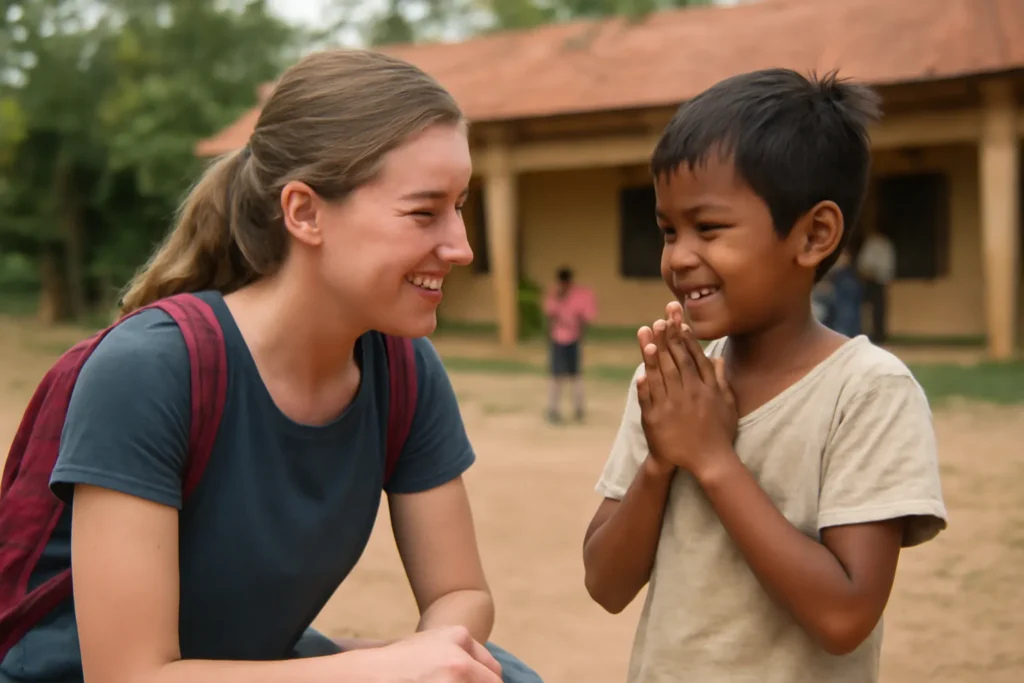
One of the enduring needs across Cambodia is access to quality education. Education-focused volunteer programs often place
volunteers in schools, community learning centers, or after-school programs.
Activities may include teaching English, assisting with science or math clubs,
supporting literacy campaigns, and helping teachers with classroom management
or curriculum development.
What volunteers do: English conversation practice, basic science labs, tutoring, club leadership, reading corners, and helping with school events.
Skills gained: Classroom management, lesson planning, cross-cultural communication, basic Khmer language exposure, and adaptability in resource-limited settings.
Ideal duration: 8–12 weeks for meaningful integration; 3–6 months often preferred for deeper impact.
Impact: Improved English proficiency, boosted student confidence, and enhanced teaching capacity for local staff.
Community development and capacity building
Community-driven projects focus on sustainable improvements in livelihoods, water and sanitation, nutrition, and youth empowerment. This sector often involves collaborative work with local partners to design and implement programs that respond to specific community needs.
What volunteers do: Infrastructure support (e.g., building small-scale facilities), facilitating workshops on hygiene, leading youth programs, support for micro-enterprise training, and helping with community organizing.
Skills gained: Project management, facilitation, participatory techniques, stakeholder engagement, and data collection for impact assessment.
Ideal duration: 2–6 months or longer for meaningful community change.
Impact: Strengthened local capacity, improved access to essential services, and empowered communities to sustain projects beyond the volunteer period.
Health-focused volunteering in Cambodia often centers on preventive health, maternal and child health education, nutrition, and community health worker support. These programs can complement local health services and contribute to health literacy and access.
What volunteers do: Health education sessions, basic health screenings (where appropriate and trained), support for maternal health education, and assisting NGO staff with outreach.
Skills gained: Public health communication, health promotion strategies, data entry for monitoring and evaluation, and sensitivity to local health beliefs.
Ideal duration: 6–12 weeks for introductory roles; longer assignments better for integrating with local teams.
Impact: Increased health awareness, better utilization of maternal and child health services, and stronger linkages to primary care facilities.
Environment, conservation, and wildlife protection
Cambodia’s biodiversity and natural heritage present opportunities to contribute to conservation
efforts, watershed management, river cleanups, and sustainable tourism practices. Programs in this
area can involve fieldwork with local conservation groups, community education on environmental
stewardship, and support for local research initiatives.
What volunteers do: Habitat restoration, wildlife monitoring, eco-tourism education, and community outreach for sustainable practices.
Skills gained: Field survey techniques, data collection, environmental education, and cross-cultural collaboration.
Ideal duration: 8–16 weeks or longer for meaningful field involvement.
Impact: Strengthened conservation capacity, increased awareness about biodiversity, and sustainable practices in local communities.
Economic development, microfinance, and livelihoods
Programs in this sector aim to support small businesses, financial literacy, and sustainable income-generating activities. Volunteers may assist with training, budgeting workshops, or information campaigns focused on market access and entrepreneurship.
What volunteers do: Business coaching, financial literacy sessions, market research support, and mentoring local youth entrepreneurs.
Skills gained: Microfinance concepts, community asset mapping, communication with diverse stakeholders, and data analysis for impact tracking.
Ideal duration: 8–20 weeks to build relationships with local entrepreneurs and see outcomes.
Impact: Improved financial literacy, increased youth employment opportunities, and stronger local economies.
Technology, digital volunteering, and education tech
The digital economy and online education have opened new avenues for volunteering in Cambodia that leverage technology to amplify impact. Remote support and field-based tech initiatives can complement traditional in-person work.
What volunteers do: Curriculum development for online learning, open educational resources, digital literacy campaigns, and IT support for NGOs (where appropriate).
Skills gained: Instructional design, e-learning development, basic IT troubleshooting, and cross-cultural collaboration.
Ideal duration: Flexible—often 4–12 weeks for on-site roles; longer remote engagements are possible.
Impact: Expanded access to digital learning, better resource availability for teachers, and increased organizational efficiency.
Disaster relief and humanitarian response
While Cambodia is relatively stable, emergency response skills and humanitarian readiness remain valuable in the broader region. Volunteer work can focus on preparedness, disaster risk reduction education, and supporting local nonprofits with relief distribution planning when needed.
What volunteers do: DRR education sessions, logistics planning support, humanitarian simulation exercises, and community resilience workshops.
Skills gained: Crisis communication, logistics coordination, risk assessment, and collaboration with government and civil society partners.
Ideal duration: Short-term trainings or longer-term capacity-building roles depending on partner needs.
Impact: Community resilience, more effective preparedness, and a better-coordinated local response framework.
Cultural preservation and heritage education
Cambodia’s rich cultural heritage includes language, art, music, and traditional crafts. Volunteer programs in this domain seek to preserve intangible cultural heritage while supporting sustainable tourism and community identity.
What volunteers do: Language exchange programs, traditional arts education, documentation of oral histories, and cultural workshops for youth and visitors.
Skills gained: Cultural management, oral history techniques, event planning, and intercultural communication.
Ideal duration: 6–12 weeks for introductory immersion; longer assignments for more in-depth projects.
Impact: Preservation of cultural knowledge, stronger community pride, and richer cultural experiences for visitors and locals alike.
How to choose the right Cambodia volunteer program
Selecting the right Cambodia volunteer program requires a thoughtful assessment of your goals, skills, and the needs of the host community. Here are practical criteria to guide your decision:
Impact and alignment: Does the program align with local priorities as defined in collaboration with community partners?
Transparency: Are the program’s costs, in-country support, and project outcomes clearly explained?
Safety and well-being: Is there a robust safety plan, in-country supervision, and access to emergency support?
Ethical considerations: Does the program avoid “voluntourism” traps by prioritizing capacity-building and local leadership?
Cost structure: What is included in the fee (housing, meals, training, airport pick-up, in-country transport) and what is optional?
Duration and commitment: Is the project suitable for your schedule and learning objectives?
Support network: Is there on-site staff, language support, and a clear point of contact?
Feedback and evaluation: Are there mechanisms to measure outcomes and solicit participant feedback?
Planning your Cambodia volunteer journey in 2026
Starting with clear goals helps you select a program that matches your interests and budget. Whether you want to teach English, contribute to community development, or assist in environmental projects, thoughtful planning improves your experience and the program’s value to locals.
Select a focus area: Determine which sector resonates most with your background and career goals.
Set learning objectives: Define what you want to learn or accomplish during the placement.
Estimate time and budget: Prepare for travel, orientation, in-country living costs, and project-related expenses.
Research hosts: Look for partners with a local presence, long-term engagement, and transparent reporting.
Planning details: housing, visas, and safety
A successful Cambodia volunteer experience depends on practical logistics as well as on preparation.
Housing and meals: Many programs offer on-site lodging in volunteer houses or partner guesthouses. Some provide meals; others offer kitchenette facilities for self-catering. Costs vary, but you can expect to budget for utilities, laundry, and occasional outings.
Visa considerations: Cambodia offers tourist visas and other options for long-term stays. If your project lasts several months, you may need a visa extension or a work-permit-style arrangement. Always verify current visa requirements with the host organization and Cambodian authorities before departure.
Safety: Prioritize programs with 24/7 emergency contact information, on-site coordinators, and clear safety protocols. In-country safety also depends on personal conduct, awareness of local customs, and minimal risk travel planning.
Health precautions: Ensure vaccinations are up to date, bring necessary medications, and have travel health insurance that covers medical evacuation if needed.
Funding, scholarships, and fundraising tips
Funding your Cambodia volunteer experience is a common concern. While many programs operate on a fee-for-service model, there are strategies to reduce out-of-pocket costs or secure financial support.
Scholarships and grants: Some organizations offer scholarships, sliding-scale fees, or partial waivers based on need or merit. Look for options that align with your academic or professional goals.
Fundraising campaigns: Personal crowdfunding, school or workplace sponsorship, or community fundraising can help cover program fees, travel, and in-country living costs.
Volunteer grants: A few foundations provide grants specifically for international volunteering, especially if the project includes education or health components.
Budgeting: Plan for accommodation, meals, local transportation, incidental costs, and a contingency fund. Consider exchange rates and travel insurance as essential line items.
A core principle for Cambodia volunteering programs is ethical engagement. Volunteers should aim to support local partners’ leadership, avoid creating dependency, and participate in capacity-building activities rather than performing tasks that could be done by locals in the long term.
Local leadership: Always work under the guidance of a host organization’s Cambodian staff and community leaders.
Capacity-building focus: Choose roles that help strengthen skills, systems, and institutions in the community as a whole.
Long-term sustainability: Prioritize projects where outcomes persist beyond the volunteer’s stay, with documented handover plans.
Respect for culture: Engage with humility, learn basic local phrases, and adhere to local cultural norms and safety guidelines.
What to expect on the ground
The daily experience of a volunteer in Cambodia varies by project, location, and sector. Rural areas may offer a slower pace, closer community ties, and resource constraints, while urban or peri-urban settings can provide exposure to more structured NGO operations and larger teams.
Community engagement: Many programs emphasize community involvement and participatory planning. Expect to attend planning sessions, observe local decision-making, and consult with community members.
Language: English may be the primary language in many NGO settings, but basic Khmer phrases can go a long way in building rapport and showing respect.
Living conditions: Housing can range from simple guesthouses to volunteer houses. Electricity and water supply can vary by location, and you may need to adjust to different routines and amenities.
Work-life balance: Projects often operate on a schedule aligned with school calendars or agricultural rhythms. Expect some weekends that are more flexible or dedicated to cultural activities.
Notable considerations for 2026
As you plan for a Cambodia-based volunteer experience in 2026, consider the evolving factors that influence programs:
Health and safety standards: Expect host organizations to emphasize health protocols, vaccination recommendations, and emergency response planning.
Local partnerships: Programs that work through trusted Cambodian NGOs or community groups tend to offer stronger alignment with local needs and better long-term outcomes.
Climate and seasonality: Cambodia has distinct wet and dry seasons. Plan travel and outdoor activities accordingly, with an eye toward sea-sonal health considerations and transportation availability.
Digital accessibility: With the growth of online learning and remote collaboration, some roles can combine in-country presence with remote or hybrid tasks, expanding flexibility for applicants.
Applying to Cambodia volunteer programs: step-by-step guide
If you’re ready to embark on a meaningful journey, here is a practical, step-by-step approach to applying for volunteer programs in Cambodia in 2026.
Clarify your goals: Define what you want to learn, contribute, and achieve. Consider your skill set, professional interests, and the communities you want to serve.
Research credible programs: Look for organizations with transparent reporting, local partnerships, and a track record of ethical volunteering. Read alumni feedback and reach out for firsthand experiences.
Check eligibility: Confirm any language prerequisites, age requirements, health considerations, and duration constraints. Some programs may require a minimum stay of several weeks or months.
Assess costs and inclusions: Understand what the program fee covers (housing, meals, orientation, in-country support) and what is not included (international airfare, visas, personal expenses).
Prepare supporting documents: Arrange a resume or CV, a brief statement of purpose, and any references requested by the host organization.
Apply and secure placement: Submit applications with required essays or videos as requested. Some programs may require an interview or an online orientation before approval.
Plan logistics: Obtain necessary travel documents, book flights with ample time for orientation, and arrange in-country transport from the arrival point to the project site.
Pre-departure training: Participate in any required orientations covering safety, cultural sensitivity, program expectations, and health considerations.
Sample itinerary concepts for a typical 8–12 week placement
While every program is unique, many Cambodia volunteer experiences share a common arc. Here are sample itinerary concepts to illustrate what a well-structured placement might look like:
Week 1–2: Orientation and language introduction — settle into housing, meet the local team, learn basic Khmer phrases, and receive project-specific training.
Week 3–6: Core project work — participate in classroom activities, lead a workshop, or contribute to project planning with local partners.
Week 7–9: Community engagement — facilitate community meetings, gather feedback, and adapt activities based on community input.
Week 10–12: Handover and reflection — document outcomes, train local staff, and compile a final impact report for the host organization.
Real-world tips to maximize your Cambodia volunteering experience
To ensure your time as a volunteer in Cambodia is productive and enriching, consider these practical tips:
Build relationships first: Invest time in understanding local priorities and building trust with community members and staff.
Be adaptable: Schedules, classroom dynamics, and resource availability can shift. Flexibility is a valuable asset.
Share your skills, not your “solutions”: Focus on capacity building and collaborative problem-solving rather than imposing external ideas.
Document and reflect: Keep a simple log of activities, outcomes, and lessons learned to support ongoing improvements and future volunteers.
Respect local norms: Observe local etiquette, dress modestly in cultural settings, and seek guidance from hosts on appropriate behavior.
Frequently asked questions about Cambodia volunteer programs
Here are concise answers to common questions prospective volunteers have about volunteering in Cambodia.
Is Cambodia safe for volunteers? Most volunteers report positive experiences when they follow safety guidelines, work with reputable organizations, and stay aware of local conditions. Stay connected with your host and local contacts.
Do I need to know Khmer? Basic phrases go a long way, but many programs operate in English. Language helps with integration but is not always a strict requirement.
What about costs? Fees typically cover accommodation, meals, orientation, and in-country support. International airfare and some personal expenses are usually separate.
Can I volunteer part-time or remotely? Yes, some programs offer hybrid or remote options, especially in education technology or coordination roles. However, many in-country roles require full-time presence.
Testimonials and anticipated outcomes for 2026
While experiences vary, many volunteers who engage in well-structured Cambodia volunteer programs report meaningful outcomes:
Enhanced cross-cultural understanding and global citizenship perspectives.
Practical skills that translate into future studies or careers, such as project management, teaching, health outreach, or field research.
Stronger local capacity through training of teachers, health workers, and community leaders.
Leave-behind resources, documentation, and framework plans that communities can continue to use after volunteers depart.
Conclusion: making the most of Cambodia volunteer programs in 2026
The landscape of volunteer programs in Cambodia in 2026 offers a broad spectrum of opportunities that can satisfy diverse interests, timeframes, and career goals. By focusing on ethical engagement, aligning with local priorities, and preparing thoroughly, you can contribute to sustainable development while gaining valuable experience, new perspectives, and lasting memories.
If you are considering Cambodia volunteering opportunities in 2026, start with clear personal goals, research reputable hosts, and plan a realistic budget. Seek out programs that highlight transparent reporting, robust supervision, and community-led decision-making. With the right preparation, your time as a volunteer in Cambodia can be both transformative for the communities you serve and deeply rewarding for you as an individual.
Further reading and how to get started
To continue exploring volunteer programs in Cambodia, consider reaching out to organizations that emphasize ethical partnerships with Cambodian hosts and clear impact reporting. Look for opportunities that align with your skills and learning objectives, and use the guidance in this article to evaluate options critically.
Educational initiatives: English teaching, literacy campaigns, and classroom support.
Community-driven projects: Water, sanitation, nutrition, and youth development.
Conservation and sustainability: Habitat restoration, wildlife monitoring, and eco-tourism education.
Technology-enabled volunteering: Remote curriculum design, digital learning resources, and IT support for NGOs.








Leave a Reply