You may know Malachi as the last book in the Old Testament, but you may still wonder what it is actually about. Why does this short prophetic book speak so strongly about priests, offerings, marriage, tithes, and a coming day of judgment?
Malachi is about returning to faithful relationship with God when worship has become routine and hope has begun to fade. The prophet addresses Judah after the Babylonian exile, when the temple had been rebuilt but the people’s spiritual life was still troubled. Through a series of questions and answers, God exposes careless worship, dishonest leadership, broken commitments, and unfair treatment of others.
The book does not end only with criticism. It also promises that God remembers those who honor him, will judge evil, and will send a messenger to prepare the way for his coming. Malachi therefore combines rebuke, repentance, justice, and hope.
Malachi belongs to the period after the people of Judah returned from exile in Babylon. Jerusalem and the temple had been restored, but the return had not produced the glorious renewal many had expected. The community faced economic hardship, weak leadership, religious disappointment, and questions about whether God still cared for them.
The exact date is uncertain, but the setting is generally placed in the Persian period, probably after the temple was functioning again and before the reforms associated with Ezra and Nehemiah were fully established. Malachi does not describe a dramatic vision or identify himself with a detailed family background. The Hebrew term connected with the book can mean “my messenger,” and some interpreters have treated it as the prophet’s name while others have considered it a title.
The book is directed to the people of Judah, especially the priests who served at the temple. Yet the whole community is involved. Malachi shows that public worship, private conduct, marriage, financial generosity, and treatment of vulnerable people all belong to the same covenant relationship with God.
Setting in one sentence: Malachi speaks to a restored but spiritually discouraged community that has rebuilt the temple without fully renewing its loyalty, justice, or trust in God.
Malachi’s message in six major points
The book is organized as a series of disputes. God makes an accusation or promise, and the people answer with a skeptical question such as “How have we done that?” The response then reveals what their behavior says about their hearts.
God’s love is questioned: The people ask how God has loved them, and God points to his continuing covenant choice of Jacob’s descendants over Edom.
The priests dishonor God: They accept defective animals for sacrifice and treat the altar as an inconvenience rather than a holy responsibility.
The covenant is being violated: The priests have failed to teach faithfully, and the people are breaking marriage commitments and acting treacherously.
God’s justice is doubted: Some ask where the God of justice is because wrongdoers seem to prosper without immediate consequences.
Faithful giving is neglected: The community withholds tithes and offerings needed for temple service, while God calls them to trust his provision.
A coming day will reveal the truth: God promises judgment on evil and vindication for those who fear him, together with the coming of a messenger.
These points fit together. Malachi is not merely a set of unrelated complaints about ancient religious customs. The people’s careless sacrifices, corrupt teaching, broken marriages, withheld offerings, and doubts about justice all reveal a damaged relationship with God and with one another.
Malachi begins with God’s love being questioned
The opening exchange in Malachi 1:2–5 is striking because God declares his love, but the people respond by asking how that love has been shown. Their question sounds less like a request for information than a sign of disappointment. They appear to look at their difficult circumstances and conclude that God’s covenant promises have little practical meaning.
God answers by contrasting Jacob and Esau, representing Israel and Edom in the book’s immediate setting. The passage is not a simple statement that God has no concern for anyone outside Israel. It addresses God’s covenant relationship with Jacob’s descendants and the devastation associated with Edom. The point is that God’s people have overlooked evidence of his faithfulness while interpreting their hardship as proof of abandonment.
Malachi begins here because spiritual neglect often grows from disappointed expectations. When people believe God has failed to act as they hoped, worship can become mechanical and obedience can seem pointless. The prophet does not dismiss their discouragement, but he challenges the conclusion that God’s covenant love has disappeared.
The priests offer worship that costs them almost nothing
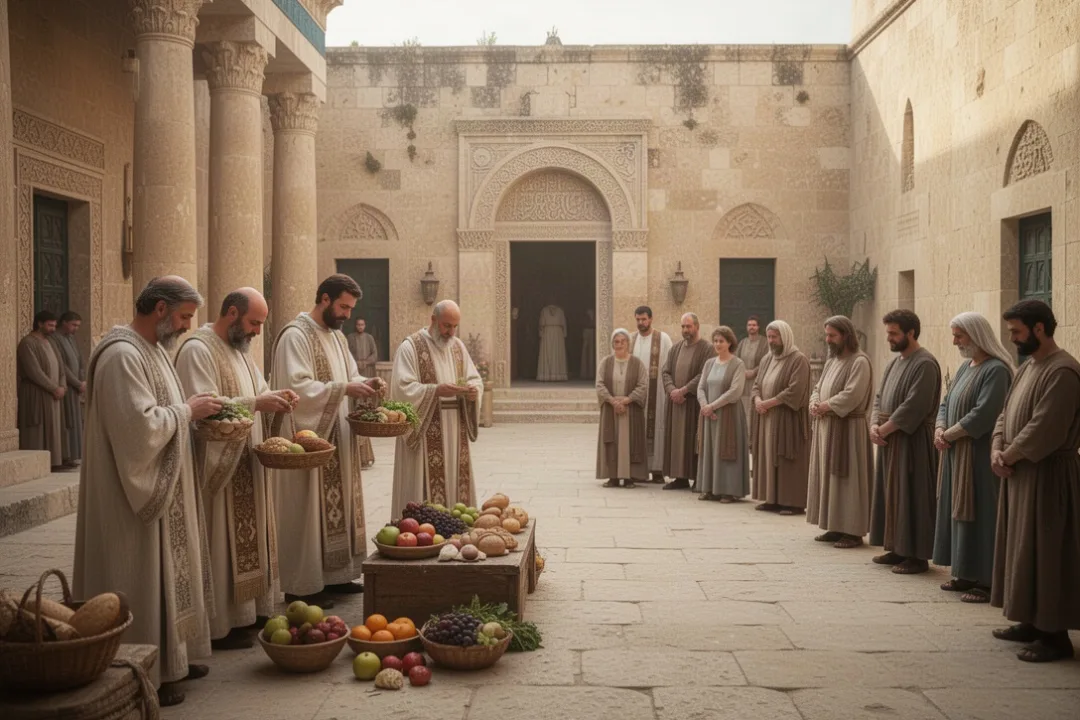
Malachi 1:6–14 focuses on the priests, who should have guarded the holiness of the temple and taught the people. Instead, they permit animals that are blind, lame, or otherwise unsuitable for sacrifice. The people may have treated these offerings as acceptable because they were unwanted or had little value to them.
God asks them to consider whether a human governor would accept such a gift. The comparison exposes the contradiction: they show more care in approaching a political ruler than in bringing worship before God. The problem is not that every worshiper can afford the same offering. The problem is deliberate carelessness—giving God what they would be embarrassed to present to someone else.
The priests also say, in effect, that the table of the Lord is tiresome. Their words and actions suggest that temple service has become an unpleasant obligation. Malachi therefore addresses both the offering and the attitude behind it. Religious activity can continue outwardly while reverence, gratitude, and integrity have largely disappeared.
This section does not mean that God measures devotion by the price tag of a gift or that financial success proves spiritual faithfulness. It challenges the habit of offering God whatever is left over while protecting what you value most. The broader principle is that worship should reflect honor rather than mere compliance.
Malachi warns religious leaders about careless teaching
Malachi 2:1–9 turns directly to the priests’ responsibility as teachers. They were expected to preserve knowledge of God’s law and help the community distinguish faithful conduct from disobedience. Instead, their instruction has become unreliable, and their example has caused people to stumble.
The prophet describes the ideal priestly role as one that keeps knowledge, speaks truth, and guides people toward God. The priests in Malachi’s audience have departed from that pattern by showing partiality and failing to uphold the covenant. Their position gives them influence, so their failure harms more than their own spiritual lives.
Leadership in this passage is not presented as a privilege without accountability. Those who teach or lead worship carry a heightened responsibility because other people may shape their understanding of God around what leaders say and do. Malachi’s warning applies beyond ancient priests to pastors, teachers, ministry leaders, and anyone whose religious influence affects others.
The passage also connects truth with character. Accurate religious language cannot compensate for dishonest behavior. A leader who speaks about holiness while tolerating corruption undermines the message being taught.
Malachi connects broken marriages with covenant unfaithfulness
Malachi 2:10–16 addresses the people’s treatment of one another, including marriages and relationships with foreign women who worship other gods. The passage has sometimes been used carelessly as a general condemnation of people from another ethnicity. Its concern is more specific: the people are violating covenant loyalty and drawing the community toward idolatry.
The prophet also condemns men who deal treacherously with the wives of their youth. The language describes betrayal, divorce, and the breaking of a solemn commitment. Malachi presents marriage as a covenant involving faithfulness and shared responsibility, not merely a private arrangement that can be abandoned when it becomes inconvenient.
The text includes a difficult discussion of divorce in Malachi 2:16, and translations differ in how they arrange the wording. The central warning remains clear: God rejects treacherous treatment within marriage and the violence or injustice associated with it. This passage should never be used to pressure someone to remain in a dangerous situation or to excuse abuse. Protecting the vulnerable and pursuing justice are consistent with the book’s wider message.
Malachi’s concern is not simply that a religious rule has been broken. Broken promises damage spouses, families, and the wider community. Faithfulness to God is shown through faithful treatment of people, especially those who have been placed in our care.
Malachi answers the complaint that justice is missing
In Malachi 2:17, the people weary God by saying that evildoers seem acceptable in his sight and by asking where the God of justice is. This complaint is closely related to the discouragement in the opening chapter. If corrupt people prosper and wrongdoers escape consequences, perhaps God is not acting—or perhaps he approves of injustice.
Malachi 3:1–5 answers that question with the promise of a coming messenger and the arrival of the Lord at his temple. The messenger will prepare the way, and the coming presence of God will not be comfortable for those who have benefited from corruption. The imagery of a refiner’s fire and cleansing soap portrays a process of purification and judgment.
The list of people threatened by judgment is revealing. It includes those who practice sorcery, commit adultery, swear falsely, exploit workers, oppress widows and orphans, and push aside foreigners. Malachi shows that religious reform cannot be separated from social justice.
The reference to foreigners does not endorse hostility toward immigrants or outsiders. It condemns the mistreatment of people who lack power in the community. Alongside widows, orphans, and laborers, they represent people who can be exploited when authorities fail to protect them.
Central justice principle: Malachi treats worship as false when it is separated from honesty, fair wages, protection of vulnerable people, and faithfulness in personal relationships.
Malachi uses tithing to confront distrust
Malachi 3:6–12 addresses the community’s withholding of tithes and offerings. A tithe was a tenth associated with Israel’s system of worship and support for those who served at the sanctuary, along with provisions connected to community life. The prophet says the people have turned away from God by failing to bring what the covenant required.
God invites them to bring the full tithe to the storehouse and see whether he will provide blessing. This is one of the most frequently quoted passages in discussions about giving, but it needs to be read carefully. Malachi is speaking to ancient Israel under its covenant system, not offering a guarantee that a particular donation will produce personal wealth.
The promise concerns God’s provision for the community and the restoration of a functioning worship system. It should not be turned into a formula that pressures people to give money they cannot afford or that promises financial returns from religious contributions. Giving is presented as an act of trust and covenant responsibility, not as a way to purchase God’s favor.
The passage also exposes a deeper issue: the people’s financial behavior reveals what they believe about God. They may be holding back because resources are scarce, because the temple seems unworthy, or because they no longer expect God to care for them. The prophet calls them to trust God’s faithfulness while also restoring material support to the community.
For readers today, the practical questions include:
Do your financial choices reflect gratitude, honesty, and concern for others?
Are religious appeals for money being used transparently, without manipulation or extravagant promises?
Does your giving support genuine service, care for people in need, and responsible community life?
Are you using the language of faith to justify greed, or are you practicing generosity within your actual means?
Malachi distinguishes cynical voices from faithful people
Malachi 3:13–18 returns to the complaint that serving God appears pointless. Some people say that prideful and wicked individuals prosper while those who obey God gain nothing. Their words reveal a practical calculation: if obedience does not produce immediate visible benefits, why continue?
In response, the book describes a group who fear the Lord and speak with one another. God notices them and records them in a scroll of remembrance. This image assures faithful people that their devotion is not overlooked, even when public circumstances make faithfulness seem foolish.
The contrast is between those who define reality by immediate success and those who continue to honor God despite delayed justice. Malachi does not pretend that the difference is always visible right away. Instead, it promises that a future day will reveal the distinction between the righteous and the wicked.
This section offers comfort without denying frustration. You can ask hard questions about injustice without abandoning reverence. Honest lament and faithful endurance can exist together; the problem is not every expression of doubt but the settled conclusion that evil is ultimately wiser than obedience.
The book ends with the day of the Lord
Malachi 4 describes a coming day that will burn like a fire. The proud and wicked are compared to stubble, while those who fear God are promised healing and freedom. The image is not meant to provide a calendar date. It communicates that evil will not have the final word and that God’s judgment will expose what human society has allowed to remain hidden.
The ending contains both warning and hope. Judgment is frightening for those who cling to injustice, but it is good news for people who have suffered under oppression and wondered whether God sees them. The promised healing picture suggests restored life, joy, and release rather than mere survival.
Malachi closes by referring to Moses and to Elijah. Moses represents the law given to Israel, while Elijah represents prophetic faithfulness and the call to turn people back to God. The final instruction is to remember the law of Moses before the day of the Lord arrives.
In the New Testament, Jesus connects the promised Elijah figure with John the Baptist in passages such as Matthew 11:14 and Matthew 17:10–13. Luke 1:17 also describes John’s mission in language associated with Elijah. Christian readers therefore commonly understand Malachi’s messenger promise as anticipating John’s preparatory ministry, while Jewish interpretation does not depend on that Christian identification. The passage itself emphasizes preparation, repentance, covenant memory, and restoration.
What Malachi says about spiritual apathy
Malachi is especially relevant when a community still has religious structures but has lost its sense of purpose. The temple is operating, priests are serving, and sacrifices are being offered, yet the prophet sees a serious gap between outward activity and inward faithfulness.
Spiritual apathy in Malachi appears in several forms:
Questioning love: People interpret hardship as evidence that God does not care.
Minimal worship: They give what is damaged, unwanted, or convenient.
Unreliable leadership: Teachers protect their status instead of honoring truth.
Broken commitments: People treat marriage and community obligations as disposable.
Social exploitation: Those with power take advantage of workers and vulnerable people.
Cynicism: People assume that obedience has no value because evil seems to succeed.
These patterns are connected by a loss of trust. If God seems absent, worship becomes a burden. If worship becomes a burden, integrity feels unnecessary. If integrity disappears, injustice spreads. Malachi responds by calling the community to remember God’s covenant and to live as though divine justice is real even before it becomes visible.
How to read Malachi responsibly today
Malachi should not be reduced to a message about giving money, and it should not be used as a weapon against people who are struggling. The book speaks to a particular covenant community in a particular historical setting. Understanding that setting prevents simplistic applications.
At the same time, its central concerns remain recognizable. Religious communities can preserve ceremonies while neglecting compassion. Leaders can teach sacred texts while pursuing status. People can ask why God allows injustice while participating in unfair systems themselves.
A responsible reading can follow these steps:
Identify the accusation. Ask what behavior God is confronting in each section.
Notice the response. The people’s questions often reveal denial, disappointment, or confusion.
Consider who is affected. Malachi repeatedly moves from worship to the treatment of spouses, workers, foreigners, widows, and orphans.
Separate promise from formula. God’s blessing is not a mechanical reward that can be bought or controlled.
Read judgment and hope together. The coming day warns the unjust and encourages those who remain faithful.
Apply the principle without ignoring context. Modern faith communities should seek integrity, justice, generosity, and responsible leadership without pretending to reproduce every ancient temple practice.
Why Malachi still matters
Malachi asks whether your religious life reflects genuine honor or merely preserves appearances. It challenges the tendency to complain about God’s absence while offering God little attention, little trust, and little concern for the people around you.
The book also insists that private devotion and public justice belong together. You cannot claim to honor God while exploiting workers, betraying a spouse, misleading people through spiritual authority, or ignoring those who have little power. Faithfulness is measured by both worship and conduct.
Its hope is equally practical. God sees those who remain faithful when their efforts seem unnoticed. God’s justice will expose corruption, and God’s coming will bring purification and healing. Malachi therefore calls readers away from empty religious routine and toward a life shaped by reverence, truth, generosity, covenant loyalty, and confidence that God has not forgotten his people.
Frequently asked questions
Is Malachi only about tithing?
No. Tithing appears in Malachi 3:8–12, but it is one part of a larger message. The book also addresses careless worship, corrupt religious leadership, broken marriages, exploitation of workers, neglect of vulnerable people, doubt about God’s love, and the coming day of judgment. Its central concern is faithful covenant living, not a fundraising formula.
Who was Malachi?
The book does not provide a biography of its author. “Malachi” may be a personal name or may reflect the Hebrew expression meaning “my messenger.” The prophet spoke to Judah after the exile, during the Persian period, when the temple had been rebuilt but worship and community life were marked by serious neglect.
What does Malachi mean by the messenger?
Malachi 3:1 promises a messenger who will prepare the way before the Lord’s coming. Christians commonly connect this promise with John the Baptist, based on New Testament passages including Matthew 11:14 and Matthew 17:10–13. The passage itself emphasizes preparation, repentance, and purification before divine judgment.
What is the main lesson of Malachi?
Malachi teaches that genuine devotion cannot be separated from integrity. Worship must be offered with reverence, leaders must teach responsibly, commitments must be honored, vulnerable people must be protected, and giving must be practiced honestly. The book also assures faithful people that God sees them and that injustice will not have the final word.









Leave a Reply