The city of Antioch in the Bible: Its people and purpose
The city of Antioch in the Bible: Its people and purpose
If you have seen Antioch mentioned in Acts or Paul’s letters, you may wonder which city the Bible means and why it appears so often. The answer is that the New Testament refers mainly to Antioch on the Orontes River in Syria, a major urban center where the gospel took root among Jews and Gentiles. A second city, Pisidian Antioch, appears in Paul’s missionary travels.
Syrian Antioch became one of the most influential Christian communities of the first century. Believers were first called Christians there, the church sent Paul and Barnabas into mission, and the congregation became a model of cooperation across ethnic and cultural boundaries. Understanding its location and role helps make several New Testament passages much clearer.
The name Antioch can refer to more than one ancient city. The most important distinction is between Antioch in Syria and Antioch in Pisidia. They were separate cities in different regions, and the biblical events connected with them are not interchangeable.
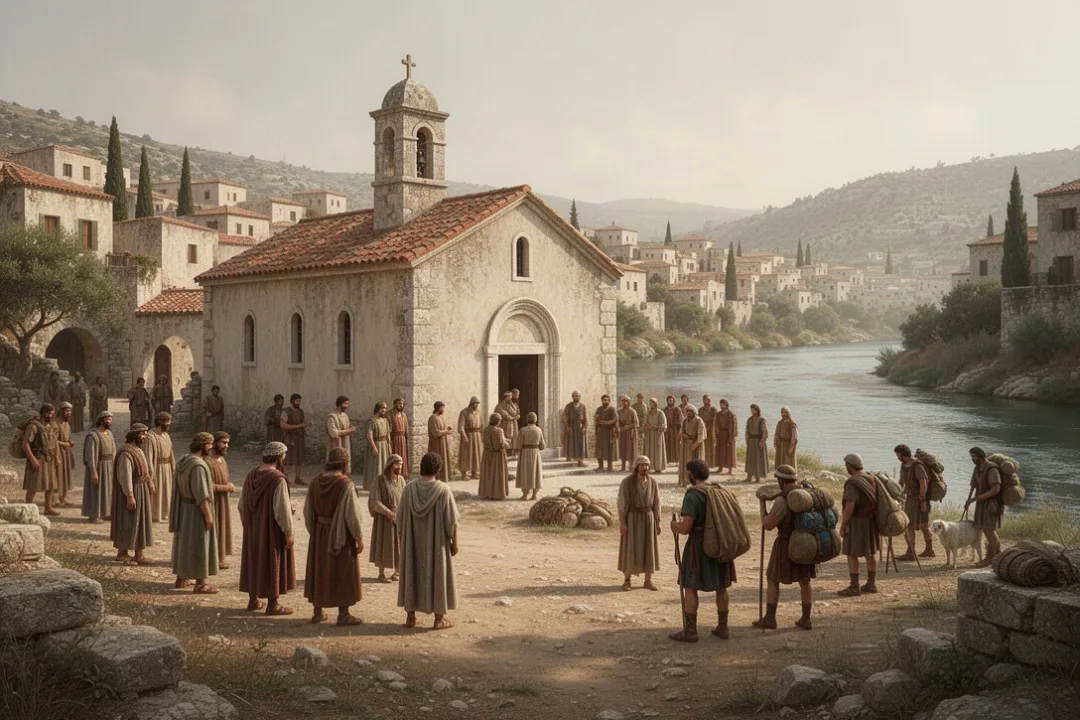
Syrian Antioch stood on the Orontes River in the eastern Mediterranean world. It was an important city in the Roman province of Syria and was located relatively close to the Mediterranean coast, although its exact ancient setting included the nearby port of Seleucia. The modern city of Antakya in southern Turkey is associated with the ancient site.
Pisidian Antioch was inland in Asia Minor, in or near the region traditionally called Pisidia. It was a Roman colony and an important local center. Paul and Barnabas preached there during the first missionary journey, and the city became one of the places where Paul faced both a strong response and serious opposition.
Antioch in Syria: The church that welcomed Gentile believers, sent missionaries, and became a central base for Christian mission.
Antioch in Pisidia: The city where Paul preached in a synagogue and later addressed Gentiles after opposition from some local leaders.
Antioch in Paul’s letters: Usually Syrian Antioch when the setting involves Peter, Paul, Barnabas, or the dispute over table fellowship in Galatians 2.
Quick identification: When Acts describes the growing church, the sending of missionaries, or believers being called Christians, it means Antioch in Syria. When Paul is traveling through Asia Minor and preaching in a synagogue, it may mean Pisidian Antioch.
Where Antioch was located and why its setting mattered
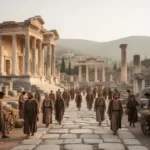
Syrian Antioch was built in a region that connected the eastern Mediterranean with inland Syria and Asia Minor. Its position made it a natural meeting place for people from different backgrounds. Traders, officials, soldiers, immigrants, local residents, Jews, Greeks, and Romans could all be found in or around the city.
That setting helps explain why the Antioch church became significant so quickly. The city was not an isolated village with one tightly defined population. It was a large, diverse urban community where language, religion, ethnicity, and social status could bring people together or create tension.
The city’s connections also made it useful as a missionary base. From Antioch, travelers could move toward Cyprus, the coast of Asia Minor, and other parts of the eastern Roman world. Acts presents the church there as more than a congregation concerned only with its own neighborhood. It became a sending church with a regional and international vision.
Antioch’s location also sheds light on the challenges faced by its Christians. A community made up of Jewish and Gentile believers had to work out practical questions about meals, religious customs, identity, and fellowship. These were not abstract debates. They affected who could eat together and whether non-Jewish followers of Jesus were treated as full members of the people of God.
How the church in Syrian Antioch began
The church in Syrian Antioch emerged during the persecution that followed the death of Stephen. According to Acts 11, believers scattered from Jerusalem and traveled through regions including Phoenicia, Cyprus, and Antioch. At first, some Christians spoke about Jesus only to Jews, following the patterns of their earlier ministry.
Other believers from Cyprus and Cyrene began speaking to Greeks as well. Acts says that a large number of people turned to the Lord. This is a major moment in the spread of the gospel because the community was not simply reproducing the Jerusalem church in another location. It was developing as a congregation in which Gentiles were receiving the message about Jesus.
The Jerusalem church heard about what was happening and sent Barnabas to Antioch. His response was positive. Acts describes him as a good man, full of the Holy Spirit and faith, and says that many people were added to the Lord. Rather than treating the Gentile response as a threat, Barnabas recognized God’s work and encouraged the new believers.
Barnabas then went to Tarsus to find Saul, later known as Paul. He brought Saul to Antioch, and the two taught the church for a substantial period. Their ministry helped establish the congregation in sound instruction and prepared it for the wider work described later in Acts.
The Antioch church therefore had roots in both persecution and welcome. Displaced believers carried the message beyond Jerusalem, local people responded, and trusted leaders helped the growing community mature. The church did not begin as a carefully planned institution. It grew through ordinary believers speaking about Jesus and through leaders recognizing where God was at work.
Why believers were first called Christians in Antioch
Acts 11:26 says that the disciples were first called Christians in Antioch. The statement is brief, but it gives the city a lasting place in Christian history. The name identifies people in relation to Christ, whom they confessed as Lord and Messiah.
The wording may suggest that the label was first used by people outside the church, although the passage does not explain exactly who coined it or whether it began as a formal self-description. In the Roman world, names ending in a form like “Christian” could identify followers or supporters of a particular leader. Whatever its initial tone, the term became the standard name for followers of Jesus.
Antioch was a fitting place for this designation to emerge. The city held a large and diverse population, and the Christian community had become visible enough to be recognized as a distinct movement. These believers were not merely another Jewish group within the city. They included Gentiles who had come to faith in Jesus, and their shared identity crossed traditional social and ethnic divisions.
The name also points to the central focus of the community. Christians were not defined first by their city, occupation, ethnicity, or social rank. They were identified by their relationship to Christ. Antioch shows how a local congregation can develop a public identity while remaining connected to the wider church.
What Acts says about Antioch’s spiritual leadership
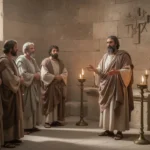
Acts 13 introduces a group of leaders who were serving the church in Antioch. The list includes Barnabas, Simeon called Niger, Lucius of Cyrene, Manaen, and Saul. The passage shows a leadership team with varied backgrounds rather than a single dominant figure.
Manaen had been brought up with Herod Antipas, while other leaders were associated with places such as Cyprus and Cyrene. The group’s diversity reflects the character of Antioch itself. The church was capable of bringing people from different histories into one community of worship and service.
These leaders were worshiping and fasting when the Holy Spirit directed the church to set apart Barnabas and Saul for a particular work. The church then fasted, prayed, laid hands on them, and sent them away. This sequence is important because it presents missionary work as a responsibility shared by the local congregation.
Paul and Barnabas were not portrayed as independent religious entrepreneurs. They were commissioned by a worshiping church that sought God’s direction and publicly affirmed their calling. Antioch therefore becomes a biblical example of missionary sending that includes prayer, discernment, community support, and accountability.
Practical principle: Antioch did not treat mission as separate from ordinary church life. Worship, teaching, prayer, fasting, leadership, and outreach belonged together.
How Antioch supported Paul and Barnabas’s first missionary journey
Acts 13 and 14 describe the first missionary journey associated with Antioch. Barnabas and Saul traveled first to Cyprus, Barnabas’s home region, and then moved into parts of Asia Minor. John Mark accompanied them at the beginning but later departed and returned to Jerusalem.
The missionaries preached in synagogues and other public settings. Their message centered on God’s promises to Israel, Jesus’ death and resurrection, and the call to believe. In many places, some people received the message while others opposed it. The journey involved both fruitful ministry and physical danger.
At Pisidian Antioch, Paul preached a significant sermon in a synagogue. He traced God’s saving work through Israel’s history and presented Jesus as the promised Savior. Acts 13 says that many listeners wanted to hear more, and the following Sabbath nearly the whole city gathered to hear the word of the Lord.
The large response also produced opposition. Some Jewish leaders became jealous when they saw the crowds, and Paul and Barnabas declared that the message would be carried to the Gentiles. The missionaries were eventually expelled from the area, but the disciples remained filled with joy and the Holy Spirit.
After visiting other cities and strengthening the new believers, Paul and Barnabas returned to Antioch in Syria. They gathered the church and reported what God had done, especially how God had opened a door of faith to the Gentiles. The report emphasizes that mission was not private achievement. The whole sending church shared in the work and heard how the mission had unfolded.
Why Antioch became central to the Gentile mission
The Antioch church occupies a central position in the New Testament’s account of the gospel crossing ethnic boundaries. Jerusalem remained foundational, but Antioch became a major center from which the message moved into the Gentile world.
Several features made this possible. First, the church had already learned to receive Gentile believers. Second, its leaders included people with varied backgrounds and broad connections. Third, the congregation was willing to send some of its strongest teachers away for extended ministry.
This was a costly decision. Barnabas and Saul were valuable leaders in Antioch, yet the church did not hold on to them for its own benefit. It released them for service elsewhere. That pattern shows a church measuring success not only by its local size or stability but also by its willingness to strengthen other communities.
Antioch also helped reshape the church’s understanding of belonging. Gentiles did not need to become culturally Jewish in order to become followers of Jesus. The question was not whether Jewish and Gentile believers had different histories. They did. The question was whether those differences prevented them from sharing one table and one faith.
What happened at Antioch in the dispute between Paul and Peter?
Galatians 2 describes a serious confrontation at Syrian Antioch. Peter had been eating with Gentile believers, but when certain people associated with James arrived, he withdrew and separated himself. Other Jewish believers, including Barnabas, followed his example.
Paul publicly opposed Peter because the withdrawal sent a damaging message. It implied that Gentile believers were not fully acceptable unless they adopted Jewish practices. For Paul, that behavior contradicted the truth of the gospel: people are made right with God through faith in Jesus Christ, not through observing the works of the law as a basis for status before God.
The incident reveals that Antioch was not free from conflict. Its mixed congregation brought real theological and social pressures. Shared meals became a visible test of whether the church truly believed that Jews and Gentiles belonged together in Christ.
Paul’s account does not describe a minor disagreement over etiquette. The behavior affected the gospel’s meaning in public. If Jewish Christians separated from Gentile Christians, the church’s unity became conditional, and Gentile believers could feel that they were second-class members.
The episode also shows why Antioch was such an important setting for early Christian development. The city’s diverse community forced questions into the open. How should Jewish and Gentile believers live together? What practices define God’s people? How should leaders respond when their conduct contradicts their teaching?
How the Jerusalem council addressed the Antioch question
Acts 15 records a dispute that began when some people taught believers in Antioch that Gentiles needed circumcision according to the custom of Moses in order to be saved. Paul and Barnabas strongly opposed this teaching, and the church decided to send them to Jerusalem to discuss the matter with the apostles and elders.
The meeting in Jerusalem is often called the Jerusalem Council. Representatives from Antioch took part in the discussion, and the church considered testimony from Peter, Paul, and Barnabas. The debate concerned the nature of salvation and the obligations placed on Gentile believers.
The council concluded that Gentiles should not be burdened with circumcision and the full yoke of the Mosaic law as a condition of belonging to the church. The leaders did ask Gentile believers to avoid several practices connected with idolatry, sexual immorality, and the use of blood. The decision was communicated to Antioch through a letter carried by trusted representatives, including Judas called Barsabbas and Silas.
The church in Antioch received the message with encouragement. Acts 15 presents the decision as a major moment of unity, although the broader New Testament shows that questions about Jewish and Gentile relations continued to require wisdom and discipline.
Antioch’s role in this event was significant. The city was not merely the location of a local dispute. It was the congregation where the practical consequences of the Gentile mission became impossible to ignore, and it became a key participant in clarifying the church’s message.
How to avoid common mistakes when studying Antioch
Readers can easily combine different events or assume that every reference to Antioch means the same place. A few careful habits prevent most confusion.
Check the surrounding passage. Acts 11, 13, 14, and 15 generally point to Syrian Antioch when discussing the church’s growth, mission, or disputes.
Watch the travel route. Acts 13 places Paul and Barnabas in Pisidian Antioch during their movement through Asia Minor, not in the Syrian city.
Do not confuse Antioch with Jerusalem. Jerusalem was the earliest center of the church and the setting for major apostolic events, while Antioch became a major center for Gentile mission.
Do not assume “Christian” means the church was culturally uniform. The Antioch congregation was notable precisely because people from different backgrounds worshiped together.
Read Galatians 2 separately from Acts 15. Both involve Jewish-Gentile tensions, but they are accounts in different books with different emphases and details.
Do not treat the Antioch dispute as a personality clash only. The conflict concerned gospel truth, church fellowship, and the basis on which people belong to God’s people.
What Pisidian Antioch contributed to the biblical story
Pisidian Antioch deserves attention in its own right. During Paul and Barnabas’s first missionary journey, they entered the synagogue there on the Sabbath and were invited to speak. Paul’s message reviewed the history of Israel, referred to David’s line, and proclaimed Jesus as the Savior God had promised.
The sermon’s structure connected the gospel to the Hebrew Scriptures rather than presenting Jesus as an unrelated religious figure. Paul emphasized God’s faithfulness, Jesus’ resurrection, and the forgiveness offered through him. Acts 13 records the sermon’s content in summary form, so readers should focus on its argument rather than expecting it to reproduce every spoken sentence.
Many people wanted to hear more, and the next Sabbath brought a very large crowd. Some leaders opposed the missionaries, leading Paul and Barnabas to announce that they would turn toward the Gentiles. The Gentiles welcomed the message, but opposition eventually forced the missionaries to leave.
Paul later visited Pisidian Antioch again while strengthening the churches established during the journey. Acts 14 says that Paul and Barnabas revisited cities, encouraged the disciples, and appointed elders. This shows that their work involved more than initial preaching. They also returned to help new communities develop stable leadership and endurance.
What Antioch teaches about church life and mission
Antioch offers several practical lessons for churches and individual believers. Its example is not a simple formula, but it highlights patterns that appear throughout Acts.
Welcome people whom God is drawing. The believers in Antioch did not reject Gentiles because their background differed from that of the earliest disciples.
Use mature leaders to strengthen growing communities. Barnabas recognized the need for teaching and sought out Saul to help serve the church.
Make mission a shared responsibility. The Antioch congregation prayed, fasted, commissioned missionaries, and received their reports.
Address disagreement honestly. The conflicts involving Peter and the Gentile question were serious, but the church did not solve them by pretending they did not exist.
Protect the meaning of the gospel in daily behavior. Who eats together, who is welcomed, and who is treated as a full member can communicate theology as powerfully as public preaching.
Build local churches for endurance. Missionaries returned to encourage believers and appoint leaders rather than leaving new disciples without support.
The church in Antioch was influential without being presented as perfect. It experienced growth, disagreement, pressure, and correction. That combination makes its story especially useful. A healthy church may still face difficult questions, but it can seek God’s direction, listen to correction, and keep the gospel at the center.
Why Antioch still matters when you read the New Testament
Antioch helps connect several major themes in the New Testament: the expansion of the gospel, the inclusion of Gentiles, the formation of Christian identity, missionary partnership, and the need for unity across cultural boundaries.
It was a city where the Christian message became visibly international. People with different languages and family histories could gather around the same Lord. That did not erase every difference, nor did it eliminate conflict. Instead, the church had to learn how the gospel reshaped relationships without pretending that history and culture no longer mattered.
The city also reminds readers that important Christian work often begins through ordinary movement. Believers scattered because of persecution, spoke to people they encountered, and helped form a community that later sent missionaries across the Roman world. The story does not depend on one dramatic public event alone. It grows through witness, teaching, prayer, hospitality, courage, and patient follow-up.
When you encounter Antioch in the Bible, ask three questions: Which Antioch is this? What issue is the passage addressing? And how does the event show the gospel creating a community across old boundaries? Those questions will usually reveal why the city appears in the passage and what its role contributes to the larger biblical story.
Key Bible passages about Antioch
These references provide a useful reading path for studying both cities and their different roles:
Acts 6–8: The persecution and scattering that helped carry the message beyond Jerusalem.
Acts 11:19–30: The founding and growth of the church in Syrian Antioch, the ministry of Barnabas and Saul, and the first use of the name Christians.
Acts 13:1–14: The Antioch church commissions Barnabas and Saul and the missionaries preach at Pisidian Antioch.
Acts 14:21–28: Paul and Barnabas strengthen new churches and report back to Syrian Antioch.
Acts 15: The controversy over Gentile believers and the Jerusalem Council’s message to Antioch.
Galatians 2:11–14: Paul describes his confrontation with Peter at Syrian Antioch over fellowship with Gentile believers.
Taken together, these passages show Antioch as both a place and a theological turning point. The city’s significance does not come only from its size or political importance. It comes from what happened there: people from different backgrounds became one church, missionaries were sent outward, and the early believers wrestled with what the gospel required of them.
Frequently asked questions
Why is Antioch important in the Bible?
Antioch in Syria became a major center of the early Christian movement. The church there included Gentile believers, supported Paul and Barnabas, sent missionaries, and helped clarify how Jewish and Gentile Christians could share one community. Acts also says disciples were first called Christians there, making Antioch an important place in the development of Christian identity.
Is Antioch the same as Antioch in Pisidia?
No. Syrian Antioch was a large city in the eastern Mediterranean region and served as a base for Christian mission. Pisidian Antioch was a different city in Asia Minor, visited by Paul and Barnabas during their first missionary journey. Acts 13–14 mainly concerns Pisidian Antioch, while Acts 11 and 15 concern Syrian Antioch.
What happened between Peter and Paul at Antioch?
According to Galatians 2, Peter had been eating with Gentile believers but withdrew when certain people arrived from Jerusalem. Paul confronted him because the withdrawal implied that Gentiles were not fully accepted without adopting Jewish customs. Paul viewed the behavior as inconsistent with the gospel and with the truth that people are accepted by God through faith in Christ.
Where is biblical Antioch today?
Syrian Antioch is associated with the modern city of Antakya in southern Turkey, near the Orontes River and close to the ancient port region of Seleucia. Pisidian Antioch is associated with a different archaeological site near modern Yalvaç in Turkey. The two locations are separated by a considerable distance and belonged to different regional settings.






Leave a Reply