If you have wondered, “Who is Hosea in the Bible?” the short answer is that Hosea was an Old Testament prophet sent to speak to the northern kingdom of Israel. He ministered during a period of spiritual compromise, political instability, and growing danger from Assyria. His message combined severe warnings about judgment with a powerful announcement of God’s enduring love.
Hosea is especially remembered because God used his marriage as a living picture of Israel’s relationship with the Lord. Hosea’s wife, Gomer, was unfaithful, and her behavior reflected Israel’s pursuit of other gods. Yet Hosea’s story does not end with rejection. It points toward God’s willingness to discipline his people while still calling them back to faithful relationship.
Hosea was a prophet whose words are preserved in the biblical book that bears his name. The opening verse identifies him as Hosea son of Beeri and places his ministry during the reigns of several kings of Judah, including Uzziah, Jotham, Ahaz, and Hezekiah, as well as Jeroboam II of Israel.
That information places Hosea in the eighth century B.C., alongside prophets such as Amos, Isaiah, and Micah. Hosea primarily addressed the northern kingdom, often called Israel or Ephraim in the book. The southern kingdom, Judah, also appears in his warnings and promises, but Israel receives most of his attention.
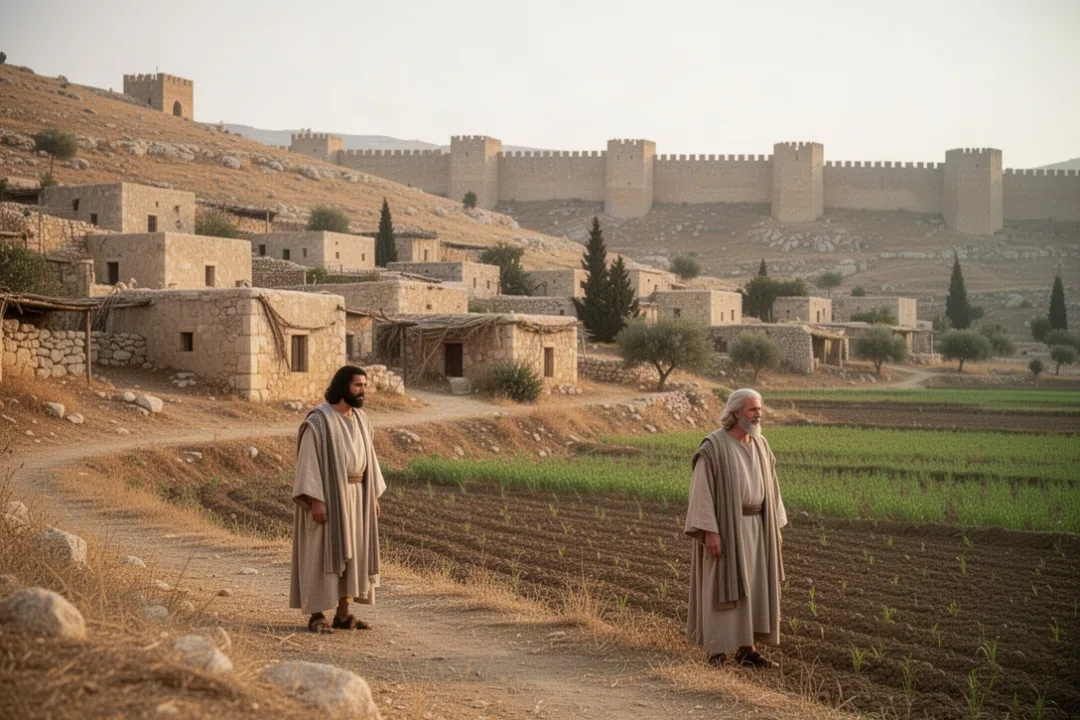
Hosea’s ministry took place before the northern kingdom was conquered by Assyria. The Assyrian empire eventually captured Samaria, Israel’s capital, and brought the kingdom to an end. Hosea’s warnings therefore came during the final decades before Israel’s fall, when many people may have considered the crisis political rather than spiritual.
At a glance: Hosea was a prophet from the northern kingdom who exposed Israel’s idolatry and injustice, warned of Assyrian judgment, and proclaimed that God still desired to restore his unfaithful people.
How to understand Hosea’s message step by step
The book can feel emotionally intense and sometimes difficult to follow because it moves between personal experience, courtroom-like accusations, historical references, and promises of renewal. These points provide a useful way to read it.
Identify the speaker and audience. Hosea speaks as God’s messenger, mainly to Israel, the northern kingdom, while also addressing Judah and the wider covenant people.
Recognize the marriage image. Hosea’s family life illustrates Israel’s unfaithfulness to the Lord through idolatry and broken covenant loyalty.
Notice the charges against Israel. The people have rejected knowledge of God, relied on foreign alliances, practiced injustice, and treated worship as a substitute for obedience.
Take the warnings seriously. Hosea announces that Israel’s sin will bring consequences, including military defeat, exile, loss of security, and the collapse of its political system.
Watch for the movement toward mercy. Even after judgment is announced, God speaks of healing, restoration, renewed relationship, and the return of his people.
Read the personal story as prophetic symbolism. The marriage and the children’s names communicate the seriousness of Israel’s condition and the possibility of restored belonging.
This pattern—sin, warning, judgment, and mercy—does not mean that the judgment is merely a temporary inconvenience. Hosea presents sin as a rupture of a relationship, not simply a violation of isolated rules. At the same time, he presents God’s mercy as more than sentimental tolerance: it seeks repentance, healing, and genuine faithfulness.
What Hosea’s marriage to Gomer represents
Hosea 1 begins with God’s command for Hosea to marry Gomer, the daughter of Diblaim. The passage describes her as a woman associated with prostitution or sexual unfaithfulness, although interpreters differ over the precise meaning of the wording and over whether she was already sexually unfaithful at the time of the marriage.
Hosea’s marriage becomes a symbolic representation of Israel’s covenant relationship with God. Israel belongs to the Lord but repeatedly turns to the Baals and other sources of security. The comparison is deliberately painful: idolatry is portrayed as spiritual adultery because God’s people abandon the relationship to which they have pledged loyalty.
The story should not be used to excuse abuse or to tell someone that they must remain in a dangerous marriage. Hosea’s prophetic sign-act belongs to a particular calling in Israel’s history, and the Bible’s use of marriage imagery does not make every harmful relationship a religious obligation. The text is revealing Israel’s covenant betrayal, not providing a general command to tolerate mistreatment.
Some readers understand Hosea’s marriage as a literal prophetic action. Others emphasize that the account may function primarily as a symbolic or literary presentation of the prophet’s message. The text’s central point remains the same: Israel has been unfaithful to God, yet God continues to address the nation and hold out the possibility of restoration.
What the names of Hosea’s children mean
The first three chapters connect Hosea’s children with prophetic names. In the Bible, names sometimes carry a message about a person’s circumstances or God’s dealings with the community. Hosea’s children therefore become part of the message delivered through his household.
Jezreel: The name recalls the Valley of Jezreel and the violent events connected with the royal house of Jehu. It signals coming judgment and also evokes Israel’s history of bloodshed and political violence.
Lo-Ruhamah: This name means something like “not shown mercy” or “not pitied.” It announces that the northern kingdom will experience the consequences of persistent rebellion rather than continuing to presume upon God’s protection.
Lo-Ammi: This name means “not my people.” It expresses the depth of Israel’s covenant rupture. The people who claimed to belong to God have behaved as though they no longer recognize him as their Lord.
These names sound final, but Hosea later reverses their message. The people once called “not my people” will be called the children of the living God. The earlier declaration of judgment is followed by a promise that God can restore identity, belonging, and unity.
The reversal does not erase the seriousness of Israel’s sin. Instead, it displays the reach of divine restoration. God’s mercy is capable of creating a future that Israel could not create through its own political strength or religious activity.
Why Hosea condemned Israel’s worship
Hosea did not accuse Israel of having no religious activity. The problem was that worship had become separated from faithfulness. People continued religious practices while also worshiping idols, exploiting others, making political alliances, and refusing to know God in the deep biblical sense of loyal relationship.
Hosea 4:6 describes the people as destroyed because they lack knowledge. In this context, knowledge is not simply information about God. It includes recognizing God’s authority, remembering his covenant, and living in a way that matches that relationship.
The prophet repeatedly connects spiritual unfaithfulness with social wrongdoing. Leaders misuse power, priests fail in their responsibilities, and ordinary people participate in deception and violence. Religious language cannot repair a community that refuses justice, truth, and loyalty.
Hosea 6:6 is one of the book’s best-known statements. God says that he desires steadfast love and knowledge of God rather than sacrifice offered without obedience. The point is not that every sacrifice was wrong; sacrifices belonged to Israel’s worship. The problem was attempting to use ritual to cover a life that had rejected God’s character and commands.
Hosea 6:6 teaches that faithful love and true knowledge of God matter more than religious ceremony performed without obedience.
This theme remains significant because it challenges a common religious mistake: treating outward participation as proof of inward faithfulness. Hosea asks whether worship produces humility, loyalty, compassion, and truth. If it does not, the ceremony itself becomes evidence that people have misunderstood what God wants.
How political alliances exposed Israel’s lack of trust
Hosea often describes Israel as turning to Assyria or Egypt for help. The nation faced genuine international threats, so diplomacy and military planning were not imaginary concerns. Yet the prophet argues that Israel placed its ultimate trust in political arrangements instead of returning to God.
His criticism is not a simple rule against diplomacy. Rather, it concerns the spiritual meaning Israel gave to its alliances. The people treated foreign powers as their saviors while ignoring the Lord who had entered into covenant with them. Their political decisions revealed a deeper problem: they wanted security without dependence on God.
Hosea compares Israel to a half-baked cake, a picture of something useless because it has not been prepared properly. He also compares the nation to a dove easily deceived and to a wild vine that produces fruit for itself. These images show instability, foolishness, and self-centeredness.
The prophet’s language can sound severe because the stakes are severe. Israel’s leaders were not making isolated mistakes; they were building national life on false worship and unreliable loyalties. The coming Assyrian invasion would expose the weakness of that foundation.
What “Ephraim” means in Hosea
Hosea frequently uses the name Ephraim for the northern kingdom. Ephraim was the most prominent tribe in the north and had become a useful designation for the kingdom as a whole. When Hosea speaks of Ephraim, he is generally addressing Israel rather than only one small tribal group.
The name allows Hosea to speak both historically and personally. Ephraim was part of the people descended from Jacob, yet the nation had become deeply involved in idolatry and political confusion. The prophet can therefore describe Ephraim as sick, stubborn, entangled with idols, and still the object of God’s concern.
In Hosea 11, the Lord recalls calling Israel out of Egypt and teaching the nation to walk. The passage portrays God as a parent who cared for a child, while Israel responded by turning away. The parental image adds another dimension to the marriage image: Israel’s rebellion wounds a relationship marked by both covenant commitment and tender care.
Hosea 11 also shows the tension between judgment and compassion. The people deserve consequences, but God speaks of a heart stirred by compassion. The passage does not deny judgment; it reveals that judgment is not the final expression of God’s character toward his people.
How Hosea describes judgment
Hosea’s warnings include invasion, exile, loss of prosperity, and the failure of institutions that once appeared secure. Israel’s kings, priests, armies, sanctuaries, and alliances cannot save the nation from the consequences of its rebellion.
The book often describes judgment as the natural exposure of false trust. Israel sowed wind and would reap a storm, meaning that the nation’s choices would produce consequences greater than it expected. Political corruption, idolatry, and injustice had created conditions that could not continue indefinitely without collapse.
Hosea also connects judgment with the loss of God’s presence and favor. The people may still have religious objects, shrines, and ceremonies, but those things will not provide protection. Their worship has become empty because the relationship it was meant to express has been abandoned.
These warnings should be read within the historical setting of Israel’s covenant and national life. Hosea is not saying that every personal hardship proves a particular person is being punished for a specific sin. He is announcing a covenant lawsuit against a nation whose long-term rebellion has reached a critical point.
How Hosea describes repentance and healing
Although the book contains strong accusations, Hosea repeatedly calls Israel to return. Repentance means more than feeling regret after disaster. It involves turning away from idols, abandoning false sources of security, acknowledging guilt, and seeking the Lord’s healing.
Hosea 14 presents a model prayer for return. The people are told to bring words rather than relying on military strength, foreign alliances, or sacrificial offerings. They are to confess their wrongdoing and recognize that true help comes from God.
The chapter then uses images of healing, growth, fragrance, and fruitfulness. Israel, once like a withered plant, can become like a flourishing tree. These images communicate renewed life after judgment, not simply a return to political comfort.
God’s restoration includes the removal of idolatry. The people will no longer boast in their own power or treat created things as their saviors. They will receive the kind of fruitfulness that comes from dependence on God rather than the frantic pursuit of self-preservation.
Reading tip: Do not isolate Hosea’s harshest phrases from his invitations to return. The warnings expose the seriousness of sin, while the promises show that God’s purpose includes healing and restored faithfulness.
What Hosea teaches about God’s love
Hosea presents divine love as faithful, wounded, disciplined, and restorative. God is not indifferent to Israel’s betrayal. The repeated images of adultery, illness, and rebellion show that sin causes real relational damage. Yet God does not respond as though the people are disposable.
Hosea 11 is especially important for understanding this love. God remembers caring for Israel from its earliest days, but the people have turned away. Even so, the Lord speaks with compassion and refuses to treat Israel as though destruction were the only possible future.
This does not make God’s love permissive. The book does not say that unfaithfulness has no consequences. Instead, it shows a love that confronts evil, removes false security, and calls people back to a relationship marked by truth and loyalty.
Hosea also challenges shallow ideas about love. Love is not merely approving every choice or preventing every consequence. In the book, love tells the truth about idolatry, resists injustice, and seeks the restoration of the person or people who have gone astray.
How Christians connect Hosea with the New Testament
The New Testament quotes or echoes Hosea in several important places. Matthew 2:15 applies Hosea’s words about Israel coming out of Egypt to Jesus’ return from Egypt. This reflects the New Testament’s understanding of Jesus as representing and fulfilling Israel’s story in a distinctive way.
Hosea 1:10 and 2:23 are also echoed in Romans 9:25–26 and 1 Peter 2:10. These passages use Hosea’s language about those who were “not my people” becoming God’s people. The New Testament applies that restoration language to the inclusion of people in God’s saving community through Christ.
Romans 9 presents Hosea as part of a larger explanation of God’s mercy and calling. First Peter uses the same theme to describe believers as receiving identity, mercy, and belonging. These connections do not remove Hosea from its original setting; they show how early Christians understood the prophet’s restoration promises as reaching beyond the immediate historical crisis.
Jesus also refers to Hosea 6:6 in Matthew 9:13 and 12:7. In those settings, the quotation supports the priority of mercy over a narrow or self-righteous use of religious rules. The reference reinforces Hosea’s central concern: genuine devotion to God must be visible in compassionate and obedient living.
Where to read about Hosea in the Bible
The main source is the Book of Hosea, which contains fourteen chapters. Different sections emphasize different parts of his message, so reading the book with a simple plan can make its structure easier to follow.
Hosea 1–3: The prophet’s marriage, the children’s names, Israel’s unfaithfulness, and the promise of renewed relationship.
Hosea 4–7: Charges against Israel’s priests, leaders, people, and political behavior.
Hosea 8–10: Warnings about idolatry, false worship, national pride, and the consequences of trusting human power.
Hosea 11: A moving reflection on God’s parental care, Israel’s rebellion, judgment, and compassion.
Hosea 12–13: Historical reminders, accusations of deception and idolatry, and warnings of coming destruction.
Hosea 14: A call to return, followed by promises of healing, growth, and renewed fruitfulness.
As you read, pay attention to repeated words and images such as return, know, love, mercy, heal, sow, reap, and fruit. These words help reveal the movement of the book. Hosea is not only describing what Israel did wrong; he is asking what it would mean for the people to know God again and live from that knowledge.
Why Hosea still matters for readers today
Hosea speaks to anyone who separates religious identity from daily faithfulness. A person may use spiritual language, attend worship, or claim allegiance to God while placing ultimate trust in status, money, power, politics, relationships, or personal success.
The prophet also speaks to communities. Hosea shows that injustice and spiritual compromise are connected. A society cannot claim to honor God while normalizing deception, exploiting vulnerable people, or allowing leaders to pursue power without accountability.
His message offers a careful balance. It warns against minimizing sin, but it also rejects despair. Failure does not become harmless simply because mercy exists; neither does failure become beyond redemption because judgment is deserved.
For Christians, Hosea provides language for understanding covenant faithfulness, repentance, mercy, and restoration. For any reader, the book raises a direct question: What do you trust when security is threatened, and does your stated faith shape the way you treat God and other people?
What kind of prophet Hosea was
Hosea was not merely a predictor of future events. He was a covenant prophet, someone who called Israel back to the relationship and obligations established by God. His work involved interpreting current events—political instability, idolatry, injustice, and international pressure—in light of Israel’s relationship with the Lord.
His personal life became part of that prophetic calling. Through his marriage, his children, their names, and his public message, Hosea embodied the grief of covenant betrayal and the possibility of renewed belonging. That combination makes his book distinctive among the Minor Prophets.
The label “Minor Prophet” refers to the shorter length of the book, not to lesser importance. Hosea’s message reaches from ancient Israel’s crisis to enduring questions about loyalty, worship, justice, discipline, and mercy. He is the prophet who shows, with unusual emotional force, that God’s judgment and God’s love are not competing ideas.
Frequently asked questions
Was Hosea a real person in the Bible?
Yes. Hosea is identified as the son of Beeri and is presented as a prophet who ministered during the reigns of several kings of Israel and Judah. The biblical book preserves his messages and describes prophetic actions connected with his marriage and children. The account places him in the historical setting before Assyria conquered the northern kingdom.
Who was Hosea’s wife?
Hosea’s wife was named Gomer, the daughter of Diblaim. Hosea 1 connects her with sexual unfaithfulness, though interpreters differ about the exact details of her condition when the marriage began. Her relationship with Hosea functions as a prophetic picture of Israel’s unfaithfulness to God through idolatry and broken covenant loyalty.
What is the main message of the Book of Hosea?
Hosea’s central message is that Israel has betrayed God through idolatry, injustice, and misplaced trust, so judgment is coming. Yet judgment is not the only word. God continues to call Israel back and promises healing, renewed belonging, and restored fruitfulness for those who return in genuine faithfulness.
How many chapters are in Hosea?
The Book of Hosea has fourteen chapters. Chapters 1–3 focus heavily on Hosea’s marriage and its symbolic meaning, while the later chapters develop accusations, warnings, historical reflections, and promises of restoration. Chapter 14 closes with a call for Israel to return and a picture of renewed life under God’s care.








Leave a Reply