The growth of Christianity: history, causes, and trends
The growth of Christianity: history, causes, and trends
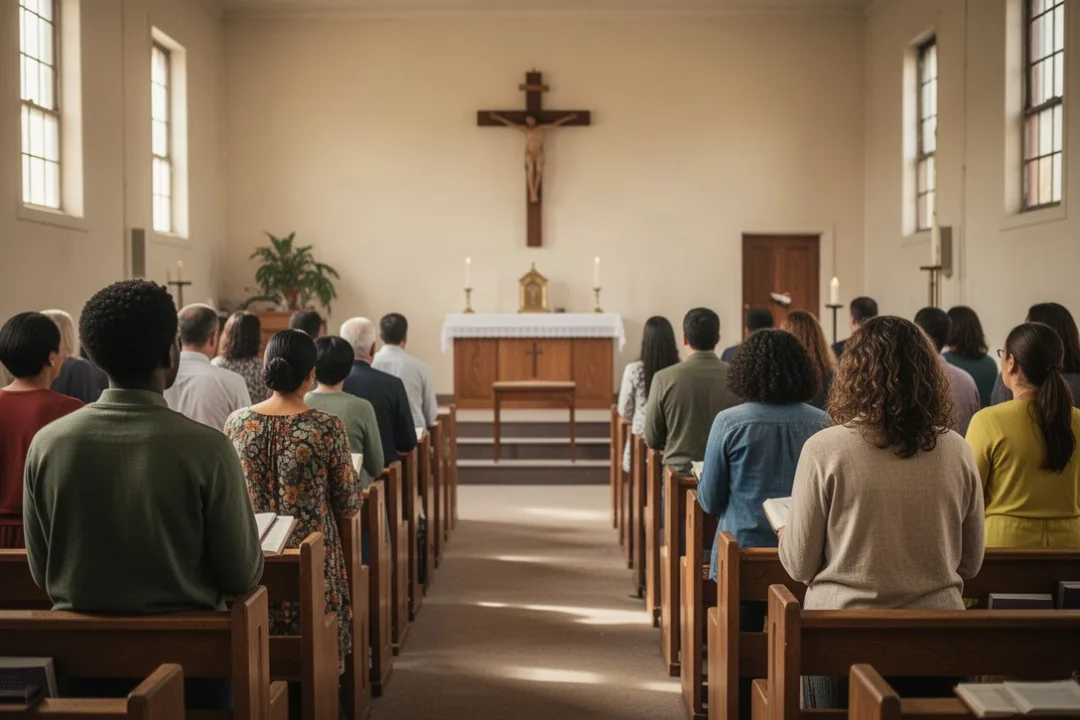
When you look at the religious makeup of your community, you may wonder how Christianity became one of the world’s largest religions—or why its strongest growth now appears in places far from its early European centers. The answer is not a single event. The growth of Christianity developed through missionary work, local leadership, family and community networks, political change, migration, education, and changing patterns of belief.
Christianity began as a small Jewish movement in the first century, centered on the life, death, and reported resurrection of Jesus of Nazareth. It spread across the Roman world, survived periods of persecution, gained legal recognition, became closely connected with political institutions, and later expanded through Catholic, Orthodox, Protestant, Anglican, and independent Christian traditions. Its history includes genuine service and cultural influence, but also coercion, colonialism, division, and conflict.
How Christianity grew from a first-century movement
The earliest Christians were a relatively small group in Roman-controlled Judea and Galilee. They proclaimed that Jesus was the Messiah and that his resurrection had decisive meaning for humanity. His first followers formed communities devoted to prayer, shared meals, teaching, mutual support, and care for people in need.
The movement expanded beyond its original Jewish setting. Early Christian missionaries presented the faith to non-Jewish audiences throughout the eastern Mediterranean. The apostle Paul is especially associated with this outreach, although many other unnamed believers also carried Christian teaching through households, trade routes, ports, and cities.
Urban networks helped the faith travel. Roman roads and shipping routes connected major population centers, while a broadly shared language made communication easier across much of the eastern empire. Christians could establish a congregation in one city and maintain relationships with communities elsewhere through letters, travelers, and visiting teachers.
Growth did not mean that Christianity immediately became dominant. For several centuries, Christians were a minority. Their communities faced suspicion and occasional official persecution, though the intensity and geographic reach of persecution varied greatly over time. The faith grew gradually through conversion, family formation, local relationships, and the formation of durable congregations.
Why early Christian communities attracted new members
Christian communities offered more than religious ideas. They created social relationships that could include widows, the poor, immigrants, enslaved people, and others who had limited protection within Roman society. Christians were expected to support fellow believers, care for the sick, and provide practical help during hardship.
That does not mean early Christian communities were free from inequality or internal conflict. They lived within societies shaped by slavery, patriarchy, and sharp class divisions. Still, the promise of belonging to a community with shared obligations could be compelling, particularly for people who lacked strong family or civic support.
Christian teaching about human dignity also contributed to the faith’s appeal. The movement emphasized repentance, forgiveness, care for neighbors, and hope beyond death. These ideas were communicated through worship, stories, letters, rituals, and personal relationships rather than through formal institutions alone.
Women played significant roles in the growth of many early Christian communities. They hosted gatherings, supported missionaries, taught other believers, and helped build networks between households. The New Testament refers to several women as patrons, coworkers, or leaders within the early movement, although later church structures often limited women’s formal authority.
A useful distinction: Christianity grew through both organized missions and ordinary relationships. Family members, coworkers, travelers, merchants, soldiers, and neighbors all helped transmit Christian beliefs.
How the Roman Empire changed Christianity’s reach
A major turning point came in the fourth century, when Roman emperors moved from tolerating Christianity to supporting it. Constantine’s rule changed Christianity’s public position, and later imperial policies gave the faith increasing legal and institutional advantages. Christian leaders gained access to public resources, and church buildings became more visible in cities.
The emperor’s personal religious decisions and the policies associated with his reign were historically important, but Christianity did not become widespread overnight. Many people continued to practice traditional Roman religions for generations. Conversion took place unevenly, and different regions followed different timelines.
As imperial support increased, bishops became influential public figures. Church councils addressed disputes about doctrine, while growing administrative structures connected local congregations with regional and international centers. Institutional stability allowed Christianity to preserve teachings, train clergy, organize charity, and establish worship communities across large territories.
Imperial support also created serious tensions. A faith that had once defined itself partly through separation from imperial power became connected to government authority. Political leaders sometimes used Christianity to strengthen unity, while church leaders could gain status and influence. Later Christian history repeatedly wrestled with the benefits and dangers of that relationship.
How Christianity spread through Europe, Africa, and Asia
Christianity developed in several major regions rather than spreading from Europe alone. North Africa produced influential Christian thinkers and communities, including the settings associated with Augustine of Hippo and other early theologians. Egypt became an important center of Christian monasticism, and Christian traditions developed deeply in Ethiopia and parts of the Middle East.
Eastern Christian communities spread through Syria, Mesopotamia, Persia, Central Asia, and parts of India. Some of these churches used Syriac languages and operated outside the political boundaries of the Roman Empire. Their merchants, monks, scholars, and missionaries connected Christian communities to routes reaching across Asia.
In Europe, Christianization unfolded over many centuries. Missionaries, rulers, monasteries, local priests, and laypeople all played roles. Some rulers adopted Christianity and encouraged or required its practice among their subjects. In other areas, conversion was gradual and blended with existing customs.
Monasteries became important centers of learning, agriculture, hospitality, and manuscript production. They preserved and copied texts, educated clergy, cared for travelers, and sometimes introduced new farming techniques. Their influence helped Christianity remain organized in areas where older Roman institutions had weakened.
Christianity’s expansion was not always peaceful or voluntary. Political pressure, destruction of sacred sites, forced baptisms, and laws against traditional religions occurred in some settings. A responsible account of Christian growth must recognize both the faith’s voluntary appeal and the coercive actions of particular rulers, institutions, and colonial powers.
How Catholic and Orthodox traditions shaped Christian expansion
The separation between Western Catholic and Eastern Orthodox Christianity developed through long disagreements involving theology, church authority, language, culture, and politics. The split commonly associated with the year 1054 was a process rather than a single moment when every Christian immediately divided into two clearly separate groups.
These traditions developed different structures of authority and different regional identities. The Roman Catholic Church became strongly associated with the papacy and Western Europe. Eastern Orthodox churches were organized around several historic patriarchates and developed close connections with the cultures of Eastern Europe, the Balkans, the Caucasus, and the Middle East.
Both traditions supported missionary work, education, charity, art, and community institutions. Christian expansion often occurred through translation into local languages. Missionaries who learned a community’s language and worked with local leaders were more likely to establish lasting churches than those who relied only on outside control.
Christianity also adapted to local settings in architecture, music, devotional practice, and public festivals. Adaptation could help communities make the faith their own, although church authorities sometimes resisted practices they considered incompatible with Christian teaching.
How the Protestant Reformation accelerated division and translation
The Protestant Reformation of the sixteenth century challenged aspects of Catholic teaching, church authority, and religious practice. Martin Luther, John Calvin, Huldrych Zwingli, and many other reformers helped create movements that became Lutheran, Reformed, Anglican, Anabaptist, and later Protestant traditions.
The Reformation had several causes. Disputes over theology mattered, but so did criticism of church finances, clerical abuses, political rivalries, the growth of universities, and the spread of printed books. The printing press made it easier to reproduce sermons, arguments, catechisms, and Bible translations for wider audiences.
Protestant movements emphasized different combinations of scripture, preaching, personal faith, congregational life, and reform of church structures. Their growth was supported in some territories by rulers who wanted greater independence from Rome. In other places, Protestant communities developed despite official opposition.
Religious division brought both expanded participation and severe conflict. Literacy and Bible reading became central in many Protestant communities, while Catholic leaders launched reforms of their own through education, missionary orders, seminaries, and renewed discipline. The result was not one unified Christian expansion but a multiplication of institutions and competing forms of Christian identity.
How colonialism spread Christianity—and complicated its history
From the fifteenth century onward, European maritime expansion carried Catholic and later Protestant missions to the Americas, Africa, Asia, and the Pacific. Missionaries founded schools, hospitals, printing presses, and churches. Some defended Indigenous people against exploitation, learned local languages, and preserved records about cultures they encountered.
At the same time, Christian missions were often connected to colonial governments, commercial interests, and military power. Conversion could be encouraged through unequal systems that disrupted local economies, languages, families, and religious traditions. In some colonies, Indigenous people were baptized under pressure or were expected to adopt European cultural practices along with Christianity.
The history of Christianity in the Americas cannot be separated from the displacement and deaths of Indigenous peoples, the transatlantic slave trade, and racial hierarchy. Christian arguments were used both to justify oppression and to challenge it. Enslaved Christians and their descendants reshaped Christian worship, theology, music, preaching, and community life in ways that European institutions did not control.
In Africa and Asia, Christian growth often continued after colonial rule ended. Local clergy, teachers, evangelists, and lay leaders built churches that were increasingly independent of European missionaries. Indigenous leadership became one of the most important forces behind the later expansion of Christianity outside Europe.
Why Christianity is growing in some regions today
Current Christian growth is concentrated especially in parts of sub-Saharan Africa, Latin America, and some areas of Asia. Exact numbers vary because researchers define and count Christians differently. Some measures count self-identification, while others focus on church attendance, baptism, membership, or participation in a particular denomination.
Population growth is one major factor. When a region has a young population and high birth rates, religious communities can grow through both conversion and natural increase. Christianity may therefore gain members even when the proportion of people converting is modest.
Urbanization also changes how churches expand. People who move from rural areas to cities may seek congregations that provide friendship, childcare, employment connections, food assistance, counseling, or a sense of cultural continuity. Large churches can organize these services, while small house churches may offer close relationships in rapidly changing neighborhoods.
Independent Pentecostal and charismatic churches have grown quickly in many countries. Their worship often emphasizes prayer, healing, spiritual experience, testimony, energetic music, and direct participation. These churches are diverse: some are small local congregations, while others have extensive media networks and international ministries.
Christianity also grows through local cultural expression. African, Latin American, and Asian churches are not simply copies of European institutions. They develop their own preaching styles, music, leadership patterns, theological priorities, and approaches to community needs. The center of Christian demographic life has shifted significantly toward the Global South.
Why Christianity is declining in some regions
Growth is uneven. In parts of Europe, North America, and other highly urbanized societies, the percentage of people who identify as Christian has declined. This change may reflect lower rates of religious participation, fewer baptisms, secular public culture, distrust of institutions, demographic aging, and the decision to identify with no religion.
People may leave a church for different reasons. Some no longer believe its teachings, while others continue to hold Christian beliefs but stop attending. Others remain culturally Christian but do not belong to a congregation. These categories matter because religious identity, belief, and participation do not always move together.
Public controversies have also affected trust. Scandals involving abuse, financial misconduct, political power, or discriminatory practices have led some people to reject church institutions. Internal conflict over sexuality, gender, race, authority, and public policy can also make congregations appear disconnected from the lives of younger adults.
Decline in one country does not mean Christianity is disappearing worldwide. A denomination may lose members in one region while growing in another. Migration can further change local religious patterns as Christians from Africa, Latin America, Asia, and the Caribbean establish congregations in cities across Europe and North America.
Practical ways to understand the growth of Christianity
Headlines about religious change can be misleading if they treat Christianity as a single, uniform organization. Use several questions when evaluating a claim about Christian growth:
What kind of growth is being measured? Distinguish conversion, birth rates, baptism, church membership, attendance, and self-identification.
Which Christian traditions are included? Catholic, Orthodox, Protestant, Anglican, independent, and non-denominational communities may be counted differently.
What is the geographic scale? A national decline can occur at the same time as regional or global growth.
Is the change demographic or religious? A larger population may produce more Christians without a major increase in conversion.
Who collected the data? Check whether the source explains its definitions, dates, sample, and treatment of missing information.
What historical context is missing? Examine migration, colonial history, state policy, economic change, education, and urbanization.
Several common mistakes produce an inaccurate picture of Christian history:
Assuming Christianity spread only through formal missionaries while ignoring families, workers, traders, women, and local leaders.
Describing conversion as entirely voluntary or entirely forced when historical situations usually involved a mixture of belief, pressure, opportunity, and power.
Treating Europe as the permanent center of Christianity despite the importance of Africa, the Middle East, Asia, and Latin America.
Equating the number of people who identify as Christian with the number who attend worship regularly.
Using the word “Christian” as though all churches share the same theology, authority structure, or social practices.
Best practice: Compare at least two measures—such as population share and church participation—before deciding whether Christianity is growing or declining in a particular place.
How technology and migration influence Christian communities
Communication technology has expanded Christian teaching beyond the physical congregation. Radio, television, recorded sermons, social media, livestreams, podcasts, and messaging groups allow churches to reach people who cannot attend in person. These tools can support prayer and study, but they can also spread unreliable claims and intensify conflicts between competing leaders.
Migration has an even more direct effect on local Christian life. Immigrants often create congregations where they can worship in their preferred language, preserve music and customs, and receive practical assistance. Over time, these churches may become bridges between cultures or may remain closely tied to a particular national community.
Christian organizations also respond to displacement, poverty, illness, disaster, and conflict. Schools, clinics, food programs, refugee assistance, and advocacy can strengthen a church’s public presence. Such work does not always produce conversion, and it should not be treated as merely a recruitment strategy; for many Christians, service is a central religious obligation.
What the future of Christian growth may look like
The future will probably involve both expansion and contraction. Christianity is likely to continue growing in parts of Africa and in some Asian and Latin American communities because of population structure, church planting, conversion, and strong local institutions. At the same time, some European and North American churches may continue to lose members or merge congregations.
The most influential Christian communities may increasingly be those with local leadership, flexible organization, strong community ties, and the ability to communicate across cultures. Formal denominations will remain important, but independent churches and networks may attract people who want less centralized authority or more direct participation.
Christianity’s global character will also become more visible in worship, theology, leadership, and public debate. African, Asian, Latin American, Middle Eastern, and immigrant Christian voices will shape questions about poverty, migration, family life, politics, justice, and religious freedom.
The growth of Christianity is therefore best understood as a changing collection of movements rather than a simple upward line. Its history includes missionary conviction, local creativity, institutional strength, political power, cultural adaptation, demographic change, and painful contradiction. Looking at all of these forces provides a clearer explanation than any single claim that Christianity is either rapidly expanding everywhere or disappearing altogether.
Frequently asked questions
Where is Christianity growing the fastest?
Much of the strongest Christian growth is occurring in sub-Saharan Africa, along with selected communities in Asia and Latin America. Growth rates differ by country and denomination. Population increase, youthful demographics, church planting, migration, and conversion can all contribute. Independent Pentecostal and charismatic churches account for a significant share of expansion in several regions, although Catholic, Orthodox, and other Protestant communities also grow in particular places.
Did Christianity spread mainly through missionaries?
Missionaries were important, but they were not the only reason Christianity expanded. Families, merchants, travelers, soldiers, teachers, women who hosted gatherings, local clergy, and community leaders also transmitted Christian beliefs. Political rulers sometimes encouraged or imposed conversion, while ordinary people adopted Christianity for spiritual, social, cultural, or practical reasons. The balance between these factors differed across regions and periods.
Is Christianity declining worldwide?
No. Christianity is declining as a share of the population in some countries, especially where secular identification and nonattendance are increasing, but it is growing in several other regions. Global trends can look different from national trends. Researchers also reach different conclusions depending on whether they measure self-identification, baptism, regular attendance, or formal membership.
How did colonialism affect Christian growth?
Colonialism connected Christian missions with European political and economic power, sometimes helping churches gain resources and reach new communities. It also caused cultural disruption, coercion, land loss, and the suppression of local religions in many places. Indigenous Christians were not passive recipients, however; they reshaped Christian teaching and worship, developed local leadership, and helped create churches that continued after colonial rule ended.









Leave a Reply