The early church fathers: who they were and why they matter
The early church fathers: who they were and why they matter
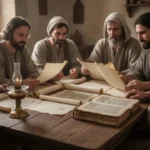
If you have ever wondered how Christians understood the faith before modern denominations, study Bibles, or systematic theologies, the answer begins with the early church fathers. They were Christian teachers and leaders from the first several centuries who preserved apostolic traditions, defended Christian belief, interpreted Scripture, and helped churches respond to internal disputes and outside criticism.
They were not a single committee with identical opinions. Some agreed closely, while others disagreed about interpretation, church discipline, philosophy, and the best way to explain difficult doctrines. Their writings are valuable because they show how early Christians prayed, worshiped, organized churches, and reasoned about the person of Jesus Christ.
Who the early church fathers were and when they lived
The phrase early church fathers usually refers to influential Christian writers and bishops from roughly the late first century through the fifth century. The exact boundaries vary. Some historians include writers from the second century onward, while others use “church fathers” more broadly for respected teachers from the early centuries of Christianity.
“Father” is an honorific rather than the name of a formal office. In the ancient church, a respected teacher could be called a father because he helped form believers in the faith, much as a parent forms a child. Many of these figures were bishops, but the group also includes pastors, monks, apologists, theologians, and Christian authors who did not hold the same kind of leadership position.
Traditional descriptions of a church father often emphasize four qualities: antiquity, sound teaching, a holy life, and recognition by the church. These standards were not applied mechanically, and Christians from different traditions do not always agree about which writers deserve the title. A person can be historically important without every teaching being accepted as authoritative.
The early fathers lived in a period of major change. Christianity began as a movement within the Jewish world of the Roman Empire, spread among Gentiles, and developed congregations across languages and cultures. Christians faced persecution in some places, public suspicion, internal divisions, and questions about how the message of the apostles should be expressed for new generations.
A useful distinction: The early church fathers are important witnesses to early Christian belief, but they are not equal to the apostles or to Scripture in every Christian tradition. Their writings should be read as historical and theological testimony, not treated as a replacement for the Bible.
Historians often group the fathers into several overlapping periods:
The Apostolic Fathers lived near the time of the apostles and include writers such as Clement of Rome, Ignatius of Antioch, and Polycarp of Smyrna.
The second- and third-century fathers defended Christianity against pagan criticism and competing interpretations of Christian teaching. Justin Martyr, Irenaeus, Tertullian, Origen, and Cyprian belong to this broad period.
The Nicene and post-Nicene fathers addressed debates about the Trinity, the incarnation, grace, the church, and Christian life. Athanasius, the Cappadocian fathers, Augustine, Jerome, Ambrose, and John Chrysostom are among the best-known examples.
What the Apostolic Fathers reveal about the earliest churches
The Apostolic Fathers are especially valuable because they stand close to the generation that learned directly from the apostles or from their immediate successors. Their writings do not provide a complete picture of every congregation, but they offer evidence about church leadership, Christian worship, moral instruction, baptism, the Lord’s Supper, and the importance of preserving received teaching.
Clement of Rome is associated with a letter sent from the church in Rome to the church in Corinth, commonly called First Clement. The letter addresses conflict and disorder in Corinth. Clement appeals to humility, peace, repentance, and an orderly pattern of ministry, while also using Israel’s Scriptures and the apostolic tradition to support his appeal.
The letter is significant because it shows a church outside Corinth taking a serious interest in another congregation’s dispute. It also reflects an early concern for continuity in Christian leadership. That does not settle later debates about church government, but it demonstrates that early Christians connected faithful ministry with stability, moral character, and continuity with the apostles.
Ignatius of Antioch wrote several letters while traveling to Rome under guard, where he expected to face martyrdom. His letters strongly emphasize loyalty to Christ, unity within the local congregation, and the relationship between the bishop, presbyters, and deacons. He also writes vividly about Jesus Christ’s real humanity, suffering, death, and resurrection.
Ignatius is often remembered for his teaching about the Eucharist and the visible unity of the church. He opposed groups that separated the divine Christ from the genuinely human Jesus. His language reflects a setting in which Christian leaders were trying to protect both the church’s common worship and its confession about who Jesus was.
Polycarp of Smyrna was a bishop remembered as a disciple of John in early Christian tradition. His surviving Letter to the Philippians combines moral instruction with encouragement to remain faithful. It emphasizes generosity, self-control, prayer, care for widows, and the danger of greed and false teaching.
Polycarp’s account of martyrdom, preserved in a separate early Christian document, presents his death as a witness to Christ rather than an act of political rebellion. Such writings helped Christians understand suffering and execution in light of Jesus’ own faithfulness. They also show how stories of exemplary believers shaped Christian memory and identity.
The Didache, or “Teaching,” is an anonymous early Christian manual. It includes moral instruction, directions concerning baptism and fasting, guidance about the Lord’s Supper, and advice for testing traveling teachers and prophets. Its practical tone gives readers a glimpse of ordinary congregational concerns that more famous theological works sometimes overlook.
These sources should be read carefully. A letter from one bishop does not automatically describe every church, and a church manual does not prove that every community practiced worship in exactly the same way. Still, together they show that early Christians cared about shared doctrine, recognizable leadership, disciplined conduct, communal worship, and continuity with the teaching they had received.
How second- and third-century fathers defended Christian belief
As Christianity spread, its teachers had to answer accusations from Roman society and disagreements within the churches. Some critics portrayed Christians as immoral or antisocial. Others argued that Christian worship was irrational because it centered on a crucified man. At the same time, rival teachers offered competing interpretations of Jesus, salvation, creation, and the Old Testament.
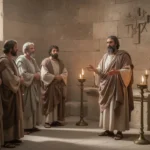
Justin Martyr responded to pagan critics by presenting Christianity as the fulfillment of truth rather than a rejection of reason. In his apologies, he explains Christian worship, moral conduct, baptism, and the Eucharist to readers outside the church. He also presents Jesus as the divine Word who brings God’s truth to humanity.
Justin’s writings are useful for learning how a second-century Christian could explain the faith in terms understandable to a Greco-Roman audience. He draws connections between Christian belief, the Hebrew Scriptures, and philosophical questions about reason and virtue. His work also contains an early description of Christian worship, although it should not be assumed to represent every congregation in every region.
Irenaeus of Lyons confronted movements often grouped under the label Gnosticism. These movements varied considerably, but many taught that salvation involved escaping the material world through hidden knowledge and that the supreme God was distinct from the creator described in the Old Testament.
In Against Heresies, Irenaeus argues that the one God is the creator, the God of Israel, and the Father of Jesus Christ. He presents salvation as God’s restoration and renewal of human life through Christ. His idea of “recapitulation” describes Christ as retracing and healing the story of humanity by becoming truly human and obeying where Adam failed.
Irenaeus also appeals to the public teaching of churches founded through the apostles. For him, Christian truth is not a secret message reserved for a spiritual elite. It is proclaimed openly in the churches, confessed in baptism, expressed in worship, and preserved through teachers who stand in continuity with the apostolic message.
Tertullian of Carthage was an energetic Latin writer who addressed heresies, persecution, Christian morality, and the relationship between faith and the surrounding culture. His sharp legal and rhetorical style influenced later Western theology. He helped establish technical language for discussing the unity and distinction of Father, Son, and Holy Spirit.
Tertullian’s later association with Montanism means that his writings need to be dated and evaluated rather than treated as one unchanging system. He remains important precisely because he shows both the strength and the complexity of early Christian theology. A prominent teacher could make lasting contributions while also developing positions later Christians would question.
Origen of Alexandria was one of the ancient church’s most productive interpreters of Scripture. He wrote biblical commentaries, homilies, apologetic works, and theological discussions. Origen encouraged Christians to read Scripture at more than one level, seeking its historical meaning while also considering its moral and spiritual significance.
Origen’s intellectual influence was enormous, but some of his speculative ideas were later criticized or rejected. His example illustrates why the fathers should not be approached as if every statement from a respected writer carries equal weight. They are witnesses to developing Christian reflection, and their writings often contain both profound insight and unresolved questions.
Cyprian of Carthage wrote during periods of persecution and internal conflict. He emphasized the unity of the church, the responsibilities of bishops, reconciliation after serious sin, and the need for disciplined communal life. His correspondence also reveals how churches handled practical matters such as clergy, charity, baptism, and believers who had abandoned the faith under pressure.
These writers demonstrate that early Christian theology was not formed only through abstract speculation. It emerged from real pressures: public accusations, imprisonment, martyrdom, doctrinal disputes, pastoral failures, and the challenge of teaching converts from different cultural backgrounds.
How Nicene and later fathers explained the Trinity and Christ
The fourth century brought a major shift in the church’s public circumstances after Christianity gained legal recognition in the Roman Empire. The change did not eliminate disagreement. Instead, debates about the identity of Jesus Christ and the meaning of divine sonship became more visible and urgent.
Athanasius of Alexandria defended the confession that the Son is truly divine, not a created being positioned between God and humanity. His arguments were tied to salvation: if the Son does not truly share in God’s divine life, then the Christian claim that God saves humanity through Christ becomes difficult to sustain.
The Council of Nicaea in 325 used the term commonly translated as “of the same substance” to confess the Son’s full divine status with the Father. The council’s creed became a central reference point, although debates continued for decades over terminology, authority, and the precise implications of the confession.
The Cappadocian fathers—Basil of Caesarea, Gregory of Nazianzus, and Gregory of Nyssa—helped clarify language about the Trinity. They distinguished between the one divine nature and the three persons, while insisting that the Father, Son, and Holy Spirit are not three gods. Their work helped Christian teachers speak more carefully about unity and distinction within God.
Basil also wrote about Christian community, prayer, care for the poor, and monastic discipline. Gregory of Nazianzus became known for theological orations that defend the full divinity of the Holy Spirit and the complete humanity of Christ. Gregory of Nyssa explored spiritual growth, human freedom, and the meaning of salvation in works that combine theology with philosophical reflection.
Read doctrinal debates in context: Arguments about words such as “nature,” “person,” and “substance” were not pointless technical disputes. Early Christians were trying to protect the claims that Jesus is truly God, truly human, and genuinely able to reconcile humanity to God.
Ambrose of Milan influenced Western Christianity through preaching, pastoral leadership, biblical interpretation, and hymns. He is also remembered for guiding Augustine before Augustine became one of the most influential theologians in Latin Christianity. Ambrose shows how worship, pastoral care, and theological instruction were closely connected.
Augustine of Hippo wrote on grace, sin, human desire, the church, Scripture, the Trinity, and the relationship between Christianity and Roman society. His Confessions combines prayer, autobiography, and theological reflection. His massive work The City of God responds to the claim that Christianity caused the decline of Rome and presents human history in relation to God’s purposes.
Augustine’s influence is especially strong in Western Christianity, but his legacy is not simple. Different traditions have interpreted his teachings on grace, predestination, baptism, the church, and human freedom in different ways. Reading Augustine well requires attention to the purpose and setting of each work rather than relying on isolated quotations.
Jerome devoted much of his life to biblical study, translation, and commentary. He worked with Hebrew and Greek sources and encouraged serious attention to the languages and historical settings of Scripture. His work contributed substantially to the Latin Christian tradition, though his strong personality and sharp disputes with other scholars also appear in his writings.
John Chrysostom, whose name means “golden-mouthed,” became famous for preaching and biblical exposition. His sermons often apply Scripture to wealth, injustice, family life, prayer, and Christian conduct. He criticized the gap between public religious observance and practical care for the poor, making his work valuable for understanding early Christian preaching and social ethics.
What the early church fathers can teach you today
The fathers can help you see that Christianity has always involved both faithful continuity and careful explanation. They inherited apostolic writings and traditions, yet they had to communicate them in new languages and answer questions their predecessors had not faced in exactly the same form.
They also remind modern readers that doctrine and daily life belong together. The same writers who discussed the Trinity wrote about generosity, fasting, sexual integrity, forgiveness, hospitality, care for widows, treatment of enslaved people, and the use of wealth. Their application was not always adequate by modern standards, but they generally understood theology as something meant to shape worship and conduct.
Several recurring themes stand out:
Christ-centered reading: Many fathers interpret the Old Testament and the Christian life in relation to Jesus Christ.
Public teaching: They often oppose secret doctrines available only to an intellectual or spiritual elite.
Churchly interpretation: Scripture is read within worshiping communities rather than as a private text detached from inherited belief.
Embodied faith: Baptism, the Eucharist, prayer, fasting, almsgiving, and care for the poor are treated as concrete expressions of belief.
Doctrinal precision: Words matter because confused language can lead to confused ideas about God, Christ, and salvation.
At the same time, the fathers have limitations. They lived in cultures shaped by the Roman Empire, ancient philosophy, patriarchy, slavery, and assumptions about society that many readers reject. Some held views that later churches modified or condemned. Their writings can also be polemical, meaning that they may describe opponents in exaggerated or incomplete ways.
For that reason, avoid two opposite mistakes. Treating the fathers as irrelevant ignores the historical roots of Christian teaching. Treating them as flawless authorities overlooks their disagreements, their historical limitations, and the fact that they often wrote while theological debates were still developing.
How to read the early church fathers without losing historical perspective
A sensible reading plan begins with shorter and more accessible works. First Clement, the letters of Ignatius, Polycarp’s letter, the Didache, and selected writings by Justin Martyr provide a useful introduction. After that, you can move to Irenaeus, Athanasius, Augustine, or another writer connected to a question you are studying.
Read each work with five questions in mind:
Who wrote it? Identify the author, location, approximate period, and intended audience when that information is available.
Why was it written? A letter addressing a church crisis should not be interpreted like a theological treatise or a sermon.
What problem is being addressed? The author may be responding to persecution, a rival teaching, moral failure, or confusion about worship.
How does the writer use Scripture? Notice which passages are cited, paraphrased, or interpreted and how they support the author’s argument.
What is widely shared and what is disputed? A theme repeated across several writers may carry different historical weight from an unusual or speculative opinion.
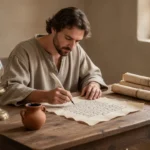
Use a reliable modern translation with introductions and notes. The fathers wrote in Greek, Latin, Syriac, and other languages, and translation choices can affect theological meaning. A good edition will identify uncertain authorship, explain historical references, and distinguish a surviving ancient text from a later attribution.
It also helps to compare several fathers rather than building a position around one striking sentence. For example, a single writer’s comment about baptism, church leadership, or the Eucharist may be shaped by a local controversy. Comparing sources from different regions and decades can reveal both broad patterns and genuine diversity.
Finally, ask what kind of authority you are seeking. If you want to know how early Christians worshiped, the fathers are important primary sources. If you want to understand how a doctrine developed, they provide essential evidence. If you want a final rule for every theological question, you will need to read them alongside Scripture and the interpretive tradition of your own church.
Their enduring value lies in the questions they force modern Christians to ask: What does it mean to confess that Jesus is truly divine and truly human? How should a church preserve its teaching? How should worship shape moral life? And how can inherited faith be explained clearly when new cultures and new challenges arise?
Frequently asked questions
Are the early church fathers the same as the apostles?
No. The apostles belong to the first generation of Christian witnesses, while the early church fathers generally lived in the generations after them. Some fathers, especially the Apostolic Fathers, were believed to have known apostles or their immediate students. Their writings are therefore historically close to the apostolic period, but they are not considered apostles themselves.
Which early church father should I read first?
First Clement and the letters of Ignatius are approachable starting points because they address church unity, leadership, worship, and Christian conduct. The Didache is also useful for its practical instructions. Readers interested in doctrine may then try Irenaeus or Athanasius, while those interested in prayer and personal reflection may begin with Augustine’s Confessions.
Did all the early church fathers agree with one another?
No. They shared central convictions, but they differed on biblical interpretation, church structure, baptism, free will, spiritual gifts, and other subjects. Some writers also developed ideas that later Christians rejected. Their disagreements are part of the historical record and show that early Christian theology developed through discussion, controversy, and clarification.
Why do the early church fathers matter for Christians today?
They connect later Christian theology with the earliest generations after the apostles. Their writings explain how churches defended belief in Christ, organized worship, responded to persecution, and interpreted Scripture. They also offer examples of pastoral teaching and moral concern. Their views should be tested carefully, but ignoring them leaves major parts of Christian history unexplained.



Leave a Reply