The divine council in the Bible: meaning and passages
The divine council in the Bible: meaning and passages
The divine council is the Bible’s picture of God presiding as supreme King over heavenly beings. This heavenly assembly appears in several biblical passages, where God announces decisions, judges spiritual powers, or assigns responsibilities. The council does not place God among equal gods. Instead, it emphasizes God’s unmatched authority over every other supernatural being.
The phrase divine council describes a heavenly court or assembly in which God is the chief ruler. The Bible uses different expressions for this setting, including “assembly of the holy ones,” “heavenly host,” and “sons of God.” These terms point to spiritual beings who stand before God and serve under his command.
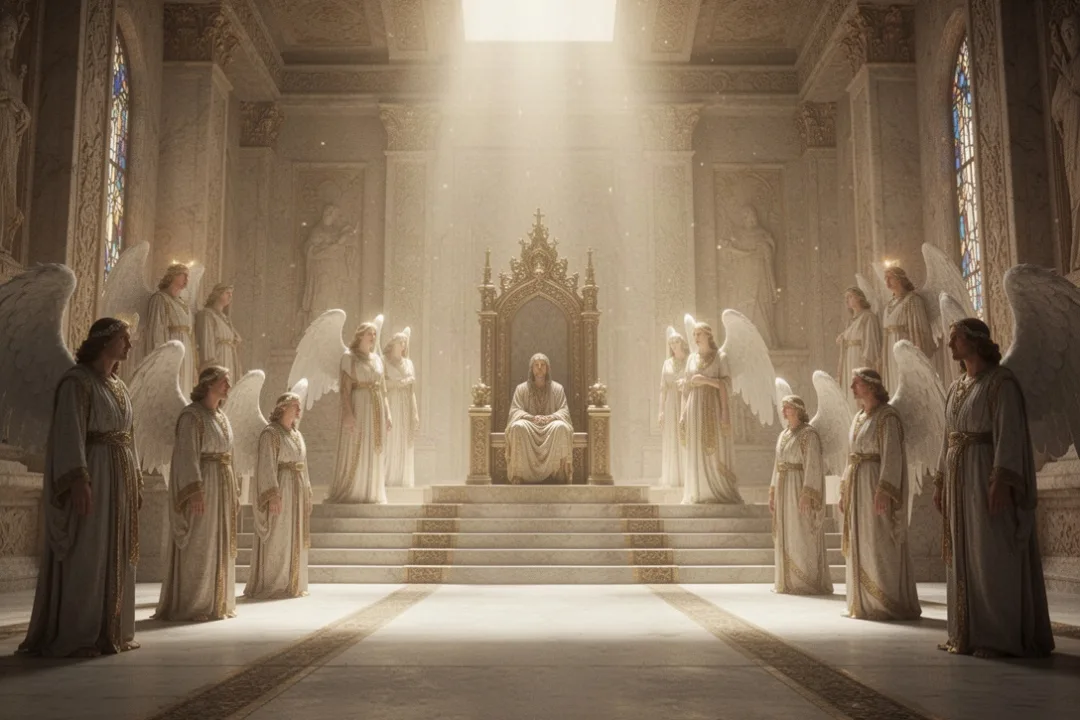
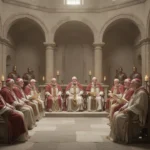
The concept resembles the throne rooms of ancient kings. A human ruler might sit in judgment while officials, advisers, messengers, and military leaders stood around him. Biblical writers use similar imagery for the unseen world, but with a crucial difference: God is not merely one ruler among many. He is the creator and judge of the entire heavenly host.
Readers sometimes assume that mentioning a heavenly council conflicts with biblical monotheism. The passages themselves make a different point. They acknowledge the existence of spiritual beings while repeatedly presenting the Lord as the highest authority, the one who creates, commands, evaluates, and judges them.
Central idea: The divine council is a royal court of heavenly beings, but God alone is sovereign. The council reflects his rule rather than limiting it.
How to recognize the divine council in Scripture
The Bible does not always use one fixed label for the council. You can identify the scene by looking for recurring features: God appears as king, heavenly beings stand before him, a decision or accusation is discussed, and God gives a ruling or assignment.
Look for a heavenly throne room. God is portrayed as seated, reigning, or surrounded by spiritual beings.
Identify the members of the assembly. They may be called holy ones, sons of God, heavenly hosts, angels, or other spiritual beings.
Notice the council’s activity. The beings may witness a judgment, receive a commission, present information, or participate in carrying out God’s will.
Ask who has final authority. The answer is consistently God, even when other beings speak or act.
Read the surrounding passage. A council scene often explains events on earth, such as a king’s downfall, a prophet’s commission, or judgment against corrupt spiritual rulers.
This approach helps distinguish a genuine council scene from a passage that simply mentions angels or heavenly beings. The central feature is not the presence of supernatural figures by itself. It is the relationship between God and the heavenly assembly.
Where the Bible presents the divine council
Several important passages show God surrounded by heavenly beings or addressing them as a group. Each scene contributes something different to the larger biblical picture.
1 Kings 22:19-23: The prophet Micaiah sees the Lord on his throne with the host of heaven standing beside him. A decision concerning King Ahab is discussed in the heavenly court.
Job 1-2: The “sons of God” present themselves before the Lord, and the accuser appears among them. The scene frames Job’s testing within a heavenly courtroom.
Psalm 82: God stands in the divine assembly and judges spiritual rulers for failing to defend the weak and uphold justice.
Psalm 89:5-7: The holy ones and heavenly beings are called to recognize the Lord’s incomparable greatness.
Isaiah 6:1-8: Isaiah sees the Lord in the temple surrounded by seraphim, who praise God and respond to his question about a messenger.
Daniel 7:9-14: The Ancient of Days presides over a heavenly court while judgment is rendered against oppressive kingdoms and authority is given to a humanlike figure.
Zechariah 3:1-7: Joshua the high priest stands before the angel of the Lord while the accuser challenges him and God issues a ruling.
1 Kings 22 and Job 1-2: These passages particularly emphasize heavenly deliberation, accusation, and the carrying out of decisions on earth.
These scenes are not identical. Some focus on judgment, some on commissioning a messenger, and others on the administration of events in the human world. Together, they show a consistent biblical pattern: God rules from heaven, and spiritual beings serve within the order he establishes.
What Psalm 82 says about the divine council
Psalm 82 is one of the clearest and most debated council passages. It opens with God standing in the divine assembly and judging among the “gods.” The Hebrew term behind “gods” is elohim, a word that can refer to the God of Israel, other spiritual beings, or, in some contexts, human authorities.
The psalm’s setting strongly suggests a heavenly courtroom. The beings addressed have been given a position of authority, yet they have ruled unjustly. They fail to defend the vulnerable, protect the poor, and uphold the rights of those who need justice.
God’s judgment exposes the failure of these rulers. Their status does not protect them from accountability. Even though they are called “gods” in the psalm, they are subject to the judgment of the Most High and will fall like other rulers.
Psalm 82 therefore makes two connected points. First, the spiritual world contains beings who possess real authority under God. Second, delegated authority can be corrupted, and God will judge those who abuse it.
Some interpreters understand the “gods” as heavenly beings. Others read the language as referring to human judges or rulers. The heavenly interpretation fits the psalm’s divine-assembly imagery, while the human interpretation emphasizes the Bible’s frequent concern with unjust leaders. Some readers see both dimensions working together: earthly rulers can represent powers that stand behind or above human institutions.
Psalm 82 is not presenting the council as a group of equals. It portrays God as the judge who holds every ruler accountable.
How 1 Kings 22 depicts a heavenly decision
In 1 Kings 22, the prophet Micaiah describes a vision of the Lord sitting on his throne with the host of heaven standing on either side. The heavenly assembly considers how King Ahab will be persuaded to go into battle, where he will meet his death.
The passage uses the imagery of a royal court. A spirit offers a plan, and the Lord permits that plan to proceed. The story does not suggest uncertainty about God’s ultimate rule. Instead, it presents the heavenly host as participating in the execution of a judgment already directed by God.
This passage also shows why council language should not be reduced to the idea of God needing advice. The members of the assembly may speak, but God determines the boundaries of their actions. The heavenly court functions under divine authority.
The account raises difficult questions about deception, judgment, and divine permission. Its main narrative purpose, however, is clear: Micaiah’s vision reveals that Ahab’s apparent military decision is connected to a heavenly judgment. What looks like ordinary political and military history is also shown as part of a larger spiritual order.
What the “sons of God” mean in Job
Job 1 and 2 begin with the “sons of God” presenting themselves before the Lord. The accuser is also present. The scene resembles a royal court or legal proceeding, where the accuser challenges Job’s motives and questions whether his faithfulness is genuine.
The accuser is not portrayed as an independent rival who can act without restraint. God questions him, limits his activity, and sets boundaries around what may happen to Job. The story’s heavenly setting therefore reinforces God’s sovereignty even during suffering.
The phrase “sons of God” refers to heavenly beings in this context. It does not mean that these figures are divine in the same way as God, nor does it imply that they share God’s unique status as creator. The language identifies them as members of the supernatural court.
Job’s opening scenes also show that the council can function as a place of examination. The accuser raises a charge, but the charge is tested within a process controlled by God. The narrative does not answer every question about suffering, yet it makes clear that the heavenly realm is not outside God’s authority.
How the divine council relates to monotheism
The Bible’s use of council language reflects a world in which spiritual beings are real. It does not require the conclusion that all such beings are gods equal to the Lord. Biblical monotheism is expressed not only by denying rival worship but also by declaring God’s unique supremacy.
Several biblical descriptions distinguish the Lord from every other heavenly being. God creates; the council serves. God judges; the council is judged. God commands; the council receives assignments. God is incomparable; the other beings cannot rival his glory or authority.
Psalm 89 captures this contrast by describing the heavenly beings as recognizing that no one compares with the Lord. The council’s existence magnifies God’s greatness because even the most powerful spiritual beings depend on him.
Other biblical passages use strong language against the worship of foreign gods. Those passages may treat idols as lifeless objects, while other texts acknowledge spiritual powers associated with pagan worship. These perspectives can stand together: an idol is not a true material deity, yet worship can still involve real spiritual deception or rebellion.
Reading tip: Do not assume that every biblical use of “god” means the same thing. Examine the passage’s context, speaker, audience, and contrast between the Lord and the beings being described.
What Deuteronomy 32 contributes to the discussion
Deuteronomy 32 is often connected with the divine council because it describes the nations being divided in relation to the “sons of God” in some ancient textual traditions. The exact wording differs among the textual witnesses, which is why translations may present the verse differently.
The passage connects the nations, heavenly beings, and the Lord’s special relationship with Israel. It can be read as presenting a heavenly administration over the nations, followed by judgment on those spiritual powers for their corruption. This theme resembles Psalm 82, where heavenly rulers are condemned for failing in their assigned responsibilities.
Readers should handle the textual details carefully. The passage is significant, but arguments based on a single English translation can overlook differences among the Hebrew text, ancient Greek translation, and other early witnesses. The broader biblical pattern is more secure: Scripture portrays God as ruling over the nations and the spiritual powers associated with them.
Deuteronomy 32 also helps explain why later biblical texts can speak about both human nations and spiritual rulers. Political conflict may have a visible human dimension while also reflecting rebellion in the heavenly realm.
How Daniel 7 develops the heavenly court theme
Daniel 7 presents one of the most dramatic throne-room visions in Scripture. The Ancient of Days takes his seat, heavenly attendants surround him, and books are opened. The scene is clearly judicial: oppressive kingdoms are assessed, and their authority is removed.
The vision then describes a humanlike figure receiving dominion, glory, and a kingdom. Different religious traditions interpret this figure in different ways, but the central structure remains clear. God presides over history, judges violent empires, and grants lasting authority according to his purpose.
Daniel’s vision expands the council theme beyond a single event. It places the rise and fall of kingdoms within a heavenly court where earthly power is not ultimate. Human empires may appear terrifying from the ground, but from the perspective of God’s throne they remain accountable and temporary.
The opened books also reinforce the legal character of the scene. The court does not act randomly. It evaluates, records, and pronounces judgment. Daniel uses this imagery to assure faithful people that oppression will not have the final word.
How Isaiah 6 shows heavenly worship and commission
Isaiah 6 presents the Lord enthroned in the temple, with seraphim attending him. Their praise centers on God’s holiness and the fullness of his glory. The scene is not primarily a debate or trial, yet it displays the same royal-court pattern.
After Isaiah recognizes his uncleanness, God cleanses and commissions him. The Lord then asks who will go as a messenger, and Isaiah responds. The wording presents a heavenly setting in which a mission is announced before the prophet accepts it.
This passage shows that the divine council is not only a courtroom. It is also a place of worship, revelation, and commissioning. Heavenly beings praise God, while human servants are called to carry his message into the world.
The seraphim are not described as independent deities. Their entire role directs attention toward God’s holiness. Their presence makes the throne room more impressive, but it never competes with the Lord’s central position.
How the divine council appears in the New Testament
The New Testament continues the biblical picture of heavenly beings surrounding God’s throne, even when it does not always use the exact phrase “divine council.” Angels, authorities, rulers, powers, and heavenly assemblies appear in several settings.
In the Gospels, Jesus speaks of angels who behold the Father’s face in heaven and of the Son of Man coming with angels. These references assume an organized heavenly realm under divine authority. The book of Revelation repeatedly depicts worship around God’s throne, with living creatures and elders praising him and participating in scenes of judgment.
Paul’s letters refer to “rulers,” “authorities,” and “powers” in ways that can include spiritual beings. Some passages present Christ as superior to every such power. The point is not that these powers are imaginary or harmless. It is that Christ’s authority exceeds theirs, and their status does not place them beyond God’s judgment.
Jesus’ teaching about judgment also uses council-like imagery. In Matthew 25, angels accompany the Son of Man in judgment. In 1 Corinthians 6, Paul refers to believers judging angels, a difficult statement that has received several interpretations. It at least reflects the New Testament’s expectation that heavenly beings belong to an ordered creation under God’s final judgment.
The book of Revelation brings these themes together: throne, heavenly attendants, accusation, judgment, worship, and the defeat of rebellious powers. The heavenly court is not a separate mythology added to the gospel. It is part of the Bible’s wider account of creation, rebellion, redemption, and final judgment.
What the divine council reveals about spiritual authority
The council theme teaches that authority can be genuine without being absolute. Spiritual beings may receive responsibilities, influence events, or exercise judgment, but they remain created servants. Their authority is delegated and therefore accountable.
This principle also applies to human leadership. Psalm 82 connects heavenly judgment with the treatment of the poor and powerless. Biblical authority is never validated merely by position. Rulers are judged by whether they act justly and protect those who lack power.
The heavenly council also challenges a purely material view of history. The Bible does not treat political events, moral corruption, worship, and spiritual conflict as completely separate subjects. A king’s decision, a nation’s injustice, or a community’s idolatry may have consequences in both the visible and invisible realms.
At the same time, council theology does not encourage speculation about every event. The biblical texts give enough information to affirm God’s rule and spiritual accountability, but they do not map every heavenly being or explain every supernatural process.
Common misunderstandings about the divine council
“The council means the Bible teaches many equal gods.” The council includes heavenly beings, but the Lord is portrayed as their creator, ruler, and judge.
“God needs advisers because he lacks wisdom.” Council scenes use royal imagery. Participation by heavenly beings does not make God dependent on them.
“Every mention of an angel is a council scene.” A single messenger may appear without a formal assembly or court setting.
“The members of the council are always good.” Job, Psalm 82, and other passages show accusation, corruption, or judgment among spiritual powers.
“The council is only symbolic.” The imagery communicates theological meaning, but the passages treat the heavenly beings as real participants in the biblical worldview.
“The council replaces human responsibility.” Scripture still holds kings, nations, communities, and individuals accountable for their choices.
These distinctions keep the topic grounded in the actual passages. The divine council is neither a minor decorative image nor a license for elaborate speculation. It is a recurring biblical way of describing God’s heavenly government.
Why the divine council matters for reading difficult passages
Recognizing the council can clarify passages that otherwise seem strange. In Job, it explains why spiritual beings appear before God. In 1 Kings 22, it explains the vision of heavenly deliberation. In Psalm 82, it identifies the setting for judgment against corrupt rulers.
It can also clarify the Bible’s language about gods, heavenly hosts, rulers, and authorities. Instead of forcing every reference into the same category, you can ask whether the text is discussing God himself, idols, human leaders, or created spiritual beings.
The theme further connects individual books of the Bible. Job, Psalms, the Prophets, Daniel, the Gospels, Paul’s letters, and Revelation use different styles, but they share a basic conviction: the unseen realm is ordered under God’s throne, and every power will ultimately answer to him.
For Christian readers, the theme also places Christ’s authority in a larger setting. The New Testament presents Jesus as exalted above angels and spiritual powers, participating in God’s final rule and judgment. That claim becomes more significant when read against the background of the heavenly court.
The divine council, then, is best understood as a biblical model of heavenly governance. It presents God as the incomparable King, spiritual beings as accountable servants or rebels, and earthly history as answerable to a higher court. The passages invite careful reading, not fear or sensationalism: God’s throne remains central, and no created power is beyond his authority.
Frequently asked questions
Is the divine council the same as the Trinity?
No. The divine council refers to a heavenly assembly of created spiritual beings who serve before God. The Trinity is a Christian doctrine about the one God existing as Father, Son, and Holy Spirit. Council passages may help explain biblical language about God’s heavenly court, but they do not describe the Trinity or replace Trinitarian teaching.
Are the “gods” in Psalm 82 demons?
The text identifies them as rulers under judgment, but it does not give them one universally agreed label in modern terms. Many interpreters understand them as heavenly beings; others see human judges or rulers. The psalm’s main point is that these authorities have acted unjustly and remain subject to the judgment of the Most High.
Does the divine council mean angels can change God’s decisions?
The council scenes show heavenly beings speaking, presenting information, or carrying out assignments, but God retains final authority. Their participation does not mean they control his purposes. The narratives portray their actions as occurring within limits God establishes, even when the details of the heavenly process remain mysterious.
Why does this topic matter for Christians today?
It helps readers interpret difficult biblical passages and understand the Bible’s view of spiritual authority. The theme also reinforces that every power, visible or invisible, is accountable to God. It encourages careful attention to justice, because both human and heavenly rulers are portrayed as responsible for how they exercise authority.





Leave a Reply