Summary of 1 Corinthians: Themes, Chapters, and Meaning
Summary of 1 Corinthians: Themes, Chapters, and Meaning
First Corinthians calls a divided church to let the gospel reshape its relationships, worship, ethics, and hope.
The letter addresses real problems in the church at Corinth, but its central concern is larger than any individual dispute. Paul argues that believers must live according to the cross of Christ rather than status, personal preference, spiritual pride, or cultural pressure.
Paul wrote 1 Corinthians to the Christian community in Corinth, a significant city in ancient Greece. The church had received the gospel, but its members were struggling to live together with humility and consistency. Some problems came from the surrounding culture, while others arose from misunderstandings about Christian freedom, spiritual gifts, worship, and the resurrection.
The letter responds to reports about the congregation and to questions the Corinthians had sent Paul. It therefore moves between correction, instruction, encouragement, and direct answers. Paul does not treat church doctrine as separate from everyday conduct. For him, what Christians believe about Christ affects how they handle conflict, sex, money, worship, authority, and care for one another.
First Corinthians is commonly understood to have been written by the apostle Paul, with Sosthenes named alongside him in the opening greeting. Paul had previously helped establish the church in Corinth. The letter belongs to the early Christian period and was written while Paul was engaged in ministry elsewhere.
Central idea: Christian maturity is not measured by impressive speech, spiritual experiences, personal freedom, or social standing. It is shown by faithfulness to Christ and by love that seeks the good of others.
First Corinthians in a step-by-step breakdown
The letter can be followed through several connected movements. Each section addresses a particular situation, but together they present a unified picture of a church learning to live under the authority of Jesus.
Chapters 1–4: Paul confronts divisions, boasting, and dependence on human wisdom.
Chapters 5–7: He addresses sexual immorality, disputes between believers, marriage, singleness, and sexual self-control.
Chapters 8–10: He explains how Christian freedom must be limited by love and concern for other believers.
Chapters 11–14: He corrects disorder in worship and teaches how spiritual gifts should serve the whole church.
Chapter 15: He defends the resurrection of Christ and the future resurrection of believers.
Chapter 16: He gives practical instructions about a collection, travel plans, co-workers, perseverance, and love.
These sections should not be read as unrelated advice. Unity, holiness, freedom, worship, and resurrection are all connected to the same question: What does it mean for a community to belong to Christ?
How 1 Corinthians addresses division in the church
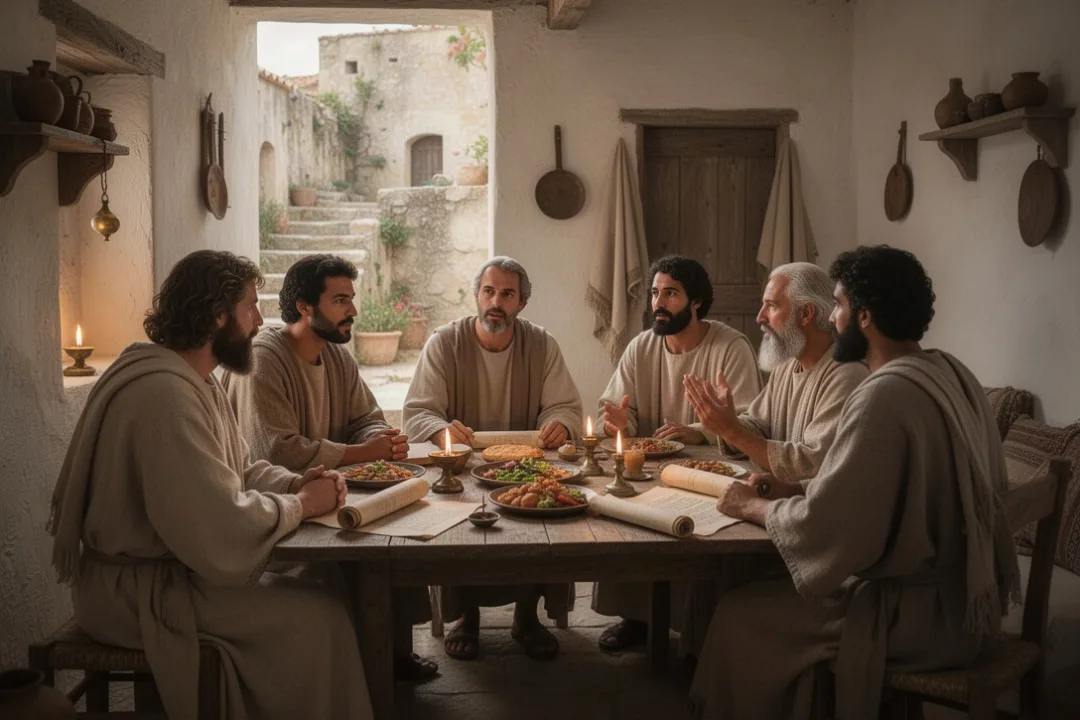
Paul begins by confronting factions in Corinth. Some believers were identifying themselves with Paul, Apollos, Cephas, or Christ in a way that suggested rivalry and superiority. Their loyalties had turned Christian leaders into competing banners.
Paul’s answer is that the church belongs to Christ alone. Christian leaders are servants through whom people came to believe, not replacements for the Lord. The message of the cross also undermines the Corinthians’ desire to measure people by worldly wisdom, eloquence, influence, or prestige.
In chapters 1–4, Paul contrasts the wisdom of God with the standards used by the surrounding culture. The cross can appear weak and foolish from a human point of view, yet it reveals God’s saving power. God’s choice of apparently unimpressive people also prevents believers from boasting as though they had earned their standing.
Paul uses the image of a field and a building to describe Christian ministry. Different workers may plant, water, or build, but God gives growth. The foundation is Jesus Christ, and every worker remains accountable for how that foundation is treated.
The church is also presented as God’s temple. This image gives the community a sacred identity and warns against damaging it through pride, rivalry, and destructive teaching. Paul asks the Corinthians to value faithful stewardship rather than public admiration.
What chapters 5–7 teach about holiness and relationships
Paul then turns to serious moral and legal disputes. His response shows that Christian freedom does not mean indifference to sin, and that church discipline should aim at restoration and the protection of the community.
Sexual immorality and church discipline
Chapter 5 addresses a case of sexual immorality that the Corinthian church was tolerating. Paul criticizes the congregation not only because of the person’s conduct but also because the church had become arrogant about its permissiveness. The community is told to take decisive action rather than treating serious wrongdoing as harmless.
Paul uses the image of yeast working through dough to explain how unchecked sin can affect the whole community. His concern is not for punishment as an end in itself. The goal is that the person may eventually recognize the seriousness of the behavior and be restored.
He also clarifies that Christians are not called to withdraw from everyone outside the church who behaves wrongly. They cannot avoid all contact with the wider world. The sharper responsibility falls on the church to practice integrity within its own fellowship.
Lawsuits between believers
Chapter 6 criticizes believers who were taking one another to court before unbelieving authorities over internal disputes. Paul considers this a public failure of Christian wisdom and mutual responsibility. The issue is not that every legal process is always wrong, but that these members were harming one another and damaging the church’s witness over ordinary conflicts.
He urges them to seek wise judgment within the community and even suggests that accepting a personal loss may be better than exploiting another believer. This teaching challenges the instinct to protect one’s rights at any cost. Reconciliation and justice matter more than winning a dispute.
The body, sexual conduct, and belonging to Christ
Paul rejects the idea that the body is spiritually unimportant. Some Corinthians may have treated sexual activity as a private matter with no lasting significance. Paul instead teaches that the body belongs to the Lord and is connected to the believer’s union with Christ.
His ethical argument rests on identity: Christians have been bought at a cost and should honor God with their bodies. Sexual sin is therefore not merely a private choice. It affects a person’s relationship with Christ and with the wider Christian community.
Marriage, singleness, and personal calling
Chapter 7 answers questions about marriage and sexual relations. Paul recognizes both marriage and singleness as legitimate ways of serving God. He gives pastoral guidance for married couples, unmarried people, widows, and believers whose spouses do not share their faith.
Paul’s advice reflects the pressures facing the Corinthian church, including difficult circumstances and the expectation that the present order is temporary. He does not make one marital condition the universal standard for everyone. Instead, he emphasizes faithfulness, self-control, peace, and responsible care for one’s spouse.
The chapter also encourages believers not to assume they must change their social condition in order to serve God. A person’s calling is not determined entirely by marital status, circumcision, or social position. At the same time, Paul allows freedom for wise change when circumstances require it.
How Christian freedom should be guided by love
Chapters 8–10 discuss food associated with idols. In Corinth, meals connected with pagan worship could create a serious problem for Christians. Some believers understood that idols had no real divine power and felt free to eat such food. Others, especially those with a former history of idol worship, experienced participation in those settings as a return to their old religious life.
Paul agrees that knowledge can establish a principle, but he warns that knowledge by itself can produce pride. The believer with greater understanding must consider the effect of personal behavior on someone whose conscience is weaker or less settled.
This leads to one of the letter’s most important principles: freedom is not the highest Christian value. Love may require a person to give up a permitted activity so that another believer is not confused, pressured, or drawn back into destructive practices.
Practical test for a disputed choice: Ask not only, “Am I allowed to do this?” Also ask, “Will this strengthen the people around me, or will my freedom become a stumbling block?”
In chapter 9, Paul uses his own ministry as an example. As an apostle, he had legitimate rights, including support from those he served. Yet he sometimes chose not to use those rights so that the gospel would not be obstructed. His conduct demonstrates that giving up a privilege can be an expression of love rather than weakness.
Chapter 10 recalls Israel’s wilderness history as a warning to the Corinthians. The people experienced God’s provision but still fell into idolatry, immorality, testing God, and grumbling. Paul says these events provide instruction for later believers. Spiritual privilege does not make anyone immune to temptation.
Paul does not teach that temptation is unavoidable in the sense of being irresistible. He teaches that God remains faithful and provides a way to endure it. The section ends by placing ordinary activities under the larger purpose of God’s glory and the good of others.
What 1 Corinthians teaches about worship and the Lord’s Supper
Chapters 11–14 focus on gatherings of the church. Paul discusses head coverings and behavior during worship, subjects connected to the social customs and gender expectations of Corinth. The details are debated, but the broader concern is clear: public worship should reflect honor, mutual responsibility, and order rather than self-display.
Paul also rebukes the Corinthians for turning the Lord’s Supper into a setting of inequality. Some members were eating generously while others went without, perhaps because wealthier people arrived earlier with more food. Paul says this behavior contradicts the meaning of the meal, which proclaims Christ’s self-giving and expresses the unity of his people.
The Lord’s Supper is therefore not merely a private devotional moment. It is a communal act that requires believers to recognize one another, share responsibly, and examine their conduct toward the church. To participate carelessly while humiliating poorer members is to fail to discern the body.
How spiritual gifts should serve the whole church
Chapter 12 teaches that spiritual gifts come from the same Spirit, the same Lord, and the same God. The Corinthians were apparently ranking gifts and treating some forms of spiritual activity as more impressive than others. Paul responds with the image of one body with many members.
Every member has a place, and no member can dismiss another as unnecessary. The eye cannot say to the hand that it has no need for it, just as one part cannot claim to be the whole body. This picture protects both unity and diversity.
Paul names a range of gifts, including forms of service, teaching, faith, healing, prophecy, discernment, tongues, and interpretation. The lists are not presented as a complete inventory. Their purpose is to show that the Spirit distributes different abilities for the common good.
Spiritual gifts are not badges of personal rank. They are forms of service and stewardship. A gift becomes harmful when it is used to gain status, dominate others, or create disorder in the gathering.
Why love is the necessary measure of Christian maturity
Chapter 13 explains that even remarkable spiritual abilities are empty without love. Paul describes love as patient, kind, resistant to envy and boasting, and unwilling to celebrate wrongdoing. He also says love bears, believes, hopes, and endures in a faithful way.
These words are often read at weddings, but their original setting is a divided church. Paul is not offering a general poem about romance. He is correcting believers who wanted recognition for their gifts while neglecting the people around them.
Love does not mean approving every behavior or avoiding all correction. In this letter, love seeks truth and the good of the community. It replaces rivalry with service and asks how one’s actions affect others.
Paul says that prophecies, tongues, and knowledge are partial and temporary, while love endures. Believers currently understand only in part, so humility is necessary. The chapter closes by placing faith, hope, and love together, with love identified as the greatest because it continues to shape life with God and neighbor.
Why Paul prioritizes understandable worship
Chapter 14 returns to prophecy and tongues. Paul values spiritual gifts but insists that public worship should build up the gathered church. Speech that people cannot understand may be meaningful to the speaker, but it does not help the congregation unless it is interpreted.
Prophecy, as Paul describes it here, communicates a message that can strengthen, encourage, and comfort others. His concern is not competition between gifts but intelligibility and edification. Worship should help people grow rather than leave them confused.
Paul also insists that the gathering should be orderly. Different people may contribute, but participation must be governed by self-control and consideration. God is not honored by chaotic behavior that prevents the church from hearing, learning, and responding.
Why the resurrection is the foundation of Christian hope
Chapter 15 is the theological high point of 1 Corinthians. Paul reminds the church of the gospel he preached: Christ died, was buried, was raised, and was witnessed by many people. He treats the resurrection as a historical and theological foundation, not merely as a symbol of new beginnings.
Some Corinthians were denying or questioning the future resurrection of believers. Paul responds that rejecting resurrection would undermine the whole Christian message. If Christ was not raised, preaching is empty, faith is futile, sin remains unresolved, and those who died trusting Christ have no secure hope.
Paul then argues from Christ’s resurrection to the resurrection of his people. Christ is described as the firstfruits, meaning his resurrection begins the larger harvest that will include those who belong to him. Death is not the final authority over believers.
Using the image of a seed, Paul explains that the future resurrected body will be continuous with the present body but transformed. The body that is perishable will be raised imperishable; what is marked by weakness will be raised in power. Paul is not describing the soul escaping the body. He is teaching bodily resurrection and transformation.
The chapter contrasts Adam and Christ as representative figures. Humanity shares in death through Adam, while those united to Christ share in life. At the resurrection, death itself will be defeated. Paul’s final practical point is that Christian labor is not pointless because God’s promised future gives present faithfulness lasting significance.
“Be steadfast, immovable, always excelling in the work of the Lord.” — 1 Corinthians 15:58, paraphrased
What the closing instructions reveal about Christian community
Chapter 16 moves from resurrection hope to practical responsibilities. Paul gives instructions for a collection to assist believers in Jerusalem. The collection was to be planned, regular, and handled responsibly rather than improvised at the last moment.
He discusses possible travel plans, the work of Timothy, and the ministry of Apollos. These references show that the early churches were connected through relationships, teaching, financial support, and shared concern. Corinth was not meant to operate as an isolated congregation.
Paul urges the believers to remain alert, stand firm in faith, act courageously, and do everything in love. He commends the household of Stephanas for their service and asks the church to respect people who work for the good of the community.
The final greetings reinforce the letter’s personal character. First Corinthians contains strong correction, but Paul writes as someone deeply invested in the church’s restoration. His concern is that the Corinthians become a faithful community whose conduct matches the gospel they have received.
Major themes running through 1 Corinthians
The cross overturns human status: God’s wisdom is not measured by prestige, eloquence, wealth, or influence.
Christian identity creates unity: Believers belong to Christ, so they should not build rival factions around leaders or preferences.
Holiness involves the body: Sexual conduct, food, lawsuits, and ordinary decisions matter because the body belongs to the Lord.
Freedom is limited by love: A permitted action may still be unwise if it harms another believer’s conscience or faith.
Gifts exist for service: Spiritual abilities are given for the common good, not for personal ranking.
Worship should build people up: Gatherings require intelligibility, order, mutual respect, and attention to those who need care.
Resurrection gives Christian work meaning: Because Christ is raised and believers will be raised, faithful labor is not wasted.
How to read difficult passages in 1 Corinthians
Some passages in the letter require careful attention to their historical setting. Instructions about head coverings, marriage, food sacrificed to idols, spiritual gifts, and women speaking in church have generated different interpretations among Christian communities. A responsible reading considers the immediate problem in Corinth, the argument of the surrounding chapters, and the letter’s recurring values of holiness, order, unity, and love.
It also helps to distinguish between universal principles and the particular social form in which Paul addressed them. The principle of honoring others in worship may remain directly relevant even when cultural symbols change. Likewise, the call to limit freedom for the good of others applies beyond the specific question of food connected with pagan temples.
Readers should avoid using one isolated sentence to cancel the broader message of the letter. Paul can defend freedom in one section and restrict its use in another because the deciding issue is love and the spiritual welfare of the community.
Practical lessons from 1 Corinthians for churches and individuals
First Corinthians gives direct guidance for handling conflict and spiritual maturity. Its lessons apply to congregations, families, ministry teams, and individual decisions.
Examine what creates division. Ask whether loyalty to a teacher, tradition, political identity, or personal preference has become more important than belonging to Christ.
Value character over appearance. Public skill and confident speech do not prove spiritual maturity.
Take wrongdoing seriously. Healthy communities do not call harmful behavior acceptable merely to avoid discomfort.
Seek reconciliation before victory. Winning an argument may still damage relationships and dishonor the church.
Use freedom responsibly. Consider the effect of your choices on people with different histories, consciences, and levels of understanding.
Make worship accessible. Teaching and participation should help people understand, respond, and grow.
Honor every member. Quiet service is no less valuable than visible leadership.
Let love set the pace. Truth without love becomes harsh, while spiritual activity without love becomes empty.
Keep resurrection hope in view. Faithful work matters even when results are not immediately visible.
The letter’s message is demanding because it refuses to separate belief from behavior. A church can have gifted speakers, strong religious experiences, and detailed knowledge while still failing in love. Paul’s answer is not to abandon truth or spiritual gifts, but to place them under the lordship of Christ and the needs of the community.
That is why the summary of 1 Corinthians can be stated simply: the gospel creates a new kind of people. They are united around the crucified and risen Christ, practice holiness in their bodies and relationships, use freedom for service, gather for mutual strengthening, and live with confidence that death will not have the final word.
Frequently asked questions
What is the main message of 1 Corinthians?
The main message is that the gospel must transform the life of the church. Paul calls the Corinthians away from division, pride, sexual immorality, selfish freedom, disorderly worship, and denial of resurrection. He points them toward loyalty to Christ, love for other believers, responsible use of spiritual gifts, and confidence in the future resurrection.
What problem does Paul address first in 1 Corinthians?
Paul first addresses divisions among the Corinthians. Members were aligning themselves with different Christian leaders and treating those associations as marks of superiority. Paul responds that no human minister should replace Christ as the church’s foundation. The cross also challenges the community’s fascination with status, eloquence, and worldly definitions of wisdom.
Why is 1 Corinthians 13 about more than romantic love?
First Corinthians 13 addresses a congregation whose members were competing over spiritual gifts and status. Paul describes love as the necessary character behind every form of ministry. The passage is relevant to marriage, but its original setting emphasizes patience, humility, truthfulness, and concern for other believers within a divided church.
What does 1 Corinthians teach about the resurrection?
It teaches that Christ’s resurrection is central to Christian faith and that believers can expect a future bodily resurrection. Paul rejects the idea that resurrection is merely symbolic or purely spiritual. He describes a transformed, imperishable body and argues that this hope gives present Christian work lasting significance.










Leave a Reply