1 Corinthians 3:16: Meaning and practical application
1 Corinthians 3:16: Meaning and practical application
When a church feels divided, or when you wonder whether God is truly present among ordinary believers, 1 Corinthians 3:16 offers a direct answer: God’s Spirit dwells among his people. Paul is not making a casual statement about religious feelings. He is describing the Christian community as God’s temple, a sacred people whose unity and conduct matter because God lives in their midst.
The verse is often applied to an individual Christian’s body, and that concern is biblical elsewhere. In its immediate setting, however, Paul is primarily addressing the church as a gathered community. His words challenge rivalry, pride, destructive leadership, and careless treatment of other believers. To understand 1 Corinthians 3:16 well, you need to read it as part of Paul’s larger argument about God’s building and the people who belong to it.
Paul wrote to the Christians in Corinth, a church struggling with disputes and competing loyalties. Some believers identified themselves with Paul, others with Apollos, and the arguments suggested that certain leaders had become more important in people’s minds than the gospel itself. Paul responds by presenting himself and Apollos as servants, not owners, of God’s work.
In the preceding verses, Paul describes the church as God’s field and God’s building. He says that he laid a foundation, which is Jesus Christ, while others build on it. The image shifts from construction work to the structure itself: the Corinthians are not merely attending God’s building; together, they constitute a holy dwelling place.
When Paul asks whether the Corinthians know that they are God’s temple and that God’s Spirit dwells in them, the expected answer is yes. The question is meant to awaken their memory and correct their behavior. They have been acting as though the church were a platform for personal status, but Paul reminds them that it belongs to God.
The next verse makes the warning sharper. Anyone who damages God’s temple will face God’s judgment, because the temple is holy. In context, “destroying” or “corrupting” the temple includes conduct that tears apart the community Paul is addressing. The passage is therefore both a promise of God’s presence and a warning against harming God’s people.
Central idea: In 1 Corinthians 3:16, “you” refers primarily to the Christian community as a whole. The verse teaches that God’s Spirit dwells among his people, so division and destructive behavior are serious spiritual matters.
What “God’s temple” means in 1 Corinthians 3:16
For Paul’s first readers, the word temple carried strong associations with worship, holiness, God’s presence, and belonging. A temple was not simply a meeting room. It was a place set apart for God, and the temple imagery would have made the Corinthians consider the seriousness of their identity.
Paul applies that sacred image to the local Christian community. The believers in Corinth are not holy because they have achieved moral perfection or because they agree on every secondary issue. They are holy because God has claimed them and his Spirit lives among them. Their sacred status creates a responsibility to treat one another accordingly.
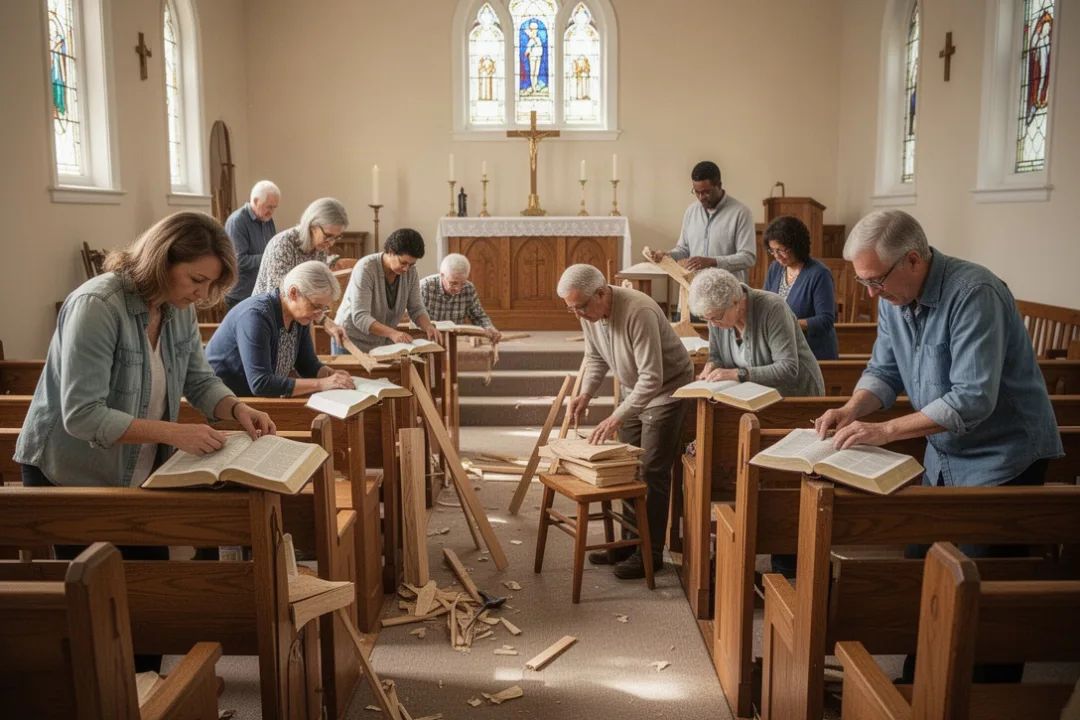
This does not mean that a church building is automatically the temple Paul describes. A building can be a useful place for worship, teaching, fellowship, and service, but the New Testament repeatedly places the emphasis on God’s people. The church is more than a facility, a weekly program, or an organization with a name. It is a community formed around Christ.
The temple image also prevents an overly individualistic reading. You may experience faith personally, pray privately, and receive individual guidance from Scripture, but you do not practice Christianity in isolation from the body of believers. Paul’s wording calls attention to what Christians are together, not merely what one believer is alone.
Why the Holy Spirit’s presence matters
The Holy Spirit’s presence means that the church is not sustained only by human skill, tradition, charisma, or organization. Christian community depends on God’s active presence. The Spirit gives life, unites believers around Christ, exposes sin, strengthens faith, and equips people to serve.
Paul’s point is not that the Corinthians have a vague spiritual atmosphere around them. He is speaking of God dwelling in the community. That presence gives the church its identity and sets a standard for its relationships. A congregation may have gifted teachers, a polished service, or a respected public reputation, yet none of those things substitutes for faithfulness to God.
The Spirit’s presence also gives hope. A divided church is not beyond restoration simply because its members have failed. The same God who makes the community his dwelling place can correct, renew, and reconcile it. Paul does not tell the Corinthians to abandon the church when problems appear; he calls them to recognize what the church is and to live in a way that fits that reality.
In other words, 1 Corinthians 3:16 is not only a warning against misconduct. It is a declaration of belonging and dignity. God is present with his people, so the community is never spiritually insignificant. Even small acts of care, repentance, patience, and truthfulness matter within a people God has chosen to inhabit.
How church division relates to this verse
The immediate problem in Corinth was not merely that people had different personalities. Their preferences had developed into factions. They were attaching their identity to particular leaders and treating spiritual workers as rivals. Paul considers this immature because it shifts attention away from Christ and damages the unity of the church.
Paul does not say that every disagreement is sinful. Churches may differ over schedules, methods, cultural practices, charitable priorities, or interpretations of less central questions. The concern in this passage is the kind of division that produces pride, contempt, competition, and allegiance to personalities rather than submission to Jesus.
That distinction helps you apply the verse fairly. “Protecting the temple” does not mean refusing all criticism or silencing sincere questions. Healthy churches can examine teaching, address abuse, correct errors, and disagree respectfully. A community is not preserved by pretending that every leader is right. It is preserved by seeking truth while refusing the pride and hostility that turn differences into spiritual warfare.
Paul’s language also warns leaders and influential members. If someone uses authority to manipulate, isolate, exploit, or divide believers, the damage is not merely organizational. It affects a people in whom God’s Spirit dwells. This gives church discipline and accountability a serious purpose: not protecting an institution’s image, but caring for the spiritual health of God’s community.
How 1 Corinthians 3:16 differs from 1 Corinthians 6:19
Many readers connect 1 Corinthians 3:16 with the later passage in 1 Corinthians 6:19, which describes an individual believer’s body as a temple of the Holy Spirit. The two passages are related, but they address different settings and should not be treated as interchangeable.
In chapter 3, Paul is confronting church division and communal destruction. The “you” is best understood in the plural sense: the Corinthian believers collectively are God’s temple. In chapter 6, Paul is dealing with sexual immorality and the believer’s personal bodily conduct. There, the teaching focuses more directly on the individual Christian’s body.
Both truths belong in Christian teaching. God cares about how you treat your body, and God cares about how you treat the church. But using 1 Corinthians 3:16 only as a statement about personal health, appearance, or private habits misses Paul’s main concern in the chapter.
1 Corinthians 3:16: God’s Spirit dwells in the Christian community, so believers must not damage its unity and holiness.
1 Corinthians 6:19: The individual believer’s body belongs to God and should not be treated as morally independent from him.
Together: Christian faith includes both personal holiness and responsible participation in the life of the church.
What the verse teaches about Christian identity
Christian identity begins with God’s action, not human achievement. Paul does not tell the Corinthians to become a temple by performing well enough. He tells them that they are God’s temple because the Spirit dwells among them. Their conduct should grow out of that identity rather than attempt to earn it.
This offers a healthier foundation than measuring your worth by popularity, ministry success, or recognition. A church may be small, overlooked, or facing a difficult season and still be a place where God’s Spirit is at work. Likewise, a prominent church may need correction if its culture encourages pride or harms people.
The verse also gives believers a shared identity that is stronger than personal preferences. Members may have different backgrounds, ages, gifts, politics, or worship styles. Those differences do not automatically threaten the church. The deeper danger comes when secondary identities become more important than belonging to Christ and caring for his people.
Because the Spirit dwells among the church, no believer should be treated as disposable. This does not mean that harmful behavior should be excused. It means correction should aim at truth, protection, repentance, and restoration rather than humiliation or revenge. Holy community requires both compassion and moral seriousness.
Practical ways to live out 1 Corinthians 3:16
Applying this verse begins with how you think about the church. If you see church as a consumer service, you may evaluate everything by convenience, preference, and personal benefit. If you see the church as God’s dwelling place, you begin to ask how your words, choices, and relationships affect the people around you.
Choose unity without pretending. Address disagreements honestly, but refuse gossip, insults, and public shaming. Unity is not the absence of difficult conversations; it is the commitment to handle them in a Christ-centered way.
Examine your loyalties. Appreciate pastors, teachers, authors, and ministry leaders, but do not treat any human leader as the foundation of your faith. Keep Jesus at the center.
Use influence carefully. If people listen to you, your responsibility increases. Avoid creating factions around your opinions, ministry style, or personal relationships.
Protect vulnerable people. Take reports of abuse, coercion, discrimination, and exploitation seriously. A church that claims to honor God must not protect its reputation at the expense of those who have been harmed.
Practice repair after conflict. Admit your part, seek forgiveness, listen carefully, and make practical changes. Reconciliation may take time, especially where trust has been broken.
Serve instead of competing. Ask what will strengthen the whole congregation rather than what will make your contribution most visible.
Pray for the community. Ask God to give the church wisdom, humility, courage, and love. Prayer keeps the focus on dependence rather than control.
These practices do not make a congregation perfect. They help believers respond appropriately to the truth that God is present among them. A church honors that presence when it makes room for truth, repentance, protection, hospitality, and faithful service.
Common mistakes when interpreting 1 Corinthians 3:16
Several popular applications sound spiritual but do not reflect the passage’s immediate meaning. Careful interpretation does not weaken the verse. It allows the verse to speak with the full force Paul intended.
Reading “you” only as one person: The verse is commonly quoted as though Paul were addressing an individual’s body. That application may be appropriate in other passages, but chapter 3 primarily addresses the church collectively.
Using the verse to forbid all disagreement: Paul condemns factional pride and destructive behavior, not every difference of opinion. Honest discussion can serve the church when it is pursued with humility and truth.
Equating the temple with a building: A church facility can be dedicated to worship, but Paul’s focus is the people. The presence of the Spirit is not confined to a sanctuary.
Turning the warning into a threat against ordinary weakness: The passage concerns serious harm to God’s community. It should not be used to terrify sincere believers who are seeking forgiveness and growth.
Ignoring the leaders and systems involved: The context includes teachers, influence, and the way people build on the foundation of Christ. Application should address congregational culture, not only individual manners.
Using holiness to excuse control: Calling a group sacred does not give leaders permission to demand unquestioning loyalty. The foundation is Christ, not a personality or institution.
Interpretive safeguard: Before applying a verse to a personal concern, ask what problem Paul was addressing, who was being addressed, and how the surrounding verses shape the meaning.
What this passage says about church leaders and ministry work
Earlier in the chapter, Paul presents ministry workers as servants who labor under God’s direction. One person plants, another waters, but God gives the growth. This language lowers human status and places ministry success in God’s hands.
The building image then adds a responsibility: people must take care how they build on the foundation. The foundation is Jesus Christ, so teaching and ministry should remain consistent with him. Public talent, persuasive speech, and organizational achievement cannot compensate for a ministry that undermines the gospel or harms the people entrusted to it.
This has practical implications for evaluating leaders. You should not judge ministry only by size, visibility, eloquence, or popularity. Look for faithfulness to Christ, truthful teaching, humility, moral integrity, willingness to receive correction, and genuine care for people who have little power.
The passage does not demand perfection from every servant. Leaders are also learners who need grace and accountability. But it rejects the idea that leaders are beyond examination. Since the church belongs to God, those who teach or lead must build with reverence rather than treating the congregation as a personal platform.
How the verse speaks to wounded or divided churches
If you have experienced church conflict, 1 Corinthians 3:16 can feel both comforting and painful. It is comforting because God has not abandoned his people when they struggle. It is painful because Paul’s warning confirms that division and spiritual harm are not minor matters to be dismissed as ordinary organizational problems.
The verse does not require you to remain in an unsafe environment. Protecting God’s temple includes protecting people from abuse, intimidation, and ongoing manipulation. Seeking help from trustworthy leaders, counselors, denominational authorities, or appropriate civil agencies may be necessary when serious harm has occurred.
At the same time, not every disappointing experience proves that a church is beyond repair. Some conflicts can be addressed through patient conversation, mediation, repentance, and structural changes. The proper response depends on the nature of the problem, the safety of those involved, and the willingness of leaders and members to pursue truth.
For a divided church, the first question should not be, “Which group gets control?” A better question is, “What honors Christ and protects the people among whom God dwells?” That question may lead to confession, new boundaries, leadership changes, reconciliation, or a patient process of rebuilding trust.
Related biblical themes that clarify the message
Several themes elsewhere in the New Testament help explain why Paul uses temple language. Believers are described as one body with different members, a household of God, and a people called to display God’s character. These images emphasize shared life, mutual responsibility, and dependence on one another.
The New Testament also teaches that Christians are united to Christ and receive the Spirit through faith. The Spirit gives gifts for service, but gifts are not badges of superiority. In the Corinthian letters, spiritual abilities are meant to build up the community, not create a hierarchy of impressive people and ordinary people.
Jesus’ teaching about reconciliation, service, humility, and care for the vulnerable fits naturally with 1 Corinthians 3:16. A church that is God’s temple should reflect the character of the God who dwells there. This includes worship, but it also includes how people speak, lead, forgive, correct, welcome, and share responsibility.
The temple theme reaches beyond a particular congregation’s internal life as well. The church’s holiness should have a public expression. A community shaped by the Spirit should become recognizable through truthful speech, integrity, mercy, hospitality, justice, and love—not through claims of superiority over outsiders.
A prayerful response to 1 Corinthians 3:16
You might respond to this verse by asking God to show you where pride, competition, resentment, or carelessness has affected your relationships with other believers. The goal is not to search for someone else’s failure while overlooking your own. Paul’s teaching invites honest self-examination within the shared life of the church.
You can also pray for the congregation as a whole. Ask for leaders who build on Christ faithfully, members who protect one another, courage to confront harm, patience during disagreement, and wisdom for decisions that affect the wider community. Such prayer recognizes that the church is God’s work, even though believers have real responsibilities within it.
A practical response may be as simple as contacting someone you have avoided, correcting a false story you repeated, thanking a quiet servant, or raising a serious concern through an appropriate channel. Small actions can either strengthen trust or deepen division. Because God’s Spirit dwells among his people, ordinary interactions carry spiritual weight.
1 Corinthians 3:16 ultimately calls the church to remember who it is. Christians are not merely a collection of preferences, personalities, or competing ministries. Together, they are a people made holy by God’s presence, founded on Jesus Christ, and responsible for building one another up with truth and love.
Frequently asked questions
Does 1 Corinthians 3:16 mean my body is God’s temple?
Not primarily in this verse. Paul is speaking to the Corinthian believers as a group and describes the church community as God’s temple. The Bible does teach that an individual believer’s body is a temple of the Holy Spirit in 1 Corinthians 6:19, but that is a separate context addressing personal sexual morality and bodily conduct.
What does “you” mean in 1 Corinthians 3:16?
The “you” is plural in the context of Paul’s message to the Corinthian church. He is addressing the believers collectively, not only one Christian privately. That grammatical and contextual detail matters because the passage focuses on church division, competing leaders, and the responsibility to protect the unity and holiness of the entire Christian community.
Is every church disagreement a violation of 1 Corinthians 3:16?
No. Churches can disagree about methods, schedules, traditions, or interpretations without becoming sinful factions. The passage addresses prideful division and behavior that damages the community. Disagreements should be handled with honesty, humility, evidence, and care. Serious wrongdoing should not be concealed under the claim that unity requires silence.
How should Christians apply this verse when a church is unsafe?
Recognizing the church as God’s temple does not require anyone to remain in an abusive or dangerous environment. Protecting God’s people may require firm boundaries, outside support, leadership accountability, or leaving a congregation. Seek help from trustworthy people and appropriate authorities, especially when abuse, threats, exploitation, or criminal conduct is involved.










Leave a Reply