Jesus with Pharisees: Conflict, Questions, and Meaning
Jesus with Pharisees: Conflict, Questions, and Meaning
Jesus’ relationship with the Pharisees was marked by frequent debate, not constant hostility. He challenged their interpretation of religious practice and their public displays of righteousness, yet some Pharisees approached him honestly, invited him to meals, or defended him before others.
The central issue was not that Jesus opposed God’s law. He argued that love for God, mercy, justice, and faithfulness reveal the law’s true purpose. His strongest criticism targeted hypocrisy: presenting an outward image of devotion while neglecting compassion and integrity.
The Pharisees were a Jewish religious movement active during the Second Temple period. They cared deeply about the Torah, prayer, purity, Sabbath observance, and the way ordinary people should live faithfully before God. They were not priests as a group, although individual priests could belong to different movements, and they were not the same as the Sadducees.
Many Pharisees believed that faithful obedience required applying biblical commands to everyday situations. They also accepted beliefs that distinguished them from the Sadducees, including the resurrection of the dead and the existence of angels, as reflected in Acts 23. Their influence appears to have extended beyond the Jerusalem Temple into local communities and synagogues.
The New Testament often presents Pharisees as opponents of Jesus, but that picture should not be reduced to a simple “good side versus bad side” story. The Gospel accounts name individual Pharisees who showed curiosity, caution, or support. Nicodemus visited Jesus at night in John 3, later raised a procedural concern about condemning someone without a hearing in John 7, and participated in Jesus’ burial according to John 19.
In Luke 13, some Pharisees warned Jesus that Herod wanted to kill him. Luke 14 describes Jesus dining in the home of a prominent Pharisee, while Luke 7 presents a Pharisee named Simon hosting him. These scenes show that Jesus’ disagreements occurred within a shared Jewish religious world, not between people with no common ground.
Historical caution: The Gospel criticisms of some Pharisees should not be used to condemn Jewish people as a whole. Jesus, his disciples, and the Pharisees were all part of the Jewish world of first-century Judea and Galilee.
Why Jesus argued with the Pharisees
Jesus argued with Pharisees because they disagreed about how obedience should be understood. The debates concerned Sabbath practice, ritual washing, fasting, healing, association with sinners, divorce, purity, and the authority of inherited interpretations. These were not minor technical disputes; they concerned what faithful life before God looked like.
The Pharisees often asked Jesus questions to test his teaching or expose what they considered error. Jesus responded with questions of his own, stories, and appeals to Scripture. Instead of treating every command as an isolated rule, he placed it within the larger demands of mercy, justice, love, and wholehearted devotion.
His conflict also involved authority. Jesus taught with unusual confidence, interpreted Scripture publicly, forgave sins, healed on the Sabbath, and welcomed people regarded as morally or socially compromised. Those actions raised a direct question: Who has the right to define faithful practice?
Not every challenge from a Pharisee was hostile, and not every answer from Jesus was a rejection of religious law. The conflict became sharp when Jesus believed religious leadership was placing burdens on others, seeking public praise, or protecting traditions while ignoring the human needs those traditions were meant to serve.
Jesus and the Pharisees on Sabbath observance
Several confrontations concerned the Sabbath. In Mark 2, Jesus’ disciples picked grain as they traveled, and critics objected. Jesus referred to David eating consecrated bread in a time of need and then described the Sabbath as serving humanity rather than enslaving it. The point was not that the Sabbath lacked value; it was that human need and God’s intention could not be ignored in the name of a narrow application.
In the Synoptic Gospels, Jesus also healed on the Sabbath. In Mark 3, Matthew 12, and Luke 6, he asked whether doing good or saving life was appropriate on that day. In Luke 13, he healed a woman who had been suffering for many years, prompting criticism from a synagogue leader. Jesus answered by pointing out that people routinely untied animals to provide water on the Sabbath. His reasoning exposed a contradiction: compassion shown to animals should not be withheld from a suffering person.
These stories present Sabbath observance as a matter of God-centered restoration, not merely rule enforcement. Jesus treated the Sabbath as a gift that honored creation and human well-being. He objected when a religious interpretation made healing appear wrong.
The principle reaches beyond debates about one day of the week. Religious practice can become distorted when people protect a system more carefully than they protect neighbors. Jesus’ Sabbath controversies ask whether your interpretation produces life, mercy, and freedom to do good.
Jesus and the Pharisees on tradition and purity
In Mark 7 and Matthew 15, Pharisees and scribes questioned why Jesus’ disciples ate without the traditional handwashing associated with ritual purity. The issue was not ordinary hygiene. It concerned religious practice and the transmission of traditions that explained how people could maintain holiness in daily life.
Jesus responded by criticizing people who could use religious tradition to avoid a direct responsibility to parents. He then taught that defilement comes from the evil intentions that emerge from the human heart, listing attitudes such as greed, deceit, pride, and slander. Matthew’s version also emphasizes that what enters the body does not carry the same moral significance as what a person produces through thought, speech, and action.
Jesus was not claiming that all tradition was worthless. He and his followers regularly used Israel’s Scriptures, attended synagogue, observed Jewish festivals, and appealed to biblical commands. His criticism concerned traditions that were treated as more important than the command to honor and care for others.
This distinction helps explain why Jesus could respect a religious practice while challenging its misuse. A tradition may preserve wisdom, identity, and communal memory. It becomes harmful when it permits people to appear devout while avoiding the demands of love and responsibility.
Jesus’ warnings about religious hypocrisy
Matthew 23 contains Jesus’ most severe public criticism of scribes and Pharisees. He accused some leaders of making heavy burdens for others while refusing to help carry them. He also criticized public religious behavior designed to attract admiration, such as conspicuous displays of piety and status.
Jesus used images such as cleaned cups, whitewashed tombs, and carefully maintained exteriors to describe the difference between appearance and inner character. His concern was not that religious actions were unnecessary. Rather, outward behavior had to arise from a heart committed to justice, mercy, and faithfulness.
Matthew 23 also records Jesus’ criticism of meticulous tithing combined with neglect of what he described as the weightier matters of the law. He did not present small acts of obedience as automatically wrong. He objected to a distorted scale in which minor visible practices received attention while justice and compassion were pushed aside.
Hypocrisy, in this setting, means more than making an occasional mistake. It describes a serious gap between what a person claims to value and how that person treats others. Jesus’ warning applies to religious leaders, teachers, churches, and individuals whenever public reputation becomes more important than truthful character.
“The greatest among you will be your servant.” — Matthew 23:11, paraphrased
This teaching connects authority with service. A religious title, deep knowledge, or respected position does not make someone spiritually superior. For Jesus, leadership is tested by humility, responsibility, and care for vulnerable people.
Jesus’ questions about the greatest commandment
In Matthew 22, Mark 12, and Luke 10, Jesus was asked about the greatest commandment. His answer joined wholehearted love for God with love for one’s neighbor. Matthew and Mark also describe a scribe or legal expert responding positively to this teaching, and Mark presents Jesus as recognizing that the man was not far from God’s kingdom.
This exchange matters because it shows that Jesus did not treat every religious expert as an enemy. He could affirm someone who understood that love is central to obedience. The dispute was not between Jesus and the idea of knowing Scripture; it was about whether knowledge led to faithful action.
In Luke 10, the question about neighbor-love leads to the parable commonly called the Good Samaritan. The story challenges the listener to see neighbor-love as active mercy, even across a boundary of hostility and social distrust. Jesus moves the question from “Which people qualify as my neighbors?” to “How will I act as a neighbor?”
That shift remains one of the clearest features of Jesus’ teaching. Faithfulness is not measured only by the groups you belong to, the rules you can explain, or the beliefs you publicly affirm. It is also seen in whether you notice suffering and respond with practical compassion.
Jesus eating with Pharisees and other outsiders
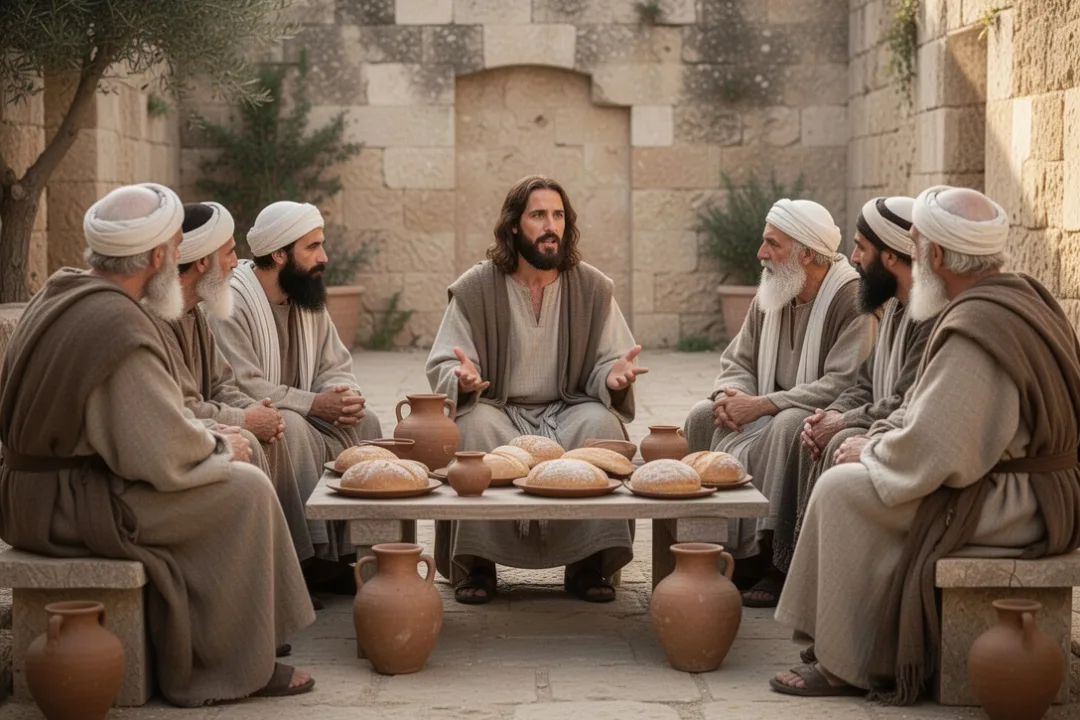
Jesus accepted invitations from Pharisees, including the meal described in Luke 14. At that gathering, he healed a man, challenged the guests’ assumptions about Sabbath practice, and commented on the way people selected seats of honor. He then taught about inviting people who could not repay the host, linking hospitality with humility and generosity.
Other meals brought Jesus into conflict with Pharisees because he ate with tax collectors and people labeled sinners. In Mark 2, Matthew 9, and Luke 5, critics questioned why he associated with such people. Jesus answered that those who are sick need a physician and that he came to call sinners rather than people who considered themselves righteous.
His table fellowship communicated welcome without pretending wrongdoing did not matter. Jesus did not treat a person’s reputation as a complete description of that person. He made room for repentance, healing, and a changed life rather than allowing social exclusion to become permanent.
The meals also reveal why his ministry unsettled religious boundaries. Shared food creates relationship, and relationship can challenge the categories people use to decide who is clean, respectable, trustworthy, or worthy of attention. Jesus’ practice called his followers to combine moral seriousness with openhearted mercy.
Jesus’ conversation with Nicodemus
Nicodemus, identified as a Pharisee and a ruler of the Jews in John 3, came to Jesus at night. He recognized that Jesus’ signs suggested divine authority, but he did not yet understand Jesus’ teaching about being born from above or born anew. The conversation addresses spiritual transformation, God’s initiative, and the need for a new kind of life.
Jesus did not begin by attacking Nicodemus’ religious identity. He engaged him as a thoughtful person who had questions. The conversation is difficult because Jesus used symbolic language, but its direction is clear: religious status alone cannot substitute for inner renewal.
Nicodemus appears again in John 7, where he asks whether the law allows a person to be judged without first being heard. His question does not prove that he had become a public disciple, but it shows a willingness to resist an unfair process. In John 19, he helps bring spices for Jesus’ burial.
Nicodemus offers a useful counterpoint to the broader Gospel portrayals of the Pharisees. People within a group can respond differently. Some may act defensively, some may investigate sincerely, and some may move gradually toward courage.
What “woe” means in Jesus’ criticism
Jesus’ repeated “woes” in Matthew 23 are often read as personal insults, but they function more like prophetic warnings. Israel’s prophets regularly confronted rulers, priests, and communities when worship became disconnected from justice. Jesus stands in that tradition when he warns leaders about the consequences of misleading others.
A woe expresses grief, danger, or impending judgment. It is not a casual label for anyone with whom you disagree. Jesus’ warnings address people with influence who shape the lives of others and claim religious authority. That context makes the words especially serious for teachers and leaders.
The passage should not be used as permission to attack people from another denomination, faith tradition, or political group. Jesus’ criticism begins with moral accountability, especially for people who instruct others. It also invites self-examination: a person can condemn hypocrisy in public while practicing a quieter form of it privately.
Common mistakes when reading Jesus with the Pharisees
Calling all Pharisees evil: The Gospel narratives include Pharisees who questioned Jesus, warned him, defended due process, or helped honor him after death.
Turning the conflict into Christianity versus Judaism: Jesus and his earliest followers were Jewish, and many disputes reflect internal arguments about Scripture and faithful practice.
Assuming Jesus rejected every religious rule: His criticism focused on priorities, interpretation, and misuse, not on the idea that obedience was meaningless.
Equating strictness with hypocrisy: A person may hold demanding convictions sincerely. Hypocrisy involves a damaging mismatch between public claims and actual conduct.
Using “Pharisee” as a label for opponents: The term becomes an insult when it stops helping you understand the Gospel passages and starts excusing contempt.
Ignoring mercy in the debates: Sabbath, purity, fasting, and tithing controversies make sense only when connected to Jesus’ larger emphasis on love, justice, and restoration.
Reading these passages responsibly requires attention to the specific scene. Ask who is speaking, what question prompted the exchange, what social pressure was present, and which biblical principle Jesus applied. Context prevents caricature and helps distinguish a debate about interpretation from a condemnation of an entire people.
A practical test: When applying Jesus’ criticism today, examine your own conduct before assigning the label “hypocrite” to someone else. The warning is most faithful when it produces humility and honest change.
Practical lessons from Jesus’ encounters with the Pharisees
These encounters offer more than historical information. They provide a framework for examining religious life, leadership, disagreement, and compassion. Jesus’ approach was demanding, but it was not careless: he defended people in need, answered serious questions, and confronted leaders when their influence harmed others.
Keep the purpose of a practice in view. Ask whether a tradition helps people love God and neighbor or merely displays group loyalty.
Put mercy alongside conviction. Firm beliefs do not require indifference to suffering. Jesus repeatedly treated compassionate action as central to faithfulness.
Let actions test religious claims. Public language about holiness means little if it is paired with exploitation, arrogance, or neglect of those who need help.
Make room for honest questions. Nicodemus shows that uncertainty and careful inquiry can be part of a genuine search for truth.
Use authority to serve. Teaching, leadership, and expertise should reduce burdens and protect people rather than increase dependence on the leader.
Refuse group-based contempt. Critique specific behavior and teaching instead of turning a religious label into a weapon.
Jesus also models a balanced response to disagreement. He could share a meal with a Pharisee, answer a legal question, praise a religious expert, and deliver a severe rebuke in the same broad ministry. Respectful contact did not require surrendering conviction, and conviction did not require dehumanizing an opponent.
How Jesus’ conflict with the Pharisees applies today
Modern readers may recognize similar tensions whenever communities debate worship styles, dress, fasting, Sabbath practice, doctrine, leadership, or who belongs at the table. The specific issues vary, but the underlying questions remain familiar: What does obedience require? Who gets included? Which traditions deserve authority? How should leaders treat those who disagree?
Jesus’ teaching directs attention to the moral fruit of religious practice. Does a rule protect people or burden them unnecessarily? Does a tradition cultivate humility or reward public performance? Does a church, synagogue, or faith community make room for repentance and restoration, or does it permanently define people by their worst actions?
These questions should not be used to dismiss all structure or discipline. Jesus’ own teaching includes clear moral demands. The challenge is to hold conviction together with mercy, and to make sure visible devotion is supported by private integrity.
The encounters also caution against judging motives too quickly. Some Pharisees appear hostile, while others are curious or protective. A reader should distinguish between careful disagreement and malicious opposition. That distinction improves both biblical interpretation and everyday relationships.
Why the Pharisee stories still matter
The Pharisee stories remain significant because they examine the danger of religion without transformation. They ask whether knowledge produces wisdom, whether discipline produces compassion, and whether leadership reflects the character it claims to represent.
They also prevent an overly simple picture of Jesus. He was not merely a gentle teacher avoiding conflict, nor was he a rebel rejecting every religious authority. He honored Scripture, participated in Jewish life, welcomed sincere seekers, and confronted practices that placed reputation above mercy.
For readers, the most searching question is not simply, “Which side was right?” It is, “What kind of person am I becoming through my beliefs and practices?” Jesus’ encounters with the Pharisees point toward a faith marked by truthful worship, generous mercy, humble leadership, and care for people.
That is why the conversations still speak clearly. They challenge religious communities to examine their priorities and challenge individuals to close the gap between what they say they believe and how they treat others.
Frequently asked questions
Did Jesus hate the Pharisees?
No. Jesus strongly criticized certain Pharisees and religious leaders, especially when he saw hypocrisy or burdens placed on others. Yet he also ate with Pharisees, answered their questions, recognized sincere understanding, and engaged individuals such as Nicodemus. His sharp words were prophetic warnings about conduct and leadership, not evidence that he hated every member of the group.
Were the Pharisees the same as the Sadducees?
No. They were distinct Jewish groups with different beliefs and sources of authority. Pharisees emphasized Torah observance and accepted ideas such as resurrection and angels. Sadducees were associated more closely with the Temple establishment and did not share those beliefs. The New Testament sometimes portrays both groups opposing Jesus, but they were not identical.
Did Jesus reject the Jewish law?
Jesus did not simply reject the Jewish law. He quoted and interpreted Scripture, affirmed core commandments, and argued that love for God and neighbor expresses the law’s central purpose. His disputes concerned interpretation, priorities, and traditions that could be used to avoid mercy or responsibility. He challenged legalism and hypocrisy rather than dismissing faithful obedience.
Why did Jesus call some Pharisees hypocrites?
Jesus used that charge when religious leaders appeared devoted outwardly but neglected justice, mercy, faithfulness, or honest care for others. In Matthew 23, he also criticized leaders who placed heavy burdens on people while seeking public honor. The term describes a mismatch between public religious claims and actual conduct, not simply strict beliefs or membership in a particular group.











Leave a Reply