The three central lessons from the Good Samaritan are to notice suffering, show practical mercy, and treat every person as your neighbor. Jesus’ parable in Luke 10:25–37 challenges the idea that love is limited to people who belong to your group, share your beliefs, or can repay your kindness.
The story also shows that compassion requires more than feeling concerned. The Samaritan stops, approaches an injured stranger, uses his own resources, and accepts personal inconvenience to help. His example turns love from an abstract principle into a series of concrete actions.
Jesus tells the parable during a conversation with a legal expert who asks what he must do to receive eternal life. Jesus points him toward loving God and loving his neighbor. When the man asks who qualifies as a neighbor, Jesus answers with a story rather than a narrow definition.
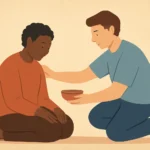
A traveler going from Jerusalem to Jericho is attacked, robbed, and left badly injured. A priest sees him and passes by. A Levite also sees him and continues on. Then a Samaritan comes upon the wounded man and responds with compassion.
The tension in the story would have been significant for Jesus’ audience because Jews and Samaritans had a history of religious, cultural, and political hostility. The person expected to act honorably does not help, while the outsider becomes the example of faithful love in action.
At the end, Jesus asks which person acted as a neighbor. The answer is not based on ethnicity, religious position, or social respectability. It is based on the Samaritan’s mercy toward someone in need.
The three lessons from the Good Samaritan at a glance
Compassion begins when you pay attention. The Samaritan sees the injured man and does not treat his suffering as someone else’s problem.
Mercy requires practical action. He moves toward danger, provides first aid, arranges transportation, and pays for continued care.
Your neighbor is the person in need before you. Love crosses boundaries and does not depend on similarity, convenience, or repayment.
These lessons work together. Seeing need without responding leaves compassion incomplete. Helping only people who resemble you creates a narrow version of neighborly love. And acting generously without wisdom can create unnecessary danger, so mercy should be both courageous and responsible.
Central idea: Jesus shifts the question from “Who deserves my help?” to “How can I become a neighbor to the person who needs help?”
Lesson one: Compassion begins with noticing suffering
The Samaritan’s first important action is that he sees the injured man. The priest and Levite also see him, so the difference is not merely visual awareness. The Samaritan allows what he sees to affect his choices. He recognizes the wounded traveler as a person rather than an interruption.
That distinction matters in ordinary life. People can be surrounded by visible need and still learn to look away. A struggling coworker may become “the person who is always behind.” A lonely neighbor may be labeled difficult. Someone asking for help may be reduced to a problem, a risk, or a burden.
The parable invites you to slow down long enough to ask what is happening beneath the surface. Attention is often the first form of care. Before you can offer useful help, you need to recognize that help is needed.
Why noticing can be difficult
People often avoid suffering because it creates emotional discomfort. You may fear getting involved, saying the wrong thing, discovering a need you cannot fix, or becoming responsible for more than you can manage. Those fears are understandable, but ignoring suffering does not make it disappear.
Busy routines can also narrow your attention. When every task feels urgent, another person’s pain may seem like a disruption. The Samaritan’s example does not suggest that every person must solve every crisis alone. It does suggest that convenience should not automatically decide who receives care.
Noticing also means resisting quick assumptions. The traveler is not introduced as deserving help because of his character. Jesus does not give the Samaritan information about the man’s beliefs, reputation, or past behavior. The need itself is enough to demand a compassionate response.
How to practice attentive compassion
Look for specific signs of need: isolation, confusion, physical injury, sudden financial pressure, grief, or unusual changes in behavior.
Ask a simple question: “Are you safe?” or “What would help most right now?”
Listen before offering solutions: the person may need practical assistance, emotional support, or connection with a qualified professional.
Pay attention to repeated needs: ongoing hardship may require a longer-term plan rather than one brief favor.
Attentiveness should not become suspicion or surveillance. The aim is not to inspect everyone’s private life. It is to remain open to the people and situations already within your reach, especially when their need is clear and immediate.
Lesson two: Mercy means taking practical action
The Samaritan does not stop at sympathy. He tends the man’s wounds, places him on his own animal, brings him to an inn, and arranges further care. Each action costs something: time, supplies, money, energy, and personal convenience.
This is the second lesson: love becomes visible through what you do. Good intentions may be sincere, but they do not feed someone, transport an injured person, provide a safe place, or connect a struggling family with support. Compassion becomes mercy when it moves from concern to appropriate action.
Practical help does not always require dramatic sacrifice. It may involve bringing a meal, making a phone call, driving someone to an appointment, watching a child for an hour, or helping a person complete a confusing form. Small actions can carry real weight when they address an actual need.
What practical mercy can look like
Physical care: call emergency services, provide basic first aid within your training, or help someone reach safe medical care.
Material support: share food, contribute money, replace a necessary item, or connect someone with a reputable aid organization.
Time and presence: sit with someone in grief, accompany a person to an appointment, or check in after a difficult event.
Advocacy: help someone communicate with an employer, school, agency, landlord, or healthcare provider.
Longer-term connection: refer the person to qualified services instead of assuming one private act will solve a complex problem.
The Samaritan also shows the importance of following through. He does not leave the injured man at the inn and forget him. He makes arrangements for continued care and offers to cover additional expense. Mercy pays attention to what happens next.
Why effective help includes boundaries
Being merciful does not mean ignoring safety, expertise, or personal limits. If someone is seriously injured, calling trained responders may be wiser than attempting care beyond your knowledge. If a person faces homelessness, addiction, domestic violence, or a mental health crisis, professional organizations may provide support that one individual cannot safely offer.
Healthy boundaries protect both the helper and the person receiving help. You can care deeply while saying, “I cannot provide that myself, but I can help you contact someone who can.” Responsible mercy is not less loving because it includes wisdom.
Practical check: Before helping, ask three questions: Is the person in immediate danger? What help is within my ability? Who else should be involved?
Lesson three: Neighborly love crosses social boundaries
The Samaritan is not simply a convenient helper in the story. He is the person many listeners would least expect to present as a moral example. By making him the merciful neighbor, Jesus challenges prejudice and exposes the danger of defining love according to social comfort.
The third lesson is that neighborly love is measured by mercy, not similarity. You do not have to agree with someone, share a background, or feel immediate affection for them in order to treat them with dignity and provide appropriate help.
This does not mean differences are unimportant. Communities, traditions, and convictions matter. It means those differences cannot be used as automatic reasons to dismiss another person’s suffering. A person’s worth is not determined by whether they belong to your circle.
How the parable challenges favoritism
It is natural to help family members, close friends, and people who have helped you before. Those relationships deserve care. The problem begins when concern stops at the edge of your personal network and everyone outside it becomes invisible.
The Good Samaritan widens the circle of responsibility. The wounded traveler is a stranger, and the Samaritan has no clear reason to expect gratitude or repayment. His mercy is not a transaction. It is a response to human need.
This challenge applies to many settings:
At work: offer respect and fair treatment to people with less status or influence, not only to those who can advance your career.
In a neighborhood: pay attention to elderly residents, new families, people with disabilities, and others who may be isolated.
In a church or community group: welcome people who differ in background, income, age, politics, or life experience.
In public life: resist language that turns vulnerable people into stereotypes or makes their hardship seem deserved.
Crossing boundaries does not require pretending that conflict does not exist. It requires refusing to let conflict erase someone’s humanity. The Samaritan helps the wounded man before resolving every disagreement between their communities.
The priest and Levite: what their inaction teaches
The story does not explain exactly why the priest and Levite pass by, so it is unwise to assign them motives with certainty. They may have feared danger, felt constrained by religious concerns, assumed someone else would help, or simply chosen self-protection. Jesus leaves their reasons open while making the result clear: they see suffering and do not respond.
Their presence matters because they represent people who are associated with religious knowledge and public respectability. The parable does not say that religious identity has no value. It shows that religious identity, by itself, is not proof of loving behavior.
This is a warning for anyone who can speak well about compassion but avoids costly opportunities to practice it. Beliefs and values become credible when they shape conduct. A person may know the right answer to a moral question and still fail to act on it.
Their inaction also warns against outsourcing responsibility. You may assume a professional, government agency, church, or nonprofit should handle a problem. Sometimes those organizations should be involved, but the existence of formal services does not excuse every individual from responding to immediate human need.
What the Good Samaritan teaches about risk and wisdom
The road in the parable is dangerous, and the injured man may have been used as bait in a trap. The Samaritan’s compassion is therefore not careless. He approaches a vulnerable situation and acts with enough judgment to move the man toward continued care.
Modern readers should apply this principle carefully. You are not required to place yourself in unnecessary danger to prove that you care. If a scene is violent, uncertain, or medically serious, protect your safety and contact trained help.
Wise action may include keeping distance, calling emergency services, asking other people to assist, or meeting someone in a public place. A person experiencing domestic violence may need confidential professional support rather than a well-intended confrontation. Someone in a mental health crisis may need emergency intervention or a crisis service.
Compassion asks, “What will genuinely help this person?” not merely, “What action makes me feel like a good helper?” The answer may be direct assistance, a referral, financial support, advocacy, or simply staying present while qualified help arrives.
How to apply the three lessons in everyday situations
Applying the parable starts with the situations already around you. You do not need to search for dramatic opportunities. A neighbor, colleague, classmate, family member, or stranger may be facing a need that becomes visible when you pay attention.
Notice the person rather than only the problem. Recognize that the individual has dignity, fears, preferences, and a story you may not know.
Assess urgency and safety. Determine whether immediate medical, police, crisis, or professional assistance is needed.
Ask what would help. Do not assume that your preferred solution matches the person’s actual need.
Offer a specific form of assistance. A concrete offer is easier to accept than a vague promise to help sometime.
Use your resources wisely. Give time, money, transportation, knowledge, or connection according to what you can responsibly provide.
Follow up when appropriate. A message or later check-in can show that the person was not forgotten.
For example, if a coworker is overwhelmed after a family emergency, you might ask whether a meal, schedule adjustment, or ride would help. If a neighbor has fallen, call for medical assistance and stay nearby if it is safe. If someone is experiencing long-term hardship, help identify reliable community resources rather than promising more than you can sustain.
What the Good Samaritan does not mean
The parable does not mean that you must solve every problem personally. Human need is too extensive for one person to meet, and pretending otherwise can lead to exhaustion, resentment, or unsafe decisions. The Samaritan’s example is about faithful response, not unlimited personal capacity.
It also does not mean that people should remain in abusive situations or accept exploitation in the name of mercy. Loving your neighbor includes protecting vulnerable people, setting boundaries, and seeking accountability when someone is being harmed.
Nor does mercy require ignoring justice. Immediate care for the wounded traveler is essential, but communities should also ask why people are left vulnerable to violence, poverty, neglect, or exclusion. Compassion addresses immediate suffering while justice examines the conditions that produce it.
Finally, the story does not teach that every request should be accepted without discernment. Generosity can be manipulated, and some situations require trained assistance. The proper response is thoughtful care, not suspicion toward everyone and not unquestioning trust toward everyone.
Why the Good Samaritan remains a lasting picture of love
The parable remains powerful because it gives love a recognizable shape. Love sees a person, crosses a boundary, accepts inconvenience, offers practical care, and follows through. It does not wait for perfect conditions or demand proof that the recipient deserves help.
It also changes the direction of the moral question. Instead of asking which people qualify for your concern, you ask how you can respond when suffering comes within your reach. That shift turns neighborliness from a category into a practice.
The story does not promise that mercy will always be easy or appreciated. The Samaritan receives no guarantee of repayment. His action is valuable because it protects a vulnerable person and restores a measure of dignity.
For Christians, this makes the Good Samaritan more than a lesson about being nice. It is a call to embody mercy, humility, courage, and responsible care in ordinary decisions. The command at the end of the passage is simple: go and practice the same kind of mercy.
Frequently asked questions
What is the main message of the Good Samaritan?
The main message is that genuine neighborly love is shown through mercy toward a person in need, even when that person is a stranger or comes from a different group. Jesus emphasizes action rather than status or religious reputation. The Samaritan notices suffering, accepts inconvenience, and arranges practical care without waiting for repayment.
Why did Jesus use a Samaritan as the example?
Jesus used a Samaritan to challenge assumptions about who could be considered righteous or compassionate. Jews and Samaritans had serious tensions, so listeners would not necessarily expect a Samaritan to be the hero. The unexpected example shows that mercy can come from outside your community and that prejudice must not define your response to suffering.
Does being a Good Samaritan mean helping everyone personally?
No. The lesson is to respond responsibly, not to solve every problem alone. You may need to call emergency services, involve trained professionals, set boundaries, or connect someone with a reliable organization. Wise help considers safety, urgency, and your actual abilities while still refusing to ignore clear and immediate suffering.
How can I practice the Good Samaritan’s example today?
Start by paying attention to people around you and offering specific help when a need becomes clear. You might provide transportation, listen without judgment, share necessary resources, or help someone contact professional support. Follow up when appropriate, and treat people with dignity even when they differ from you in background, beliefs, or social position.











Leave a Reply