There is no single official number of parables in the Bible. Most traditional counts identify about 30 to 40 distinct parables of Jesus, while broader lists include more than 40 by counting short comparisons, symbolic sayings, and parallel Gospel accounts separately.
The number changes because “parable” can mean different things. Some readers count only extended stories, such as the Good Samaritan. Others include brief images, allegories, symbolic actions, and Old Testament teaching stories. The Bible itself does not provide a numbered list.
A parable is generally a story, image, or comparison that communicates a spiritual or moral truth. The word often refers to Jesus’ teaching stories, but the Bible uses several forms of figurative instruction. A strict count therefore produces a smaller total than a broad count.
For example, one list might count the Lost Sheep only once because Matthew and Luke present related versions. Another list may record each Gospel account separately. A third list may combine the Lost Sheep with the Lost Coin and the Lost Son because they appear together in Luke 15, while another treats all three as separate parables.
Readers may also disagree about short statements. Jesus compares the kingdom of heaven to a mustard seed and yeast, but some lists call these mini-parables rather than full stories. The same issue arises with images such as the lamp, the wise and foolish builders, or the new wine and wineskins.
Several factors affect the final number:
Definition: Some counts include only narrative stories, while others include every extended comparison.
Gospel parallels: The same teaching may appear in Matthew, Mark, and Luke with different details.
Separate scenes: Some interpreters group related images together; others count each one individually.
Allegory: Certain passages have several symbolic elements and are classified differently by different study guides.
Old Testament material: A broad count includes biblical teaching stories outside the Gospels.
The most useful answer: the Bible contains dozens of parables, and Jesus told roughly 30 to 40 commonly recognized parables, depending on the counting method.
How many parables Jesus told in the Gospels
Jesus is the central biblical teacher associated with parables. The Synoptic Gospels—Matthew, Mark, and Luke—preserve many of these teachings, while John presents Jesus’ words in a different style and does not use the conventional parable collection in the same way.
A commonly used count identifies around 30 distinct parables in the Gospels. Broader traditional lists often reach approximately 40 or more. Neither figure is a contradiction; each reflects a different decision about what qualifies as a parable.
Jesus used parables to describe the kingdom of God, expose hypocrisy, explain forgiveness, challenge social expectations, and call people to faithful action. His stories often begin with ordinary experiences—farming, lending, cooking, hiring workers, managing money, attending a wedding, or caring for sheep.
The parables are distributed unevenly among the Gospels. Matthew contains many kingdom-focused parables, Mark includes a smaller selection, and Luke preserves a number of stories found nowhere else. Some of Jesus’ best-known parables, including the Good Samaritan and the Prodigal Son, are especially associated with Luke.
Parables found only in Matthew
Matthew includes several stories that emphasize the nature and value of God’s kingdom. These include the Weeds Among the Wheat, the Hidden Treasure, the Pearl of Great Value, the Unforgiving Servant, the Workers in the Vineyard, and the Ten Virgins.
Matthew also records the Wise and Foolish Servants, the Two Sons, the Ten Talents, and the Sheep and the Goats. Some of these are longer narratives; others function as vivid scenes that demand a response from the listener.
Matthew’s collection frequently contrasts genuine readiness with outward appearance. A person may say the right words but fail to act, or appear prepared while lacking the faithfulness the situation requires. The stories cannot be reduced to one simple formula, but they repeatedly ask what kind of response God’s reign produces.
Parables found only in Mark
Mark contains fewer unique parables than Matthew or Luke. Its distinctive examples include the Growing Seed and the Doorkeeper, although some lists classify the latter as a short exhortation rather than a full parable.
The Growing Seed describes a farmer who plants and then watches the crop develop without controlling the hidden process. The image points to the mysterious growth of God’s kingdom. Mark’s version highlights that divine work may continue even when people cannot see exactly how it is happening.
Parables found only in Luke
Luke preserves many of the most familiar parables, including the Good Samaritan, the Friend at Midnight, the Rich Fool, the Barren Fig Tree, the Lost Coin, the Prodigal Son, the Dishonest Manager, the Rich Man and Lazarus, and the Pharisee and the Tax Collector.
These stories repeatedly address mercy, wealth, prayer, repentance, humility, and the treatment of outsiders. Luke’s parables often place surprising people at the center of God’s purposes: a Samaritan becomes the compassionate neighbor, a tax collector prays humbly, and a restored son receives a welcome he could not claim as a right.
The exact boundaries within Luke 15 also affect the count. The Lost Sheep, Lost Coin, and Prodigal Son are three distinct stories, but they form one carefully arranged teaching sequence about loss and celebration. A list that counts individual stories will include all three; a thematic list may describe the chapter as one parable cycle.
Well-known parables and what they teach
Counting parables is useful, but understanding their purpose matters more than reaching a particular total. Each story works within its setting, and many have more than one important feature. The following examples show the range of subjects Jesus addressed.
The Sower and the soils
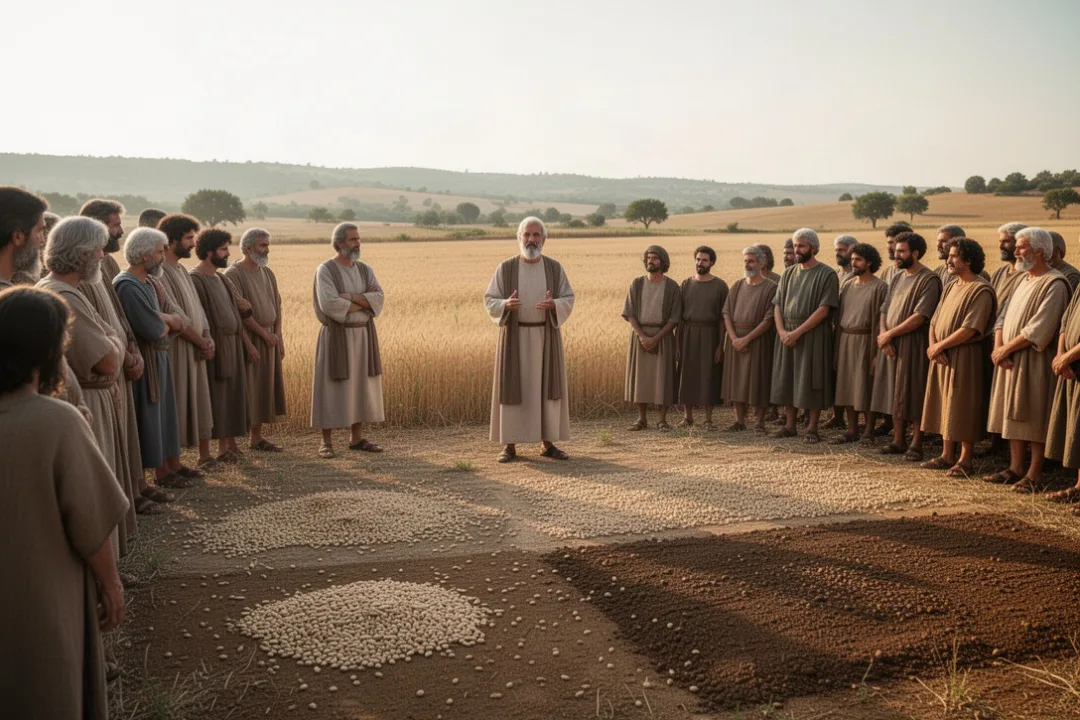
In the Parable of the Sower, seed falls on different kinds of ground. Jesus explains that the soils represent different responses to the message of the kingdom. The story calls attention to hearing, endurance, distraction, and spiritual fruitfulness.
The parable appears in Matthew 13, Mark 4, and Luke 8. Because it is recorded in three Gospels, a catalog should count it as one parable, not three, if the goal is to count distinct teachings.
The Good Samaritan
The Good Samaritan appears in Luke 10. A wounded traveler is ignored by respected religious figures but helped by a Samaritan, a person from a group that many Jewish listeners viewed with hostility or suspicion.
Jesus uses the story to answer a question about who qualifies as a neighbor. Its force comes from the reversal of expectations: the person considered an outsider becomes the example of active compassion. The parable is not merely about feeling concern; it portrays costly, practical care.
The Lost Sheep, Lost Coin, and Prodigal Son
Luke 15 brings together three stories about something lost and then found. A shepherd searches for one sheep, a woman carefully looks for one coin, and a father welcomes a son who has left home and squandered his inheritance.
These parables emphasize joy over restoration. They also challenge listeners who resent mercy shown to repentant people. The older brother in the final story is not simply a background character; his reaction exposes how religious obedience can become mixed with resentment.
The Mustard Seed and the Yeast
Matthew 13, Mark 4, and Luke 13 include brief kingdom comparisons involving a mustard seed. Matthew and Luke also present the image of yeast working through dough. These are short, but they are often counted as parables because they use familiar physical processes to communicate a spiritual reality.
The images focus on unexpected growth and pervasive influence. A small beginning can produce a result far greater than its initial appearance suggests. Whether a particular list counts each image separately, together, or as short sayings explains some variation in published totals.
The Rich Fool
In Luke 12, Jesus tells of a wealthy man who plans to build larger storage facilities so he can enjoy a secure future. He assumes that possessions can guarantee his life, but the story presents his sudden death and the emptiness of his plans.
The parable warns against hoarding without regard for God or other people. It does not teach that every form of saving is wrong. Its focus is the illusion that material abundance can make a person secure in the deepest sense.
The Pharisee and the Tax Collector
Luke 18 contrasts two men praying in the temple. One praises his own religious performance, while the other admits his need for mercy. Jesus presents the second man as the one who goes home justified.
The story addresses humility rather than public religious reputation. It does not suggest that moral behavior has no value. Instead, it exposes self-righteousness—the belief that personal goodness gives someone grounds to look down on others or claim superiority before God.
Parables in the Old Testament
If “the Bible” means both Testaments, the total includes more than Jesus’ teachings. The Old Testament contains several stories and comparisons that function like parables, although biblical scholars may use different labels for them.
One clear example appears in 2 Samuel 12. The prophet Nathan tells King David about a wealthy man who takes a poor man’s only beloved lamb. David condemns the rich man’s behavior before Nathan reveals that the story exposes David’s own sin involving Bathsheba and Uriah.
Another example appears in Judges 9, where trees are represented as seeking a king. The story criticizes destructive leadership and the willingness of worthless rulers to accept power. It is commonly called the Parable of the Trees.
Isaiah 5 uses the image of a carefully planted vineyard that fails to produce good grapes. The vineyard represents God’s people, and the image communicates disappointment over injustice and unfaithfulness.
Ezekiel 17 includes a comparison involving two eagles and a vine. The symbolic story concerns political alliances, leadership, and the consequences of breaking an agreement. Ezekiel contains several other enacted and symbolic messages that some broad parable lists include.
These Old Testament examples show why a single Bible-wide number is difficult. Some are narrative teaching devices, some are prophetic symbols, and some are poetic comparisons. A narrow definition may leave them out, while a broad definition recognizes them as part of the Bible’s larger tradition of indirect instruction.
How parables differ from allegories and illustrations
The terms parable, allegory, and illustration overlap, but they are not identical. A parable usually presents a comparison through a story or recognizable situation. An allegory tends to assign symbolic meaning to multiple elements across an extended passage.
The Parable of the Sower is sometimes described as an allegorical parable because Jesus explains what the seed, soils, and obstacles represent. The story still functions as a parable, but its interpretation gives each major image a particular significance.
Jesus’ statement about the vine and branches in John 15 is often included in broad lists of biblical parables, but many readers classify it as an extended metaphor or symbolic discourse instead. John contains rich figurative teaching, yet it does not present parables in the same concentrated form found in the Synoptic Gospels.
A useful classification asks three questions:
Is the passage primarily a story or comparison rather than a direct command?
Does it use an ordinary situation to communicate a spiritual or moral truth?
Does the passage stand as a recognizable teaching unit, or is it only one brief image within a larger speech?
These questions do not remove every disagreement, but they make the counting method transparent. A careful source should explain what it includes instead of presenting one number as universally accepted.
Common mistakes when counting biblical parables
Many disagreements come from counting errors rather than from major differences in interpretation. The following habits can help you evaluate a list and understand why its total may not match another source.
Counting Gospel parallels as separate parables: The Sower appears in three Synoptic Gospels, but those accounts usually describe one teaching with parallel witnesses.
Assuming every figurative statement is a parable: A metaphor, proverb, symbolic action, and parable are related but not interchangeable categories.
Ignoring the Old Testament: A count limited to Jesus’ teachings is not the same as a count of parabolic material throughout the Bible.
Combining related stories automatically: The three stories in Luke 15 share a theme, but the Lost Sheep, Lost Coin, and Prodigal Son remain distinct narratives.
Treating titles as biblical labels: Names such as “The Prodigal Son” are traditional titles. Different books may use different names for the same passage.
Counting every symbolic discourse in John: John uses images extensively, but scholars do not always classify those passages as parables.
Reading a parable as a complete system: A story usually makes a focused point. Not every minor detail must carry a separate symbolic meaning.
Reading tip: Before comparing totals, check whether the source counts only Jesus’ narrative parables, includes short kingdom sayings, separates Gospel parallels, or adds Old Testament examples.
How to study a parable without missing its main point
A parable becomes clearer when you read it in context rather than isolating its most memorable image. Start with the event, question, or conflict that prompted the teaching. In many cases, the surrounding verses explain why Jesus told the story and which listeners needed to hear it.
Pay attention to the audience and setting. A parable spoken to disciples may address perseverance or service, while one told to critics may expose hypocrisy or misplaced confidence. Luke often identifies a question or social tension that provides a key to the story.
Next, look for repeated contrasts. Biblical parables commonly place two responses side by side: wise and foolish, faithful and unfaithful, generous and selfish, prepared and unprepared, humble and proud. These contrasts help identify the central issue without requiring every detail to represent a separate doctrine.
Then ask what response the parable calls for. A story may invite repentance, patience, mercy, watchfulness, generosity, prayer, or trust. The right interpretation should fit the passage’s context and the broader teaching of Scripture rather than resting on one isolated detail.
Read the entire passage, including the verses before and after it.
Identify the audience and the question or conflict behind the teaching.
Notice the main characters, contrasts, and repeated ideas.
Use any explanation provided in the text, such as Jesus’ interpretation of the soils.
State the central lesson in one or two sentences before examining secondary details.
Apply the teaching carefully without forcing every story element into a modern analogy.
Why Jesus taught with parables
Parables made profound truths concrete. Listeners who had never studied theology could understand a farmer scattering seed, a woman searching her house, or a traveler helping someone on the road. Familiar scenes gave the teaching a memorable form.
They also required reflection. A direct statement can be accepted or rejected immediately, but a story may draw a listener into a judgment before revealing how that judgment applies personally. Nathan’s story to David demonstrates this power: David recognizes the injustice in the story before realizing that he is the guilty man.
Parables could both reveal and conceal. In Matthew 13, Jesus discusses why he teaches with parables. His explanation connects the stories with the differing responses of listeners: some receive the message, while others hear without truly understanding.
The stories also challenged ordinary assumptions. The religious outsider may show greater love than the respected insider. The last workers hired may receive the same payment as those who began early. A repentant sinner may be welcomed while a morally serious person remains resentful.
Because parables are compact and memorable, they continue to raise questions across generations. Their enduring value does not depend on finding a single master count. The number helps organize the material, but the deeper purpose is to hear the challenge each story presents.
What number should you use when someone asks?
If someone asks, “How many parables are in the Bible?” the clearest response is that there is no universally agreed total. You can add that most counts of Jesus’ parables fall somewhere between 30 and 40, with broader traditional lists exceeding that range.
If the question specifically concerns the Old Testament, mention that it contains several parabolic or symbolic teaching passages, including Nathan’s story to David, the trees in Judges 9, and Isaiah’s vineyard song. If the question concerns Jesus, specify whether the count includes short sayings and parallel accounts.
A precise answer should always include its method. Saying “there are 37” without explaining the criteria may sound authoritative but hides the real issue. Saying “about 30 to 40 commonly recognized parables of Jesus, depending on classification” gives a more accurate picture.
The safest way to use a number is as an organizational aid, not as a test of faith or biblical knowledge. What matters most is reading each passage in context and responding to its central teaching about God, people, sin, mercy, responsibility, and the kingdom.
Frequently asked questions
Are there exactly 37 parables of Jesus?
Thirty-seven is a traditional count used by some Bible lists, but it is not an official or universally accepted number. Other careful lists identify fewer or more because they handle short comparisons, parallel Gospel passages, and related stories differently. The most accurate wording is that Jesus told roughly 30 to 40 commonly recognized parables.
Which Gospel contains the most parables?
Luke is generally associated with the largest collection of distinctive parables, including the Good Samaritan, the Prodigal Son, the Rich Fool, and the Pharisee and the Tax Collector. Matthew also contains many parables, especially about God’s kingdom. Mark includes fewer, while John uses figurative teaching in a different style.
Are all parables stories told by Jesus?
No. Jesus told most of the parables people commonly study, but the Old Testament also contains parabolic stories and symbolic comparisons. Nathan’s story confronting David, the trees seeking a king in Judges, and Isaiah’s vineyard image are notable examples. Whether every symbolic passage qualifies depends on the definition being used.
Why did Jesus use parables instead of speaking directly?
Parables connected spiritual truth with familiar experiences such as farming, meals, money, work, and family life. They made ideas memorable while requiring listeners to think about their own response. They could also challenge prejudice and expose hidden attitudes, especially when a story caused people to judge a character before recognizing themselves in the situation.











Leave a Reply