Succoth, also spelled Sukkot or Succos, is one of the major festivals in the Jewish calendar. The name comes from the Hebrew word sukkah, meaning a temporary shelter or booth. The plural form, sukkot, refers to the shelters associated with the holiday.
The festival begins on the 15th day of Tishrei, the seventh month of the Hebrew calendar. It falls in the early autumn, usually during September or October on the Gregorian calendar. Because the Hebrew calendar is lunisolar, the exact dates shift from year to year.
Succoth has two central meanings. First, it recalls the period when the Israelites lived in temporary shelters after leaving Egypt and traveling through the wilderness. Second, it is connected to the agricultural harvest, especially the gathering of crops at the end of the growing season in the land of Israel.
The Torah describes Succoth as a time of rejoicing and instructs the Israelites to live in booths for a set period. The biblical explanation connects this practice with the shelters used by the Israelites during their journey. Jewish interpretation also emphasizes that the festival teaches people to recognize how temporary material security can be.
Succoth follows Rosh Hashanah and Yom Kippur in the Jewish calendar. That sequence gives the season a meaningful rhythm: reflection and repentance are followed by a festival centered on joy, gratitude, and welcoming others.
The central idea: Succoth asks you to remember that comfort and security are gifts rather than permanent possessions, while encouraging gratitude for food, shelter, community, and the natural world.
When Succoth is celebrated and how long it lasts
Succoth begins at sunset on the 15th of Tishrei and lasts seven days in Israel. In many Jewish communities outside Israel, the main festival is observed for eight days because of the traditional practice of adding an extra festival day to certain biblical holidays.
The first day, or the first two days outside Israel, traditionally have the strongest restrictions associated with a Jewish festival. Depending on a person’s community and level of observance, these restrictions may include avoiding ordinary work and following particular rules concerning cooking, carrying, fire, and use of electrical devices.
The remaining days are called chol ha-moed, meaning the intermediate days of the festival. They have a different status from the opening days. Some work is permitted, although people may still attend synagogue services, eat in the sukkah, perform the holiday rituals, and make time for family and guests.
After the seven days of Succoth comes Shemini Atzeret, literally the “eighth day of assembly.” In Israel, it is observed on the eighth day after Succoth begins. Outside Israel, it is generally observed on the eighth day, with Simchat Torah traditionally celebrated on the following day. In Israel, Shemini Atzeret and Simchat Torah are observed together.
Shemini Atzeret and Simchat Torah are closely associated with Succoth but are not simply additional days of the same festival. Shemini Atzeret has its own religious character, while Simchat Torah celebrates the completion and restarting of the annual Torah-reading cycle.
Because the dates depend on the Hebrew calendar, you should check a reliable Jewish calendar for the year you are observing. Local synagogue calendars also clarify the times for services, candle lighting, festival meals, and the transition to Shemini Atzeret.
How to build and use a sukkah
The sukkah is the most visible symbol of Succoth. It is a temporary structure built outdoors or in another suitable open-air location. Families may construct one in a yard, on a patio, on a balcony, or in a communal area, provided that local safety rules and building requirements are followed.
A sukkah needs walls and a roof covering called sechach. The walls may be made from many materials, including wood, fabric, canvas, or prefabricated panels. The roof must be made from plant material that has been cut and prepared for this purpose, such as branches, bamboo, reeds, or certain types of unfinished vegetation.
The roof should provide enough shade to make the sukkah feel like a shelter, but it should not be so dense that it blocks the view of the sky completely. The covering should remain a roof rather than becoming a permanent, weatherproof ceiling. Details of construction vary among Jewish legal traditions, so a family seeking precise guidance may consult a rabbi or a trusted synagogue resource.
A sukkah should be sturdy enough to remain safe in ordinary conditions. It should not obstruct sidewalks, violate building codes, create a fire hazard, or become unstable in wind and rain. A temporary structure still needs careful planning, especially when children will use it.
Many families decorate the sukkah with:
Fruit, vegetables, or other harvest-themed decorations
Paper chains, artwork, and handmade ornaments
Natural branches, leaves, and flowers
Pictures or symbols connected to Jerusalem, Israel, or Jewish history
Seasonal lights that are installed safely and kept away from flammable materials
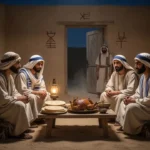
During Succoth, people traditionally eat meals in the sukkah and may spend additional time there. Some observant Jews sleep in the sukkah as well, although this practice depends on climate, health, family circumstances, and the customs of a particular community.
The sukkah is not meant to be a luxury outdoor room. Its temporary and somewhat fragile nature is part of the religious message. Moving from a permanent home into a simple shelter creates a physical reminder of dependence, vulnerability, and the protection associated with the wilderness journey.
At the same time, the sukkah is designed to be a place of joy. Families invite guests, share meals, sing, study, and welcome friends. The contrast between a modest shelter and a generous gathering is central to the festival’s meaning.
Safety first: Keep cooking equipment, candles, heaters, and electrical cords away from flammable walls and roof materials, and never use a sukkah that is unstable or exposed to dangerous weather.
What the lulav and etrog represent
Another major Succoth practice involves the Four Species, known in Hebrew as arba minim. They are a lulav, an etrog, myrtle branches, and willow branches. Together, these plants are held and moved in a prescribed way during prayers.
The lulav is the central palm branch or bundle. It is held with branches of myrtle and willow, while the etrog, a fragrant citrus fruit, is held separately. The plants are selected carefully, and many Jewish communities pay close attention to their appearance, condition, and suitability for the ritual.
During the service, worshipers recite a blessing and wave the Four Species in several directions. The exact movements differ slightly by custom, but they generally include directions such as forward, backward, to the right, to the left, upward, and downward. The gestures express the idea that God’s presence extends in every direction.
Jewish commentators have offered several explanations for the four plants. One familiar interpretation compares them with different qualities of people, such as learning and good deeds, and says that the community becomes complete when everyone is brought together. Another interpretation connects the plants with different parts of the body or with the varied forms of creation.
The etrog is especially distinctive because it has both a pleasant fragrance and the appearance of a fruit. The palm has fruit but no fragrance, the myrtle has fragrance but no edible fruit, and the willow has neither. These differences have inspired explanations about the relationship between knowledge, action, character, and community.
The Four Species are used during portions of the morning service on the festival’s days. In many communities, worshipers also carry them during Hallel, a collection of psalms recited on certain joyful Jewish occasions. On particular days of Succoth, the congregation may circle the synagogue while holding the Four Species in a practice called hoshanot.
If you are purchasing a lulav and etrog, a synagogue, Jewish community center, or rabbi can explain local customs and help you find a kosher set. The requirements can be precise, and different communities may follow different traditions regarding selection and handling.
How people celebrate Succoth at home and in synagogue
Succoth is often called zman simchateinu, “the season of our rejoicing.” Joy during the festival is not limited to entertainment. It includes sharing food, recognizing the harvest, welcoming guests, participating in prayer, and appreciating the temporary shelter that makes the holiday visible.
Festival meals usually include foods suited to autumn and to outdoor dining. There is no single menu required for every Jewish household. Families may serve soups, roasted vegetables, grains, fruit, baked dishes, or traditional foods from their own cultural background.
Many cooks favor dishes that are easy to carry outdoors and serve to a group. Weather can affect the meal, so practical planning matters. Covered dishes, warm layers, secure tableware, and a backup indoor space can make the celebration more comfortable without changing its religious purpose.
A traditional concept associated with Succoth is ushpizin, symbolic guests invited into the sukkah. These guests are often understood as biblical ancestors, including figures such as Abraham, Isaac, Jacob, Moses, Aaron, Joseph, and David. Some families also connect the practice with welcoming people who need companionship, food, or practical support.
Hospitality can be expressed in many ways:
Invite relatives, neighbors, or friends to share a meal in the sukkah.
Make room for someone who might otherwise celebrate alone.
Bring food to a person who cannot attend communal events.
Learn about another family’s Succoth customs with respect and curiosity.
Give time or resources to a local food pantry or community organization.
Synagogue services include special festival prayers and readings. The congregation may use the Four Species, recite Hallel, and participate in hoshanot processions. The Torah readings and additional prayers vary according to the day and the community’s liturgical tradition.
Children often take an active role by helping decorate the sukkah, making paper crafts, learning the names of the Four Species, or helping prepare a meal. These activities are not merely decorative. They allow children to experience the holiday through building, touching, eating, and welcoming others.
Some communities organize public sukkot, neighborhood meals, concerts, educational programs, or harvest events. These gatherings can help people participate even if they live in an apartment or do not have space to build a sukkah at home.
People who are new to Jewish practice do not need to know every custom before participating. A good starting point is to visit a synagogue, ask whether a public sukkah is available, and follow the guidance of the community. Customs differ across Orthodox, Conservative, Reform, Reconstructionist, and other Jewish settings, as well as among Sephardic, Ashkenazi, Mizrahi, and other traditions.
How Succoth connects wilderness, harvest, and gratitude
Succoth brings together two images that might seem separate: the exposed wilderness shelter and the abundance of the harvest. The holiday holds both ideas at once. A person may enjoy food and security while remembering that these conditions are not guaranteed.
The agricultural side of Succoth is especially clear in its biblical setting. It occurs after the main harvest, when farmers gathered crops and had reason to feel relief and satisfaction. The festival turns that satisfaction toward gratitude rather than self-congratulation.
The sukkah changes how people think about a home. For a short time, the ordinary boundaries between indoors and outdoors become less firm. You can see the sky through the roof, hear changes in the weather, and notice how much effort normally goes into maintaining a permanent house.
This experience can encourage a more thoughtful relationship with possessions. Succoth does not require people to reject comfort or permanent homes. Instead, it creates a recurring practice of stepping away from those comforts and recognizing the conditions that make them possible.
The festival also places hospitality at the center of religious life. A sukkah is structurally temporary, but it becomes spiritually expansive when people are invited inside. The shelter represents both vulnerability and welcome: it is not fully protected from the elements, yet it is meant to hold a community.
For many people, the most meaningful way to observe Succoth is to connect its symbols with concrete action. That may mean reducing waste after a harvest meal, supporting farmers, sharing food, welcoming a neighbor, or reflecting on people who lack safe housing.
Succoth can also be a time to examine assumptions about safety and abundance. The holiday does not offer a simple promise that hardship will disappear. It teaches a practice of gratitude that remains aware of uncertainty and of the needs of others.
When the festival ends and the sukkah is taken down, its lessons do not have to disappear with the structure. The experience can leave a lasting reminder to appreciate shelter, treat food as precious, make room for guests, and recognize the strength found in shared community.
Frequently asked questions
Is Succoth the same holiday as Sukkot?
Yes. Succoth and Sukkot are different English spellings of the same Jewish festival. Other transliterations include Succos and Sukot. The spelling varies because Hebrew sounds do not always map neatly onto English letters. The holiday’s central practices remain the same: building or using a sukkah, celebrating the harvest, welcoming guests, and observing the Four Species according to community tradition.
Can someone observe Succoth without building a sukkah?
Yes. A person may participate by visiting a synagogue sukkah, eating a meal in a community sukkah, learning about the holiday, using the Four Species, attending services, or practicing hospitality. People who cannot build a sukkah because of housing, weather, health, or safety limitations should seek guidance from a local Jewish community rather than assuming they cannot take part.
What should you say to someone celebrating Succoth?
“Chag Sameach” is a widely used Hebrew greeting meaning “happy holiday.” You may also hear “Chag Sukkot Sameach,” which specifically wishes someone a happy Sukkot. If you are speaking with someone you know well, simply wishing them a meaningful or joyful holiday is also respectful.
Why is Succoth sometimes called the Feast of Tabernacles?
“Feast of Tabernacles” is an older English name based on the temporary shelters used during the festival. In contemporary English, Jewish communities commonly use Sukkot, Succoth, or another Hebrew transliteration. “Tabernacles” can also cause confusion because it may suggest a different religious structure rather than the temporary sukkah used for Succoth.










Leave a Reply