Old Testament overview: books, themes, and structure
Old Testament overview: books, themes, and structure
The Old Testament is the first major section of the Christian Bible and tells the story of God’s covenant relationship with Israel, from creation through the centuries before Jesus.
What the Old Testament is and why its structure varies
The name Old Testament comes from the Christian understanding of an earlier covenant, or binding relationship, between God and his people. Christians read it as Scripture that prepares for and provides context to the New Testament, while Jewish communities read the corresponding collection as the Tanakh, the Hebrew Bible.
The books overlap substantially, but their number, order, and grouping differ among religious traditions. Most Protestant Bibles contain 39 Old Testament books. Catholic Bibles include additional books commonly called the Deuterocanonical books, and Orthodox traditions include a somewhat different collection. The Hebrew Bible contains the same core material as the Protestant Old Testament but arranges it into 24 books.
The Old Testament is not arranged as one continuous modern history. It combines narrative, law, poetry, wisdom writing, prophecy, genealogy, songs, and ritual instructions. Understanding these forms helps you read each book according to its purpose instead of expecting every passage to work like a historical report or a direct prediction.
Essential perspective: The Old Testament is best understood as a library with an overarching story, not as a single book written in one style or at one time.
How to read the Old Testament from beginning to end
A useful overview follows the Bible’s main movements rather than treating every book as an isolated document. These steps give you a basic map:
Creation and human rebellion: Genesis presents God as creator, describes humanity’s disobedience, and introduces the consequences of sin, violence, and alienation.
Abraham’s family and God’s promise: God calls Abraham and makes promises involving descendants, blessing, land, and a continuing relationship.
Israel’s deliverance from Egypt: Exodus describes the liberation of the Israelites and the formation of a covenant community at Mount Sinai.
Life under the covenant: Leviticus, Numbers, and Deuteronomy explain worship, holiness, justice, leadership, and the responsibilities attached to Israel’s covenant.
Life in the land: Joshua through Kings follows Israel’s settlement, judges, monarchy, division, political crises, and eventual exile.
Exile and restoration: Prophetic books interpret national disaster, call for repentance, and preserve hope for renewal. Ezra, Nehemiah, and related traditions describe aspects of restoration.
Wisdom and worship: Job, Psalms, Proverbs, Ecclesiastes, and Song of Songs explore suffering, prayer, moral discernment, love, mortality, and the search for meaning.
Future hope: The prophets look toward renewed justice, restored relationship with God, and a transformed people and creation, though they express that hope in different ways.
This sequence is a reading guide rather than a claim that every book was written in exactly the order in which it appears. Some books reflect events from several periods, and scholars continue to debate the development and dating of particular passages.
The five sections of the Protestant Old Testament
The Pentateuch establishes the foundations
The first five books are called the Pentateuch, a Greek term meaning “five scrolls.” Jewish tradition calls this collection the Torah, meaning instruction or teaching. These books establish the central characters, promises, laws, worship practices, and covenant ideas that shape the rest of the Old Testament.
Genesis: Creation, the flood, the ancestors Abraham, Isaac, Jacob, and Joseph, and the beginnings of Israel’s family story.
Exodus: Israel’s escape from Egypt, the covenant at Sinai, the Ten Commandments, and the construction of the tabernacle.
Leviticus: Sacrifices, priests, purity, festivals, holiness, and ethical responsibilities within Israel’s worshiping community.
Numbers: Israel’s wilderness years, rebellions, censuses, leadership challenges, and movement toward the promised land.
Deuteronomy: Moses’ speeches reviewing the covenant and urging Israel to love God, practice justice, and remain faithful in the land.
These books do more than supply background information. They answer foundational questions: Who is God? What does it mean for humans to live as God’s people? Why do worship, justice, rest, community boundaries, and care for vulnerable people matter?
The historical books trace Israel’s national story
The historical books describe Israel’s life in and around the promised land. Their purpose is not merely to preserve political events. They repeatedly evaluate leaders and communities according to faithfulness, justice, worship, and obedience.
Joshua: Israel enters and settles the land under Joshua’s leadership.
Judges: A recurring cycle shows Israel turning away, facing oppression, crying out, and receiving temporary deliverance.
Ruth: A short family story highlights loyalty, compassion, and the place of a Moabite woman within the ancestry of David.
1 and 2 Samuel: The rise of Samuel, Saul, and David, including the promises and failures connected with kingship.
1 and 2 Kings: The history of Solomon, the divided kingdoms of Israel and Judah, prophetic confrontations, and the destruction of Jerusalem.
1 and 2 Chronicles: A later retelling that emphasizes David’s line, temple worship, Judah, and hope after national catastrophe.
Ezra and Nehemiah: Return from exile, rebuilding the temple and Jerusalem’s walls, and renewed attention to communal identity and the law.
Esther: A story of Jewish survival in the Persian Empire, where God’s name is not explicitly mentioned in the Hebrew text.
These books present both admirable and deeply flawed leaders. David receives a significant covenant promise, yet his actions also cause serious harm. Solomon builds the temple but later turns toward foreign worship. The narrative pattern resists simplistic hero worship and shows that Israel’s hope cannot rest on human rulers alone.
The wisdom and poetry books explore worship and human experience
Wisdom literature often speaks through poetry, reflection, proverbs, dialogue, and observation rather than through a continuous national history. It addresses ordinary and difficult questions: How should a person live? Why do the righteous suffer? What makes work worthwhile? How can people speak honestly to God?
Job: A profound exploration of undeserved suffering, human limitations, and the danger of reducing hardship to simple explanations.
Psalms: Songs and prayers of praise, lament, confession, thanksgiving, trust, protest, and hope.
Proverbs: Practical sayings about wisdom, speech, work, relationships, discipline, wealth, and moral character.
Ecclesiastes: Reflections on mortality, apparent meaninglessness, pleasure, work, time, and the limits of human understanding.
Song of Songs: Poetic celebration of romantic love, desire, beauty, and mutual delight.
Poetry uses imagery and compression. A psalm may describe God as a rock, shepherd, fortress, or light without suggesting that God is literally made of stone or light. Proverbs generally present patterns of wise living, not guarantees that every good choice produces immediate success. Reading genre carefully prevents many misunderstandings.
The prophets confront injustice and announce hope
The prophets were not primarily fortune-tellers. They were covenant messengers who addressed real communities in specific political and religious circumstances. They confronted idolatry, exploitation, corrupt leadership, empty ritual, violence, and dependence on military power.
The prophetic books often move between warning, judgment, grief, repentance, and restoration. A prophet might announce consequences for present injustice and then describe a future in which God heals, gathers, judges, or renews the people. These passages can shift quickly between near historical circumstances and larger visions of hope.
Isaiah: Judgment on Judah and surrounding nations, the holiness of God, comfort for exiles, a servant figure, and visions of restored creation and justice.
Jeremiah: Warnings before Jerusalem’s fall, grief over national rebellion, and promises involving a renewed covenant and restored relationship with God.
Lamentations: Poetic mourning over Jerusalem’s destruction, combining anguish, confession, and fragile hope.
Ezekiel: Visions of God’s glory, judgment, personal responsibility, renewed hearts, restored land, and a restored temple vision.
Daniel: Stories of faithful Jewish people under foreign rule and symbolic visions concerning kingdoms, oppression, judgment, and God’s ultimate authority.
The twelve shorter prophetic books are called the Minor Prophets because they are generally shorter, not because their messages are less significant. Hosea addresses covenant betrayal through the imagery of marriage. Amos condemns exploitation of the poor. Micah links worship with justice and humility. Jonah examines resistance to mercy, while Malachi challenges careless worship and anticipates future renewal.
The covenant theme that holds the books together
A covenant is a committed relationship with defined promises and obligations. Several covenants appear in the Old Testament, and each contributes to the larger story. God’s covenant with Noah follows the flood and emphasizes the preservation of life. God’s promises to Abraham focus on descendants, blessing, land, and a role in blessing other peoples.
The covenant at Sinai forms Israel as a people after the exodus. It includes commands about worship, community life, justice, sexual conduct, property, labor, festivals, and treatment of foreigners, widows, orphans, and the poor. The covenant is not only private belief; it shapes a society.
The Davidic covenant connects kingship with a continuing royal line and Jerusalem. The prophets later criticize kings who betray their responsibilities while also preserving hope for a righteous ruler. The language of a new covenant in Jeremiah 31 becomes especially significant in Christian interpretation, while the Hebrew Bible itself presents it as a promise of renewed faithfulness and transformed relationship with God.
Reading tip: When a passage mentions covenant, ask what has been promised, what responsibilities accompany the promise, and how the surrounding text portrays faithfulness or violation.
Creation, sin, and the human problem
Genesis begins with an ordered creation that God calls good. Humanity is made in God’s image and receives responsibility for the earth, other creatures, and human relationships. The early chapters then describe disobedience, murder, escalating violence, the flood, and the division of peoples at Babel.
These stories explain why the biblical world contains both dignity and disorder. People remain capable of creativity, courage, loyalty, and compassion, yet they also misuse power and damage one another. The Old Testament does not reduce evil to one cause. It examines personal choices, family conflicts, unjust systems, idolatry, arrogant rulers, and communal failure.
The story of Abraham’s family does not erase this problem. The patriarchs and matriarchs display faith and courage, but they also lie, scheme, favor certain children, and create family conflict. The biblical narrative presents God’s purposes as working through imperfect people rather than waiting for a flawless human community.
Exodus and worship as central images
The exodus from Egypt is one of the Old Testament’s defining events. It establishes God as the one who hears oppressed people, confronts Pharaoh’s power, leads Israel to freedom, and forms a covenant community. Later biblical writers repeatedly refer back to the exodus when speaking about salvation, justice, identity, and hope.
Worship in the Old Testament includes sacrifices, festivals, prayer, music, fasting, priestly service, sacred spaces, and public reading of the law. These practices are connected to holiness and communal responsibility, not merely private religious feeling. The tabernacle and temple symbolize God’s presence among the people, while the priesthood and sacrifices provide a structured way to approach God within Israel’s ritual system.
At the same time, the prophets insist that ritual cannot compensate for injustice. Isaiah 1, Amos 5, Micah 6, and other passages connect acceptable worship with integrity, mercy, and care for the vulnerable. The message is not that worship is worthless, but that ceremony separated from faithful living is empty.
How the Old Testament presents law and holiness
Modern readers often use the word “law” to mean a legal code imposed by a government. The Old Testament’s Torah is broader. It includes commands, narratives, rituals, wisdom, covenant teaching, and guidance for life with God. The law addresses worship, food, festivals, land, debt, labor, marriage, crime, health, and social responsibility.
Holiness means being set apart for God’s purposes. Some laws distinguish Israel from neighboring peoples through food, clothing, ritual practice, and calendar observance. Other commands express principles of justice and compassion that the prophets treat as permanently significant. Careful interpretation asks how each command functioned within ancient Israel and how later Jewish and Christian traditions understand it.
Christians differ over how Old Testament laws apply after the coming of Jesus. Jewish interpretation continues to engage the Torah within Jewish covenant life, with diverse approaches across communities. A responsible overview should not treat one Christian answer as the only possible interpretation of the entire biblical tradition.
Israel’s kings, divided kingdoms, and exile
Israel’s monarchy begins after the period of the judges. Saul is Israel’s first king in the narrative, followed by David and Solomon. David establishes Jerusalem as a political center, and Solomon builds the first temple according to the biblical account. After Solomon’s reign, the kingdom divides into Israel in the north and Judah in the south.
The northern kingdom falls to Assyria in the eighth century BCE. Judah continues for more than a century before Jerusalem and the temple are destroyed by Babylon in the early sixth century BCE. Many people are deported, and the experience of exile becomes one of the central interpretive crises of the Old Testament.
The prophets explain exile through several lenses. It is a consequence of persistent injustice and idolatry, a judgment on failed leadership, and a season in which God’s purposes have not ended. Exile raises a painful question: Can God’s presence and promises continue when the land, city, temple, and monarchy appear lost?
Later Persian policy permits many exiles to return and rebuild. The restoration is real but incomplete. Jerusalem is rebuilt, yet the community remains under imperial rule for much of the period represented in the later Old Testament. That tension between partial restoration and future hope shapes books such as Haggai, Zechariah, Malachi, Ezra, and Nehemiah.
Major themes to watch while reading
Several themes recur across books written in different periods and genres. Tracking them helps connect Genesis, the historical narratives, wisdom books, and prophets without flattening their distinct voices.
God’s character: The Old Testament describes God as creator, holy judge, merciful redeemer, covenant keeper, and defender of the vulnerable.
Presence: Eden, the tabernacle, the temple, exile, and restoration all raise questions about where and how God dwells with people.
Justice: Economic exploitation, dishonest courts, oppression of workers, and abuse of power receive sustained criticism.
Faithfulness: The books contrast human inconsistency with God’s continuing commitment to promises.
Land: Land is connected to promise, livelihood, inheritance, rest, stewardship, exile, and restoration.
Remnant and hope: After judgment, the texts often preserve hope through a faithful remnant, a renewed community, or a future act of God.
Wisdom: People are called to fear God, seek understanding, practice self-control, and recognize the limits of human knowledge.
These themes do not always appear in harmony. Job questions easy explanations of justice. Ecclesiastes challenges confident claims about human control. Lamentations gives grief a sustained voice. The prophets may condemn Israel in one passage and promise restoration in the next. That range is part of the Old Testament’s theological and literary depth.
How Christians and Jews read the Old Testament
Jewish and Christian readers share the Scriptures of Israel but place them within different interpretive frameworks. Jewish reading centers the Torah, the Prophets, and the Writings as the Hebrew Bible, with a long history of rabbinic interpretation and communal practice. Christianity reads the Old Testament as part of a two-part Bible and often interprets its promises, symbols, and patterns in relation to Jesus.
Christian traditions differ among themselves as well. Some emphasize prophecy fulfilled in Christ, others focus on moral and theological principles, and many use both approaches. The New Testament quotes or alludes to the Old Testament extensively, but readers should still allow Old Testament passages to be heard in their original literary and historical settings.
Respectful reading avoids treating Judaism as merely a preliminary stage of Christianity. The Old Testament is the Jewish Bible’s shared scriptural foundation, and Jewish interpretation remains a living tradition rather than only historical background for Christian theology.
A practical reading plan for the Old Testament
Reading all the books in printed order can be valuable, but it may feel difficult when the narrative shifts into detailed laws or long prophetic collections. A blended plan provides context while preserving variety.
Start with Genesis and Exodus to learn the creation, ancestor, exodus, and covenant foundations.
Read selected portions of Leviticus, Numbers, and Deuteronomy with attention to holiness, worship, justice, and covenant responsibility.
Continue through Joshua, Judges, Ruth, Samuel, and Kings to follow the major national story.
Read Psalms and Proverbs alongside the narratives to experience prayer, praise, lament, and practical wisdom.
Add Isaiah, Jeremiah, and Ezekiel for the major prophetic interpretation of judgment, exile, and restoration.
Finish with the shorter prophetic books, Chronicles, Ezra, Nehemiah, Esther, Job, Ecclesiastes, and Song of Songs to broaden the picture of Israel’s worship, wisdom, and postexilic life.
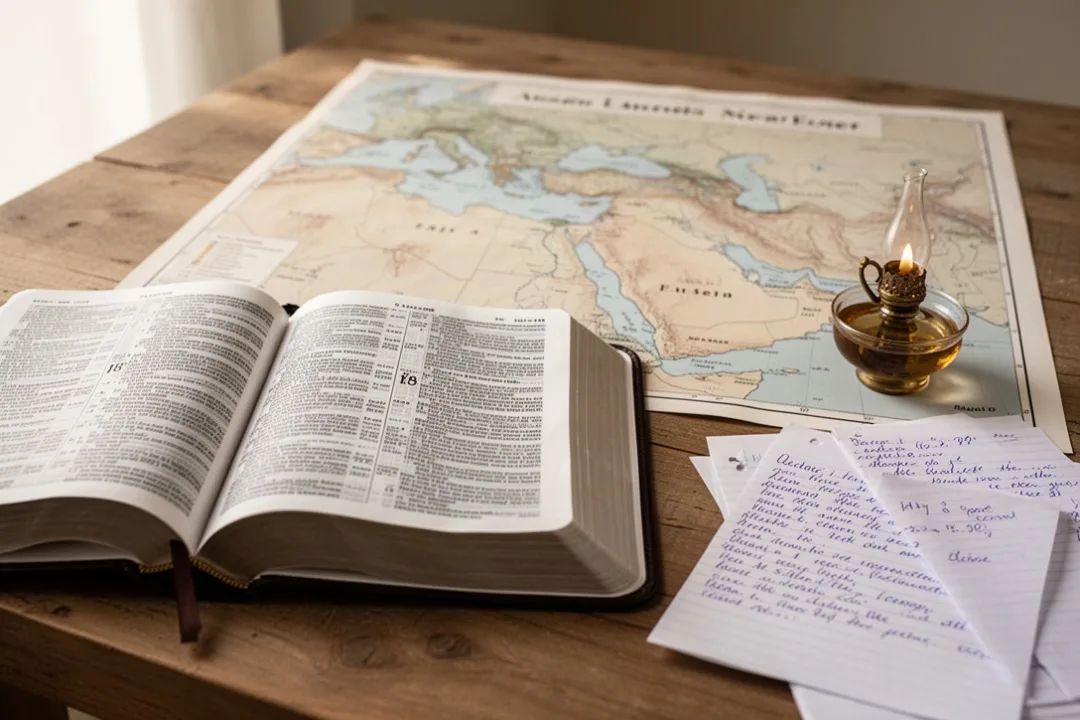
For each reading, identify the speaker, audience, setting, genre, and immediate problem. Then ask what the passage reveals about God, people, covenant, justice, worship, or hope. A study Bible, historical atlas, or reliable commentary can clarify unfamiliar customs without replacing your own careful reading.
Common mistakes to avoid
One common mistake is treating every Old Testament passage as if it were written for the same situation. A creation poem, a legal instruction, a royal psalm, a proverb, a lament, and an apocalyptic vision require different reading habits.
Another mistake is assuming that every event is presented as an endorsement. The text may report deception, violence, polygamy, or political failure without approving it. Narrative context, prophetic criticism, and the consequences that follow often reveal the author’s evaluation.
Readers can also miss the Old Testament’s concern for ordinary people. Alongside kings and priests, it gives attention to widows, immigrants, debtors, laborers, children, grieving families, refugees, and people living under foreign domination. Its vision of faith includes social conduct, not only religious identity.
Finally, avoid forcing every detail into a single simple timeline. The books were composed, collected, edited, and transmitted across many generations. Their final forms invite theological and literary reading even as they preserve memories of real places, rulers, wars, migrations, and communities.
What the Old Testament contributes to the Bible as a whole
The Old Testament supplies the Bible’s core vocabulary for creation, sin, covenant, holiness, sacrifice, kingdom, wisdom, prophecy, exile, redemption, and restoration. Without that framework, many New Testament references become difficult to understand. Images such as shepherd, temple, Passover, Messiah, new covenant, and kingdom emerge from this earlier collection.
Its contribution is also broader than preparation. The Old Testament offers enduring prayers for fear and grief, wisdom for relationships and work, warnings about power, visions of justice, and honest testimony about human failure. It refuses to hide confusion or suffering, yet it continues to hold out the possibility of mercy and renewal.
A thoughtful old testament overview therefore begins with the whole story but leaves room for each book’s distinctive voice. Genesis speaks through origins and family narratives, Psalms through prayer, Proverbs through concise instruction, Job through debate and lament, and the prophets through urgent covenant confrontation. Together, they form a diverse collection centered on God, people, promise, responsibility, judgment, and hope.
Frequently asked questions
How many books are in the Old Testament?
Most Protestant Bibles contain 39 Old Testament books. Catholic Bibles include additional Deuterocanonical books, while Orthodox traditions use a somewhat different collection. The Hebrew Bible contains 24 books because several works counted separately in Protestant Bibles are grouped together. The differences concern the canon’s organization and scope, not simply different editions of one fixed table of contents.
What is the difference between the Old Testament and the Hebrew Bible?
The two collections substantially overlap, but they differ in arrangement, grouping, and the traditions that define their boundaries. The Hebrew Bible is organized as the Torah, Prophets, and Writings, often called the Tanakh. The Christian Old Testament usually groups the books as law, history, poetry or wisdom, and prophets, with Protestant and Catholic traditions also differing in included books.
Was the Old Testament written by one person?
No. It is a collection produced across many centuries by different authors, editors, poets, priests, prophets, historians, and wisdom teachers. Some books preserve older oral or written traditions, while others show signs of later compilation. Religious traditions often describe the books as inspired, while historical study examines their language, sources, settings, and stages of development.
What is the best place to begin reading the Old Testament?
Genesis and Exodus provide the strongest foundation because they introduce creation, the ancestors, the exodus, and the covenant. You can then read Joshua through 2 Kings for the main national story, adding Psalms for prayer and Isaiah for prophetic themes. A study Bible can help explain unfamiliar laws, names, geography, and historical settings as you proceed.






Leave a Reply