Bible first book: What Genesis means and why it matters
Bible first book: What Genesis means and why it matters
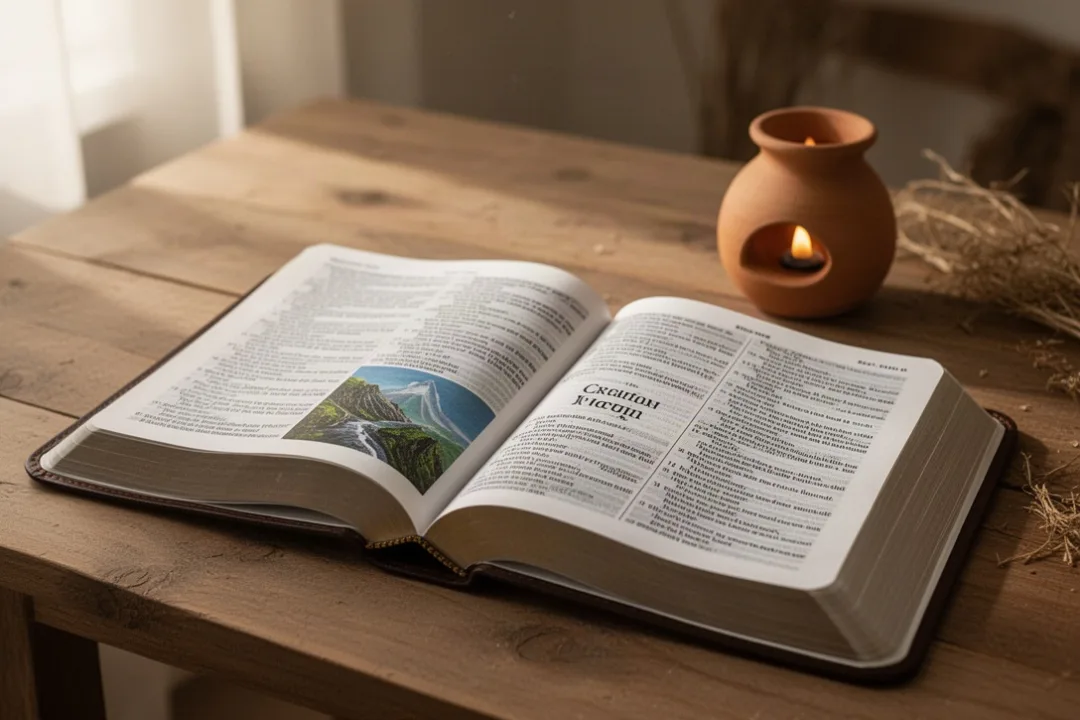
If you open a Bible and wonder where to begin, the answer is usually Genesis, the Bible’s first book. Its name means “beginning” or “origin,” and its chapters explain how the world begins, why human suffering and sin appear, and how God starts a covenant relationship with a particular family.
Genesis is more than a collection of famous stories. It provides the foundation for major biblical ideas such as creation, sin, judgment, blessing, covenant, faith, and redemption. The later books of the Bible repeatedly refer back to its people and events.
Genesis is the first book of the Bible and the first of the five books traditionally known as the Pentateuch, or Torah. The other four are Exodus, Leviticus, Numbers, and Deuteronomy. In the Jewish tradition, these five books form the Torah, while Christian Bibles place them at the beginning of the Old Testament.
Genesis contains 50 chapters. It begins with the creation of the heavens and the earth and ends with Joseph’s death in Egypt. The book moves from a universal view of humanity to the story of one family: Abraham, Isaac, Jacob, and Joseph.
Quick answer: The first book of the Bible is Genesis. It explains the beginnings of creation, humanity, sin, nations, and God’s covenant family.
The book is traditionally associated with Moses, along with the other books of the Pentateuch. Genesis itself does not identify its human author in the same way a modern book might. Jewish and Christian communities have long received it as part of the Mosaic Torah, while many modern scholars study it as a text shaped from older traditions and sources.
How Genesis is organized from creation to Joseph
A useful way to read Genesis is to follow its movement from the whole world to one family. The opening chapters address humanity as a whole, while the second half focuses mainly on the family of Abraham and the formation of Israel’s ancestry.
Creation and the human vocation: Genesis 1–2 describes God creating the world and placing human beings in it with a distinctive role.
Human rebellion and its consequences: Genesis 3–11 tells of the fall, violence, the flood, and the scattering of nations at Babel.
Abraham and Sarah: Genesis 12–25 follows God’s call, promises, covenant, and tests involving Abraham’s household.
Isaac and Rebekah: Genesis 24–26 continues the promise through Abraham’s son Isaac and his family.
Jacob and his sons: Genesis 27–36 shows Jacob’s conflict, transformation, marriages, and twelve sons.
Joseph in Egypt: Genesis 37–50 traces Joseph’s betrayal, suffering, rise to power, and reconciliation with his family.
This structure helps explain why Genesis contains both sweeping beginnings and detailed family narratives. The book is answering two connected questions: What happened to the world? and How did Israel’s story begin?
What Genesis says about creation and humanity
Genesis opens with a repeated pattern: God speaks, creation responds, God evaluates what has been made, and the narrative advances. The first chapter presents an ordered creation in which light, sky, land, vegetation, heavenly bodies, animals, and humans appear in a deliberate sequence.
Genesis 1 teaches that the world is not presented as divine itself or as the product of competing gods. Instead, one God creates and orders the world. Creation is repeatedly described as good, and humanity receives a special status within it.
Genesis 2 tells the creation story from a closer human perspective. It focuses on the garden, the formation of the man, the woman, work, companionship, and the command concerning the tree of the knowledge of good and evil. The two creation chapters use different emphases, but together they establish the Bible’s opening picture of God, the world, and human responsibility.
Human beings are described as made in the image of God. Christians and Jews have interpreted this phrase in several ways, including human dignity, moral responsibility, relational capacity, and a representative role toward creation. Genesis does not reduce people to their usefulness; it gives human life a distinctive worth while also giving people obligations.
The garden narrative also connects work and care with human purpose. Before the entrance of sin, the man is placed in the garden to cultivate and guard it. That detail has influenced religious reflection on stewardship, labor, land, and the proper use of creation.
Why the fall in Genesis 3 matters
Genesis 3 describes the man and woman eating from the forbidden tree after being persuaded by the serpent. The chapter does not use every later theological term associated with this event, but it clearly presents disobedience as a rupture in trust and relationship with God.
The consequences spread outward. Shame enters the human relationship, blame replaces openness, pain and struggle mark human life, and the garden is no longer the place where the pair can remain. The story presents sin as more than breaking a rule; it is a refusal to accept God’s boundary and an attempt to define good and evil independently.
Different Christian traditions explain the relationship between Genesis 3 and original sin in different ways. Some emphasize inherited guilt, others inherited corruption or a damaged human condition, and others focus on humanity’s recurring pattern of turning from God. All of these interpretations recognize the chapter as a central explanation of why the world is not as it should be.
Genesis also shows that judgment is not the only divine response. Even after the disobedience, God seeks the humans, addresses them, provides clothing, and continues the human story outside the garden. The narrative holds together accountability and mercy rather than treating them as opposites.
How Genesis 4–11 explains violence, judgment, and nations
After the garden, the effects of sin become increasingly visible. Cain kills his brother Abel, and the story presents this first family conflict as a warning about jealousy, anger, and the failure to master destructive desire. Genesis does not portray violence as an isolated problem; it shows how wrongdoing spreads through households and societies.
The flood story in Genesis 6–9 describes a world filled with corruption and violence. God judges that violence through the flood but preserves Noah, his family, and representatives of the living creatures. Afterward, God makes a covenant with Noah and places the rainbow as its sign.
The covenant with Noah is significant because it reaches beyond one nation. It concerns the earth and all living creatures. Genesis presents the flood as a judgment story, but it also gives a promise that the earth will not again be destroyed by a flood in the same way.
The account of Babel in Genesis 11 explains the scattering and diversity of human communities. People gather to build a city and a tower, seeking security and fame through unified human power. God confuses their language and disperses them. The story challenges human pride and self-made greatness, not the ordinary existence of cities, technology, or cooperation.
Reading tip: Genesis 1–11 works as a broad account of humanity’s beginnings, while Genesis 12–50 narrows the focus to the family through which God’s promises will continue.
What God promises Abraham in Genesis
Genesis 12 marks a major change in direction. God calls Abram, later named Abraham, to leave his homeland and promises to make him into a great nation, bless him, make his name significant, and bless others through him. This is the beginning of the book’s sustained focus on covenant and promise.
Abraham’s story includes faith, courage, fear, impatience, generosity, conflict, and failure. He leaves his homeland, travels through Canaan, separates from Lot, rescues Lot from captivity, and receives covenant promises. He also makes serious mistakes, including presenting Sarah as his sister in situations where he fears for his safety.
The promise involves three closely related elements: descendants, land, and blessing. Genesis develops these elements gradually rather than resolving them immediately. Abraham and Sarah wait many years for the promised son, Isaac, and their experience shows that biblical faith often includes uncertainty and delay.
Genesis 15 describes God’s covenant with Abraham through a formal covenant ceremony, while Genesis 17 connects the covenant with circumcision as a sign. These chapters emphasize that the relationship rests on God’s initiative, even though Abraham is called to respond with trust and obedience.
The account of Abraham’s near-sacrifice of Isaac in Genesis 22 is one of the book’s most difficult passages. God tests Abraham, but the son is not ultimately sacrificed. The episode raises questions about trust, obedience, and the dangers of confusing religious devotion with violence. It should not be used to justify harming a child or obeying a human demand for sacrifice.
How Isaac, Jacob, and Esau continue the family story
Isaac receives the covenant line from Abraham, but Genesis gives him less narrative space than Abraham, Jacob, or Joseph. His marriage to Rebekah, the birth of the twins Jacob and Esau, and disputes over wells show that the family remains vulnerable to rivalry and conflict.
Jacob and Esau are different in temperament and occupation, but their relationship becomes strained when Jacob obtains Esau’s birthright and receives their father’s blessing through deception. Genesis does not present Jacob’s actions as uncomplicatedly admirable. He gains what he wants but must flee from the consequences of his choices.
Jacob’s life changes during a night encounter at Peniel in Genesis 32. He wrestles with a mysterious divine figure and receives the name Israel. The name becomes central because Jacob’s sons and descendants will form the people of Israel.
Jacob’s transformation is gradual. He remains complicated and imperfect, yet Genesis shows God continuing to work through him. That pattern is important: the covenant family is not selected because every member behaves well. The narrative repeatedly combines divine faithfulness with human weakness.
Jacob’s reconciliation with Esau in Genesis 33 offers one of the book’s clearest examples of a damaged relationship moving toward peace. The brothers do not simply erase the past, but they meet without the violence Jacob once feared. Their encounter shows that reconciliation can involve humility, gifts, distance, and changed behavior.
Why Joseph is central to the last part of Genesis
Joseph is Jacob’s favored son, and his brothers resent him after he shares dreams suggesting that they will one day bow before him. They sell him into slavery, and he is taken to Egypt. The story then follows Joseph through false accusation, imprisonment, political advancement, and reunion with his family.
Joseph’s life illustrates how betrayal and suffering can shape a person without having the final word. He does not control the events that carry him to Egypt, but he develops practical wisdom and remains capable of serving others. His administrative work during years of abundance prepares Egypt and surrounding regions for famine.
When Joseph’s brothers come to Egypt for food, he has the power to punish them. Instead, he tests whether they have changed, reveals his identity, and provides for the family. The reconciliation is emotionally complex, because forgiveness does not mean pretending that the betrayal never happened.
Near the end of Genesis, Joseph interprets the family’s history through God’s providence. His statement in Genesis 50:20 contrasts the brothers’ harmful intention with God’s ability to use the same events to preserve life. The verse should not be used to call evil good; it expresses the belief that God can bring preservation from human wrongdoing.
Genesis ends with Joseph’s death in Egypt, not with Israel’s return to the promised land. Joseph’s final words point forward to God’s future attention to the family. That unfinished ending leads directly into Exodus, where the descendants of Jacob become enslaved and later delivered from Egypt.
What themes connect the whole book of Genesis?
Genesis contains many individual episodes, but several themes connect them. Paying attention to these themes helps you read the book as a unified work instead of treating each story as a separate lesson.
God creates and orders: Genesis presents God as the source of life and the one who brings structure out of disorder.
Human beings bear dignity and responsibility: People are made in God’s image, yet they are accountable for how they treat God, one another, and the earth.
Sin damages relationships: Disobedience appears in broken trust, family rivalry, violence, exploitation, and pride.
God works through covenant: Promises to Noah and Abraham give shape to the relationship between God, humanity, and the family of Israel.
Promises often develop slowly: The land, descendants, and blessing promised to Abraham unfold over generations.
God uses unlikely people: The main family includes outsiders, younger sons, flawed leaders, and people who make serious moral mistakes.
Blessing is meant to extend outward: Abraham’s calling is not only for his household; it includes blessing for other peoples.
Providence does not excuse wrongdoing: Joseph’s story shows God working through evil without calling the evil itself acceptable.
These themes also explain why Genesis matters to later biblical books. The Exodus story assumes the promises to Abraham, Isaac, and Jacob. Israel’s laws refer back to creation, the patriarchs, and the family’s time in Egypt. The prophets revisit the covenant, land, blessing, and human failure introduced in Genesis.
How Genesis relates to the rest of the Bible
The New Testament frequently refers to Genesis. Jesus and the apostles discuss creation, marriage, Noah, Abraham, Sarah, Isaac, Jacob, and the destruction of Sodom. Christian writers also connect Adam with humanity’s need for redemption and describe Jesus as the one through whom God’s blessing reaches the nations.
These later references do not all use Genesis in the same way. Some treat its people as historical ancestors, some use its stories as moral or theological examples, and some draw broader patterns from its themes. Reading Genesis within the full Bible therefore requires attention to both its original setting and its later interpretation.
Genesis also shapes Jewish identity and worship. The patriarchs, matriarchs, covenant, creation, and the family of Jacob remain central to Jewish Scripture and tradition. Christians inherit much of this story but should avoid treating Jewish interpretation as merely a background to Christianity; Genesis is foundational within Judaism in its own right.
How to read Genesis carefully and responsibly
Genesis includes poetry-like passages, genealogies, family sagas, covenant scenes, symbolic actions, and stories of judgment. Each type of material should be read with care. A genealogy, for example, serves a different purpose from a dialogue between Jacob and Esau, while a creation account raises different questions from Joseph’s court narrative.
Readers also disagree about how Genesis relates to modern scientific accounts of the universe, the age of the earth, and human origins. Some Christians read the creation chapters as a chronological account, some read them as theological literature with a distinct structure, and others hold positions between those approaches. Faithful reading requires recognizing that Genesis is making theological claims even when people disagree about scientific or literary details.
When a passage is difficult, avoid building a complete doctrine from one isolated scene. Read the surrounding chapters, compare repeated themes, and ask what the narrative emphasizes. Genesis often communicates through patterns: blessing and reversal, promise and delay, human schemes and divine purpose, exile and return.
Read a manageable section: One or two chapters at a time is enough for careful reflection.
Identify the people and setting: Track family relationships, locations, promises, and conflicts.
Notice repeated words and actions: Repetition often signals the book’s major concerns.
Separate description from approval: Genesis records deception, violence, and exploitation without automatically endorsing them.
Ask how the passage advances the promise: Consider its place in the movement toward Abraham’s family and Israel.
Read the ending in context: Joseph’s death points forward to Exodus rather than providing a self-contained resolution.
A first reading can focus on the main storyline: creation, fall, flood, Babel, Abraham, Isaac, Jacob, and Joseph. A second reading can examine the smaller details, including names, genealogies, covenant signs, repeated journeys, and the ways family members respond to fear.
Where to begin if Genesis feels difficult
Some parts of Genesis are easy to recognize, such as creation, Noah’s ark, Abraham’s call, and Joseph’s rise in Egypt. Other sections, especially the genealogies and long family disputes, can seem harder to follow. You do not need to understand every detail before grasping the book’s central movement.
Start with Genesis 1–3 to understand creation, human dignity, and the entrance of sin. Continue with Genesis 12, 15, 17, and 22 for Abraham’s calling and covenant. Then read Genesis 27–33 for Jacob’s family conflict and transformation, followed by Genesis 37–50 for Joseph’s story.
Keep a short list of the main promises as you read: descendants, land, and blessing. Also watch for the repeated question of who will carry the family line forward. Genesis often creates tension by making the promised future appear impossible, then showing the story continue through unexpected means.
The first book of the Bible therefore serves as both a beginning and a foundation. Genesis tells where the world, human brokenness, the nations, Israel’s ancestors, and God’s covenant story begin. Its unfinished ending invites you to continue into Exodus, where the family introduced in Genesis becomes a people.
Frequently asked questions
Is Genesis the oldest book in the Bible?
Genesis comes first in the Bible, but its position does not necessarily prove that it was written before every other biblical book. The book presents the earliest events in the biblical storyline, while questions about when its final written form developed are studied through tradition, language, literary structure, and historical context.
Does Genesis have 50 chapters?
Yes. Genesis contains 50 chapters in standard English Bible editions. Chapter numbers were added later to make the text easier to locate; they were not part of the earliest manuscripts. The book begins with creation and ends with Joseph’s death in Egypt, creating a bridge to the events of Exodus.
What is the main message of Genesis?
Genesis presents God as the creator who remains committed to the world despite human rebellion and violence. It traces the development of covenant promises through Abraham’s family and shows how blessing, judgment, human failure, and divine faithfulness shape the biblical story.
Should Genesis be read as history or theology?
Genesis makes theological claims about God, creation, humanity, sin, covenant, and providence, while its narratives are rooted in the ancient world. Jewish and Christian readers differ over how particular passages relate to modern historical and scientific questions. Reading the book well means taking its theological purpose seriously without assuming every reader must use the same interpretive approach.










Leave a Reply