When Christians say “our body is the temple of God,” they are referring primarily to 1 Corinthians 6:19–20. The teaching means that a believer’s body belongs to God, is a dwelling place of the Holy Spirit, and should be used in ways that honor him. It is not a command to pursue physical perfection or a promise that faithful Christians will never become sick.
The statement connects spiritual identity with ordinary physical life. Your choices involving sexuality, rest, food, work, exercise, appearance, and personal boundaries can express what you believe about God’s ownership and purpose. The Christian view does not treat the body as worthless or separate from spiritual devotion; it sees the whole person as someone God has created, redeemed, and called to faithful living.
What “your body is the temple” means in 1 Corinthians
Paul’s words appear in a passage addressing sexual immorality, the resurrection of the body, and the believer’s union with Christ. Some members of the Corinthian church apparently treated sexual behavior as unrelated to spiritual life. Paul rejects that separation. What happens with the body matters because the body is involved in belonging to Christ.
In 1 Corinthians 6:19–20, Paul identifies the believer’s body as a temple of the Holy Spirit. He also says that believers are not their own because they were bought at a price, and he calls them to honor God with their bodies. These ideas belong together: God’s presence, God’s ownership, and the believer’s practical response.
The word temple points to a place associated with God’s presence and worship. Paul is not merely offering a poetic way to say that people should behave well. He is making a strong claim about identity. A Christian’s body is connected to God’s redemptive work and should not be treated as an object for careless use, exploitation, or self-centered control.
“Bought at a price” is commonly understood in light of Christ’s sacrificial death. The phrase does not mean that a person loses dignity or becomes a possession without value. It means that redemption creates a new relationship of belonging. The believer responds to grace by giving God honor, not by trying to purchase acceptance through perfect behavior.
Core meaning: Your body is not spiritually insignificant. Because you belong to Christ and the Holy Spirit dwells in you, your physical life is part of your worship and discipleship.
This teaching also corrects two opposite errors. One error treats the body as everything, making appearance, pleasure, or performance the foundation of identity. The other treats the body as unimportant, as if only thoughts or religious activities mattered to God. Biblical Christianity gives the body a meaningful but properly ordered place: it is valuable, limited, mortal, and intended for God’s purposes.
How the Holy Spirit changes the meaning of the body
The temple image begins with God’s presence, not with a health program. In the biblical story, the temple was connected with worship, holiness, and communion with God. When Paul applies that language to believers, he emphasizes that God is not distant from Christian life. The Holy Spirit is present in believers, so their daily actions take place before God.
This does not mean that the human body becomes divine. A person does not become God, and the body is not an object of worship. Instead, the body becomes a place where a person’s relationship with God is lived out. Prayer, work, affection, restraint, service, and care for others can all involve the body and become expressions of faithfulness.
The Holy Spirit’s presence also means that Christian holiness is more than external rule-following. Holiness is a life increasingly shaped by God’s character and purposes. Rules may identify harmful behavior, but the Spirit forms wisdom, self-control, love, humility, courage, and a willingness to turn away from what damages people or dishonors God.
That transformation usually develops over time. A Christian may still struggle with addiction, compulsive habits, sexual temptation, disordered eating, anger, or shame. Calling the body a temple should not be used to pretend that these struggles do not exist. It should encourage honest repentance, patient growth, wise support, and confidence that God meets people in the process of restoration.
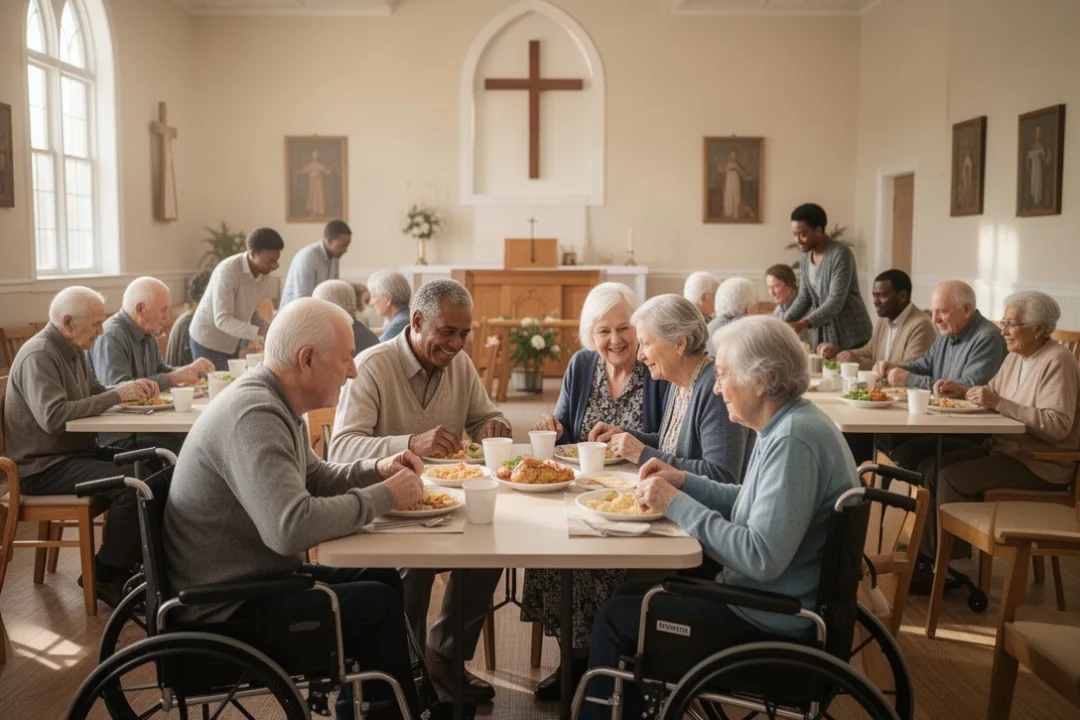
The presence of the Spirit also gives the body inherent dignity. This applies to every person, including people who are disabled, elderly, chronically ill, injured, infertile, recovering from trauma, or unable to meet cultural standards of beauty and strength. A body does not become more valuable because it is young, athletic, conventionally attractive, or free from disease.
Physical limitations do not make someone a failed temple. The body may reflect weakness, aging, genetic conditions, or the effects of harm, but none of these removes a person’s worth before God. Christian care should therefore reject contempt toward the body while also refusing to make physical ability a measure of spiritual maturity.
The church as God’s temple in 1 Corinthians 3
Paul also uses temple language in 1 Corinthians 3:16–17, but that passage emphasizes the church community rather than only an individual believer. The people of God together are described as God’s temple, and the warning concerns actions that damage the community. Reading both passages together gives a fuller picture.
Individually, your body matters to God. Collectively, the church is a people among whom God dwells. This means that “the temple” is not only about personal choices such as diet or sexual conduct. It also concerns how Christians treat one another, whether leaders exploit trust, whether communities tolerate abuse, and whether believers build unity or cause destructive division.
A healthy interpretation holds both truths together:
Personal responsibility: Your body and behavior should honor God.
Shared responsibility: Your choices affect the spiritual health, safety, and dignity of other people.
Community protection: Churches should resist conduct that harms vulnerable people or corrupts the community.
Mutual care: Believers should help one another pursue holiness without humiliation, control, or self-righteousness.
How to honor God with your body
Honoring God with your body begins with a change in motivation. Christian physical care is not a competition for attractiveness, fitness, productivity, or social approval. It is a response to God’s grace. You care for your body because it is a gift and a means of service, not because your appearance determines your value.
Sexual integrity is central to the immediate context of 1 Corinthians 6. That includes treating your own body and other people’s bodies with dignity. It means rejecting coercion, exploitation, adultery, pornography that contributes to objectification, and sexual behavior that violates faithful commitments. It also means recognizing that consent, honesty, responsibility, and respect are essential parts of how bodies should be treated.
Honoring God does not require one single lifestyle or body type. Christians may differ in their diets, exercise routines, medical decisions, clothing, schedules, and physical abilities. The question is not whether every believer follows the same plan. The question is whether a choice reflects wisdom, self-control, love, and responsible stewardship rather than enslavement to appetite, vanity, fear, or pressure.
Practical care can include getting enough sleep, eating in a balanced way, seeking medical attention, moving your body when possible, taking prescribed medication, avoiding unnecessary danger, and receiving help for addiction or mental health concerns. These actions are not methods of earning God’s love. They are ordinary ways of respecting the life entrusted to you.
Rest belongs here as well. A body that is constantly pushed past its limits is not necessarily a more faithful body. Rest acknowledges that you are finite and that your worth does not depend on uninterrupted productivity. Sabbath practices, healthy boundaries, vacations, quiet, and adequate sleep can become ways to resist the belief that you must prove your value through endless output.
Honoring the body also includes using it for service and love. Hands can help a neighbor, prepare food, or care for a child. A voice can speak truth, encouragement, or advocacy. Feet can carry you toward someone who needs practical support. Physical strength, time, mobility, and energy are resources that can be directed toward compassion rather than self-protection alone.
A useful personal examination might include these questions:
Does this habit help me remain free, or is it beginning to control me?
Does this choice respect my body and the bodies of other people?
Am I caring for a real need, or am I responding mainly to shame and comparison?
Could wise counsel, medical care, pastoral support, or professional treatment help me?
How can my physical abilities and limits become an opportunity for love and service?
These questions are not a checklist for condemning yourself. They are prompts for honest discernment. Wisdom may lead one person to seek treatment, another to establish a boundary, another to leave a dangerous environment, and another to release an unrealistic demand for physical improvement.
What this teaching does not mean
“Our body is the temple of God” is sometimes used in ways that go beyond the biblical passage. It does not mean that every illness results from personal sin. The Bible does not give permission to judge someone’s faith by their weight, medical condition, disability, fertility, appearance, or physical performance.
It also does not mean that Christians must pursue perfect health. Bodies age, become injured, develop diseases, and eventually die. The New Testament’s hope is not based on keeping the present body permanently young or powerful. It includes the future resurrection, when God will redeem the whole person, but that hope does not require denial of present weakness.
The phrase should not become a slogan for shame. Telling someone with an eating disorder that they simply need more discipline can deepen harm. Telling a chronically ill person that insufficient faith caused the illness can be cruel and theologically irresponsible. A faithful response may involve doctors, therapists, recovery groups, pastors, trusted friends, and practical accommodations.
Nor does temple language support body worship. Fitness, nutrition, skincare, and appearance can all become excessive when they control identity or consume attention. A disciplined habit is not automatically a holy habit. If physical care produces contempt for others, anxiety, vanity, or compulsive behavior, it needs to be reconsidered.
Another misuse is legalism: creating detailed rules that Scripture does not require and then treating those rules as proof of spiritual superiority. Christians should take biblical holiness seriously, but they should also distinguish clear moral teaching from personal preference. The body belongs to God, yet believers still need humility when applying that principle to areas where sincere Christians may reach different conclusions.
Important safeguard: Temple language should lead to reverence, compassion, and wise care—not body shame, medical blame, rigid appearance standards, or judgment toward people living with illness and disability.
The teaching also does not authorize anyone to control another person’s body. Abuse, harassment, coercion, and manipulation contradict the dignity that the temple image affirms. Churches, families, and relationships should create safety and accountability, not use religious language to demand access, silence concerns, or excuse harmful behavior.
How this belief shapes Christian identity and daily choices
The statement gives Christians a way to understand identity that is deeper than appearance or appetite. You are not merely a consumer of bodily experiences, and you are not required to earn love by making your body impressive. You are a person whose body is included in God’s work of redemption. That identity can bring both responsibility and freedom.
It brings responsibility because physical choices matter. Repeated actions can shape desires, relationships, health, and the ability to serve. A person who recognizes God’s claim over the body may choose to end a destructive pattern, establish a boundary, seek forgiveness, or accept help rather than defend a habit that is causing harm.
It brings freedom because the body no longer has to carry the burden of being an idol or an enemy. You do not have to worship your appearance, and you do not have to despise your physical self. You can receive your body with gratitude while acknowledging its limitations and making reasonable efforts to care for it.
This perspective can change the way you approach food. Food is neither a moral scoreboard nor an enemy to be feared. Eating can involve nourishment, culture, hospitality, pleasure, and dependence on God’s provision. Wisdom may require moderation or specialized care, but shame should not be mistaken for holiness.
It can change the way you approach exercise. Movement may support strength, mobility, mood, and health, but it does not establish your worth. If exercise is impossible or limited, your spiritual value remains intact. If exercise is available, it can be received as a form of stewardship rather than a demand to match an idealized image.
It can change the way you approach sexuality. Instead of viewing sex as either shameful or purely recreational, Christian teaching places it within a framework of faithfulness, mutual honor, responsibility, and covenant love. The body of another person is not a product, conquest, or tool for gratification. Your own body is not something others are entitled to use.
It can change the way you approach appearance. Clothing, grooming, and personal presentation can be appropriate forms of creativity and social respect. They become spiritually harmful when appearance becomes the primary source of identity or when you use it to rank the worth of other people. God’s concern reaches deeper than public presentation.
It can change the way you approach suffering. When the body is weak, the Christian response is not to pretend everything is fine. Lament, prayer, treatment, adaptation, and receiving care can all be faithful responses. A person who needs a wheelchair, medication, surgery, counseling, or daily assistance is not less spiritually mature because the body requires support.
A grounded response to the teaching may include the following practices:
Receive your body honestly: acknowledge both its dignity and its limitations.
Identify what controls you: notice habits that damage health, relationships, freedom, or integrity.
Seek appropriate help: involve qualified medical and mental health professionals when needed.
Build respectful boundaries: protect yourself and treat other people’s bodies with care.
Use your abilities for love: direct time, energy, and physical resources toward service.
Practice gratitude without comparison: appreciate what your body can do without despising what it cannot do.
The phrase “our body is the temple of God” is therefore both a theological statement and a practical invitation. It tells you that the physical and spiritual parts of life cannot be separated so easily. Your body is a place where belonging to God becomes visible through choices marked by holiness, compassion, restraint, courage, and care.
That calling is not fulfilled through anxiety or perfectionism. It is lived through a steady return to God’s grace: honoring the body, seeking help when it is wounded, refusing to exploit others, and offering your whole self for faithful love and service.
Frequently asked questions
Does “your body is the temple of God” mean Christians cannot get tattoos?
The phrase itself does not directly settle questions about tattoos. Its central concern is whether your choices honor God, respect your body, and avoid vanity, harm, or conduct that violates Christian conviction. Christians interpret tattoo-related biblical passages differently, so the decision may involve prayer, conscience, cultural context, health considerations, and thoughtful counsel rather than a universal rule.
Does being the temple of the Holy Spirit require a strict diet?
No. Scripture does not prescribe one universal Christian diet, and physical health varies widely. Wise eating can be part of stewardship, but food should not become a measure of spiritual superiority or personal worth. People with allergies, medical conditions, eating disorders, or limited access to food need compassion and appropriate care, not simplistic religious judgments.
How should someone respond if they have mistreated their body?
Begin with honesty rather than self-condemnation. Depending on the situation, this may include confession, setting practical boundaries, contacting a doctor or therapist, joining a recovery group, and asking a trusted Christian for support. God’s grace does not depend on a flawless history. Seeking healing and making responsible changes can be a meaningful expression of honoring the body.
Is caring for your body a form of Christian worship?
It can be, when care is offered with gratitude and directed toward faithful living. Medical treatment, rest, nourishment, movement, hygiene, and safety may help you serve others and live responsibly. They become distorted when they control your identity or cause contempt for people whose bodies differ from yours. Worship includes the heart and purpose behind the action, not only the action itself.









Leave a Reply