Tanktops are more than just a basic wardrobe staple. They are a versatile
tool for layering, performance, fashion statements, and comfort across
seasons. In this guide, you’ll find a comprehensive look at tanktop types,
including the most common styles, fits, and materials.
Whether you are shopping for an athletic build, a casual summer look, or a
chic layered outfit, understanding the subtleties of necklines, arm openings,
fabrics, and construction will help you choose garments that perform, last,
and feel right for you.
Styles at a glance: the core tanktop families
Tanktops come in several broad families defined by neckline shape, back design,
and silhouette. The distinctions matter because they affect coverage, range of
motion, undergarment choices, and how the top sits on the torso. Below is a
concise taxonomy you’ll frequently encounter in stores and on online catalogs.
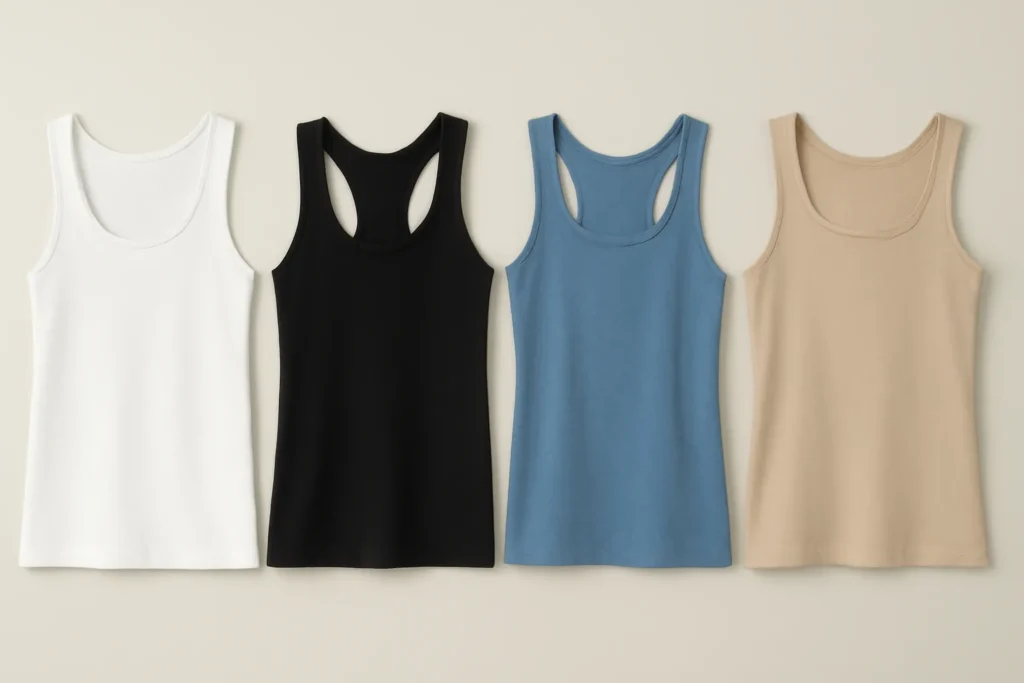
Classic (Scoop Neck) Tank — A timeless silhouette with a rounded
neckline that sits above the bust and a gentle curve at the shoulder. This is
the archetype many people picture when they think of a tanktop.
V-Neck Tank — Neckline shaped like a V, which can elongate the
neck and create a more open, dressier line. It pairs well with collared shirts
or jackets for layered looks.
High-Neck / Mock Neck Tank — A more conservative option that
covers more of the chest and can offer a sleek, modern aesthetic suitable for
professional environments or late-summer runs.
Racerback Tank — A back design where the straps converge toward the
center back, freeing the shoulders for enhanced range of motion. Popular in
athletic wear and warm-weather fashion.
Halter Tank — Straps tied or connected behind the neck, leaving
the back exposed. This style often reads chic and bold, and it works well for
evenings out or beach reads.
Stringer / Muscle Tank — A sleeveless cut with narrow straps and a
more exposed armhole. Common in gym settings and streetwear for a rugged,
athletic vibe.
Boxy / Relaxed Tank — A looser silhouette that skims the torso with
extra room in the chest and waist. Great for layering and casual comfort.
Necklines and back designs: what to expect
Necklines and backs are the primary levers for changing the tone of a tanktop.
A few notes to help you pick the right one:
Scoop vs. V necklines alter the balance of chest exposure and neckline depth.
Back coverage varies from fully covered to racerback or open-back
configurations; back design can affect bra choice and comfort during movement.
Shoulder strap width matters for strapless bras or concealment of undergarments.
Fits and silhouettes: how a tanktop should hug your frame
The fit of a tanktop influences its function—whether you wear it for
workouts, casual outings, or as a layering piece. Here are the main fit categories
you’ll encounter, with guidance on when each shines.
Slim / Fitted — Conforms closely to the body, emphasizing the chest,
waist, and sometimes the arms. Ideal for athleisure, performance wear, and outfits
that push a sleek, modern line.
Regular / Tailored — A balanced cut that skims the torso without clinging.
A versatile choice for everyday wear and layering under jackets or shirts.
Relaxed / Loose — Extra ease through the chest and waist for a casual,
laid-back look. Adds comfort and airiness, especially in warm climates.
Crop Tank — Shorter length that ends around the midriff. Works well with high-waisted
bottoms and can create a bold streetwear or festival aesthetic.
Longline Tank — Elongated torso length that provides coverage mid-to-lower
hip area. Popular in fashion-forward outfits and layering ensembles.
Choosing the right fit for activities
The best fit often depends on what you plan to do while wearing the tanktop:
Exercise and gym — Prioritize a snug but not restrictive fit with
moisture-wicking fabric and flatlock seams to minimize chafing.
Everyday wear — A midweight cotton blend or modal blend with a relaxed fit
balances comfort and shape retention for all-day wear.
Layering — Look for a slightly looser silhouette that won’t bunch
under a shirt or sweater, and consider fabrics with a bit of stretch for smooth layering.
Fabrics and materials: performance, feel, and care
The materials used in tanktops determine comfort, durability, drape, and how well the fabric
handles sweat and movement. Below are common fibers and blends, with notes on where they shine.
Cotton — Naturally breathable, soft, and familiar. Pure cotton tanks are comfortable
for casual wear, but may shrink or wrinkle and have less stretch. Look for pima or organic cotton for a smoother hand and improved durability.
Cotton blends (often with polyester or elastane) — Improve stretch, wrinkle resistance,
and color retention. Common blends include cotton-poly blends and cotton-spandex.
Modal and other viscose blends — Known for a silky feel, excellent drape, and
good moisture management. Often used in premium tanks and lounge wear.
Polyester and synthetic fabrics — Offer high durability, quick-drying properties,
and strong colorfastness. Ideal for performance wear and sports wardrobes.
Performance fabrics (nylon, polyester blends with moisture-wicking finishes) —
Engineered for workouts, with features like wicking, anti-microbial,
and four-way stretch for unrestricted movement.
Linen tanks — Light, breathable, and excellent in hot climates, but they wrinkle more
easily and may require more care. Great for resort wear and casual summer looks.
Bamboo viscose — A sustainable option offering softness, breathability, and a smooth
hand. Often blended with cotton or spandex to improve shape retention.
Recycled materials — Some tanktops use recycled polyester or nylon, aligning with
sustainability goals while delivering performance benefits.
Care considerations by fabric
Different fabrics require different maintenance to preserve color, shape, and texture:
Machine wash cold with like colors for most cotton and blends to minimize shrinkage and color bleed.
Avoid high heat in drying; air-drying or tumble-drying on low helps prevent shrinkage and fiber damage.
Wash performance fabrics with gentle cycles to preserve moisture-wicking finishes.
Ironing: use low to medium heat on cotton blends; many performance fabrics avoid ironing entirely due to weave and finishes.
Construction details that impact wearability
Beyond fabric and fit, the way a tanktop is constructed affects comfort, durability, and value. Key
construction elements include seams, hems, and edge finishes, which are especially important for
movement-intensive wear.
Seam types — Flatlock or overlock seams reduce chafing and are common in athletic tanks; hidden seams can improve comfort for all-day wear.
Hem finish — A double-stitched hem provides durability; rolled or raw hems can create a casual vibe or vintage look.
Armhole finish — Bound or reinforced armholes extend garment life and reduce stretching. Raglan and other shoulder constructions influence arm mobility as well.
Tag placement — Tagless or printed tags improve itch-free wear; this is particularly appreciated in performance styles.
Specialized tanktop variants worth knowing
While the core styles cover most needs, there are several specialized variants that appear in fashion
and sport circles. Recognizing these can help you choose a piece that truly matches your use case.
Sport and performance variants
Compression tanks — Ultra-tight, designed to support muscle performance, improve proprioception,
and manage moisture during high-intensity workouts.
Racerback training tanks — Optimized for range of motion in the shoulders; a staple in gym and CrossFit settings.
Grip tanks — Feature textured or brushed surfaces that aid grip during outdoor activities or climbing.
Fashion-forward and statement tanks
Decorative tanks — Include lace trims, embroidery, prints, or metallic threads for evenings out.
Metallic or sheer panels — Used in trendy outfits to add contrast and texture while staying lightweight.
Seasonal prints — Floral prints, tie-dye, or geometric patterns that reflect current fashion cycles.
Special purpose tanks
Maternity tanks — Graduated cuts and extra stretch to accommodate a growing belly while maintaining style.
Post-surgery or medical tanks — Often feature softer seams and gentle closures for comfort during recovery.
How to choose by body type and personal goals
Selecting the right tanktop depends on your body type, your goals for the garment, and
how you intend to wear it. Here are practical guidelines to help you refine your choices.
If you want a sleek silhouette — Lean toward slim or regular fits in stretchy blends
with V-neck or scoop necklines to elongate the torso and reduce bulk under layers.
If you prioritize comfort and everyday wear — A regular or relaxed fit in cotton blends with a classic scoop or crew neck.
If you need performance — Look for moisture-wicking fabrics, four-way stretch, and flatlock seams.
If you want layering versatility — Consider longline or boxy tanks that create clean lines under jackets, cardigans, or button-down shirts.
Color and pattern choices can dramatically alter the impression a tanktop makes. The right color
palette can harmonize with your skin tone, hair color, and wardrobe, while patterns add energy or
subtle texture.
Neutral basics — White, black, gray, navy, and beige are versatile foundations for every capsule wardrobe.
Seasonal statement colors — Bright yellows, greens, corals, or blues can refresh a wardrobe and pair well with denim or khaki.
Patterns and prints — Stripes, florals, or abstract prints work best when kept in balance with other pieces to avoid visual clutter.
Care and longevity: preserving look and feel
Proper care extends the life of a tanktop, preserving color, shape, and fit. The exact approach depends
on fiber content, but some universal practices help across almost all materials.
Wash with care — Turn garments inside out to protect prints and minimize pilling. Use mild detergent
and avoid aggressive washing cycles for delicate fabrics.
Drying strategy — Air-drying is the gentlest option, especially for natural fibers; if using a dryer, opt for low heat to reduce shrinkage and fiber fatigue.
Storage — Store folded rather than hung in damp spaces; this helps prevent shoulder stretch and maintain shape.
Stain management — Address stains promptly with appropriate stain removers; avoid hot water on protein-based stains (like sweat) until pretreated.
Practical tips for trying and purchasing online or in-store
With a crowded market, making a good choice can be challenging. Here are practical strategies to
streamline your shopping and increase the odds you find exactly what you want.
Check size charts carefully — Sizes vary by brand; compare measurements rather than relying solely on size labels.
Read fabric descriptions — Note fiber content, care instructions, and whether the fabric has stretch or moisture management features.
Consider return policies — A flexible returns policy is valuable when you’re unsure about fit or color.
Assess layering needs — If you plan to wear under a shirt or blazer, choose a tank with a smoother finish and minimal bulk.
Summary: building a tanktop lineup that works
A well-rounded collection often includes a mix of classic scoop neck tanks for daily wear,
a V-neck option for layering with blazers, a racerback or workout tank for
fitness, and a longline or relaxed variant for casual, fashion-forward looks.
The best approach is to align your choices with your activities, climate, and personal style while
prioritizing fabrics that feel comfortable against your skin and stand up to regular wear.
If you’re building a capsule wardrobe or refreshing a wardrobe, here are example notes you can bring
to a store or use as filters when shopping online.
Look for 100% organic cotton or cotton-modal blends for a balance of softness and performance.
Choose a performance tank with moisture-wicking and anti-microbial finishes for workouts.
Consider a longline cotton tank for a fashion-forward base layer under cardigans or denim jackets.
Common misconceptions about tanktops
There are a few myths people often encounter. Clearing them up helps you make more informed choices.
All tanktops are the same — In reality, the cloth, cut, and finish vary widely, affecting comfort and fit.
Natural fibers always breathe better — Breathability depends on weave, fiber, and moisture management; high-quality blends can outperform cotton in some conditions.
All tanktops shrink a lot — Modern blends and pre-shrunk fabrics mitigate shrinkage, but some cottons may still shrink if washed at high temperatures.
Conclusion: embracing the tanktop as a versatile wardrobe tool
The vast landscape of tanktop types offers something for every taste, season, and activity. By
understanding the styles, fits, and materials, you can curate a
collection that feels personal, performs reliably, and remains in good condition for years. Remember to
balance your choices between comfort, function, and fashion, and you’ll discover that the humble tanktop
can be a powerful building block in your daily outfits.









Leave a Reply