Priest garments: Meaning, names, and how they are used
Priest garments: Meaning, names, and how they are used
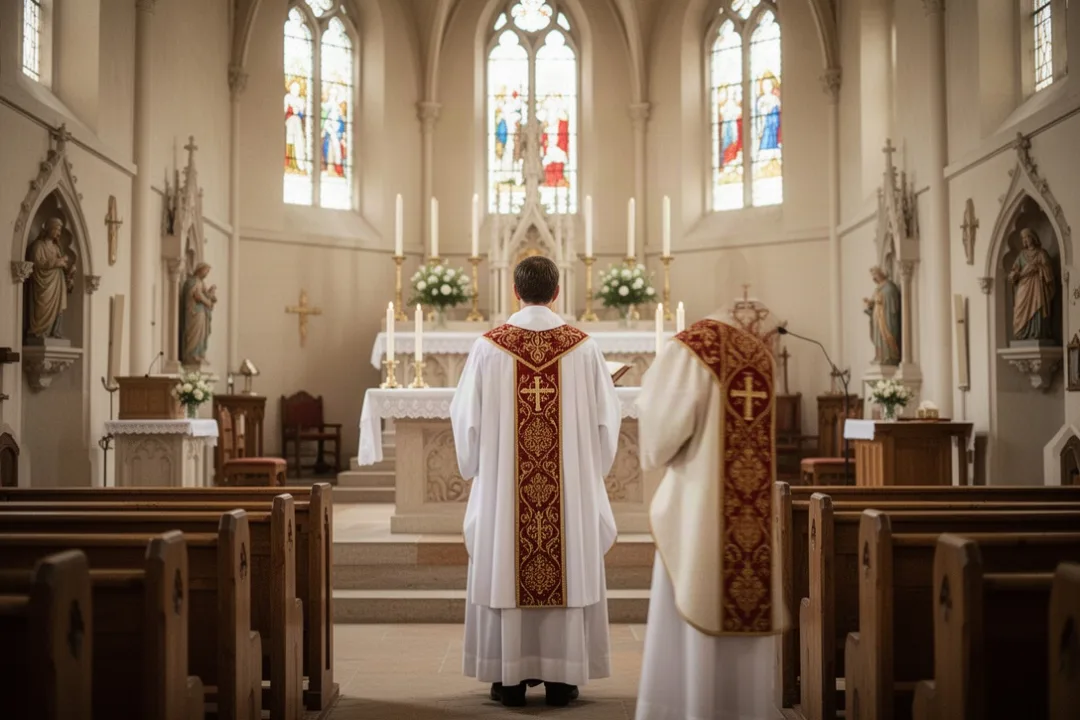
Priest garments are specialized clothing worn during religious service, and their meaning depends on the tradition. In the Old Testament, the high priest wore garments described in Exodus, including an ephod, breastpiece, robe, tunic, turban, and sash. In many Christian churches today, priests wear vestments such as an alb, stole, and chasuble, while colors often mark the season or occasion.
These clothes serve more than a decorative purpose. They can identify the wearer’s liturgical role, distinguish ordinary clothing from worship clothing, express reverence, and point the congregation toward the service rather than the individual minister. Names and customs differ, so the same garment may have a different use in a Catholic, Anglican, Lutheran, Orthodox, or other church.
Priest garments help communicate that a service has a particular religious purpose. A minister may wear ordinary clerical clothing outside the service, but vestments are usually reserved for prayer, sacramental rites, processions, or other formal acts of worship. The clothing creates a visible distinction between daily activities and the public duties of the service.
Vestments also make the priest’s role easier to recognize. In a large church, the congregation may see a stole, chasuble, or distinctive head covering before the service begins. These garments can show that the person is acting in a liturgical capacity, especially when presiding at Communion, the Eucharist, or another sacrament.
The clothing does not give the wearer personal holiness or magical power. Its meaning comes from the worshiping community’s beliefs, the rite being celebrated, and the prayers or customs associated with it. Many Christians understand the vestments as signs of service, humility, and responsibility, not as evidence that the priest is socially superior to other people.
Priest garments can also support visual unity. When several clergy members serve together, matching or coordinated vestments show that the ministers share one ceremony and one common duty. The design may also reflect local culture, church tradition, the church calendar, and the importance of the occasion.
Practical distinction: “Priest garments” can refer to biblical priestly clothing, Christian vestments, or everyday clerical dress. Identifying the tradition and the type of service is the quickest way to understand what a particular garment means.
Not every church uses elaborate clothing. Some communities use a simple robe, while others use ordinary formal clothes or no special garment at all. Even within one denomination, a parish may follow a more ceremonial or more modest practice depending on its history and local customs.
The high priest’s garments in the Old Testament
The most detailed biblical description of priestly clothing appears in Exodus 28 and related passages. These instructions concern Aaron and the priests serving in the tabernacle. The high priest had garments made for honor and beauty, and the clothing helped mark his sacred responsibilities before God and the people of Israel.
The biblical description includes several connected pieces. Each part had a particular construction or symbolic association, although the text does not provide a complete explanation for every detail. The garments were made from valuable materials and carefully crafted textiles, reflecting the importance of the priest’s role in the worship of ancient Israel.
The ephod and shoulder stones
The ephod was a distinctive priestly garment worn over the tunic. It was made from materials that included gold-colored thread or gold, blue, purple, and scarlet yarn, along with fine linen. The ephod included shoulder pieces, and the biblical text describes stones bearing the names of the tribes of Israel.
These stones represented the people being carried before God. The image suggests that the high priest did not appear only as a private individual. He served on behalf of the community and brought the people’s identity into the central act of worship.
The breastpiece and its stones
The high priest also wore a breastpiece of judgment, a square piece connected with the ephod. It held twelve stones, associated with the twelve tribes of Israel. The breastpiece was positioned over the priest’s chest, making the representation of the people especially prominent.
The biblical account also connects the breastpiece with decision-making before God. It mentions the Urim and Thummim, objects whose exact form and function are not fully explained in the biblical text. It is best to avoid treating them as ordinary decorative jewels; they belong to a specific system of priestly discernment described in ancient Israelite worship.
The robe, tunic, sash, and turban
Under or alongside the more distinctive pieces, the high priest wore a robe, tunic, sash, and turban. The robe is described with decorative elements at its lower edge, including bells and pomegranate-shaped ornaments. The bells produced sound as the priest moved, while the pomegranates added visual detail to the garment.
The tunic was made of fine linen, and the sash was also part of the prescribed clothing. The turban included a gold plate inscribed with words identifying holiness to the Lord. This plate was worn on the front of the turban and emphasized the priest’s consecrated role.
These garments should not be confused with the vestments worn by most Christian priests today. Christians may draw theological connections between ancient priesthood and later worship, but the Old Testament clothing belonged to the tabernacle and temple system of ancient Israel. Different Christian traditions interpret that connection in different ways.
Ephod: a distinctive outer garment associated with the high priest.
Breastpiece: a square piece bearing twelve stones representing the tribes of Israel.
Robe: a blue garment described with bells and pomegranate-shaped ornaments.
Tunic and sash: linen garments worn as part of the priestly clothing.
Turban and gold plate: headwear carrying a statement about holiness.
Exodus also describes simpler garments for other priests. Their clothing included linen tunics, sashes, head coverings, and undergarments. The difference between the high priest’s clothing and the garments of other priests reflects a difference in office and responsibility within the ancient worship system.
Common priest garments in Catholic and Western churches
In Catholic, Anglican, Lutheran, and related Western traditions, the word vestments usually refers to clothing worn for worship. The exact set varies by denomination and service. A priest may put on several layers, with each garment serving a practical or ceremonial purpose.
The amice, alb, and cincture
The amice is a rectangular cloth that may be placed around the shoulders and neck before the alb. In traditions that use it, the garment can protect the outer vestments from perspiration and create a neat boundary around the collar. Some clergy use it with a symbolic prayer; others omit it according to local practice.
The alb is a long white garment extending to the feet. Its name comes from a word associated with whiteness. The alb is worn by many kinds of ministers, not only priests, and it commonly represents baptismal dignity, purity, or the new life of the Christian community.
The cincture is a cord or band tied around the waist over the alb. It keeps the long garment in place and gives the clothing a finished shape. Symbolically, it is sometimes associated with self-control, readiness for service, or discipline, though the precise interpretation can vary.
The stole
The stole is a long, narrow band worn around the neck. A priest generally wears it hanging down in front, while a deacon often wears it diagonally across the body. This difference helps indicate the minister’s office and is one reason the stole is among the most recognizable clerical vestments.
Priests may wear a stole for sacraments, preaching, blessings, funerals, and other official acts, although local rules differ. The stole is often understood as a sign of ordained ministry and the responsibility to serve the church. Its color commonly follows the liturgical season or the particular ceremony.
The chasuble
The chasuble is the large outer vestment most closely associated with a priest presiding at the Eucharist or Mass. It is worn over the alb and stole. Modern chasubles may be relatively simple or richly decorated, with symbols such as crosses, wheat, grapes, lambs, or other Christian imagery.
The chasuble developed from an outer cloak used in the ancient world. Its size and shape have changed over time, but it remains a visible sign of the priest’s presiding role. In Western churches, the chasuble usually carries the color assigned to the day or season.
The cope and other ceremonial clothing
The cope is a full-length cloak open at the front and fastened near the chest. A priest or bishop may wear it for processions, benediction, solemn prayer, funerals, or other services where the chasuble is not the primary outer vestment. It can be richly embroidered and may include a decorated strip called a hood or orphrey.
The dalmatic is associated primarily with deacons, although a bishop may wear one under the chasuble in some Catholic services. It is usually more structured and has sleeves. Learning the difference between a stole, chasuble, cope, and dalmatic can help you identify the minister’s role and the kind of ceremony taking place.
Identification tip: A long white robe is usually an alb, a narrow band around the neck is a stole, and the broad outer garment worn for the Eucharist is commonly a chasuble. Color and local custom can still change the details.
Priestly clothing in Eastern Orthodox and other traditions
Eastern Orthodox priestly clothing has different names, shapes, and customs from Western vestments. Orthodox priests commonly wear a sticharion, an epitrachelion, a zone, and a phelonion for the Divine Liturgy. They may also wear additional garments for particular services or according to their rank.
The sticharion is a long tunic comparable in broad function to the Western alb. The epitrachelion is the priest’s stole, worn around the neck with both ends hanging down the front. The zone is a belt, and the phelonion is the large outer garment worn over the other vestments.
Orthodox bishops wear additional items, including garments that distinguish their office. The omophorion, for example, is a broad band associated with episcopal ministry. Orthodox liturgical clothing often uses elaborate brocade, metallic thread, and symbolic decoration, but the appearance varies considerably between churches and regions.
Anglican vestments may resemble Catholic vestments because both traditions share elements of Western liturgical history. An Anglican priest may wear a cassock, surplice, stole, and chasuble, or may wear a preaching gown and academic hood in settings where that custom is established. The choice depends on the church, the service, and local tradition.
Lutheran churches also vary widely. Some Lutheran clergy wear an alb and stole, sometimes with a chasuble for Holy Communion. Others wear a cassock and surplice or a preaching robe. The vestments generally identify the service and the office of the minister rather than suggesting that the priest or pastor has a different human status from the congregation.
In many Protestant communities, the minister may wear a simple robe, suit, or other modest clothing. The absence of elaborate vestments does not necessarily indicate a lower view of worship. It may reflect a theological emphasis on simplicity, the priesthood of all believers, local history, or a desire to keep attention on preaching and communal prayer.
Western Catholic traditions: commonly use the alb, stole, chasuble, and cope.
Eastern Orthodox traditions: commonly use the sticharion, epitrachelion, zone, and phelonion.
Anglican traditions: may use Western-style vestments or preaching garments.
Lutheran traditions: range from alb-and-stole combinations to robes and surplices.
Less ceremonial churches: may use simple robes or ordinary formal clothing.
What the colors of priest garments mean
Liturgical colors help mark the church calendar and the character of a service. The exact system differs between denominations, but white, red, green, purple, and black are widely recognized in Western traditions. Some churches also use rose, blue, or other colors in particular circumstances.
White and gold for celebration
White or gold is commonly associated with major celebrations, joy, light, holiness, and the glory of Christ. It may appear at Christmas and Easter, as well as at services celebrating particular saints who were not martyrs. White is also often used for baptisms, weddings, and funerals, although local practice determines the details.
Red for the Spirit, blood, and martyrdom
Red can represent fire, the Holy Spirit, and the blood of martyrs. It is often used for Pentecost, celebrations of martyrs, and certain services connected with the passion or death of Christ. The same color may carry more than one related meaning depending on the day.
Green for ordinary seasons
Green is commonly used during periods sometimes called Ordinary Time. It can suggest growth, life, and the ongoing work of Christian discipleship. Because this season occupies much of the church year, green vestments are familiar in many congregations.
Purple and violet for preparation and penitence
Purple or violet is associated with Advent and Lent in many Western churches. It can express preparation, repentance, restraint, and expectation. Some traditions use purple for funerals or other services that call for a more solemn tone, while others prefer white or black.
Black, rose, and local variations
Black may be used for mourning, funerals, or services focused on death and remembrance. In some churches, white has largely replaced black for funerals because of its association with resurrection hope. Rose may be used on two particular Sundays in traditions that observe those optional color changes, signaling a brief note of celebration during penitential seasons.
Color is a helpful clue, not a complete explanation. The same garment may be used in several settings, and a church may follow a different calendar from another church nearby. Symbols embroidered on the vestment, the structure of the service, and the denomination’s customs provide additional context.
How to identify priest garments when you see them
Start with the garment’s shape, position, and layer. A long white robe reaching the ankles is probably an alb or a similar tunic. A narrow strip hanging from the neck is usually a stole, while a wide cloak-like garment may be a chasuble or cope.
Next, consider what the minister is doing. A priest wearing a chasuble is likely presiding at the Eucharist or Mass. A cope may appear during a procession or blessing. A stole over a simple robe may indicate a sacrament, prayer service, funeral, wedding, or other official ministry.
Look at the neckline and the way the garment falls. A Western stole normally hangs vertically from a priest’s shoulders, while a deacon’s stole is commonly worn diagonally. In Eastern Orthodox worship, the epitrachelion may look similar in purpose but has its own construction and is worn according to Orthodox custom.
Pay attention to the fabric and decoration without assuming that expensive materials indicate greater spiritual authority. Embroidery may show a cross, a monogram for Christ, a biblical symbol, or a local design. A plain vestment can be just as traditional and meaningful as a highly decorated one.
Identify the base layer: determine whether the minister wears an alb, cassock, robe, or another tunic.
Find the narrow band: check whether a stole is around the neck or across the body.
Examine the outer garment: distinguish a chasuble, cope, phelonion, or another regional form.
Check the color: connect it with the church calendar, while allowing for local differences.
Consider the setting: the service, denomination, and minister’s role often explain the clothing better than appearance alone.
Some garments are worn by more than one type of minister. An alb, for example, may be worn by priests, deacons, altar servers, and other liturgical ministers. The garment alone may not identify a person’s office, so the stole, outer vestment, and actions during worship can provide more reliable clues.
Priest garments are best understood as a language of visual signs. Their materials, colors, layers, and shapes connect the service with a church’s history and theology. Once you know the main terms, you can recognize the difference between ancient biblical priestly clothing and the vestments used by Christian ministers today.
Frequently asked questions
Are priest garments required in every Christian church?
No. Vestment practices depend on denomination, local tradition, and the type of service. Catholic, Orthodox, Anglican, and some Lutheran churches commonly use formal liturgical clothing, while other congregations use a simple robe, ordinary formal clothes, or no distinctive garment. Even churches within the same denomination may make different choices.
What is the difference between a priest’s stole and a chasuble?
A stole is a long, narrow band worn around the neck, usually hanging down the front for a priest. A chasuble is a broad outer garment worn over the alb and stole, especially when the priest presides at the Eucharist or Mass. The stole points to ordained ministry, while the chasuble marks the principal celebrant’s liturgical role.
Do priest garments have to be expensive?
No. Vestments may use elaborate embroidery and high-quality fabric, but cost does not determine their religious value. Many communities use simple garments made for durability and respectful worship. The design, color, and proper use matter more than price, and some churches deliberately favor plain clothing as an expression of simplicity.
Why do priests wear different colors at different times?
Liturgical colors help the congregation recognize the season or character of worship. Green is commonly used during Ordinary Time, purple during Advent and Lent, white or gold for major celebrations, and red for Pentecost or martyr commemorations. Practices vary, so a church’s calendar and customs should be checked before drawing a definite conclusion.











Leave a Reply