The phrase Laodicea Revelation points to one of the most debated and studied passages in the New Testament: the message addressed to the church in Laodicea, found in Revelation 3:14–22. This brief but potent communication closes the set of seven messages to seven distinct communities and is often cited as a concise portrait of a spiritual condition that many readers recognize in various churches and individuals today. In the broader discussion of Laodicea in Revelation, scholars explore what the text meant to a first‑century audience and what it might signify for later generations and for readers who inhabit a modern world of material abundance and spiritual thirst.
The Laodicean Revelation has linguistic, historical, and theological layers. It speaks not only to a specific ancient city but also to a timeless dynamic between wealth and faith, between self‑sufficiency and dependence on divine grace, and between outward success and inward conviction. This article presents a careful, multifaceted look at the meaning of the Laodicea Revelation, its significance for individuals and churches, and the range of end‑time insights that commentators have proposed across biblical history.
Historical Context: Laodicea in the First Century
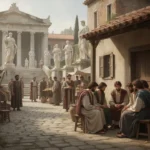
To understand the Revelation to Laodicea, it helps to know something about the city itself. Laodicea was a wealthy, thriving center in the Lycus Valley of Asia Minor (modern-day Turkey). It stood near the cities of Colossae and Hierapolis, and its prosperity came from banking, textile production (notably a distinctive black wool), and a strong commercial network. The city’s aqueduct and public works were admired in antiquity, yet the same wealth that signaled civic pride could also breed complacency in matters of faith.
The audience for Laodicea Revelation would have heard this message within a milieu familiar with a bustling economy, social status, and a public identity tied to reputation. The text is not simply a condemnation of material success; it is a call to examine whether wealth and prestige have replaced devotion, whether outward appearances mask inner need, and whether a community can remain faithful without compromising its spiritual clarity. In this sense, the Laodicean Revelation is both a historical artifact and a perennial warning.
Meaning and Core Message of the Laodicea Revelation
The central message of the Laodicea Revelation concerns spiritual temperature and authentic devotion. The imagery of being “lukewarm” is especially provocative: it conjures a state that is neither refreshing nor dangerous, but rather unpalatable and ineffective. The voice in Revelation 3 speaks with a mix of admonition and appeal, signaling that indifference toward God results in distance from grace even when outward prosperity remains intact.
Lukewarmness versus zeal: The phrase “neither cold nor hot” becomes a diagnostic for spiritual complacency rather than moral neutrality.
Self‑assessment and accountability: The call to self‑awareness is a recurring feature—to recognize one’s true condition apart from appearances.
Dependence on divine provision: The remedy centers on embracing what comes from God rather than what comes from wealth or status.
Repentance and renewal: The invitation is not merely a rebuke but an opening toward repentance that yields real change.
In the Laodicea Revelation, the Lord’s exhortation begins with awareness: “I know your deeds” (a refrain echoed across the seven letters) and continues with concrete prescriptions for spiritual recovery. The text emphasizes that genuine wealth, spiritual sight, and personal radiance come through God’s provision rather than human achievement. The contrast between the city’s material abundance and the church’s spiritual hunger lies at the heart of the passage’s meaning.
The Imagery of the Laodicea Revelation: What the Text Really Portrays
The imagery in the Revelation to Laodicea depends on familiar first‑century associations. The water supply in Laodicea itself came from two sources, and the contrast between hot and cold water in the region’s hydrology became a vivid picture for readers. Some scholars note that the image of lukewarm water would have resonated with an audience accustomed to thermal springs (hot) and pure mountain streams (cold). The lukewarm water associated with the city’s aqueducts would have tasted unpalatable and even caused stomach discomfort—an effective metaphor for spiritual unease.
Three core motifs in the Laodicean Revelation
Cold versus hot: The absence of either extreme signals a failure to provide refreshing truth (cold) or transformative heat (hot).
Wealth and clothing: The call to purchase white garments correlates with spiritual purity and identity, not merely with social status.
Eyesalve: The admonition to anoint the eyes with eye salve stands for spiritual discernment—seeing reality as God sees it.
The urgency of the Laodicea Revelation also lies in its closing promise: a divine invitation to open the door to Christ’s fellowship. The memorable line, “Behold, I stand at the door and knock,” is not only about an individual’s heart but about a community’s receptivity to divine life. When the door is opened, the promise is companionship and reciprocal blessing; when it remains closed, the heart risks spiritual stagnation. The Laodicean Revelation thus invites readers to reevaluate what they rely on and to realign their affections with divine purpose.
The Threefold Remedy in the Laodicea Revelation: Gold, Garments, and Sight
The Revelation to Laodicea presents a threefold remedy that has become a classic framework for spiritual renewal. Each element targets a fundamental deficiency that the text identifies in the church and, by extension, in individuals who identify with that church.
Gold refined by fire — This phrase invites believers to pursue genuine wealth that lasts beyond material abundance. It speaks to testing, refinement, and the trust that comes when faith proves itself under pressure. The idea is not rejection of wealth, but a redefinition of what constitutes true riches—trust in God’s provision, integrity, and a refined character that endures.
White garments — Clothing in biblical imagery often signifies identity and righteousness. The call to acquire white garments emphasizes holiness, purity, and the maintenance of garments that symbolize a restored standing before God. It counters the city’s reputation for luxury and invites a life marked by moral clarity and spiritual honesty.
Eye salve — Spiritual discernment is essential in navigating an era of competing voices. The eye salve represents the capacity to see truth clearly and to resist deception, distraction, and spiritual apathy. It is a gift that enables believers to distinguish what truly matters in God’s eyes.
For readers of the Laodicea Revelation, these three directives provide a practical template for renewal. They emphasize a shift from self‑reliance and social standing to a posture of dependence on divine grace, visible righteousness, and perceptive understanding of spiritual realities. The threefold remedy is not merely a personal checklist; it is a pathway back to intimate fellowship with Christ and meaningful participation in the life of the community of faith.
Meaning for Individuals and Churches: Why the Laodicea Revelation Matters Today
The enduring significance of this particular revelation—often titled Laodicea Revelation for contemporary readers—rests on its universal diagnostic: a faith that looks healthy on the surface can still be spiritually fragile if it lacks depth, dependence, and discipline. This remains a critical theme for personal devotion and congregational health alike. Across centuries, readers have found in the Laodicea message a mirror for the inner life: what we claim to possess, what truly sustains us, and how we respond when confronted with God’s corrective voice.
Self‑examination: Where do you place your ultimate trust—your finances, your status, your comfort—or your relationship with God?
Intentional renewal: Are you pursuing genuine spiritual riches that endure beyond circumstances?
Discernment: Do you have the eye salve to recognize what is spiritually true, even when it is hard to accept?
Church‑level implications in the broader discourse
Community accountability: A healthy church fosters accountability, transparency, and meaningful service that aligns with the gospel.
Balanced prosperity: Wealth and influence should be stewarded toward justice, mercy, and the flourishing of the vulnerable, not merely to display prestige.
Adherence to core faith: The Laodicea Revelation cautions against equating external success with divine favor; inner faithfulness remains essential.
End-Time Insights: How Scholars and Theologians View the Laodicea Revelation
The discussion of end‑time insights related to the Laodicea Revelation spans a spectrum of biblical interpretive approaches. While there is no single consensus about eschatological timelines, many readers find value in considering the Laodicean Revelation as a symbol with relevance for any era that faces the seductions of wealth, power, and complacency.
Historicist Framework: Some scholars view the seven messages, including the Laodicea note, as part of a historic sequence representing different eras of church history. In this view, Laodicea highlights the later stage of the church’s development, characterized by challenges of wealth, comfort, and moral compromise.
Futurist Perspective: Within futurist eschatology, Laodicea can symbolize a final generation before Christ’s return, marking a last‑day condition of faith that requires urgent repentance and renewal.
Idealist or Symbolic Approach: Many theologians treat the Laodicea Revelation as a timeless symbol of spiritual apathy that can emerge in any age. The emphasis is less on predicting events and more on aligning heart posture with God’s purposes.
Spiritual‑Practical Reading: A number of readers emphasize personal piety and communal renewal. They focus on the practical lessons—zeal, righteousness, and discernment—as timely prescriptions for churches that face cultural pressures.
It is important to recognize that each of these perspectives offers insights rather than a definitive forecast. The strength of the Laodicean revelation lies in its capacity to prompt self‑examination, to challenge complacency, and to encourage a recommitment to a living faith that is visible in love, justice, and humble dependence on God.
Intersecting themes with other biblical messages
Connection to the other six letters to the churches in Revelation emphasizes continuity: warnings against complacency, calls to endurance, and assurances of Christ’s presence amidst struggle.
Alignment with themes of purification, sanctification, and moral integrity that recur across both the Old and New Testaments.
The invitation to open the door to Christ echoes broader biblical invitations to repentance and intimate fellowship with the Creator.
Practical Applications: Living Out the Laodicea Revelation Today
For readers seeking to apply the lessons of the Laodicea Revelation in tangible, everyday ways, a number of steps can help cultivate a faith that remains robust under pressure, characterized by authentic devotion rather than mere appearance.
Steps to counter lukewarm faith
Engage in regular spiritual disciplines (prayer, Scripture, reflection) that invite God to shape the heart rather than simply regulate behavior.
Foster accountable relationships within a faith community—discipleship partnerships, mentorship, or small groups that encourage honesty and growth.
Align wealth with blessing by using resources to serve others, support justice initiatives, and invest in people rather than merely accumulating goods.
Develop discernment—cultivate the ability to distinguish genuine spiritual influence from worldly noise, informed by a steady diet of biblical teaching and wise counsel.
Communal strategies for churches labeled by the Laodicea Revelation
Promote authenticity by naming struggles openly, not merely projecting an image of success.
Prioritize mercy and service as expressions of faith that demonstrate the gospel’s transformative power.
Encourage ongoing repentance as a hopeful practice that invites ongoing renewal rather than a one‑time event.
Laodicea Revelation in Art, Culture, and Modern Discourse
The Laodicea Revelation has left a mark beyond academic commentary. In Christian art, literature, and popular discourse, the metaphor of “lukewarm” faith often serves as a reminder that spiritual vitality requires continual care. Contemporary discussions about spiritual vitality, church reform, and ethical leadership frequently return to the core questions raised by the Laodicean message: What does it mean to be faithful in a culture of abundance? How can a community maintain zeal for mission while navigating complexity and prosperity?
In cultural discussions, the Laodicea Revelation can be appropriated with care to describe situations where institutions appear outwardly prosperous yet lack inner life. The goal of such usage is not to shame but to invite transformation—an invitation that resonates with readers who recognize the risk of spiritual complacency in any era.
Conclusion: The Enduring Message of the Laodicea Revelation
The Laodicea Revelation remains a compelling invitation to examine where true wealth comes from, how one’s identity is shaped, and what it means to truly see and respond to God. The imagery of gold refined by fire, white garments, and eye salve offers a concise grammar for spiritual renewal: renewal comes not from outward displays of success but from a cultivated interior life shaped by grace, truth, and accountability. The call to hospitality, to openness to Christ’s drawing near, and to courage in repentance provides a timeless horizon for both individuals and faith communities.
Whether approached as a historical note, a symbolic emblem, or a practical counsel for faithfulness, the Laodicean Revelation invites believers to avoid both extremes—complacent luxury and cynicism—and to pursue a balanced, fervent, and discerning life in the presence of God. In this sense, the final message to the Laodicea church can be understood not only as a warning about a specific ancient city but as an ongoing invitation to align heart, mind, and deeds with the transformative power of the gospel.
As readers reflect on the meaning of Laodicea Revelation, they may find it helpful to consider questions such as: Am I allowing wealth, comfort, or social standing to shape my faith more than Scripture does? Do I cultivate true spiritual discernment, or am I vulnerable to the illusions of a prosperous age? Am I open to God’s knock at the door of my heart—and to the invitation to renewed fellowship with Christ and his people? Answering these questions in humility can yield a renewed life—one that embodies the hope and integrity the Laodicea Revelation seeks to awaken in every generation.










Leave a Reply