Overview of the miracle: the feeding of the five thousand
The event commonly labeled as the Feeding of the Five Thousand is one of the most cited narratives about Jesus’ compassion and divine provision. In the Gospel tradition, this episode unfolds when a large crowd trails Jesus to a secluded place near the Sea of Galilee. The crowd is hungry, the day is long, and the needs of the people are real. Against that backdrop, Jesus does more than simply supply food; he performs a transformative act that reveals something essential about who he is and what his mission entails. In the way it is reported—across the four Gospels—the miracle centers on a small, ordinary donation becoming an extraordinary outcome: a handful of loaves and fish become enough to feed thousands, with abundance left over. This dramatic moment is sometimes called the multiplication of loaves and fishes and is presented as both a display of power and a sign of God's gracious provision.
Scholars and readers often approach this story from two angles: first, a historical-literary lens that notes the narrative’s setting, sequence, and textual variants in the Synoptic Gospels and John; and second, a theological lens that asks what this event teaches about God, Jesus, and the human condition. Regardless of where one stands in the debate about interpretation, the core elements remain consistent: a crowd in need, a small act of sharing, an intervention by Jesus, and a response of gratitude, trust, and awe. As a title, you might see this episode called the miracle of feeding the crowd, the miracle of the loaves and fishes, or Jesus’ provision for hungry people. Each phrasing emphasizes a slightly different emphasis—miracle, abundance, and the motive of care.
The setting and the miracle in context
The narrative is set after a period of intense ministry. In Matthew, Mark, and Luke, Jesus withdraws with his disciples to a solitary place following the execution of John the Baptist and the demands of ministry that accompany his growing fame. The crowd discovers where he is, and, moved by compassion, Jesus welcomes them rather than sending them away. The lesson begins with a simple recognition: people have basic, practical needs—food, rest, safety—and those needs deserve attention.
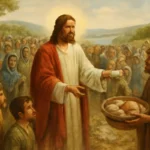
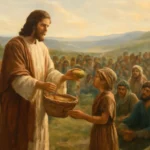
The details about the provision vary slightly between the gospels. In most versions, the crowd is described as “five thousand men,” though the accounts acknowledge that women and children were present as well, even if not counted in the numeric figure. The source of sustenance—a boy’s small gift of five barley loaves and two fish—is humble by any standard. Yet Jesus blesses, breaks, and distributes the food through his disciples, and everyone eats until they are satisfied. The result is not merely physical fullness; it is a sign that the reign of God is near, a tangible demonstration of divine provision in response to human need.
A distinctive feature across the Gospel accounts is how the distribution is organized. The people are arranged in groups—often described as “a multitude” seated in orderly fashion—before the food is shared. In some versions, the disciples are told to place the people in groups of fifty. This careful arrangement mirrors a broader biblical impulse: order and care in the midst of abundance, ensuring dignity for everyone gathered and a transparent, communal act of sharing.
How the story is told across the Gospels
The miracle appears in the Synoptic Gospels (Matthew, Mark, Luke) and is echoed in the Gospel of John with a slightly different emphasis. The core elements—crowd, scarcity, a small offering, blessing, multiplication, and leftovers—create a coherent picture that readers can recognize across the centuries. When you study the variations, you gain a fuller sense of how communities remembered this event and what each evangelist wanted to highlight.
Matthew 14:13-21 emphasizes Jesus’ compassion and the disciples’ practical concern for the crowd. The narrative closes with the statement that all ate and were satisfied, and the disciples gathered twelve baskets full of leftovers.
Mark 6:30-44 stresses the disciples’ initiative, Jesus’ compassionate response, and the miracle of multiplication that occurs after the instruction to give the people something to eat. The feeding is followed by a small-group departure and the sense of awe among onlookers.
Luke 9:10-17 situates the event in a broader arc of Jesus’ ministry, tying the miracle to early themes of apostolic mission and the nourishment that sustains disciples to continue their work.
John 6:1-14 foregrounds a dialogical dynamic: the crowd’s hunger leads to a teaching about true bread from heaven, and the feeding becomes a sign pointing toward Jesus as the Bread of Life. The emphasis shifts from the physical meal to a deeper spiritual message.
Across the variations, a consistent message emerges: God’s provision enters human need through humble means, and the response—gratitude, sharing, and faith—becomes a catalyst for a larger understanding of who Jesus is and what his mission entails.
Key symbols and meanings
Bread and fish: ordinary signs of life, extraordinary implications
The items that appear in the boy’s lunch—barely enough by ordinary standards—are transformed into a sign of abundance. In biblical symbolism, bread is life, sustenance, and a daily reminder of dependence on God. The miracle of bread and fish thus communicates more than a one-time meal; it points toward Jesus as the one who sustains life itself and invites the hungry into union with God’s own provision.
Five loaves, two fish: significance of scarcity becoming abundance
The specific numbers carry interpretive weight. The “five” and the “two” can be read as humble, human measures that do not by themselves promise much. Yet in the hands of Jesus, those measures become enough to feed a multitude. This is where the theme of divine abundance through human offering shines: God does not demand perfect resources to act; God accepts what is offered with faith and transforms it.
Leftovers and fullness: baskets full of excess
The followers collect twelve baskets of leftovers after everyone has eaten. The leftover imagery reinforces the idea that God’s provision does not merely meet minimal needs; it overflows beyond expected boundaries. The number of baskets, and the very act of collecting leftovers, also speaks to a future mission: the twelve baskets can be read as a sign of inclusion (the twelve tribes, the twelve apostles) and a reminder that the act of feeding has social and ecclesial dimensions—an invitation to carry the abundance into the world through witness and service.
Lessons for today: what this narrative can teach contemporary readers
The feeding miracle is timeless, and its lessons translate across cultures and generations. Here are several strands of meaning that readers often draw from the event:
Compassion in action: When people are in need, the ethical response is to act. Jesus’ response to the crowd is not merely theological reflection; it is a concrete act of care in a moment of hunger and fatigue.
Shared responsibility: The disciples organize, distribute, and participate in the feeding. Leadership and participation are bound together—people in authority must empower others, and those who receive help have a role in the process.
Trust in provision: The disciples initially worry about scarcity, asking if there is enough. Jesus teaches that God’s provision often comes through small, ordinary contributions that are blessed and multiplied.
Inclusivity and hospitality: The story welcomes a broad audience, including those who are often overlooked. The miracle is not limited to a single group; it invites the entire crowd into a shared experience of provision and belonging.
Sign toward the divine bread: In John’s gospel, the feeding redirects the crowd toward a deeper claim about Jesus as the Bread of Life, foreshadowing the spiritual sustenance that Jesus offers beyond the physical meal.
Gratitude and worship: The response to such a gift is often expressed in prayer, praise, and a broader commitment to imitate Jesus’ generosity in daily life.
Symbolic angles and theological significance
Beyond practical instruction, the story also holds symbolic weight in Christian theology. The bread motif recurs across the biblical narrative, culminating in ceremonial and sacramental contexts. The miracle narrative resonates with questions about how God relates to human need: does God respond to the world only with miraculous signs, or does God invite human participants to be co-workers in mercy? The answer, as suggested by the episode, is a combined one: God acts decisively through Jesus, while humans respond with trust, generosity, and collaborative action.
In the Gospel of John, the miracle becomes a pivot for a teaching about the true bread from heaven and the living bread that gives eternal life. While the Synoptic Gospels emphasize the logistical feat of feeding crowds, John invites readers to see the event as a theological gateway to a Christ-centered understanding of sustenance, faith, and eternal life. The varied emphases among the Gospels enhance the sense that this episode is foundational to how early Christians understood Jesus’ identity and mission.
Practical applications for faith communities and individuals
If you are part of a church, a charity, or a family seeking to translate this ancient story into present-day action, here are several practical applications inspired by the Feeding of the Five Thousand:
Honor the dignity of the hungry: Create or support food programs that respect recipients as full participants in the community. Avoid stigmatizing language and ensure safety and respect in distribution sites.
Encourage small gifts that become big: Like the boy’s lunch, everyday contributions—food drives, financial gifts, or volunteering—can be transformed into outcomes larger than their expected value when blessed and coordinated well.
Coordinate care in groups: Organize volunteers in teams, much like the groups of fifty in the narrative. Structured, inclusive planning leads to sustainable impact.
Link mercy to mission: Use distribution as an opportunity to share stories of hope, to invite conversation about justice and care, and to pivot from relief to ongoing community-building.
Integrate prayer and reflection: Begin with blessing and gratitude for what is given, and end with gratitude for the opportunity to serve others. Reflect on what the act teaches about dependence on God and the dignity of all people.
Teach bread as life: In Christian education, connect the feeding miracle to the broader teaching about Jesus as the Bread of Life. Help learners see how physical nourishment intersects with spiritual nourishment in the life of faith.
Was the act truly miraculous, or could it have been an efficient distribution of already available food?
The majority of Christian tradition treats this event as a genuine miracle—one that transcends human capacity and demonstrates divine intervention. Critics may ask whether it could be explained by an efficient distribution, miscounting, or social dynamics. The consensus among scholars who affirm the miracle emphasizes the intentional framing: Jesus blesses, breaks, and distributes, and the result is an outcome beyond ordinary arithmetic. The emphasis in the narrative is not solely on the number of people fed but on the revelation of who Jesus is and how God’s provision breaks into ordinary life in extraordinary ways.
How does this event relate to the Eucharist or other sacraments?
In Christian theology, many readers see a typological connection between this event and the Eucharist. The act of blessing, breaking, and sharing mirrors the rhythm of the Last Supper and the sacramental observances that follow in Christian practice. The bread imagery links the feeding of the five thousand to the sustaining nourishment believers receive through sacramental life and communal worship. While not all traditions interpret the link identically, the paired motifs of blessing, sharing, and nourishment consistently invite contemplation of spiritual sustenance as a gift from God.
Conclusion: the enduring significance of the miracle for today
The Feeding of the Five Thousand stands as a milestone in the gospel story, not merely for its dramatic demonstration of Jesus’ power but for its clear invitation to respond with faith, generosity, and communal care. It speaks to a God who notices the vulnerable and who acts through ordinary people to meet needs in tangible ways. In today’s world, where hunger and scarcity can feel persistent and overwhelming, the narrative offers a counter-narrative: abundance is possible where we begin with what we have, bless it, and distribute it with care. It challenges individuals and communities to move beyond mere sentiment toward practical action, sustained by gratitude and guided by a vision of inclusive generosity.
In sum, the modern reader encounters not only a historical miracle but a living invitation: to participate in God’s work of nourishment, to practice shared responsibility, and to see in every act of giving a glimpse of the kingdom Jesus announced. Whether one approaches this story as a historical memory, a theological symbol, or a spiritual mentor for daily living, the message remains clear: Jesus provides, and in that provision, a whole world is invited to feast on mercy, hope, and life.










Leave a Reply