What Will Happen When Jesus Returns: Signs, Timelines, and What to Expect
What Will Happen When Jesus Returns: Signs, Timelines, and What to Expect
What will happen when Jesus returns is a question that has shaped belief, hope, and ethical living for generations of Christians. In many traditions, this moment is described with titles such as the Parousia, the Second Coming, and the Day of the Lord. While the details differ across Christian communities, there is a shared anticipation of a decisive, transformative event that will bring history to its conclusion and inaugurate a new era. This article offers an informative overview of the signs that are believed to precede the return, the plausible timelines discussed within Christian scholarship, and a careful look at what believers can expect and how they should respond in the present. The aim is to help readers understand the conversation about Jesus’ return in a balanced and respectful way, recognizing both diversity of interpretation and shared convictions.
Understanding the Core Idea: The Parousia and the Second Coming
Across Christian traditions, the central event is understood as Jesus returning in glory to fulfill God’s purposes for creation. The terms Parousia (a Greek term often translated as presence or arrival) and Second Coming denote the moment when Christ reappears in a visible, public way. Some traditions emphasize the cosmic scale of the event, with all of creation bearing witness, while others highlight a more local or spiritual dimension. Across these views, several common threads persist: the return is an act of the triumphant consolidation of God’s rule, the vindication of the righteous, and the final defeat of evil. The language used to describe this moment is melodious and varied, but the ending is consistently portrayed as transformative rather than merely episodic.
Key terms and distinctions
Parousia: often used to describe the arrival or official manifestation of Christ’s presence and authority at the end of the age.
Second Coming: a widely used shorthand for Jesus’ future, public return to judge and renew all things.
Day of the Lord: a biblical term that connotes a time of divine intervention, judgment, and delivery of justice.
Resurrection: the rising of the dead, both righteous and wicked, which occurs in the eschatological timeline in many traditions.
Judgment: the decisive evaluation of humanity, leading to eternal outcomes for individuals and communities.
New heavens and new earth: the ultimate renewal of creation following the defeat of evil and the establishment of God’s kingdom.
Signs and Indicators: What Many Traditions Expect Before the Return
Debates about signs blend scriptural interpretation with historical observation. While no single sign guarantees the imminent arrival of Christ, many readers look for a constellation of indicators that the end of the present order is approaching. It is important to note that different Christian communities emphasize different signs, and some describe them in symbolic rather than purely literal terms. Below is a synthesis of the kinds of signs commonly discussed in Christian teaching.
Cosmic and natural signs
Cosmic disturbances and unusual celestial events are often described as omens or indicators that something extraordinary is unfolding in God’s plan.
Increasing instances of natural disasters, climate upheaval, and environmental strain are sometimes interpreted as the earth groaning under the weight of sin and the longing for renewal.
Unusual astronomical alignments or phenomena are sometimes cited in traditional literature as symbolic of a turning point in the divine timetable.
Religious and moral indicators
Global proclamation of the gospel—the idea that the message about Jesus will be widely known and accessible across nations and cultures.
Widespread deception and the rise of false prophets—a warning often connected to end-times teaching about spiritual error and seduction.
Escalating persecution of believers or social pressure against faith communities as the world grapples with truth claims about Jesus.
Increased spiritual conflict and moral confusion, with people debating identity, truth, and authority at accelerating rates.
Social, political, and global dynamics
Shifts in political power, alliances, and global conflict can be read by some as part of a larger eschatological narrative, though many Christian thinkers caution against tying revelation too tightly to current events.
Growing fragmentation within humanity regarding ethics, justice, and mercy, along with renewed interest in justice and mercy, can be seen as signs that humanity is wrestling with profound questions about meaning and authority.
The strengthening of a universal or near-universal sense of accountability before a transcendent standard, sometimes expressed as a global sense of judgment or rectification.
As readers weigh these signs, it is essential to maintain humility and interpretive charity. Most Christian traditions insist that signs should never be treated as precise dates or timelines, but rather as indicators that invite watchfulness, repentance, and hopeful perseverance.
Timelines and Predictions: Can We Know When He Will Return?
A central question in Christian eschatology is whether the timing of Jesus’ return can be known in advance. The New Testament itself offers a nuanced stance. The Gospel writers and apostolic letters repeatedly urge readiness, but they also caution against calculating the exact moment of the event. In particular, the saying often quoted is that “no one knows the day or the hour”—a reminder that the timing remains in God’s sovereign wisdom rather than human planning.
Amillennial and many symbolic readings often interpret the “thousand years” as a symbolic period rather than a literal future chronology, emphasizing the ongoing, spiritual reign of Christ in the present age while awaiting the final culmination.
Premillennial readings tend to anticipate a future, literal thousand-year reign of Christ on earth following his return, with varying views on when tribulation occurs relative to the ascent.
Postmillennial perspectives typically view the church’s mission as progressively advancing God’s kingdom until a dramatic culmination at the return of Christ.
Across these streams, many theologians stress that any definitive timeline—such as “this generation” or “in the next century”—is not a reliable method for predicting the exact moment of Jesus’ return.
Practical implications of timing debates
Readers are encouraged to focus on faithfulness, hope, and generosity rather than speculation about dates.
The emphasis often falls on readiness and discernment: living with integrity, pursuing justice, and cultivating a life oriented toward God’s purposes.
Communities may cultivate diverse theological frameworks while maintaining shared commitments to love for neighbor, mercy, and stewardship of creation.
The Event Itself: What Will Happen When Jesus Returns
Descriptions of the moment of return and its aftermath are among the richest and most debated portions of Christian eschatology. Across traditions, certain core events are frequently highlighted as the essential sequence. The following overview presents a composite picture that respects the variety of interpretations while outlining the major milestones commonly discussed in Christian teaching.
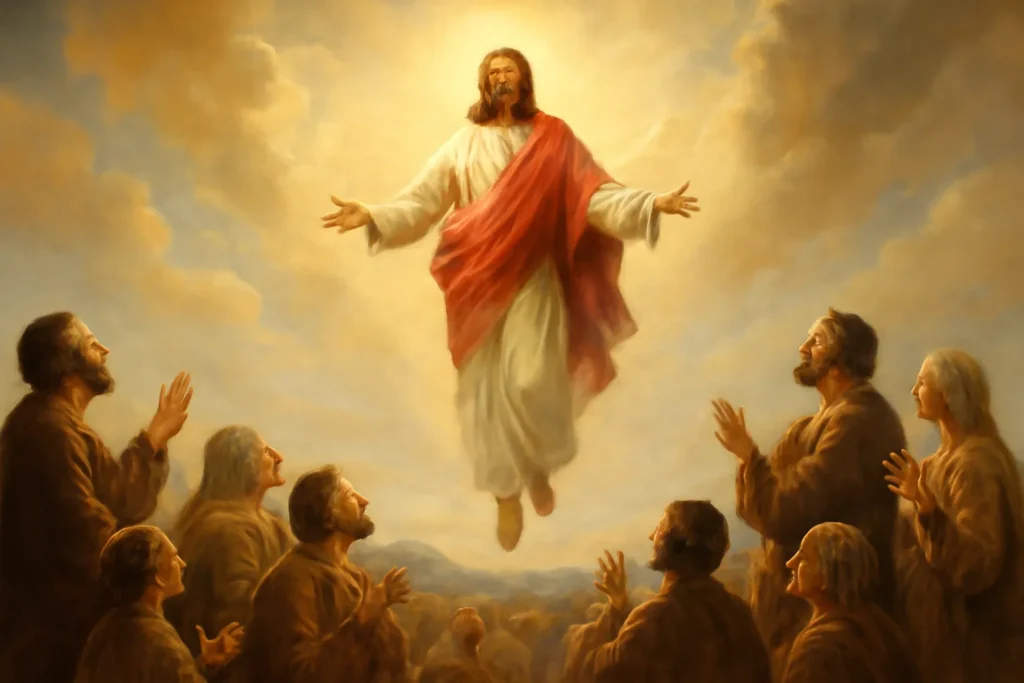
The Return in Glory: Jesus is described as coming with visible glory and with angelic assistance. This is often portrayed as a universal, unmistakable event that will reveal Christ’s authority to all people. Believers and non-believers alike will observe his arrival, and the event is portrayed as a decisive intervention in history.
Resurrection and Transformation: The dead in Christ are raised, and living believers are transformed in an instant. This transformation is described as an instant, glorious change that secures the ultimate continuity of personal identity with a renewed, perfected form fit for eternal life.
Judgment: A universal judgment follows, in which individuals are judged based on their deeds, faith, and response to God’s grace. This judgment is often linked to the separation of those who belong to God’s eternal family from those who do not, with consequences that align with the moral order of creation.
Defeat of Evil: Satan and all systemic evil are decisively defeated. Some traditions speak of Satan’s removal or binding in a way that limits his influence for a season, while others describe a more definitive removal from the created order.
Establishment of the Kingdom: God’s reign is inaugurated in a public, universal, and righteous way. Jesus rules as mediator and King, bringing justice, peace, and harmony to every corner of creation.
New Creation: The old order passes away, and a new heavens and a new earth emerge. Pain, death, and sorrow are removed, and life in its fullness is realized in fellowship with God and one another.
Within this sequence, it is common to hear discussions about a gospel-centered hope: that the return is not merely an end, but the fulfillment of God’s plan to restore all things. This offers comfort to believers who endure hardship and motivation to live for what endures beyond the present age.
What to Expect for Believers: Readiness, Transformation, and Purpose
For those who follow Jesus, the return is experienced as a culmination of trust and a fulfillment of promise. While the exact timing remains unknown, Christians often reflect on how to live in light of this expectation. The following themes are central to the practical life of faith in anticipation of the end of the present age.
Faith and repentance: A genuine turning toward God, embracing grace through faith, and a commitment to align one’s life with Jesus’ teachings.
Hope in Christ: A cultivated hope that sustains endurance under trial and motivates mission and mercy in daily life.
Humility and teachability: Recognizing human limits and seeking wisdom through Scripture, prayer, and community.
Ethical living and service
Love of neighbor: Acting with justice, mercy, and kindness toward others, especially the vulnerable and marginalized.
Stewardship: Caring for creation, resources, and relationships as a reflection of God’s care for all things.
Peace and reconciliation: Pursuing reconciliation in personal relationships and in wider social contexts.
A life of worship and mission
Worship that centers on God’s glory, gospel grace, and the beauty of holiness.
Participation in the mission of sharing good news, both through words and deeds, so that people from every tribe and nation may know the grace of Christ.
Spiritual disciplines that sustain faith, such as prayer, Scripture reading, corporate worship, and acts of mercy.
Readers are encouraged to view these practices not as a checklist for earning salvation, but as a coherent way of living in hopeful readiness for the moment when Christ returns.
Theological Variants and Interpretive Lenses
Scholars and lay readers alike recognize that interpretations of end-times events vary widely. These differences are not simply academic; they shape how communities understand moral responsibility, the role of the church, and expectations for political or cultural engagement. Several major frames deserve attention:
Premillennial, Amillennial, and Postmillennial views
Premillennial vantage points typically anticipate a literal 1,000-year reign of Christ on earth after his return, with a distinct sequence of tribulation, rapture, and millennial rule in some versions.
Amillennial interpretations often view the “thousand years” as symbolic of the present era in which Christ reigns from heaven through the Spirit and the church, with the final consummation occurring at the end of the present age.
Postmillennial perspectives emphasize that the gospel will progressively transform society, culminating in Christ’s return after a period of sustained, triumphal Christian influence on culture and institutions.
It is important to approach these frames with charity, recognizing that believers may affirm different sequences while sharing core convictions about the nature of Christ’s return, judgment, and the hope of new creation.
Common Questions About the Return
What will be visible to all people?
Most traditions affirm that the return of Jesus will be publicly visible and undeniable, not a private event. The imagery often used is that of a “visible appearing” with glory, accompanied by the holy angels, and witnessed by humanity at large.
Does the church replace Israel in these prophecies?
This is a longstanding and debated topic. Different traditions hold varying views about the relationship between the church and Israel in eschatology. Some see continuity, others a reinterpretation in light of the gospel, and still others hold a more symbolic reading. The common ground is a shared expectation that God remains faithful to his promises and that all nations will be blessed through Christ.
Many Christians affirm that the church’s mission—proclaiming the gospel, embodying mercy, and pursuing justice—continues into the eschaton. The return is not only a cosmic event; it is also a moment that tests and confirms the fidelity of communities who have been faithful witnesses to the gospel.
Preparing Now: How to Live with End-Time Hope
Believers are called to a life that harmonizes hopeful anticipation with daily faithfulness. The end is not only an event to be awaited; it is a call to shape the present moment with courage, compassion, and integrity. Practical disciplines help nurture this readiness:
Love and mercy in tangible acts of service to the poor, the marginalized, and the hurting.
Truth and discernment in an age of information overload, seeking guidance from Scripture, tradition, and wise counsel.
Justice and reconciliation as ongoing commitments in personal relationships and in society.
Hopeful worship that centers on God’s character, promises, and the coming renewal of all things.
Living with these commitments is a way of honoring the reality of the return while remaining productive and compassionate in this life. The goal is not fear or fascination with speculative timelines, but steadfast faith that aligns with the message of reconciliation through Jesus.
Across Christian communities, the question of what will happen when Jesus returns remains a powerful motivator for spiritual formation, ethical living, and hopeful mission. While the exact sequence and timing may differ among traditions, the shared core conviction is that Christ will return to complete what God has begun in creation: the defeat of evil, the vindication of the righteous, and the renewal of all things. In this light, readers are invited to cultivate a life marked by faith, hope, and love, to engage the world with justice and mercy, and to live in a posture of readiness that is sure of the promise but wary of presuming on the timing. The return, when it comes, will be the moment when God’s purposes for the cosmos are decisively realized, and all creation is drawn into the joyful, eternal reign of Jesus the Christ.









Leave a Reply