He Heals All Our Diseases: Understanding the Biblical Promise of Healing
Healing is one of the most enduring themes in Scripture, woven into stories of individual deliverance, national renewal, and cosmic restoration. The phrase “he heals all our diseases”—in various forms and linguistic expressions—appears as a gracious declaration about God’s care for his people. This article offers an in-depth exploration of that promise, tracing its biblical roots, examining its scope, and considering how it speaks to believers today. We will move beyond a simplistic interpretation and consider physical healing, spiritual renewal, emotional wholeness, and communal restoration as parts of a broader divine healing work. Throughout, we will use variations of the phrase to reflect the breadth of biblical language while highlighting the central claim: the God who creates, redeems, and sustains is a healer who invites faith, trust, and participation in his life-giving work.
What the Bible Means by Healing
When Christians encounter the biblical claim that God heals all our diseases, they encounter a layered vision. Healing is not merely the absence of illness but the restoration of life as God intends it: restored relationships with him, renewed bodies, renewed minds, and a renewed social order that reflects his kingdom. In Scripture, healing often unfolds in several overlapping dimensions:
Physical healing: relief from illness, injury, and bodily weakness (as seen in miracles and prophecies).
Spiritual healing: forgiveness of sins, reconciliation with God, and renewed worship and devotion.
Emotional and relational healing: peace in the heart, restoration of broken relationships, and the rebuilding of communities.
Cosmic or eschatological healing: the future fullness of life when all things are made new.
In the broad biblical narrative, healing often appears as a sign of God’s kingdom breaking into the present age. It is not simply a private blessing but a public declaration that the Lord reigns and that his restoration is available to all who seek him. The language of healing then becomes a catechetical tool, guiding readers toward trust in God’s character and persistence in prayer, while also calling the church to embody mercy, medical wisdom, and compassionate care.
Key Biblical Texts About Healing
Several passages stand out for their enduring witness to God’s healing power. Below are representative verses and short reflections on how they contribute to the portrait of God as healer. These texts use variations of the healing idea and reinforce the permanence of God’s care across covenants and generations.
Psalm 103:3 and the Healing-Pardon Connection
One of the clearest statements about healing within a larger context of God’s mercy is found in Psalm 103. The Psalmist proclaims, “who forgives all your sins and heals all your diseases” (Psalm 103:3, NIV). The pairing of forgiveness and healing underlines an integrated view of salvation: God’s saving action covers both the guilt of sin and the brokenness brought on by illness. The phrase “heals all your diseases” here signals a total scope of divine care, which includes bodily ailment as well as spiritual need. Interpreters often stress that healing in this psalm points to God’s gracious initiative and his readiness to restore the whole person, not merely the outward conditions of life.
Isaiah 53:5 and the Suffering-Servant Context
Isaiah 53:5 is one of the most cited healing-associated texts in Christian theology. It speaks of the Servant who “by his wounds we are healed” (ESV). This verse anchors healing in the atoning work of Christ. In this perspective, God’s healing power is mediated through the cross, turning suffering into an avenue for grace, redemption, and ultimate restoration. The passage invites readers to interpret healing not only as relief from physical pain but as a salvific work that touches the deepest dimensions of human life—sin, guilt, shame, and the estrangement from God that illness often amplifies. The promise expands from a personal miracle to a cosmic reconciliation that begins in the present and culminates in God’s renewing across all creation.
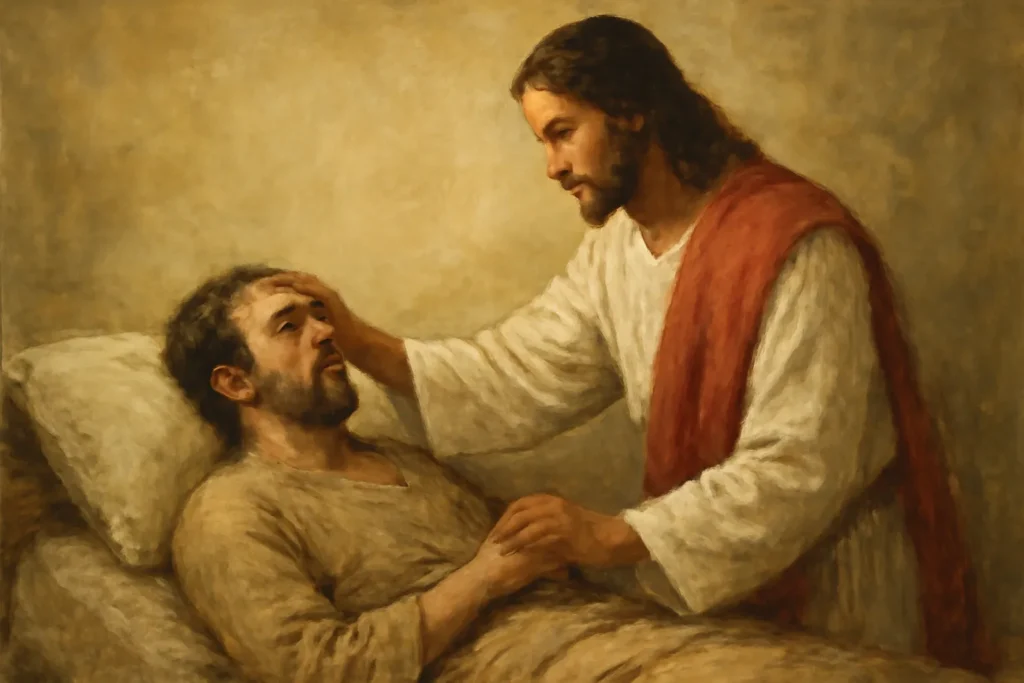
In the Gospel of Matthew, Jesus’ healing ministry is summarized with an explicit reference to Isaiah’s prophecy: Jesus “took up our infirmities and bore our diseases” (Matthew 8:17). This linkage between Jesus’ miracles and prophetic scripture presents healing as a sign of the Messiah’s arrival and a key component of the inauguration of the kingdom. The Gospel writer presents healings as demonstrations of power and compassion, while also tying them to the broader narrative of suffering and salvation. The emphasis is not merely on the occurrence of healings but on their meaning: Jesus is the divine actor who defeats the forces of illness and enables people to live under God’s reign.
1 Peter 2:24 and the Sufferer’s Union with Christ
In the New Testament epistles, healing language often intersects with vicarious suffering. In 1 Peter 2:24, the author writes that Christ “bore our sins in his body on the tree, that we might die to sins and live for righteousness; by his wounds you have been healed” (NIV). This text reinforces the idea that healing includes a redemptive transformation that begins at the cross and continues through the believer’s life. It also invites readers to interpret physical healing within the broader framework of spiritual renewal: salvation, sanctification, and the transformation of the whole person are tightly linked to Christ’s redemptive work.
James 5:14–16 and the Church’s Prayerful Healing Community
The Epistle of James provides practical instruction on community-based healing: “Is anyone among you sick? Let them call the elders of the church to pray over them and anoint them with oil in the name of the Lord”, and “the prayer offered in faith will make the sick person well” (James 5:14–15, NIV). This passage emphasizes the communal dimension of healing, the role of prayer, and the humility of patient care. It also highlights that healing may take different shapes—immediate restoration, gradual improvement, or steadfast perseverance through illness. The broader exhortation to confess sins and pray for one another adds a moral and relational layer to healing, suggesting that restoration often requires confession, accountability, and mutual care.
Exodus 15:26 and the Lord as Healer in Covenant Faith
In Exodus, God identifies himself as the one who “will not bring on you any of the diseases I have brought on the Egyptians; for I am the Lord, who heals you” (Exodus 15:26, NIV). This declaration situates healing within covenant faithfulness. It invites readers to trust the Lord as the one who sustains health and empowers the people to live in alignment with his life-giving commands. While the Old Testament emphasizes covenantal expectations, the underlying pattern points toward a God who cares for his people’s physical and spiritual well-being and who invites them to seek him with faith and obedience.
The Scope of Healing in Biblical Theology
Healing in the Bible is not a one-note phenomenon. It encompasses multiple dimensions that are often interdependent. Understanding the full scope helps readers avoid reducing healing to a single type of miracle or to a purely therapeutic aim. Here are some dimensions to consider:
Physical healing as a real and tangible deliverance from illness, pain, and disability.
Spiritual healing as forgiveness, new life, and restored relationship with God.
Emotional healing as peace, resilience, and the renewal of hope in the face of suffering.
Communal healing as restoration of trust, justice, and social harmony within communities.
Cosmic healing as the ultimate renewal of all things in the renewed creation.
Different Christian traditions emphasize different facets of this spectrum. Some stress the immediacy and visibility of physical miracles; others highlight the subtle, ongoing work of God through ordinary means—medicine, therapy, and supportive relationships—paired with unwavering faith. A balanced view honors both the extraordinary and the ordinary ways God works to bring healing to his people.
Various theological frameworks offer distinct lenses for interpreting the biblical promises of healing. Reading these perspectives side by side helps believers think faithfully and charitably about God’s methods, timing, and purposes in healing.
Healing as Covenant Faithfulness
From the Old Testament forward, healing is often tied to God’s covenant faithfulness. When the people live in alignment with God’s commands and trust his character, healing becomes a tangible sign of the covenant’s blessings. In this framework, healing is not automatic or mechanical; it is relational. The healer is God, and the pathways to healing include worship, obedience, and faithful response to God’s call to mercy and justice. In this sense, the healing promise is also a summons to trust and a call to participate in the work of restoration in the world.
Healing and Redemption in Christ
With the arrival of Jesus, healing takes on a new depth within the gospel. Physical healings accompany proclamation of the kingdom, and the cross becomes the comprehensive means by which healing is secured for humanity. The sentence “by his wounds you have been healed” reorients understanding from a purely clinical model to a salvific framework. Jesus’ healings are signs that point beyond themselves to the ultimate healing and restoration that God will accomplish in the new creation. The church is thus invited to participate in that healing work, bearing witness to God’s mercy in word and deed.
Practical Faith and Medical Wisdom
Another important perspective emphasizes the harmony between faith and medicine. The Bible does not present healing as anti-science; rather, it invites believers to trust God while also using the gifts and practices of medical science. Faith that seeks wisdom is a repeated biblical theme: praying with confidence, seeking competent medical care, and making wise lifestyle choices. In this view, healing often arrives through a combination of divine grace and human responsibility—prayer, discernment, and practical care working together.
Believers who carry the longing for healing can adopt a holistic approach that honors both prayer and practical action. The following steps are offered as a compassionate guide rather than a formula. They reflect biblical teaching about faith, community, and medical stewardship.
Pray with faith and discernment. Engage in sincere prayer, expressing both trust in God’s goodness and honest questions about the illness. Ask for wisdom regarding treatment options, comfort, and endurance through pain. Consider scriptural prayers that acknowledge God’s sovereignty while expressing deep need.
Seek competent medical care. Do not hesitate to pursue medical evaluation, diagnosis, and treatment. The Bible commends wise stewardship of the body and the use of available means to care for health. View medical professionals as part of God’s provision for healing, not as rivals to faith.
Invite the community into the journey. James 5 centers on communal prayer and support. Reach out to trusted friends, family, and church communities who can pray with you, fast with you, and provide practical help during illness.
Engage in confession and reconciliation where needed. If illness is tied to unresolved guilt, relational brokenness, or sin, address these aspects in a humble, pastoral process. Healing often travels with reconciliation and cleansing of the heart before God.
Maintain spiritual disciplines. Reading Scripture, worship, and contemplative practices can sustain hope and faith. Remember that healing encompasses more than the body; it includes the renewal of the heart and mind.
Discern God’s timing and means. Healing may come suddenly, gradually, or may involve enduring through ongoing illness. The important thing is faithfulness and trust in God’s purposes, even when the path remains unclear.
Hold to the broader hope of ultimate restoration. Even when immediate healing is not evident, the biblical narrative points toward the day when God will wipe away every tear and renew all things (Revelation 21:4). This eschatological hope sustains perseverance and courage in present suffering.
Common Questions About Healing
Many readers have questions about how healing works in the modern world. Here are some frequently asked questions, with concise theological reflections to encourage careful, compassionate engagement.
Does God heal everyone in this life?
In Scripture, healing is often promised and practiced, but not always in the way human expectations might demand. Some people experience immediate healing, others endure illness with grace, and some receive healing through the ultimate renewal in the age to come. The consistent biblical refrain is that God is present with his people in suffering and powerfully at work to restore.
Why doesn’t God always provide physical healing?
There are various interpretive perspectives. Some point to mystery in God’s providence, others to the missing element of faith in the recipient, community support, or spiritual formation through suffering. The overarching biblical pattern is that God’s love, mercy, and faithfulness persist even when healing seems delayed or different than expected.
How should a believer respond when healing seems delayed?
Respond with faithful perseverance, prayer, and practical care. Seek wise counsel, cultivate hope, and stay connected to a community that supports healing in all its dimensions. Delayed healing can become an occasion for deeper trust and for witnessing to others about God’s steadfast love.
What is the relationship between healing and salvation?
Healing is part of God’s redemptive work, yet salvation encompasses the entire person—body, soul, and relationships. Some scriptures link healing to forgiveness and transformation that leads to righteousness, while others describe physical deliverance as a sign of divine mercy. Both strands point to the same God who heals and saves in fullness.
Is medical treatment a sin if I pray for healing?
No. The biblical pattern often celebrates the use of sensible means to care for health, including medicine and professional care. Faith and medicine can cooperate harmoniously. Prayer affirms dependence on God while medicine provides tools for healing.
In light of biblical teaching, churches and individuals can cultivate a posture of hopeful realism: we trust the Lord who heals and seek to be vessels of mercy in the world. By embracing the full spectrum of healing—physical, spiritual, emotional, relational, and cosmic—we acknowledge that God’s care is comprehensive. The healing promise is not a guarantee of immediate relief in every case, but it is a steadfast invitation to trust, to pray boldly, and to work for restoration in concrete ways. In this light, believers can cultivate:
Compassionate care that attends to physical needs and affirms the dignity of every person.
Hope-filled endurance that carries believers through long seasons of illness with the confidence that God’s purposes are at work.
Faith-informed action that blends prayer with prudent medical care, healthy living, and wise counsel.
Community witness by demonstrating grace, hospitality, and mercy to those who suffer.
A Final Reflection: The Healer Who Draws Near
Ultimately, the biblical claim that God heals all our diseases (in its various expressions) points us to a living, personal God who draws near to his people in weakness, sustains them in trial, and invites them into a broader story of restoration. It is a promise that integrates the present with the future: in Jesus, healing enters history; in the church, healing is enacted through acts of mercy and the care we extend to one another; in the eschaton, healing reaches its culmination in the renewal of all things. The biblical vision is not merely about flipping a switch of health but about participating in God’s ongoing redemptive work—a work that binds together body, soul, and society under the lordship of Christ. In this sense, the divine healer remains at work today, inviting believers to trust him, to pursue wisdom, and to partner with him in showing mercy to the afflicted.
Conclusion: Embracing the Promise with Wisdom and Compassion
The phrase “he heals all our diseases”—in its many manifestations across the Bible—offers both comfort and challenge. It reassures us that God’s care extends to every facet of human life and invites us into a life of faith that is active, hopeful, and socially engaged. As you reflect on this promise, consider the following balanced takeaway:
God’s healing encompasses more than physical relief; it includes spiritual renewal, emotional wholeness, and communal restoration.
Healing comes through faith, prayer, and practical wisdom; they operate in concert, not in opposition.
Healing is a missional invitation; it calls Christians to embody mercy, pursue justice, and care for the vulnerable with humility and courage.
Ultimate healing points to the coming restoration; even in present suffering, the hope of a new creation sustains faith and anchors hope in God’s fidelity.
In the end, the Bible’s healing promise is a portrait of a God who is present with his people in every season of life. Whether seen as a direct miracle, a gradual restoration, or the ultimate renewal at the end of the age, the assurance remains: God is the healer who meets us in our needs, invites us to turn to him in faith, and empowers us to become agents of healing in a hurting world. As you walk in trust, may you experience the truth that the Lord heals all our diseases, in whatever form that healing takes, for his glory and for the good of his people.










Leave a Reply