The question “Is God coming back soon?” sits at the intersection of faith, prophecy, and personal hope. Across cultures, communities, and centuries, people have asked whether a divine return is imminent, and if so, what it would look like. This article surveys the topic with care, presenting the range of beliefs, the kinds of signs that believers look for, the various timelines that have been proposed, and the broader implications for ethics, worship, and daily life. While a precise date or moment is never verifiable from a secular vantage point, the conversation around God’s return, the Second Coming, or parousia has shaped art, scripture interpretation, politics, and personal conduct for generations. The aim here is to illuminate the landscape rather than to endorse a single forecast.
What the Phrase Means Across Traditions
Different faith traditions speak about a divine return in distinct terms. Understanding these variations helps clarify why people say “God will come again” or “the Messiah is coming back” in different ways.
Christian perspectives
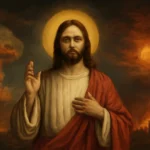
In many Christian traditions, the refrain “the Second Coming of Christ” is a central eschatological belief. Christians often distinguish between the first coming of Jesus, his life and death, and a future return that will complete God’s plan for creation. Typical features of this belief include:
The appearance of Jesus Christ in glory, witnessed by all peoples.
A final judgment in which humanity is weighed by its deeds and faith.
The restoration of creation, the defeat of evil, and the establishment of God’s rule.
Interpretive emphasis varies widely by tradition—some read prophecies as past events fulfilled in history, others as future events awaiting realization.
Within Christianity, there are notable variants regarding timing and sequence. Some groups emphasize a pre-tribulation, mid-tribulation, or post-tribulation approach to the events surrounding the return. Others focus on moral readiness and ongoing mission rather than predicting a specific moment. A common thread across many Christian communities is the expectation that the return of Christ will be universal, transformative, and final.
Islamic perspectives
In Islam, the concept that mirrors a return is tied to the figure of the Mahdi and the return of Isa (Jesus) in the end times. Muslims do not describe a single “second coming” of God, but rather a dramatic culmination in which Jesus descends to restore justice, defeat falsehood, and usher in a period of peace aligned with divine will. Key ideas include:
A period of widespread trial and moral testing before the end of days.
The rise of a righteous leader (the Mahdi) who will guide humanity in unity and justice.
The return of Jesus to break crosses, abolish certain traditions, and affirm the oneness of God.
In Islamic discourse, the precise timing of these events is generally considered unknowable to humans, and emphasis is placed on steadfast faith, prayer, and justice in the present life.
Judaism and messianic expectations
Judaism presents a spectrum of beliefs about the Messiah (mashiach) and the possibility of a future era of peace and divine presence on earth. Distinctions exist between:
Messianic figures who may inaugurate the messianic age.
Rabbinate-based interpretations that focus on moral improvement, renewal of the Temple, and global justice.
Different timelines—some traditions anticipate a historical, visible leader, others emphasize ongoing ethical transformation without a fixed date.
Judaism tends to stress human responsibility in the present age—repairing the world (tikkun olam) and aligning daily life with divine will—even while awaiting a future realization of messianic hopes. The language is often less about a dramatic arrival and more about a transformative era that follows particular signs and collective moral renewal.
Other traditions and broader eschatologies
Beyond the three Abrahamic traditions, various faiths and secular reflections propose different versions of a future culmination or renewal. Some Eastern traditions speak of cycles of time, avatars, or cosmic eras in which divine presence becomes more accessible or manifest. Buddhist and Hindu thought, for example, contains ideas about epochs, prophecies, or new cycles of the universe in which spiritual awakening or divine action may unfold, though these are not framed as a single, universally anticipated return of a monotheistic God. In secular and philosophical contexts, people may reinterpret the question as a metaphor for human progress, moral awakening, or the urgent task of addressing injustice and suffering in the here-and-now.
Signs People Look For
What counts as a sign of the times varies widely. Across traditions, a few broad categories recur: natural events, moral and social indicators, political shifts, and prophetic or scriptural cues. It is important to recognize that signs can be interpreted in multiple ways, and many have historical precedents long before any contemporary announcements.
Natural and cosmic signs
Earthquakes, famines, pandemics, and other disasters that prompt reflection on human vulnerability.
Astrological or astronomical phenomena that some interpret as omens or signals.
Environmental degradation and the call to stewardship as a catalyst for reform.
Moral and societal indicators
Widespread injustice, poverty, and violence as evidence of a broken world in need of repair.
Growing awareness of human rights, climate justice, and compassion across cultures.
Religious pluralism and interfaith dialogue as signs of a globalized era in which spiritual questions become more universal.
Prophetic and scriptural cues
Quotations and prophecies cited from scripture, often reinterpreted to fit current events.
Exegesis that links historical patterns to anticipated outcomes, with varying degrees of certainty.
Ritual and liturgical renewals that emphasize return, renewal, or cleansing as a preparation for a future era.
Readers should approach such signs with care, recognizing that many events can be interpreted through multiple lenses. Discerning signs often reveals more about the interpreter’s framework than about an objective timetable. For this reason, many communities emphasize spiritual readiness—cultivating virtue, charity, humility, and mercy—over fixation on an exact moment of fulfillment.
Timelines and Predictive Attempts
Timelines associated with the return of God or the Messiah have appeared in various forms throughout history. Some have been precise to the day, others general to an era. Most mainstream traditions encourage skepticism about exact dates, noting that the divine calendar is not revealed to ordinary humans. Here is how timelines have been discussed and challenged across time.
Early Christian communities experimented with signs and dates based on biblical chronology, sometimes predicting an imminent return that did not occur, which led to clarifications about the nature of prophetic time.
Medieval and early modern scholars used chronologies to link events in world history with scriptural expectations, often dating the culmination to the present generation or a specific century.
In the modern era, various groups have published precise dates (e.g., the turn of a century, a specific year), only to find that events moved forward without the anticipated culmination.
Why precise dating is controversial
Most religious authorities caution against fixed dates, arguing that prophetic timing is not for humans to decide.
Many predictions have harmed communities by fueling fear, division, or coercive behavior—leading to a preference for ethical living over eschatological forecasting.
The hermeneutical challenge: texts that speak about the end time often use symbolic language, metaphors, and numerology, making straightforward dating unreliable.
Because of these complexities, many theologians advocate for a posture of watchful faith rather than a countdown. The question “when will God return?” is reframed as “how shall we live now?” and “what justice can we pursue today?”
Beliefs and Doctrines about the Return
To understand God’s return in a robust way, it helps to summarize how major traditions frame the idea, including the aims, the conditions, and the ethical stakes involved.
Christianities and their emphases
Across Christian denominations, there is broad agreement that the Second Coming will be a decisive, public act of God in history. Areas of variation include:
Whether Christ’s return is preceded by tribulation, and what form that tribulation might take.
Whether a rapture is a separate event or a subset of the overall Second Coming.
How to interpret revealed scripture—whether apocalyptic literature is primarily symbolic, historical, or prophetic of future events.
Despite differences, many Christians anchor their hope in the belief that God will redeem creation and establish a just reign where suffering ends and peace endures.
Muslim eschatology in brief
In Islam, the eschatological horizon is not framed as God returning in the same way as in Christian discourse, but as a sequence of events culminating in ultimate accountability and divine justice. Important points include:
The appearance of the Mahdi and the descent of Jesus as a sign of final victory of truth over falsehood.
A period of widespread trial that tests faith and virtue in the absence of visible prophets.
A final judgment and the restoration of divine order according to God’s wisdom.
Judaism and messianic expectation in context
Judaism traditionally refrains from pinpointing a calendar date for the arrival of the Messiah. Instead, it emphasizes the moral and societal transformation that would accompany a messianic era, including:
Peace among nations, justice, and a renewed relationship with God.
The rebuilding of the Temple in Jerusalem and a deeper ethical alignment with divine commandments.
A focus on communal repentance, acts of charity, and repair of the world as preparation for a future renewal.
Other traditions and approaches
Some religious communities emphasize a continuous, ongoing divine presence rather than a sudden return. In these views, “God coming back soon” translates into reforms in human hearts, social structures, and global harmony. Secular perspectives may reframe the term as a symbolic turning point—an era of awakening or a collective decision to pursue justice and compassion with heightened urgency.
What does the possibility of God’s return imply for believers today? A number of ethical and spiritual themes recur in discussions of eschatology.
Hope and accountability: Eschatological belief often serves as a beacon of hope while demanding personal responsibility and social courage in the present.
Humility about certainty: Because exact timings are uncertain, many communities cultivate humility, avoiding speculation that could harm individuals or communities.
Charity and justice: The prospect of a final reckoning frequently motivates charitable works, mercy, and advocacy for the vulnerable.
Unity and discernment: Eschatological talk can either unite communities in shared mission or divide them through competing interpretations. Thoughtful engagement stresses respectful dialogue and careful hermeneutics.
Because beliefs about God’s return are deeply meaningful and historically consequential, it is wise to approach the topic with care. Here are some practical guidelines for readers who want to explore end-times beliefs without becoming ungrounded in fear or exclusion.
Seek sources across traditions to understand different viewpoints on the return and avoid echo chambers that only confirm preexisting assumptions.
Differentiate between apocalyptic language (often symbolic) and concrete predictions about dates or events.
Balance hope with ethical action; many faiths teach that readiness is demonstrated through love, justice, and service rather than speculation about exact timing.
Residue of prophecy can inspire social reform—use it to motivate constructive engagement with current injustices rather than to sow fear.
Respect pluralism: recognizing that others may hold radically different expectations about when and how God might act can foster dialogue rather than division.
Common Misunderstandings and How to Avoid Them
A number of misconceptions persist about God’s return or the Second Coming. Clarifying these can help readers evaluate claims more carefully.
Misunderstanding: A literal, universal forecast that everything will happen at a single calendar moment. Reality: Many traditions emphasize a sequence of events whose timing is not publicly known.
Misunderstanding: Every sign points toward a dramatic, global catastrophe. Reality: Signs are interpreted in variety of ways, and compassionate action in the present is a persistent theme.
Misunderstanding: Only one religious group has the correct prediction. Reality: Across history, many groups have claimed exclusive access to divine timing; most have revised or abandoned those predictions as time passed.
Misunderstanding: Eschatology is only about fear. Reality: For many believers, eschatology also conveys profound hope, renewal, and a call to justice.
Practical Ways to Think About This Question Today
While one may be drawn to speculative forecasts regarding God’s return soon, most thoughtful engagement focuses on how belief shapes conduct in the present. Here are practical approaches to live well while contemplating eschatology.
Cultivate ethical living as a daily practice—care for the vulnerable, protect the fragile, and pursue justice in tangible ways.
Engage in interfaith dialogue to understand why other people hold different beliefs about the end times and to build mutual respect.
Study scripture and tradition with humility, recognizing that different readings yield different conclusions about timing and meaning.
Support communities that emphasize mercy, charity, and peace, rather than sensationalism or fear-driven narratives.
Reflect on personal mortality and the finite nature of human life, letting that reflection deepen compassion for others rather than anxiety about the future.
To ask “Is God coming back soon?” is to ask a question that has animated the human imagination for generations. The spectrum of responses—from confident timelines to cautious reticence—reflects a deep desire to understand the end of all things and the renewal of all things. Across Christian, Islamic, Jewish, and other religious streams, the notion of a divine culmination serves not only as a forecast but as a call: to live in truth, to pursue justice, and to love neighbor in concrete, everyday ways while waiting for whatever may come.
In the end, the most enduring takeaway is not a date or a timetable, but a posture: to remain hopeful, to act justly, and to seek wisdom in interpretation. Whether one speaks of the Second Coming, the Messiah, the Mahdi, or a wholly different framework, the conversation invites believers to orient their lives toward compassion, responsibility, and reverence for the divine mystery that transcends human calendars. The question remains provocative and meaningful not only for those who anticipate a dramatic moment of fulfillment but for anyone who seeks to live with integrity in the face of a complex, evolving world. In that sense, perhaps the most important answer is this: the future is not merely something to be predicted; it is something to be prepared for—with courage, care, and constancy in the present moment.









Leave a Reply