What is the morning star? Astronomy and biblical meaning
What is the morning star? Astronomy and biblical meaning
The morning star is usually Venus, the brightest planet visible in the sky before sunrise, although the phrase also has important biblical and symbolic meanings.
Venus looks like a brilliant star because it is close to the Sun, relatively near Earth, and covered by highly reflective clouds. It does not produce its own light, however. Like the Moon, Venus shines by reflecting sunlight.
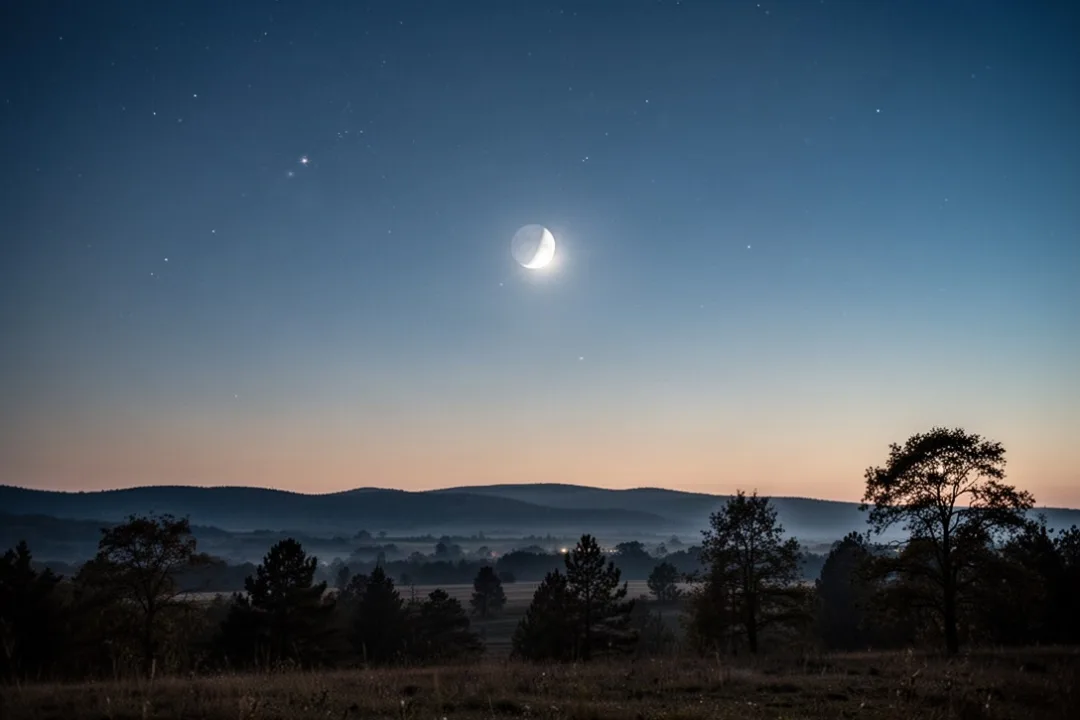
In ordinary conversation, the morning star means the bright point of light that appears in the eastern sky shortly before dawn. In most cases, that object is the planet Venus. Ancient observers called it a star because it looks like a star to the unaided eye and because the modern distinction between stars and planets developed later.
The name is not a permanent title that Venus carries every day. Venus alternates between being an evening star and a morning star as it moves around the Sun. When it appears after sunset in the western sky, people may call it the evening star. When it appears before sunrise in the east, it is called the morning star.
The phrase can also describe other bright objects in a broader, less precise sense. Mercury sometimes appears as a morning star, and certain bright stars can be prominent before dawn. Still, “the morning star” without further explanation usually refers to Venus.
Quick answer: The morning star is generally Venus, not a star. It is a planet that reflects sunlight and appears near sunrise because of its orbit inside Earth’s orbit.
How to identify the morning star before sunrise
Finding Venus is usually straightforward when it is in its morning appearance. Use the following steps rather than relying on the object’s brightness alone:
Look toward the eastern horizon about 30 to 60 minutes before local sunrise. Venus will be relatively low in the sky, though its exact height depends on the season and your location.
Find the brightest point of light in that part of the sky. Venus is normally much brighter than the surrounding stars and often looks steady rather than strongly twinkling.
Check the timing. Venus is visible only during part of the night because it never travels far from the Sun in our sky. If the object remains high after sunrise or was visible around midnight, it may be something else.
Compare its position over several mornings. Venus gradually shifts against the background stars. Its position and brightness change as its orbit carries it around the Sun.
Use a sky map or astronomy app when necessary. An app can distinguish Venus from Mercury, Jupiter, bright stars, and aircraft, especially when the object is close to the horizon.
The morning star can be difficult to see when the horizon is blocked by buildings, mountains, trees, or haze. Bright twilight also reduces the number of visible stars, but Venus usually remains easy to recognize because it is so luminous.
Why Venus looks brighter than the stars
Venus is the brightest planet seen from Earth because several factors work together. It is relatively close to us, it is covered in bright clouds, and it can approach Earth more closely than the other planets that are visible to the naked eye. Its clouds reflect a large amount of sunlight back into space.
Venus is also an inferior planet, meaning its orbit lies inside Earth’s orbit. This position allows it to appear relatively close to the Sun from our point of view. It cannot appear on the opposite side of the sky from the Sun, but it can become strikingly bright when its position and distance are favorable.
The planet does not always show a full, round disk. Through a telescope, Venus displays phases similar to the Moon. It can appear nearly full when it is farther from Earth and on the far side of the Sun, or it can show a crescent phase when it is closer to Earth. A thinner crescent can still look very bright because Venus is then closer to us and presents a larger apparent disk.
Why the morning star appears only near dawn
Venus orbits the Sun at a smaller distance than Earth does. From Earth, this means Venus never moves very far east or west of the Sun in the sky. When Venus is east of the Sun from our perspective, it sets after the Sun and becomes the evening star. When it is west of the Sun, it rises before the Sun and becomes the morning star.
The change is gradual rather than instantaneous. Venus may be visible in the morning for several weeks or months, then move closer to the Sun’s apparent position until sunlight makes it difficult or impossible to see. After passing through a period of conjunction with the Sun, it eventually becomes an evening object.
Venus’s cycle from one similar appearance to the next takes roughly 584 days as viewed from Earth. This is called its synodic period. The planet itself completes an orbit around the Sun in about 225 Earth days, but Earth is moving too, so the cycle of repeated morning and evening appearances takes longer.
How the morning star differs from other bright objects
Several objects can be confused with Venus when viewed before sunrise. Brightness, location, and movement provide useful clues.
Jupiter: Jupiter can also be extremely bright, but it may appear higher in the sky and can remain visible for much more of the night. It is not limited to a narrow position near the Sun in the same way Venus is.
Mercury: Mercury is an inner planet and can be a morning object, but it usually appears lower and is harder to see. It is generally less bright than Venus.
Sirius: Sirius is the brightest star in the night sky. It can twinkle noticeably and may appear in different parts of the sky depending on the season and latitude.
Aircraft: A plane usually changes position, may blink, and can move across the sky within minutes. Venus stays fixed among the stars during a short observation.
Satellites: Satellites move steadily across the sky and may fade or brighten. Venus does not cross the sky quickly.
The Moon: The Moon is much larger in appearance and may be close to Venus on some mornings, but its shape changes rapidly from night to night.
Venus generally shines with a steady white or slightly yellow-white light. Atmospheric turbulence can make any bright object shimmer near the horizon, so the absence of twinkling is a helpful clue rather than an absolute rule.
What the morning star means in the Bible
In the Bible, morning star is used as a symbolic image rather than as a simple astronomy lesson. The image draws on the appearance of a bright object before sunrise: darkness is giving way to light, and a new day is approaching.
In Revelation 22:16, Jesus is described as the bright morning star. In that setting, the title communicates authority, hope, and the arrival of God’s promised future. Christians commonly understand the phrase as referring directly to Jesus rather than to the planet Venus.
Second Peter 1:19 uses related imagery when it speaks of the morning star rising in believers’ hearts. The passage connects the image with growing spiritual understanding and the dawning of light after darkness. The wording is symbolic, not a claim that a planet has a divine identity.
The Bible also uses star imagery in other passages, but not every reference to a star means the same thing. A careful reading depends on the specific book, historical setting, literary form, and surrounding verses.
The biblical image of the morning star points to light appearing after darkness and to the hope of a new day.
Is “morning star” another name for Lucifer?
The connection between morning star and Lucifer comes mainly from the history of Bible translation and interpretation. Isaiah 14:12 addresses the “shining one” or “morning star” in a passage describing the downfall of the king of Babylon. Some older translations used the Latin-derived name Lucifer for this figure.
In its original context, Isaiah 14 is a taunt against a powerful earthly ruler. The poetic language describes someone who sought an exalted position but was brought down. Later Christian tradition connected this passage with Satan’s fall, but the passage itself does not simply present “Lucifer” as a personal name for Satan in every context.
This creates an apparent difficulty for readers who notice that Revelation calls Jesus the morning star while older translations use Lucifer in Isaiah 14. The phrase is not automatically a unique personal name. Its meaning depends on context. A common image can be applied in different ways, just as light, lion, rock, or shepherd can carry different meanings in different passages.
The Hebrew expression in Isaiah is often translated with wording such as “shining one” or “morning star.” The Latin word lucifer originally meant “light-bearer” or “morning star”; it was not originally a uniquely evil name. Its later association with Satan developed through interpretation and theological tradition.
Why the biblical image is so powerful
A star visible before sunrise occupies a brief but meaningful position between night and day. It can be seen while the sky is still dark, yet its appearance signals that dawn is approaching. That natural pattern makes the morning star a strong symbol of promise, revelation, renewal, and victory over darkness.
The symbol does not necessarily mean that every difficulty has ended. Dawn begins before the full light of day arrives. In biblical writing, the morning star can therefore suggest an unfolding change: understanding is growing, hope is becoming visible, or a promised event is drawing nearer.
That symbolism also explains why the phrase appears in Christian hymns, sermons, prayers, art, and devotional writing. It evokes a bright guide that can be seen before the day has fully come. The meaning is theological and poetic, while Venus supplies the familiar natural image.
How ancient observers understood the morning and evening star
Ancient sky watchers noticed that the same brilliant object could appear after sunset in one period and before sunrise in another. Because it seemed to disappear and return in a regular pattern, several cultures treated its evening and morning appearances as significant.
Before modern astronomy established that Venus was one planet, people sometimes treated the evening and morning appearances as separate objects. The Greek names associated with the two appearances reflected this distinction. Over time, observation showed that the two bright objects were actually the same planet.
Venus’s prominence made it useful for calendars, navigation, religious symbolism, and storytelling. Its appearance is predictable enough to attract careful observation, yet its changing brightness and phases provide a visible reminder that the heavens are in motion.
Ancient descriptions should be read in their own cultural settings. Calling Venus a “star” was not a scientific error in the modern sense; it reflected an older category for bright lights in the sky. Modern astronomy uses more precise categories, separating stars, planets, moons, comets, and other objects.
Can you see the morning star every morning?
No. Venus is not always visible before sunrise. Its visibility depends on its position relative to Earth and the Sun, as well as on local conditions such as weather, haze, latitude, and the timing of sunrise.
At some points in its cycle, Venus is too close to the Sun’s apparent position to see safely or clearly. At other times, it is an evening object. Even during a favorable morning appearance, it may rise only shortly before the Sun and remain low above the horizon.
Venus’s maximum apparent separation from the Sun is called its greatest elongation. Around a favorable elongation, it can remain visible for a longer period before sunrise. The exact viewing experience changes depending on whether Venus is north or south of the Sun’s path and where you are observing from.
Safety reminder: Never use binoculars or a telescope to scan near the Sun. Find Venus while the sky is still dark, and stop observing well before sunrise reaches the object’s area of the sky.
What the morning star looks like through a telescope
To the naked eye, Venus appears as a bright point. A telescope reveals that it is a disk with phases, although its surface is not usually visible through a small amateur instrument because thick clouds cover the planet.
Venus can look surprisingly large through a telescope when it is near Earth, especially when it appears as a thin crescent. Its brightness can also create glare, making the outline harder to see than expected. A neutral or specialized filter may help some observers, but filters do not reveal ordinary surface features through visible-light viewing.
Unlike Mars or Jupiter, Venus does not usually offer a clear view of surface markings. Its atmosphere is dense and reflective, and the planet rotates very slowly in the opposite direction from most planets. The most accessible telescopic feature is its changing phase.
What “morning star” means outside astronomy and the Bible
The phrase is also used in literature, music, personal names, religious writing, and other symbolic contexts. Writers may use it to represent a guide, a new beginning, a beloved person, or hope after a difficult period. In such uses, the phrase may not refer to Venus specifically, even when it borrows the image.
“Morning star” can occasionally refer to a historical weapon called a morning star, a spiked club or flail-like object. That meaning is unrelated to the planet and is usually clear from context. If a text discusses armor, medieval weapons, or battle equipment, the phrase should not be interpreted astronomically.
The best way to understand the term is to ask three questions:
Is the context about the sky? If so, the phrase probably refers to Venus or, less commonly, another bright object visible before dawn.
Is the context biblical or theological? Check the specific passage, because the image may refer to Jesus, spiritual awakening, a ruler, or a symbolic figure.
Is the context literary or historical? The phrase may describe hope, guidance, a person, or a weapon rather than an astronomical object.
Why the morning star is not the North Star
Venus and the North Star have very different roles in the sky. Venus is a planet that changes position and is visible only during certain parts of its cycle. The North Star, also called Polaris, is a distant star located near the north celestial pole and appears to remain nearly fixed while other stars seem to rotate around it.
Polaris is useful for finding north in the Northern Hemisphere, while Venus is useful mainly as a bright planet to identify and observe. The morning star is not a directional name for Polaris, and Polaris is not normally the brilliant object people mean when they say “the morning star.”
How to get a reliable answer when someone points to a bright object
If someone asks whether a particular bright object is the morning star, the answer should include its location and time. A bright object in the east before sunrise is a good candidate for Venus, but confirmation requires checking the date and observing location.
Try this practical process:
Record the date and local time. Planet visibility changes from week to week.
Note the direction. Use a compass or landmarks to identify east, southeast, or another part of the horizon.
Observe movement. A planet will not cross the sky rapidly like an aircraft or satellite.
Check whether it twinkles. Stars often twinkle more strongly, especially near the horizon, while planets usually shine more steadily.
Verify with an astronomy resource. A reputable sky chart can identify the planet and show its rising time.
Local visibility can differ substantially even on the same date. An unobstructed horizon may reveal Venus clearly, while a nearby hill or tall building may hide it until the sky is already bright.
The simplest way to remember the meaning
For astronomy, remember that the morning star is usually Venus, a bright planet seen before sunrise in the eastern sky. It is called a star because of its appearance, not because it generates light or belongs to the scientific category of stars.
For biblical interpretation, remember that the phrase is context-dependent symbolism. In Revelation, it is a title associated with Jesus; in Isaiah, related “shining one” language appears in a poetic judgment against Babylon’s king; in other passages, morning-star imagery can point to spiritual illumination and hope.
That combination of a visible natural object and a powerful metaphor explains why the phrase has lasted for centuries. Venus provides the image, while the surrounding context determines the meaning.
Frequently asked questions
Is the morning star actually a star?
Usually, no. The morning star is generally Venus, which is a planet that reflects sunlight rather than producing its own light. It looks like a star because it appears as a bright point to the unaided eye. The phrase is a traditional descriptive name, not a scientific classification.
Is Venus always called the morning star?
No. Venus is called the morning star when it appears before sunrise, usually in the eastern sky. When it appears after sunset in the western sky, it is commonly called the evening star. Venus shifts between these appearances as it moves around the Sun and as Earth changes position in its own orbit.
Does the Bible say Jesus is the morning star?
Revelation 22:16 uses the image of the bright morning star for Jesus. Christians generally understand this title as a symbol of hope, authority, and the arrival of light after darkness. The phrase is symbolic in that passage and should not be confused with the astronomical identity of Venus.
Why is Lucifer associated with the morning star?
“Lucifer” comes from a Latin word meaning light-bearer or morning star. In Isaiah 14, related language describes the downfall of Babylon’s king, while later Christian interpretation connected the passage with Satan. The term was not originally a unique personal name meaning Satan, and its meaning depends on translation and context.











Leave a Reply