When life feels uncertain, you may wonder what the familiar words about a shepherd’s rod and staff actually mean. Psalm 23 presents both objects as sources of comfort, not threats: they show how God protects, guides, corrects, and stays present with his people.
The phrase appears in Psalm 23:4, where the writer describes walking through a dark and dangerous valley while refusing to fear because the shepherd is near. The “rod” and “staff” are not decorative symbols added to a peaceful rural scene. They are practical tools associated with care, authority, defense, and direction.
What the shepherd’s rod and staff mean in Psalm 23
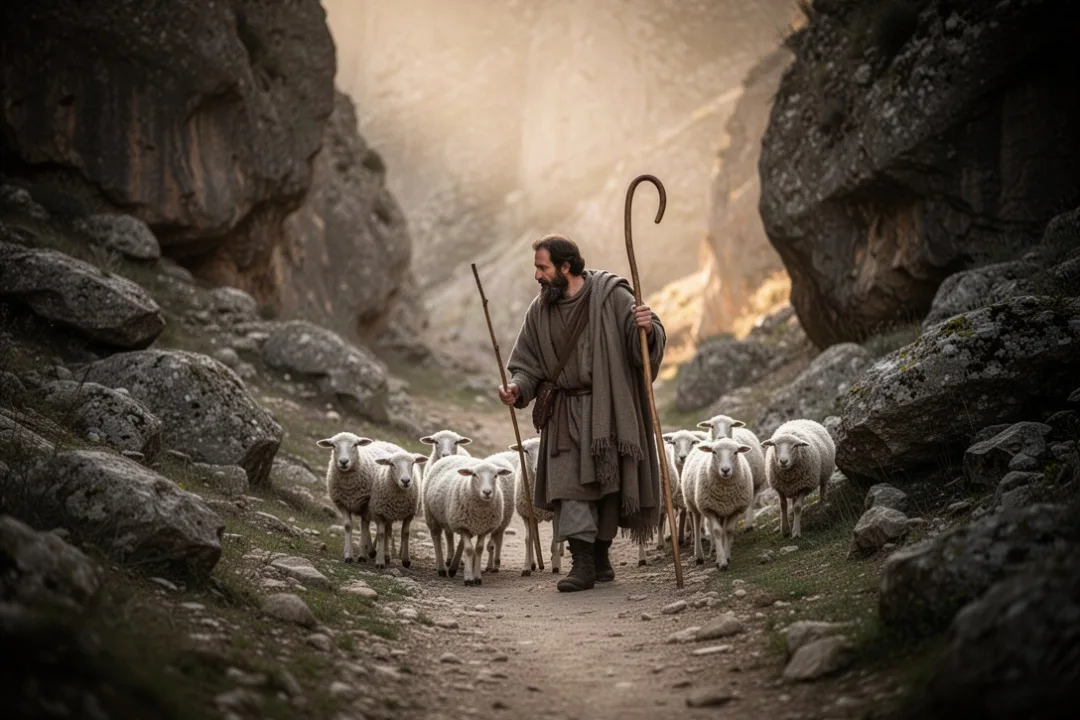
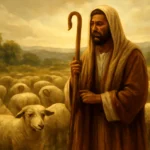
The rod and staff can be understood as two related but distinct images. A shepherd’s rod was a sturdy club or short weapon used to defend the flock and, when necessary, manage an animal. A staff was a longer walking stick used to support the shepherd, guide sheep, and help rescue them from difficult places.
Psalm 23 does not explain every detail of these tools, so readers should avoid treating one interpretation as the only possible meaning. The central point is clear, however: the shepherd’s equipment represents the shepherd’s active care. God is not pictured as watching from a distance. He is close enough to protect and guide.
Core meaning: The rod reassures the sheep that the shepherd can defend them, while the staff reassures them that he can guide and retrieve them. Together, they express dependable care in dangerous circumstances.
How the shepherd’s rod and staff worked in daily life
Understanding ordinary shepherding helps clarify the biblical image. Ancient shepherds faced predators, rough terrain, scattered animals, thieves, and weather hazards. Their tools were part of the work of keeping a vulnerable flock alive and together.
The exact design of a rod or staff could vary by region and period. Biblical passages also use shepherd imagery in different ways. Still, several practical functions consistently help explain why these objects became meaningful symbols.
Defense: A rod could serve as a weapon against predators or human threats.
Counting and inspection: A shepherd could use the rod while animals passed beneath it, helping identify and examine the flock.
Direction: A staff could gently guide an animal back toward the path or away from danger.
Rescue: The curved end commonly associated with a staff could help pull or lift a sheep from a hole or steep place.
Support: The shepherd could lean on the staff while traveling through difficult country.
These functions explain why the Psalm 23 image includes both comfort and authority. A shepherd does not merely soothe the flock. He takes responsibility for its safety, sets boundaries, and intervenes when an animal is in danger.
How to read the rod and staff step by step
The phrase becomes clearer when you follow the movement of Psalm 23:4 rather than isolating the two objects. The verse describes a person entering a threatening place, recognizing the shepherd’s presence, and receiving comfort from the shepherd’s tools.
Notice the setting: The valley represents a place of darkness, danger, grief, or uncertainty. It is not necessarily a literal reference to death, although the language can include the experience of facing mortality.
Notice the shepherd’s presence: Comfort comes because the shepherd is with the speaker. The assurance is relational before it is circumstantial.
Consider the rod: The rod points to the shepherd’s ability to confront threats and exercise protective authority.
Consider the staff: The staff points to guidance, support, and recovery when the sheep cannot safely manage the path alone.
Return to the response: The speaker is comforted, not because the valley is harmless, but because the shepherd’s care remains active within it.
This reading avoids two common extremes. The rod should not be reduced to punishment, and the staff should not be reduced to a vague picture of kindness. Both objects communicate strong, practical, personal care.
What the shepherd’s rod symbolizes
The rod primarily represents protection and authority. A shepherd holding a weapon could face an animal that threatened the flock. In this sense, the rod reassures the sheep that danger is not beyond the shepherd’s ability to answer.
The rod also suggests accountability. Shepherds had to count, examine, and manage their animals. Other biblical passages connect the shepherd’s rod with inspection or judgment, showing that the image can include the idea of being measured and held under responsible care.
That does not mean Psalm 23 presents God as looking for reasons to harm his people. The surrounding image is one of a shepherd who leads the flock to pasture and water, restores the weary, and stays near in danger. The rod’s authority serves the flock’s welfare.
For a modern reader, the rod can represent God’s ability to confront forces that threaten your life, faith, or well-being. It may also point to the boundaries and correction that prevent greater harm. A loving shepherd does not allow every impulse or outside danger to determine the flock’s direction.
What the shepherd’s staff symbolizes
The staff primarily represents guidance, support, and rescue. A sheep can wander, become separated, or enter a dangerous place without understanding how to return. The shepherd’s staff provides a means of directing it back to safety.
The staff also evokes patient care. A shepherd may use it to guide an animal without striking it, especially when the animal is confused or moving away from the flock. The image is not of an animal being dragged through every step of life, but of a shepherd who remains involved when the sheep needs help.
As a walking stick, the staff also suggests endurance. The shepherd travels with the flock through changing terrain. Its presence shows that the shepherd is willing to move through the same difficult landscape rather than abandoning the animals to find their own way.
In personal terms, the staff can represent God’s direction through decisions, suffering, temptation, and transition. It does not promise that every path will be easy. It does promise that guidance is available and that losing your way does not mean you have been forgotten.
Why Psalm 23 calls both objects comforting
Some readers find the rod difficult to connect with comfort. A club or instrument of correction may sound intimidating, especially if they have experienced authority as abusive or unpredictable. The Psalm’s picture, however, places the rod in the hand of a trustworthy shepherd whose purpose is to care for the flock.
Comfort does not always come from removing every source of danger. Sometimes it comes from knowing that danger is seen, that help is present, and that someone capable is responsible for protection. The rod conveys the shepherd’s strength; the staff conveys the shepherd’s nearness and practical assistance.
The phrase also balances two needs that are easy to separate. You may need protection from what threatens you, but you may also need direction because fear has made it hard to know where to go. The rod and staff answer both concerns: God guards you from danger and guides you through it.
“Your rod and your staff—they comfort me” is best understood as a statement of trust in the shepherd’s active presence, not as a promise that valleys will never appear.
How the phrase connects with the rest of Psalm 23
The rod and staff should be read alongside the Psalm’s other shepherd images. The opening description presents God as a shepherd who provides what the speaker needs. The next images describe green pasture, quiet water, restored strength, and right paths.
These details establish a pattern: the shepherd provides, leads, restores, and protects. The valley in the middle of the Psalm does not cancel the earlier care. Instead, it shows that the shepherd remains present when peaceful surroundings give way to danger.
After the valley, the imagery changes from a shepherd in the countryside to a host preparing a table. The speaker receives food, welcome, and an honored place even in the presence of enemies. The Psalm therefore moves from provision to protection, hospitality, and lasting belonging.
The rod and staff occupy a crucial point in that movement. They show how the shepherd’s care functions when the path is frightening. The person praying the Psalm does not claim to understand every danger or control every outcome. The person trusts the one who leads.
How other biblical passages develop shepherd imagery
Shepherd language appears throughout the Bible, and the wider pattern helps explain Psalm 23. Leaders are sometimes described as shepherds because they are responsible for the well-being of a community. When leaders exploit or neglect people, biblical prophets criticize them as failed shepherds.
Other passages portray God as seeking scattered sheep, gathering the weak, healing the injured, and judging those who harm the flock. These images show that divine shepherding includes both tenderness and justice. God cares for vulnerable people and opposes those who use power to exploit them.
In the New Testament, Jesus is described with shepherd language that emphasizes knowing, seeking, protecting, and laying down his life for the sheep. This develops the theme of sacrificial care. The shepherd does not merely issue instructions; he accepts personal cost for the safety of the flock.
When you compare these passages, a consistent picture emerges. Biblical shepherding is not passive supervision. It involves responsibility, relationship, protection, correction, and self-giving care.
Does the rod mean punishment?
The rod can include correction, but Psalm 23:4 does not require you to interpret it as a promise of punishment. The word’s meaning depends on context. A rod could function as a weapon, a counting tool, a symbol of authority, or an instrument connected with discipline.
In Psalm 23, the immediate setting is a dangerous valley. The emphasis falls on comfort in the shepherd’s presence. That makes protection and authority more central than the idea of punishment, although responsible guidance may include correction when a sheep moves toward danger.
Healthy correction aims to restore a person to safety and relationship. It is different from cruelty, humiliation, or violence. The shepherd image should never be used to excuse abuse or to tell someone that mistreatment is evidence of God’s care.
Important distinction: Biblical shepherd imagery does not justify human abuse. A person who uses fear, coercion, or violence against others is not automatically acting as a faithful shepherd.
What the phrase means during grief and suffering
Many people turn to Psalm 23 during illness, bereavement, anxiety, or major change. The rod and staff can speak powerfully in those settings because they do not depend on an easy environment. The Psalm acknowledges valleys rather than pretending that faithful people avoid pain.
The rod may remind you that suffering does not have unlimited authority. Fear, loss, injustice, and death are real, but they are not presented as the final shepherd of your life. The staff may remind you that you do not have to identify every step before receiving help for the next one.
This does not mean the phrase should be used to dismiss grief. “God is with you” is not a replacement for mourning, medical care, practical assistance, or the presence of trusted people. The shepherd image can support honest lament while giving hope that pain is not faced alone.
How to apply the rod and staff imagery in prayer
You can use the two images as a simple framework for prayer. Begin with the situation you are facing instead of trying to make your emotions sound more confident than they are. Psalm 23 models trust that can speak about fear without being controlled by it.
Pray for protection: Ask for strength against threats, destructive habits, injustice, and fear.
Pray for discernment: Ask for help recognizing the right path and avoiding choices that lead toward harm.
Pray for correction: Consider where you may need to change direction, accept wise counsel, or repair damage.
Pray for rescue: Name the places where you feel trapped, isolated, exhausted, or unable to recover alone.
Pray for presence: Ask for awareness of God’s nearness even when circumstances remain unresolved.
For example, someone facing a difficult job decision might pray for the rod as protection from dishonest pressure and for the staff as guidance toward a wise choice. Someone grieving may pray for the rod as strength against despair and for the staff as support through each day of loss.
How the shepherd’s rod and staff apply to leadership
The image also raises questions about how people lead others. Parents, pastors, teachers, managers, and community leaders may have authority, but biblical shepherding places that authority under the demands of care. The leader’s role is not to dominate the flock but to protect and serve it.
A faithful shepherd-like leader provides clear direction, notices vulnerability, responds to threats, and accepts responsibility for people’s welfare. Such a leader uses authority to create safety and help people flourish, not to demand unquestioning loyalty or personal praise.
The rod and staff therefore challenge both extremes of leadership. Authority without compassion becomes oppressive. Compassion without protection can leave vulnerable people exposed. The biblical image calls for strength guided by care.
Common misunderstandings about the shepherd’s rod and staff
Several popular explanations simplify the phrase too much. A careful reading keeps the image meaningful without claiming more certainty than the text provides.
“The rod is only punishment.” The rod can represent correction, but its setting in Psalm 23 strongly supports protection and authority as well.
“The staff is only comfort.” The staff also implies direction, rescue, and the shepherd’s practical involvement.
“The phrase promises a trouble-free life.” The Psalm explicitly includes a dark valley, so comfort exists alongside hardship.
“The two objects have one fixed meaning everywhere.” Biblical shepherd imagery changes with context, and the surrounding passage should guide interpretation.
“God’s care means you need no human help.” The shepherd image can encourage community, wise counsel, professional care, and practical support rather than rejecting them.
These distinctions protect the central message. The point is not to create a detailed technical manual for ancient shepherd equipment. The point is to understand why the speaker can remain confident while moving through danger: the shepherd is present, capable, and committed.
What the phrase can mean for you today
The shepherd’s rod and staff invite a realistic form of faith. You may be walking through a season where the path is unclear, your strength is limited, or threats feel larger than your resources. Psalm 23 does not ask you to deny those facts.
Instead, the imagery encourages you to ask two questions. What needs protection? And where do I need guidance or rescue? Those questions can help turn a general prayer for comfort into an honest response to your actual circumstances.
The rod reminds you that care can be strong. The staff reminds you that strength can be gentle and close. Together they portray a shepherd who does not abandon the flock at the edge of the valley, but walks with it through the place of uncertainty.
That is why the phrase has endured. It offers neither a guarantee that danger will disappear nor an instruction to face danger alone. It presents a God whose presence, protection, correction, and guidance remain trustworthy when the road becomes difficult.
Frequently asked questions
Are the rod and staff the same shepherd’s tool?
They are generally understood as two different tools, although ancient equipment and terminology could vary. The rod was shorter and stronger, suited to defense and authority. The staff was longer and useful for walking, guiding, and rescuing sheep. Psalm 23 places them together to create a complete picture of the shepherd’s care rather than requiring a rigid technical distinction.
Does Psalm 23 promise that believers will avoid danger?
No. The Psalm specifically imagines walking through a dark valley. Its promise is not the absence of hardship but the shepherd’s presence during hardship. The speaker can face danger without being ruled by fear because protection, guidance, and companionship remain available even when circumstances do not immediately change.
How should Christians respond if the rod makes them uncomfortable?
Read it within the larger picture of a trustworthy shepherd who provides, restores, leads, and protects. The rod can represent authority and correction, but it should not be used to defend cruelty or abuse. Healthy spiritual correction seeks restoration and safety; violence, coercion, and humiliation do not reflect faithful shepherding.
Can the rod and staff represent human leaders too?
Yes, shepherd imagery can describe people entrusted with responsibility, including spiritual and community leaders. It calls them to protect vulnerable people, provide wise direction, and use authority for service rather than control. Human leaders remain imperfect, so the image should never be used to demand blind loyalty or excuse harmful behavior.






Leave a Reply