Who wrote Psalm 23? What the Bible and tradition say
Who wrote Psalm 23? What the Bible and tradition say
If you have ever read Psalm 23 and wondered who could write such a calm, personal prayer, the traditional answer is David, the shepherd who became king of Israel. Psalm 23 begins with a Hebrew heading that identifies it as “a psalm of David,” which is why Jewish and Christian readers have long regarded David as its author.
That answer needs a little context. The heading strongly connects the psalm with David, but the Bible does not describe the circumstances in which he wrote it, and scholars cannot establish an exact date. The Hebrew wording can identify a psalm as belonging to, connected with, or associated with David, so the attribution is meaningful while leaving room for discussion about how the psalm reached its final form.
The most direct evidence appears in the superscription, the short heading placed before the poem in the Hebrew text. Psalm 23 is identified as a psalm “of David.” Similar headings connect many other psalms with David, including Psalms 3, 18, 34, 51, and several others.
In ordinary reading, “of David” naturally suggests Davidic authorship. That is how the psalm has generally been received in Jewish tradition and throughout much of Christianity. The New Testament also refers to David as a speaker and writer of psalms, reinforcing his established role as Israel’s chief royal psalmist.
Still, a superscription does not give us a biography of the poem. It does not tell us whether David composed every line personally, whether the poem was edited later, or which event inspired it. The safest answer is that Psalm 23 is traditionally attributed to David, while its precise history cannot be reconstructed with certainty.
Short answer: David is the traditional author of Psalm 23 because the psalm’s Hebrew heading attributes it to him. Its exact date, setting, and editorial history are unknown.
Why David is a fitting author for Psalm 23
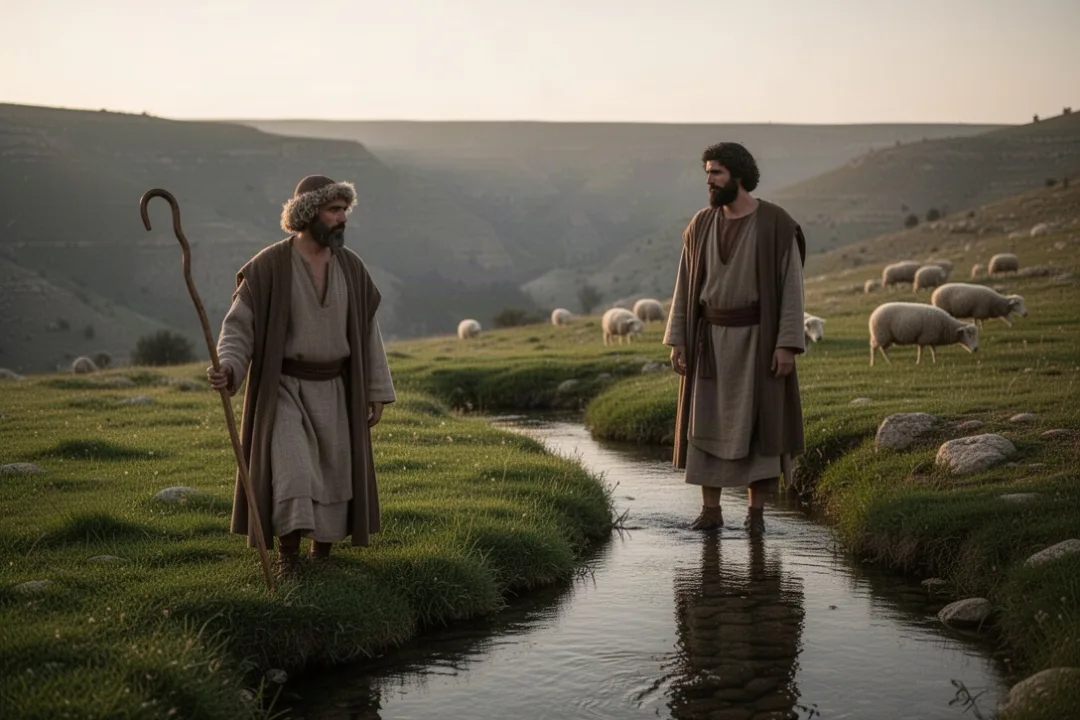
David’s life gives the psalm’s imagery a particularly natural setting. Before he became king, he worked as a shepherd. The biblical account of his youth presents him as responsible for protecting his father’s flock, even facing dangerous animals while doing so. When he later faced the warrior Goliath, he described his experience defending sheep as part of his preparation.
Psalm 23 begins by presenting God as a shepherd who provides, leads, and protects. That metaphor would have been more than a poetic comparison for David. He knew the daily work of finding pasture, locating water, guarding vulnerable animals, and moving a flock through difficult terrain.
David also knew the pressures of political leadership. As Israel’s king, he had to guide a nation, confront enemies, make difficult decisions, and live with the consequences of conflict. The psalm’s movement from quiet pastures to dark valleys and hostile surroundings can therefore speak both to a shepherd’s experience and to a ruler’s life.
His biography includes long periods of danger. David spent years fleeing King Saul, hiding in wilderness areas, and depending on uncertain sources of food and safety. Later, he faced rebellion within his own household and continued military threats. Those experiences help explain why the psalm combines peaceful images with confidence in the presence of danger.
How to identify the author from the psalm itself
The author’s name is not the only clue. The poem contains several features that fit the Davidic tradition, although none of them proves authorship by itself. Read the evidence in this order:
Start with the heading. Psalm 23 is labeled as a psalm of David, making him the primary traditional candidate.
Notice the shepherd vocabulary. The writer understands the shepherd’s work well enough to use it as a central picture of God’s care.
Observe the royal imagery. The final scene describes a table, anointing, and dwelling in God’s house, images that can fit a worshiper connected with Israel’s royal and temple traditions.
Consider the personal voice. The repeated use of “I,” “me,” and “my” gives the poem the character of an individual testimony rather than a general teaching poem.
Keep the historical limits in view. The language supports a traditional Davidic setting, but it does not identify a particular year or event.
This approach avoids two opposite mistakes. One mistake is to dismiss David’s authorship simply because the poem’s final form may have been preserved or edited later. The other is to claim that the Bible tells us exactly when David wrote it, since no such detail is provided.
What “of David” can mean in the Hebrew heading
The Hebrew expression traditionally translated “of David” is le-David. The prefix can have several related meanings, including belonging to David, associated with David, or intended for David. In many contexts, readers understand it as an authorship label, but the phrase itself is not a full explanation of the psalm’s origin.
This linguistic point matters because ancient collections could preserve poems in more than one way. A psalm might have been written by the named person, connected with that person’s life, performed in a tradition bearing that person’s name, or later placed within a collection associated with that person.
That does not make the heading meaningless. It establishes a strong relationship between Psalm 23 and David. It simply means that modern readers should distinguish between traditional attribution and a documentary account of composition.
Many biblical books also reached their present form through preservation, arrangement, and transmission over time. A poem can be genuinely Davidic in origin while also having been carefully preserved by later worshiping communities. Those possibilities do not cancel one another.
What the shepherd images reveal about the writer
The first half of Psalm 23 describes God through the actions of a shepherd. God provides food and rest, brings the speaker to water, restores the person’s inner life, and guides the right path. These are not abstract claims about divine power. They are concrete pictures of daily care and dependable direction.
A shepherd must pay attention to the condition of the flock. Sheep need safe grazing areas and reliable water, and they can become vulnerable when frightened or scattered. The psalm uses this world to describe a God who notices needs before the worshiper can solve them alone.
The reference to “paths of righteousness,” paraphrased rather than quoted, adds a moral dimension. God does not merely keep the speaker comfortable. God leads the speaker along a right or trustworthy way, a path consistent with God’s character and reputation.
The phrase about God’s name matters as well. In the ancient biblical setting, a name represented a person’s character and honor. The psalm therefore connects guidance with God’s faithfulness: the shepherd leads well because that is who God is.
Why the dark valley does not identify a specific event
Psalm 23 then turns from green pasture and quiet water to a threatening valley. Translations differ in how they render the Hebrew expression, but the picture involves deep darkness, danger, or the shadow of death. The writer does not say exactly what caused the crisis.
That silence prevents us from assigning the psalm confidently to one episode in David’s life. It could fit a period of military threat, a dangerous journey, illness, persecution, grief, or the approach of death. The broad language is one reason the psalm has remained meaningful across many circumstances.
The central change is not that the valley disappears. Instead, the speaker says that God is present in the valley. Earlier, the psalm speaks about God in the third person. In the valley, the language becomes more direct, addressing God personally. The crisis does not produce a new God; it changes the worshiper’s manner of speaking to the same God.
The shepherd’s rod and staff represent protection and direction. A shepherd’s equipment could defend the flock, correct its movement, or help guide it through difficult ground. The exact symbolic details need not be forced into separate meanings. Together, they communicate that the speaker is not abandoned or without guidance.
How the psalm shifts from shepherd to host
In the final part, the dominant image changes. God is no longer described mainly as a shepherd but as a generous host who prepares a meal, welcomes the guest, and provides abundance in the presence of enemies. This scene moves from open countryside to a place of hospitality and honor.
The table is prepared while adversaries are still visible. That detail makes the image stronger than a simple promise of escape. The speaker receives care and dignity even before every threat has been removed. God’s provision is public, secure, and not controlled by the enemies surrounding the guest.
Anointing with oil commonly expressed welcome, refreshment, honor, or celebration in the biblical world. The overflowing cup conveys more than bare survival. The host gives generously, treating the guest as someone valued rather than merely tolerated.
The poem ends with confidence that goodness and faithful love will accompany the speaker throughout life, followed by the desire to remain in God’s house. The ending is not a claim that the writer will never suffer. It is a declaration that God’s care defines the whole direction of life, including the seasons marked by danger.
What is known about when Psalm 23 was written
No surviving biblical statement gives the date of Psalm 23. If David composed the original poem, it could have come from any number of periods in his life, including his years as a shepherd, his time as a fugitive, or his reign as king. The text itself does not settle the question.
Some readers associate the psalm with David’s youth because of its shepherd language. Others connect the confidence in danger with his years of flight or warfare. Still others see the royal feast and temple language as more compatible with his mature life. These are possible settings, not established facts.
The psalm’s final form may also reflect the work of later scribes and worship communities. Ancient biblical texts were copied, collected, and used in public worship. Preservation can involve arranging poems within a larger collection or clarifying wording for later readers, even when the original poem is much older.
It is therefore reasonable to say that the poem is Davidic in tradition while acknowledging that its exact literary development is uncertain. An honest answer leaves room for what the text says and avoids filling the gaps with invented historical details.
Why some scholars discuss authorship differently
Modern biblical scholars examine vocabulary, grammar, themes, manuscript evidence, and the way psalms were collected. Some accept the traditional attribution as evidence that David wrote the poem. Others think the heading may indicate a broader connection with a Davidic collection or tradition rather than direct, line-by-line authorship.
Scholars may also ask whether a poem that originated with David was later revised for worship. This question is not unique to Psalm 23. Many ancient works were transmitted through communities that preserved their central message while adapting language, arrangement, or liturgical use.
Differences in scholarly conclusions often reflect different assumptions about how the headings function and how the Psalms were compiled. They do not change the basic fact that David is the figure named by the biblical tradition.
For a reader seeking a clear answer, the useful distinction is simple:
Traditional and devotional answer: David wrote Psalm 23.
Historical-critical qualification: David is the attributed author, but the exact process of composition and editing cannot be demonstrated in detail.
What remains certain from the text: Psalm 23 presents a personal confession of trust in God’s provision, guidance, protection, and welcome.
How Psalm 23 fits David’s wider role in the Bible
David is portrayed in the Bible as a musician, poet, warrior, king, and worshiper. He is also shown as a deeply imperfect person who makes serious moral failures and experiences painful consequences. That combination gives the Davidic tradition emotional range: its prayers can express confidence without pretending that life is simple.
Several other psalms connected with David mention fear, enemies, guilt, injustice, rescue, or praise. Psalm 23 is gentler in tone, but it belongs to the same world of dependence on God. Its calm confidence does not require an easy life from its speaker.
The shepherd image also connects David’s personal story with his public calling. He begins as someone who cares for sheep and becomes someone responsible for a people. In biblical leadership language, a king can be expected to guide and protect the nation like a shepherd. Psalm 23’s imagery therefore resonates with both private faith and public responsibility.
That connection may explain why the psalm speaks so powerfully to people who carry responsibility for others. Parents, caregivers, pastors, leaders, and anyone facing uncertainty can recognize the need for guidance. The author’s identity adds historical depth, but the poem’s language reaches beyond one biography.
How to read Psalm 23 without forcing a hidden meaning
Psalm 23 rewards slow reading. Because it is familiar, readers sometimes move through it too quickly and miss the progression from provision to guidance, danger, hospitality, and lasting belonging. A careful reading can preserve the comfort of the poem while also respecting its complexity.
Read the heading first. It places the psalm within the Davidic tradition and reminds you that the poem has a historical frame.
Follow the images in order. Notice the movement from flock, to valley, to banquet, rather than treating every phrase as an isolated promise.
Ask what the speaker needs. The needs include food, rest, direction, courage, protection, honor, and a secure home.
Notice the change in address. The speaker talks about God in the peaceful opening and speaks directly to God during the valley.
Keep suffering present. The psalm does not deny enemies, darkness, or mortality; it places them within a larger confidence in God’s presence.
Apply the imagery carefully. Its central message concerns trust in God, not a guarantee that every hardship will immediately disappear.
This reading also helps explain why the identity of the author matters without controlling the entire meaning. David’s life illuminates the poem’s language, but the psalm is not only a historical artifact. It became part of Israel’s worship and has been prayed by generations facing their own valleys and uncertainties.
What can be said with confidence about Psalm 23
The strongest answer remains both clear and careful: Psalm 23 is attributed to David, and David is traditionally understood to have written it. The biblical heading supports that conclusion, while the shepherd imagery fits his early life and the danger-filled confidence fits the broader story associated with him.
At the same time, the Bible does not identify the date, occasion, or exact process by which the poem was preserved. The Hebrew heading can signal association as well as authorship, and later transmission may have shaped the form readers know today.
Those qualifications do not weaken the psalm. They help you read it honestly. Whether you approach it as David’s personal prayer, a poem preserved in the Davidic tradition, or a worship text shaped over time, its central movement remains clear: God provides, leads, stays present in danger, honors the vulnerable, and offers a lasting home.
Why the author question still matters to readers
Knowing that David is traditionally connected with Psalm 23 gives the poem a human voice. The words are not presented as detached ideas about comfort; they come from a tradition shaped by a shepherd who knew responsibility, conflict, fear, success, failure, and dependence on God.
That background can make the opening image more concrete. The writer is not using a shepherd merely because the metaphor sounds peaceful. He draws on a world of real work and real risk, then applies it to the relationship between God and the worshiper.
The result is a poem that holds together two truths people often separate. Life can contain deep danger, and trust can still be reasonable. The author’s traditional identity helps show why Psalm 23 speaks with such steady confidence: it is associated with someone whose life included both open fields and threatening valleys.
Frequently asked questions
Is David definitely proven to be the author of Psalm 23?
David is the traditional and biblical attributed author, based on the psalm’s heading. However, the heading does not provide a modern-style record of composition, and scholars differ on whether it indicates direct authorship or a broader connection with David’s tradition. The most accurate wording is that Psalm 23 is traditionally attributed to David.
Did David write Psalm 23 while he was a shepherd?
The text does not identify when David wrote it, so a shepherd-period setting cannot be confirmed. His early work with sheep makes the imagery especially fitting, but the psalm also reflects experiences associated with danger, leadership, and worship. It could have been composed during several different stages of his life.
What does Psalm 23 mean by calling God a shepherd?
The image describes God as someone who provides necessities, gives rest, leads toward what is good, protects during danger, and remains present when the path is frightening. It does not promise a life without hardship. Instead, it presents divine care as stronger and more lasting than the threats surrounding the worshiper.
Why does Psalm 23 use both shepherd and banquet imagery?
The two images show different aspects of care. The shepherd picture emphasizes guidance, protection, and provision during travel. The banquet scene portrays welcome, honor, abundance, and security despite enemies. Together they present God as both a careful guide through danger and a generous host who gives the worshiper a lasting place of belonging.








Leave a Reply