Even Though I Walked Through the Valley: Lessons on Faith, Resilience, and Hope
Even Though I Walked Through the Valley: Lessons on Faith, Resilience, and Hope
Even Though I Walked Through the Valley: Lessons on Faith, Resilience, and Hope
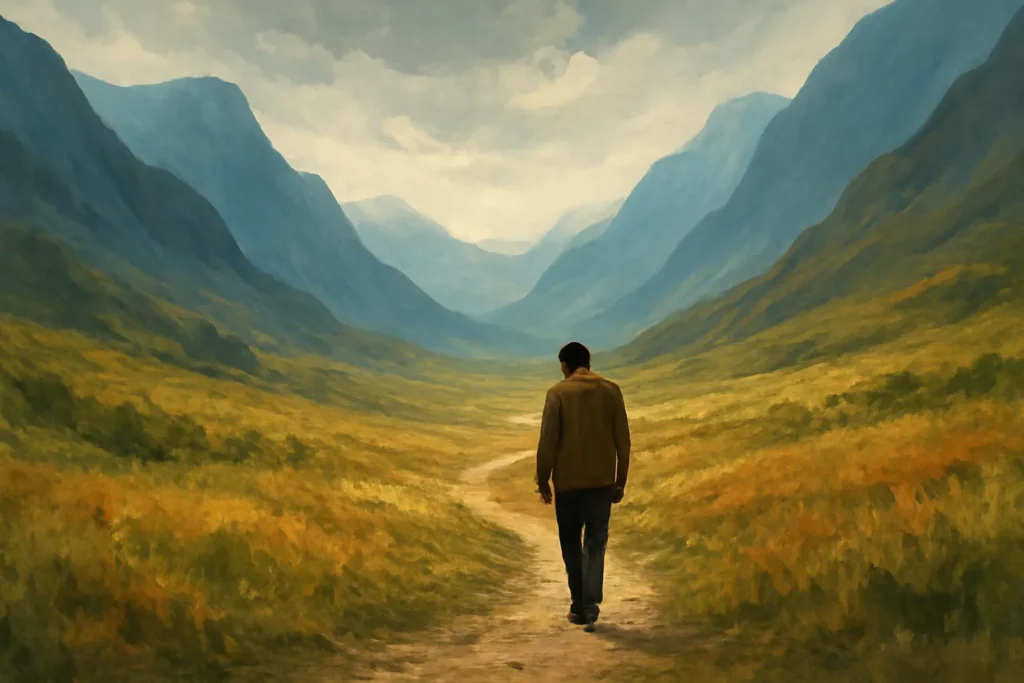
From the first steps into a difficult season to the long walk out into a broader horizon, the image of a valley remains one of the most enduring metaphors for human experience. Whether the valley is marked by grief, doubt, illness, loss, or upheaval, the journey through it invites a particular kind of attention: a disciplined attention to what endures when circumstances falter, and a quiet formation of character that can outlast the pain. In this article we explore what it means to traverse the valley with intention, offering lessons on faith, resilience, and hope. We will consider how the language of walking through a valley has long carried moral and spiritual weight, and how we can translate that weight into practical living that uplifts ourselves and others.
Understanding the valley as a metaphor for hardship
When we say we are in the valley, we refer not merely to a geographic place but to a condition of life where the scenery changes in ways that make us pause, re-evaluate, and listen more closely. The valley can symbolize uncertainty, vulnerability, or even a reckoning with mortality. It is in these low areas that some of the most fundamental questions arise: Who am I when I am stripped of my usual comforts? What do I rely on when my plans fail? Where do I place my trust when the road ahead grows dim?
To walk through the valley is to accept the possibility of discomfort while choosing to keep moving. It is an act of courage, but not the absence of fear. It is a discipline that involves accepting help, naming pain, and seeking meaning without pretending that the hardship is unimportant. The valley, in this sense, becomes less a trap to escape and more a landscape in which certain capacities can mature—most notably, faith, resilience, and hope.
Variations on the core idea: different ways to say the same truth
The phrase even though I walked through the valley has many semantic siblings that enrich our understanding without changing the underlying truth. Some people say:
Even when I walk through the valley of uncertainty, I will not abandon my commitments to truth and compassion.
Even if I walk through the valley with trembling steps, I will keep faith with what sustains me.
Even though we walk through the valley, we can choose to walk together, making the journey less solitary.
Even when the valley feels long, the horizon beyond it remains reachable through consistent practice.
Even in the valley’s shadow, small acts of kindness can become bright markers of meaning.
Even as I move through the valley, I learn to notice the signs of grace that appear in ordinary moments.
These variations share a common structure: acknowledgment of difficulty, followed by a deliberate decision to persist. This is a powerful pattern for personal growth, and it serves as the backbone for the lessons that follow.
The three core pillars: faith, resilience, and hope
Across cultures and traditions, three interlocking qualities repeatedly prove useful when we are in the valley: faith (in something larger than ourselves, whether religious, philosophical, or communal), resilience (the capacity to rebound after adversity), and hope (a directional faith in a future that can be realized through acts today). Below, we explore each pillar and how they work together in the valley experience.
Faith as a compass in the dark
Faith is not a guarantee against pain. Rather, it is a framework that helps us orient ourselves when the terrain becomes unfamiliar. In the valley, faith often acts as a compass rather than a map: it points toward what matters most—compassion, truth-telling, and care for others—while acknowledging that the path forward may be obscure. Faith can be rooted in religious tradition, but it can also be grounded in a deep commitment to values such as justice, mercy, and generosity. When we say Even when faith is tested, we name a common experience: the moment when belief meets doubt, and yet dawn breaks nonetheless because someone chose to continue stepping forward.
Practice presence: cultivating awareness of your surroundings, emotions, and the people who stand with you.
Seek meaning beyond comfort: interpretive openness to the ways hardship can reveal what matters most.
Hold onto a personal creed: a simple, memorable statement that anchors decisions in the valley.
Resilience as a daily habit
Resilience is not about never bending; it is about having the discipline to return to alignment after bending. It involves small, repeatable practices that accumulate over time. Resilience is forged in daily acts of care—for oneself, for others, and for the larger community. It is both a skill and a stance: you persist not because you ignore pain but because you have learned how to bear it with intention. When you say, Even when I must endure hardship, you are naming a universal stage in life and inviting yourself to build resources that make endurance sustainable.
Develop routines that restore energy: sleep, nutrition, movement, and mindful reflection.
Build a support network: trusted friends, mentors, and communities that offer practical and emotional support.
Measure progress in small increments: celebrate small wins that accumulate toward larger goals.
Hope as a forward-facing practice
Hope is not a denial of pain; it is a deliberate imagination of a future possibility that remains worth pursuing. Hope keeps the long view in sight even when the present feels heavy. It invites action in the present that can transform tomorrow. As you walk through the valley, saying, Even if the days are long, hope invites you to trust that effort, courage, and care can move things toward a better horizon. Hope can be nourished by stories of resilience, by moments of beauty in daily life, and by the belief that your life has consequences that reach beyond the immediate moment.
Identify anchors of hope: people, practices, and purposes that repeatedly renew your sense of possibility.
Engage in hopeful routines: rituals that honor difficulty while affirming life’s value.
Share hope with others: offer encouragement, listen actively, and participate in acts of solidarity.
Practical steps for applying the lessons in daily life
Knowledge remains inert until it becomes practice. The following steps provide a practical framework for turning the insights of faith, resilience, and hope into daily habits that sustain you through the valley and beyond.
Name the valley clearly. Write down what the current season feels like: the losses, the fears, the questions. Naming reduces ambiguity and creates a starting point for action.
Breathe and ground. When anxiety spikes, use intentional breathing, grounding exercises, or brief meditations to re-center. A few minutes of breath work can reset physiological stress responses and create space for deliberate choice.
Decide your one next step. In complex situations, the path forward is often a sequence of small moves rather than one grand gesture. Identify the immediate, doable action you can take today.
Reach toward community. Connection mitigates isolation. Schedule one check-in call or meet with someone who can listen without judgment and offer perspective or practical help.
Engage in meaningful rituals that mark transition. This could be journaling, a short devotion, a walk in nature, or a quiet moment of gratitude. Consistency matters more than length.
Count the small graces. Keep a daily list of things you are grateful for or that brought you relief, no matter how small.
Review and adjust. Periodically reassess your plan. What is working? What needs to shift? Resilience grows when you adapt with humility and curiosity.
Document progress. A simple record—journal entries, notes, or voice memos—helps you see the arc of your experience, reinforcing hope and faith through memory.
Help others walk their valleys. Service is not only a gift to others; it reinforces your own sense of meaning and connectedness.
Stories and real-life echoes: examples of walking through the valley
Storytelling is a powerful way to translate theory into lived practice. Across different domains—family life, work, health, and community—people have found ways to embody the lessons of faith, resilience, and hope while traveling through their valleys. Here are a few illustrative vignettes, framed to emphasize actionable insights rather than to persuade with sentimentality.
In a season of chronic illness, a mother learns that strength is not the absence of symptoms but the ability to keep showing up for her children. She names her valley openly, invites help from a trusted friend network, and commits to daily rituals that sustain her body and spirit. Her practice includes a brief morning meditation, a short family walk, and a nightly gratitude list. Through ongoing care and communal support, she demonstrates how faith in community and resilience in daily habit can coexist with pain, turning a threatening valley into a space where life, love, and learning can still flourish.
A scientist navigating systemic uncertainty
A researcher facing funding gaps and professional doubt discovers that hope is not naive optimism but a disciplined patience. He reframes failure as feedback, keeps a journal of small experiments, and leans on mentors for perspective. He learns to say to himself, Even if I walk through the valley of uncertainty, I can still move forward by iterating ideas, seeking new collaborations, and sharing interim results with others who can offer guidance. His story illustrates how resilience is cultivated in professional settings through deliberate practice, transparent communication, and a steadfast adherence to one’s core values.
A community that holds space for grief and growth
In a neighborhood that experiences recurrent hardship, neighbors form circles of listening and mutual aid. They gather for rituals of remembrance, share meals, and design small acts of service that restore dignity to those who have suffered loss. Their valley is not a solitary journey but a shared passage—even when we walk through the valley, we can rely on one another to keep the flame of hope alive, and to remind each other of the worth of every human life.
Common obstacles and how to address them
Even the most robust frameworks encounter friction. Here are some frequent challenges and practical responses that help keep the journey productive rather than punitive.
Doubt and cynicism: Name doubts openly and interrogate them with curiosity rather than suppression. Seek evidence from personal experience and trusted sources, and allow your faith to grow in conversation with doubt rather than in victory over it.
Overwhelm and burnout: Break tasks into tiny, achievable steps and schedule rest as a non-negotiable part of the plan. Burnout often masquerades as spiritual or emotional dryness; counter it with replenishment, boundaries, and honest pacing.
Isolation: Reach out. Even when it feels vulnerable to ask for help, vulnerability is a bridge to connection and healing.
Pain with no clear resolution: Accept ambiguity as a component of the human condition. Holding onto the belief that not all questions have immediate answers allows you to live with integrity and courage in the meantime.
Building a personal creed for the valley
One practical tool for grounding yourself in traversing the valley is crafting a personal creed—three to five compact statements that summarize your approach to hardship, your commitments to others, and your sources of strength. This creed can be consulted during tough moments and revised as you evolve. A sample creed might look like this:
Faith is the vow to seek truth with humility and to treat every person with dignity.
Resilience is the daily choice to act with courage and kindness, even when the outcome is uncertain.
Hope is the belief that small, faithful actions today create a more just and compassionate tomorrow.
Community is the practice of showing up for others and inviting others to show up for you.
Grace is the willingness to forgive oneself and others for missteps along the journey.
As you encounter new valleys, return to your creed, rewrite it if necessary, and allow it to guide conversations, decisions, and routines. The creed is not a lawbook but a map for the terrain you are navigating.
Even though I walked through the valley, I did not walk alone. The valley is a teacher that can impart humility, gratitude, and steadfastness when approached with intention. By cultivating faith, resilience, and hope, and by translating theory into daily practice, we can transform the valley from a place of fear into a site of growth. The lessons are not abstract ideas but lived realities: we name our pain, we choose a next step, we lean on others, and we keep moving toward a horizon that promises both possibility and meaning.
In the end, the valley teaches that life is not only about surviving rough seasons but about becoming more fully ourselves in the process. The journey from hardship to healing is rarely linear, but it is navigable—one deliberate act, one kind word, one hopeful moment at a time. And when we do this together, the walk through the valley becomes a shared pilgrimage toward a future where faith, resilience, and hope illuminate the way forward.
Note: The phrases and variations above intentionally explore the emotional and practical landscape of hardship. If you are in the middle of a crisis, consider reaching out to trusted friends, family, or local support services to assist you through this season.









Leave a Reply