Rainbows symbolism: Meanings and cultural interpretations
Rainbows symbolism: Meanings and cultural interpretations
Rainbows have captured human imagination for millennia, appearing in skies after storms and in the imagination of poets, painters, scientists, and activists alike. They are not merely optical phenomena; they are powerful symbols with layered meanings that shift with culture, time, and purpose. This article offers a broad, informative survey of the symbolism attached to rainbows—how different traditions interpret them, what common themes unite diverse cultures, and how rainbows continue to illuminate contemporary conversations about hope, diversity, and connection.
To understand symbolism, we begin with the ordinary: a rainbow is a meteorological and optical event, produced when sunlight is refracted, reflected, and dispersed by raindrops in the atmosphere. The result is a spectrum: a circular arc of color, typically visible when the sun is low and meets rain. But the practical explanation often sits in the background while the symbolic foreground rises to prominence. In many cultures, the phenomenon carries an implicit message: light becomes visible in the wake of darkness, order emerges from chaos, and beauty arises from storm and struggle. The same core idea—transformation through trial—unites rainbow symbolism across diverse traditions.
Different aspects of the rainbow contribute to its symbolic richness:
Color symbolism: each color carries associations that can color entire interpretations.
Arcs and forms: the curved shape suggests arching opportunities, bridges, or pathways.
Temporal transition: rain followed by sunlight mirrors renewal and new beginnings.
Universality: found in many mythologies, religious texts, and modern iconography, yet constantly reinterpreted to fit local values.
Rainbow symbolism across cultures: major themes
Across the globe, rainbows appear in myths, legends, rituals, and art. While the particulars differ, several enduring themes recur: the rainbow as a bridge between worlds, as a sign of blessing or covenant, as a symbol of beauty and potential, and as a reminder of harmony after chaos.
Christian, Jewish, and Abrahamic lineages
In Christian tradition, the rainbow is often associated with the biblical covenant—God’s promise to Noah after the flood. This association casts the rainbow as a seal of divine mercy, a reminder of faithfulness, and an invitation to trust that life can be renewed after hardship. In Christian art, the rainbow can appear as a bridge toward grace or as a sign accompanying the annunciation or salvation narratives.
In Jewish folklore and liturgy, rainbows can symbolize hope and a moral balance in creation. While not as centrally codified as the Noahic covenant in Christian interpretation, rainbows in Jewish art and storytelling often appear as reminders of divine presence, justice, and the possibility of reconciliation after suffering.
In broader Abrahamic contexts, the rainbow frequently embodies covenant, providence, and the idea that the divine will remains actively engaged in the world. The arc’s breadth and spectrum can symbolize the breadth of mercy or the inclusivity of a divine plan that encompasses many peoples and nations.
Norse, Celtic, and other European mythologies
The Norse tradition elevates the rainbow into the realm of myth with the Bifröst, the rainbow bridge that connects the realm of the gods with the mortal world. It is both a boundary and a passage, a shimmering route guarded by the god Heimdall. Here, the rainbow stands for communication between realms—worlds that must remain interconnected for the cosmos to function.
Celtic folklore often treats rainbows as markers of miraculous places, secret fortunes, or destinations of the supernatural. In some tales, the end of a rainbow is a doorway to leprechauns, treasure, or hidden knowledge. The metaphor is potent: a fleeting arc that leads to abundance, reward, or mystic revelation if one can follow it.
Chinese, Hindu, and South Asian perspectives
In many East Asian traditions, rainbows can symbolize auspicious transformation or the harmony of opposing forces. The arc may be seen as a sign of balance, a moment when light and color align to reveal a more harmonious order within the cosmos.
In Hindu culture, rainbows carry layered symbolism tied to mythic narratives, cosmic cycles, and the interplay of deities. Some stories associate rainbows with divine weapons, divine banners, or the upholding of cosmic order (rita). The spectrum’s unity—varied hues coexisting in a single arc—can be read as a metaphor for unity amid diversity, and for the idea that multiple energies together sustain the world.
Indigenous and Aboriginal perspectives of the Pacific and Americas
Among Indigenous cultures in North America, rainbows appear in a variety of narratives, often symbolizing renewal, bargaining with spirits, or the joining of elements in a sacred way. Some traditions view the rainbow as a bridge to the ancestors, a path to healing, or a sign of blessing from the natural world. The double rainbow, in particular, can signal a strong auspice—an especially powerful message from the spiritual realm.
In Australian Aboriginal cosmologies, rainbows may represent water sources, living waterways that traverse the land, or beings that shape the landscape. The rainbow is not only a meteorological phenomenon; it is a living sign in stories about origins, land, and identity. The symbolism often emphasizes reciprocity between humans, ancestors, and the landscape.
African and Afro-diasporic contexts
Across Africa and in Afro-diasporic communities, rainbows appear in proverbs, songs, and ceremonial traditions as omens of change, fertility, or social renewal. The rainbow can symbolize collective resilience—how a people endure hardship and emerge with shared strength, beauty, and solidarity.
Rainbow as a symbol of hope, renewal, and promise
One of the most persistent themes in rainbow symbolism is hope. The arc is a visual promise that light persists after storm, that beauty can surface from chaos, and that a better future may be possible after difficulty. This broad, hopeful message takes many forms:
Hope after tragedy: rainbows appear in art and ceremony as a sign that grief can transform into reconciliation or healing.
Renewal: the rainbow marks a cycle—rain, sunlight, growth—encouraging communities to persevere and reset after disruption.
Inclusion: the rainbow’s spectrum is a natural symbol for diversity, inviting people of all backgrounds to belong within a shared human story.
Promise: in literature and film, a rainbow can reaffirm a vow or a new beginning after an oath is made.
In ceremonial contexts, rainbows may be invoked to bless marriages, births, and harvests, or to signify the renewal of civic or spiritual commitments. The arc’s widening breadth—spanning many colors and covering large distances—invokes the idea that hope is not narrow or exclusive; it encompasses many voices and paths.
Rainbow in modern culture and identity
In contemporary times, rainbows have become powerful emblems for social movements, especially around rights, visibility, and acceptance. The rainbow flag, designed in the 20th century, is one of the most recognizable symbols of LGBTQ+ pride and solidarity. It reframes a natural phenomenon into a universal message of inclusion: that people of diverse identities deserve equal dignity, opportunity, and love.
Beyond LGBTQ+ symbolism, rainbows appear in branding, education, and digital media as signals of creativity, optimism, and cooperative community. In educational settings, the rainbow image is used to teach science, weather literacy, and color theory while also inviting discussions about culture, history, and ethics. In design, the rainbow’s spectrum can convey balance and harmony, or serve as a reminder to honor multiple perspectives.
Colors, meanings, and the rainbow’s semantic breadth
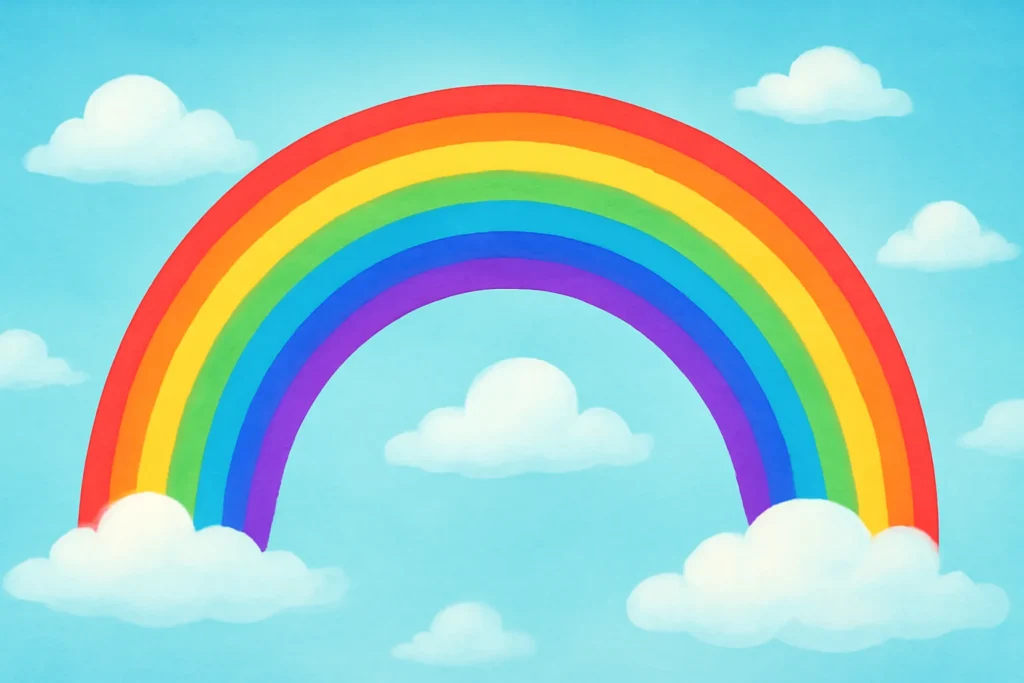
A rainbow is not a single symbol but a collection of color-symbols that can be interpreted in various ways, depending on tradition and context. While not all cultures assign fixed color meanings, certain associations recur:
Red: vitality, courage, passion, or danger; often linked to life force and heat.
Orange: creativity, enthusiasm, warmth, and sociability.
Yellow: intellect, joy, enlightenment, and hope; sometimes caution or warning.
Green: nature, growth, fertility, renewal, and balance.
Blue: calm, truth, loyalty, and spiritual depth; sometimes sadness or distance.
Indigo/Violet: mystery, imagination, transformation, and higher consciousness.
In many traditions, the way colors blend in a rainbow can evoke the idea that different qualities coexist harmoniously. The rainbow’s unity—despite its plurality—becomes a metaphor for social harmony: we can embrace diversity while maintaining a coherent shared life.
Variations of rainbow symbolism: forms, examples, and nuance
Symbolism is not limited to the standard arc. Several variations carry distinct meanings:
Double rainbow: often interpreted as a sign of amplified blessing or a stronger call to examine one’s path, with the secondary arc sometimes viewed as a companion or hidden meaning behind the visible one.
Supernumerary rainbow: the extra, pastel bands inside the main arc can symbolize subtler aspects of beauty and the layered nature of truth or revelation.
Circular rainbow or glory: when the rainbow forms a full circle around the sun or a light source, it can indicate wholeness, cyclical time, and cosmic balance.
Partial rainbows appearing in art or poetry often emphasize fragility, fleeting opportunity, or the idea that reality is incomplete without interpretation.
Colored halos in sacred art: rainbows or rainbow-like halos around holy figures symbolize divine presence and blessing radiating from sacred beings.
Rainbow symbolism in art, literature, and media
Throughout literature and visual arts, rainbows function as shorthand for complex ideas: transformation, reconciliation, and the interplay between chaos and order. In poetry, a rainbow can be a compact image of hope that stands in for a larger emotional arc. In painting and cinema, rainbows can be used to foreshadow healing, to underscore a moral turning point, or to celebrate unity across difference.
Contemporary media often deploys rainbows as inclusive emblems. In music videos, film narratives, and graphic design, the rainbow becomes a visual language for solidarity, environmental stewardship, and human rights. This modern usage intersects with older myths and religious ideas, creating a layered, culturally rich set of meanings that can be read on multiple levels.
Pedagogical uses: teaching with the rainbow
Educators frequently use rainbows to explore topics such as light and color, weather science, and cultural symbolism. A typical lesson might read a text about a myth, show a short video about the optical process, and then invite students to create their own artistic or interpretive rainbows that express personal or community meanings. This approach reinforces scientific literacy while honoring diverse cultural perspectives.
Rainbow rituals, rites, and everyday practices
Rituals around rainbows vary widely, but several common practices recur:
Blessings and prayers: communities may invoke the rainbow in prayers for healing, protection, or harvest blessings after storms.
Storytelling: telling myths about rainbow bridges or captains of weather as a way to pass down cultural memory and moral lessons.
Artistic offerings: creating rainbow-themed decorations, mosaics, or textile designs to celebrate unity, spring, or civic pride.
Rituals of inclusion: using rainbow imagery in ceremonies that welcome newcomers or recognize diversity within a community.
The ritual use of rainbows emphasizes their function as social glue—images that help groups articulate shared values, mark transitions, and reaffirm commitments to one another.
Double rainbows, circular rainbows, and symbolic depth
Double rainbows, circular rainbows, and other phenomena deepen symbolism by expanding the palette of meaning. A double rainbow often invites interpretation about layered truths, the idea that there is more than one path to wisdom, or that a blessing has multiple facets. Circular rainbows draw attention to wholeness and continuity, suggesting cycles that include beginnings, middles, and endings. These variations encourage thinkers and artists to explore nuance rather than a single fixed meaning.
Some scholars note that rainbows have been used in political and social movements to embody unity and diversity. The arc becomes a map of solidarity that can travel across borders—an image that expresses both personal identity and collective belonging.
Practical guidance: interpreting rainbows in daily life
When encountering a rainbow in daily life, what should one take away? Here are practical frames to consider:
Notice and reflect: a rainbow invites a pause after a difficult moment, a chance to reflect on outcomes and choices.
Seek connections: consider how different aspects of life—family, work, community—fit together in a broader, harmonious pattern.
Honor diversity: a rainbow can be a reminder that many voices enrich a community and that inclusion strengthens resilience.
Promote care for the planet: because rainbows depend on weather, they can be a gentle prompt to support ecological stewardship and sustainable living.
In education and public discourse, using the rainbow as a metaphor can help explain complex ideas about intersectionality, social cohesion, and ethical responsibility.
Rainbow symbolism in philosophy and ethics
Philosophers and ethicists sometimes use the rainbow to discuss the nature of beauty, value, and pluralism. The rainbow’s unity amid diversity mirrors debates about universal human rights and particular cultural contexts. It can be a helpful metaphor for balancing universal moral obligations with respect for cultural particularities. The image also invites contemplation of how societies negotiate tensions between conflict and harmony, conservatism and change, tradition and innovation.
In existential or phenomenological terms, a rainbow can be read as a phenomenon that draws attention to consciousness: it appears in the moment when light and moisture become perceptible to a perceiver, turning ordinary weather into a symbol-rich encounter. This line of thinking emphasizes not only what a rainbow is, but how humans experience and interpret beauty, meaning, and connection.
Context matters. The same rainbow might carry different interpretations depending on geography, religion, or personal experience. Here are a few interpretive lenses:
Natural science lens: emphasizes the optical and meteorological processes, with symbolism understood as cultural overlay on a physical phenomenon.
Religious or mythic lens: reads the arc as covenant, blessing, or portal between realms, often tied to moral or ethical guidance.
Social and political lens: uses rainbows as emblems of inclusion, rights, or solidarity, with attention to contemporary struggles for equality.
Artistic lens: treats rainbows as design elements that convey mood, contrast, or hope within a composition.
Examples of rainbows in cultural artifacts
To illustrate the breadth of rainbow symbolism, here are representative examples across media and traditions:
Mythic texts: rainbows appear as divine pathways, bridges, or omens in myths worldwide, often linking moral lessons to natural phenomena.
Religious artwork: stained glass windows and iconography use rainbows to symbolize grace, divine presence, and the beauty of creation.
Literary symbolism: poets describe rainbows to signal transformation, the synthesis of pain and joy, or the moment when reality opens to imagination.
Contemporary symbolism: in movements for equality, the rainbow communicates a universal language of inclusion and human dignity.
Rainbow symbolism and education: inclusive curricula
A well-rounded curriculum about rainbows can cover science, history, religion, literature, and social science. Topics to consider include:
Light and color theory: basic physics of how rainbows form and how color perception works.
Myth and legend: exploration of rainbow stories from different cultures and their moral dimensions.
Ethics and civics: discussions about inclusion, rights, and the importance of diverse voices in a shared society.
Art and design: projects that use the rainbow spectrum to express identity, community, and hope.
Such curricula help students appreciate how a single natural phenomenon can carry a multitude of meanings, each with value in its own right.
Rainbows sit at the intersection of science, spirituality, and social life, which means they occasionally become focal points in debates. Some conversations touch on the commercialization of rainbows, the politics of symbols, or debates about the appropriate contexts for certain emblems. Respectful discourse recognizes that symbols, including rainbows, can have many legitimate meanings, and that communities should be free to use symbols in ways that are authentic to their experiences and values.
Additionally, some scholars note that over-emphasis on any single interpretation can obscure the broader, cross-cultural richness of rainbow symbolism. Acknowledge both the shared human affinity for rainbows and the specific meanings that different traditions attach to them.
From ancient myth to contemporary street art, the rainbow endures as a living symbol with multiple, sometimes overlapping meanings. It invites us to see beauty after hardship, to celebrate diversity within unity, and to recognize our connections to one another and to the natural world. Whether read as a covenant, a bridge between realms, a sign of hope, or a beacon of inclusion, the rainbow remains a versatile and resilient emblem. By exploring its many interpretations, we gain a richer understanding of how humans create meaning from phenomena that are both universal and intimately personal.
In the end, rainbows remind us of a simple, enduring truth: that light, when bent by rain or circumstance, reveals a spectrum that is more than the sum of its parts. The world, too, is a spectrum—of people, beliefs, landscapes, and dreams. To honor this complexity is to honor the rainbow itself: a symbol of possibility, a promise of connection, and a reminder that after every storm, color returns.











Leave a Reply