Introduction: Why the phrase “Love God and Love Others” matters
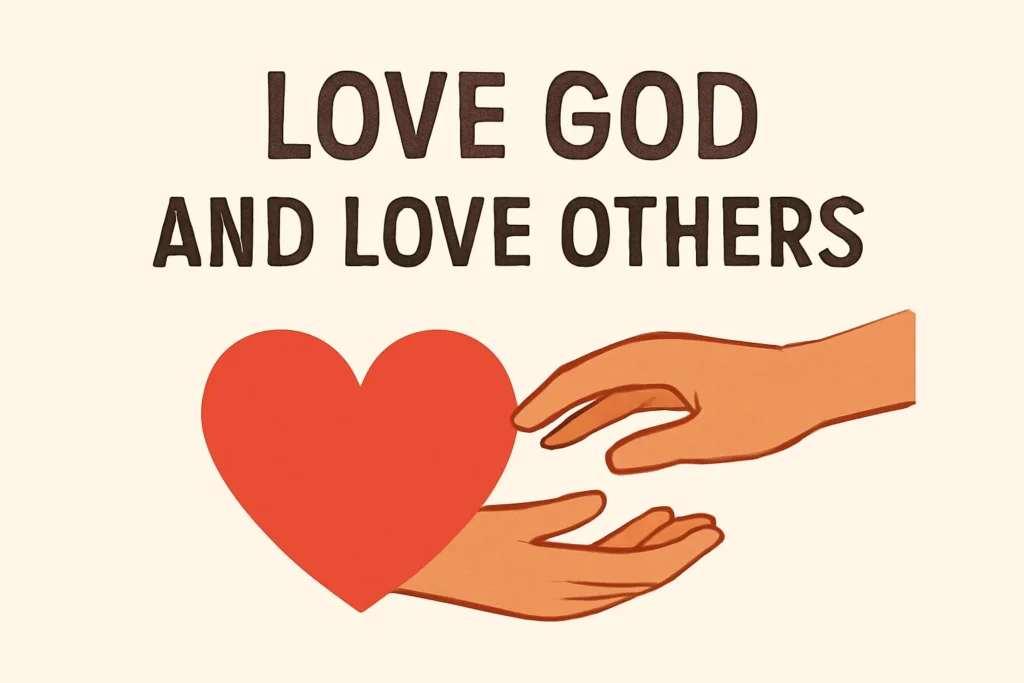
The maxim often summarized as “Love God and Love Others” sits at the heart of Christian ethics and has resonated across cultures as a simple yet demanding standard for daily life. This article explores the meaning of the compact verse or pair of commandments, its biblical roots, and practical ways to embody it in a complex world. Rather than treating the phrase as a slogan, we will examine its theological foundations, its implications for personal character, and its transformative potential for communities.
The core idea: how a pair of commands shapes a life
The idea of loving God and loving others is not just about feeling affection. It is about orienting one’s desires, choices, and actions toward a relational standard that elevates God’s integrity and extends grace to neighbors. When people speak of the two greatest commandments, they point to a unity: a vertical love that honors the divine, and a horizontal love that honors fellow human beings. In Christian tradition, these two dimensions are inseparable—one cannot fully love others without a rooted relationship with God, and one cannot truly love God without living toward the welfare of others.
What the biblical text says: key verses and their language
Several passages articulate the idea in ways that scholars and readers have found both clear and challenging. Here are the core verses often cited in discussions about loving God and loving others, along with brief notes on their emphasis:
Matthew 22:37-39: “You shall love the Lord your God with all your heart and with all your soul and with all your mind. This is the first and great commandment. And the second is like it: You shall love your neighbor as yourself.” The structure highlights two commandments that stand side by side, not a hierarchy with the second replacing the first, but a pairing that defines ethical life.
Mark 12:30-31: A parallel to Matthew’s version, with emphasis on wholehearted devotion to God and genuine love for one’s neighbor as a concrete expression of faith.
Luke 10:27: A concise summary where love for God and love for neighbor are combined in a single practical question: how to live out love in everyday life.
Leviticus 19:18 (the earlier commandment “You shall love your neighbor as yourself”) is often cited as the baseline for neighbor-love within the Hebrew Bible and is frequently invoked in Christian teaching as the horizontal complement to love for God.
Matthew 5–7 (the Sermon on the Mount) and John 13:34-35 (the command to love one another as Jesus has loved) offer a high-conscious standard for how love should be lived among communities and demonstrate that love is a living practice, not merely a belief statement.
1 John 4:7-21 frames love as an essential attribute of God and as the defining feature of authentic relationship with God and with others.
Theological foundations: why love is central to God’s character
Love as the core of God’s being
In Christian theology, God is love (1 John 4:8, 16). This provocative claim does not narrow love to a feeling; it identifies love as the essential disposition through which God engages the world. If God’s character is love, then to know God is inseparable from learning to love rightly. The vertical dimension—loving God with heart, soul, mind, and strength—reflects a trustful relationship with the divine that empowers followers to extend generous, patient, and self-giving love to others.
The relational logic of agape and neighbor-love
The Greek concept of agape conveys a self-giving, choosing, steadfast love that seeks the good of the other. This is not primarily a sentiment; it is an action orientation that seeks the flourishing of the beloved, even at personal cost. When the biblical writers pair agape toward God with agape toward one’s neighbor, they are describing a unified moral vision: love is the language through which humans live in a right relationship with God and with one another.
Two dimensions, one obedience: vertical and horizontal in harmony
Readers often talk about the two commandments as a two-way street. Here is how the vertical and horizontal aspects illuminate daily life:
Vertical dimension — Loving God means cultivating trust, worship, gratitude, obedience, and reverence. It involves daily practices that align the heart with God’s will and invite God’s presence into ordinary routines.
Horizontal dimension — Loving others means actively choosing their good, speaking truth with grace, offering service, and pursuing justice. It requires recognizing the dignity of every person and responding with mercy, even when it costs us personally.
When these two dimensions are integrated, a life demonstrates that love for God is not a private piety divorced from public action, and love for neighbor is not a social ethics detached from worship and devotion. This integration forms a coherent way of living that shapes relationships, communities, and institutions.
Variations in phrasing and emphasis: why wording matters
Different Bible translations and Christian traditions emphasize slightly different words, yet the underlying message remains consistent. Some variations you might encounter include:
“Love the Lord your God with all your heart, soul, mind, and strength” (emphasizing total devotion and the entire person’s involvement).
“Love your neighbor as yourself” (affirming the self-awareness needed to extend healthy love to others).
“Love one another” (a more communal framing that centers relationships within a community of believers).
“Love for God and love for others” as a paired mandate, sometimes articulated as two inseparable commands rather than as a single composite idea.
Across traditions, the message remains consistent: love God fully and love others sincerely. The differences in wording can help readers see different facets of the same ethical truth, such as the importance of internal devotion, external action, and community life.
Living it out: practical steps for everyday life
Daily disciplines that nurture love for God
To love God with consistency, many find it helpful to adopt daily practices that cultivate awareness of the divine presence, gratitude, and alignment with God’s purposes. Practical steps include:
Prayer and silence — Carve out time for listening and adoration, not just speaking and requests.
Scripture reflection — Read with questions like, “What does this reveal about God?” and “How should this shape my conduct today?”
Worship and gratitude — Let ordinary moments become opportunities to acknowledge God’s goodness and faithfulness.
Spiritual rhythms — Observe sabbath rest, stewardship of resources, and mindful attention to God in daily routines.
Hospitality and inclusion — Welcome strangers, both near and far, and create safe spaces where people feel seen and valued.
Acts of service — Help those who are physically, emotionally, or financially struggling, even when it costs time or resources.
Listening well — Practice empathetic listening, allowing others’ stories to shape your understanding and response.
Forgiveness and reconciliation — Seek restorative paths in broken relationships and release what could harden hearts.
Love in community and society
Love for others expands beyond personal relationships to the public square. It involves advocating for justice, defending the vulnerable, and building communities that reflect the dignity of all people. Practical steps include:
Engaging in community service projects that address real needs.
Supporting ethical workplaces and fair labor practices.
Participating in dialogue across differences to foster understanding rather than division.
Promoting policies and practices that protect the vulnerable and promote human flourishing.
Common questions and thoughtful clarifications
Readers often raise helpful questions about how to interpret and live out these commandments amid modern complexities. Here are a few thoughtful clarifications:
Does loving God mean rejecting secular life? No. Loving God may involve integrating faith with everyday work, family life, and civic responsibilities. The commandment invites a consistent faithfulness that does not retreat from public life but seeks to bless it.
How do I love others when they disagree with me? Biblical love and truth can coexist. Love includes listening, respecting, and seeking what’s best for the other person, while also remaining honest and principled.
What about limits or boundaries? Healthy love recognizes boundaries—protecting the vulnerable, avoiding harmful behavior, and choosing to disengage from toxic dynamics when necessary, while still honoring the intrinsic worth of every person.
Can love be tested in difficult times? Yes. Hard seasons often reveal whether love for God and love for others is robust. Perseverance, mercy, and a willingness to grow through hardship are often the marks of mature love.
Love in action: scenarios and reflections
To translate theory into practice, consider a few real-life scenarios where the twofold commandment can guide responses:
In the workplace — Treat colleagues with fairness, mentor someone who lacks opportunities, and work for equitable policies that reflect the common good.
In family life — Practice patience, forgive repeatedly, and nurture a home where each member is known, valued, and enabled to grow.
In the neighborhood — Welcome new residents, collaborate on local projects, and stand against prejudice or harm that targets any neighbor.
In times of social injustice — Speak up for the vulnerable, support relief efforts, and cultivate communities where justice and mercy inform policies and practices.
Challenges and tensions: staying faithful over the long haul
Even with clear principles, living out Love God and Love Others in a complex world challenges people to navigate tensions between conviction and compassion, truth and tenderness, personal boundaries and generosity. Some common tensions include:
Conviction vs. compassion — Balancing steadfast beliefs with mercy and humility toward those who hold different views.
Personal limits — Recognizing when to guard one’s own emotional, physical, or financial health without slipping into apathy or burnout.
Social influence — Responding to cultural pressures that degrade others or minimize the sacredness of each person’s humanity.
Conflict resolution — Addressing disagreements with grace, seeking reconciliation, and avoiding patterns of grievance that harden relationships.
In confronting these challenges, readers often turn to spiritual practices, communal support, and a robust vision of love as a transformative force that heals, reconciles, and renews both heart and society.
Variations across traditions and translations: breadth of interpretation
Across Christian traditions and even within scholarly study, the language of love is given nuance. Some denominations emphasize the communal dimension of love—how churches live out the second commandment together—while others stress personal devotion as the grounds for ethical conduct toward others. The breadth of interpretation can be a strength, inviting believers from various backgrounds to contribute unique insights about what it means to love God and to love others well in a changing world.
For many readers, the call to love God and love others becomes not only a set of instructions but a lens through which to reimagine ordinary life. This imaginative stance invites believers to see every encounter as a potential place where love can be practiced: a cashier’s smile, a neighbor’s need, a friend’s heartbreak, a coworker’s frustration, a stranger’s confusion. The verse becomes a spiritual discipline that shapes perception, intention, and action—turning abstract ethics into measurable kindness and justice.
Different life stages bring distinct questions about love and its expression. Here are some concise reflections for various situations:
Youth and young adulthood — Building a foundation of character, practicing generosity, and developing the resilience to love when love is tested by peer pressure or uncertainty.
Parenting — Demonstrating patient affection, modeling forgiveness, and teaching children to respect the sacred value of every person they encounter.
Marriage — Fostering mutual devotion to God and to one another while prioritizing the well-being of the family and others in the broader community.
Older adulthood — Sharing wisdom, showing steadfast loyalty, and continuing to advocate for justice and mercy beyond one’s immediate circle.
Conclusion: living the love that shapes life and world
The invitation to love God and love others is not a one-time decision but an ongoing practice that molds character, relationships, and communities. It is a calling that asks for depth—depth of devotion to the divine and depth of care for fellow humans. When these two dimensions work in harmony, they generate a life marked by integrity, generosity, and resilience. The verses about loving God and loving neighbor serve as a dependable compass, helping individuals and communities navigate questions of meaning, purpose, and ethics in every season of life. Whether you approach these verses as a personal meditation, a faith community’s shared creed, or a lens for social action, they remain a robust invitation: to become people who love with both conviction and courage, toward God and toward every neighbor.
For further reflection, consider these closing prompts:
In what daily ways can you cultivate a more wholehearted love for God this week?
Who is a neighbor you can actively serve or listen to more attentively in the coming days?
How might your church, workplace, or neighborhood embody the twofold commandment more clearly?
What fears or obstacles keep you from loving others as fully as you desire? What practical steps can you take to overcome them?
Ultimately, the phrase “Love God and Love Others” is not merely a slogan but a life invitation. It invites ongoing formation—of heart, mind, and hands—so that love becomes the defining habit of a person and the enduring pattern of a community. By embracing both dimensions with sincerity and humility, readers can grow into a more radiant, resilient reflection of the divine love that inspires and sustains all things.











Leave a Reply