Heresy of modalism: what it teaches and why it matters
Heresy of modalism: what it teaches and why it matters
The heresy of modalism teaches that God is one person who appears or acts in different modes, rather than one God eternally existing as three distinct persons.
Modalism is a theological view that tries to protect belief in one God by explaining the Father, Son, and Holy Spirit as different roles, names, manifestations, or stages of the same divine person. Under this view, God may be the Father in one situation, the Son in another, and the Holy Spirit in another. The three are not eternally distinct persons who relate to one another.
The word modalism comes from the idea of “modes.” A mode is a particular way something exists or operates. A modalist explanation might compare God to one person who is a parent at home, an employee at work, and a volunteer in the community. The person has several roles, but remains one individual. Modalism applies a similar pattern to the Trinity.
Historic Christian teaching rejects that explanation because the Father, Son, and Holy Spirit are presented as personally distinct while sharing the one divine nature. The Father sends the Son, the Son prays to the Father, and the Spirit is sent by the Father and the Son. These relationships are not merely different appearances of one person speaking to himself.
The central distinction: Trinitarian Christianity teaches one divine essence in three eternal persons; modalism teaches one divine person revealed through three changing modes.
Why the early church regarded modalism as heresy
In historic Christian usage, heresy means a teaching that contradicts a central doctrine of the faith, especially after the church has defined that doctrine carefully. Calling modalism heresy does not mean that every person who uses an unclear illustration understands the doctrine in a fully developed way. It means that the modalist position itself conflicts with the church’s confession of the Trinity.
The church faced two pressures when explaining God. One pressure was to maintain monotheism: Christianity inherited the conviction that there is only one God. The other was to account faithfully for the Father, Son, and Holy Spirit as each divine and as genuinely related to one another. Modalism addressed the first pressure but did so by weakening the second.
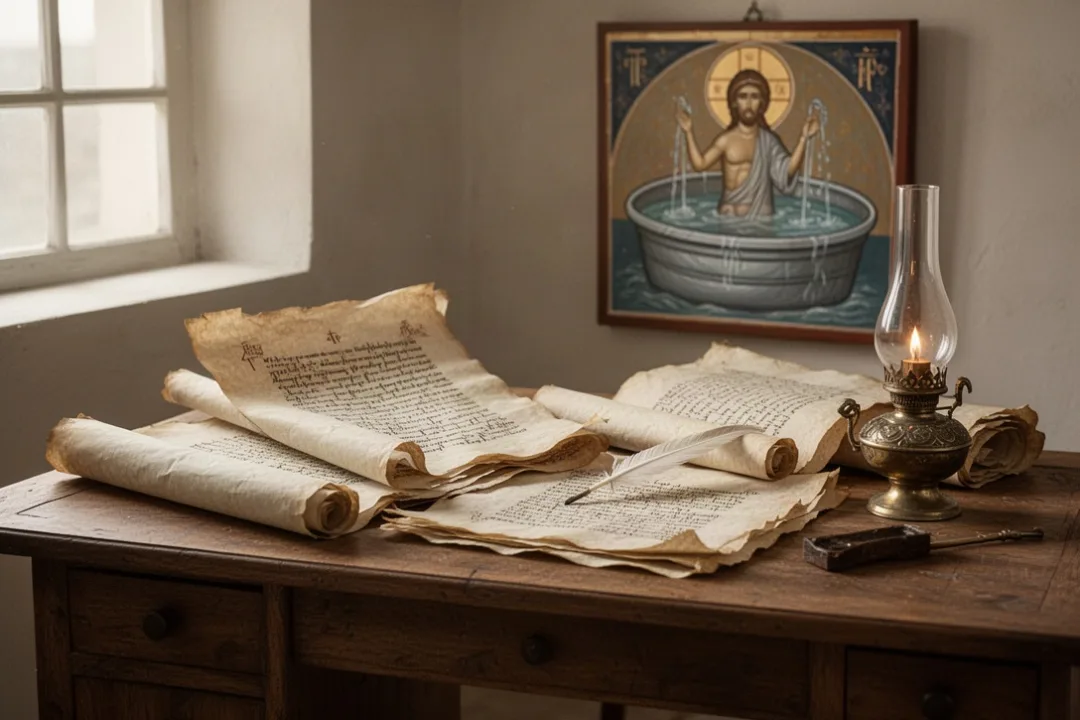
Early Christian teachers argued that the New Testament does not describe the Father, Son, and Spirit as temporary costumes worn by one person. Instead, it portrays them acting toward one another and appearing together. The baptism of Jesus is a clear example: Jesus is baptized, the Spirit descends, and the Father speaks from heaven, as described in Matthew 3:13-17 and Luke 3:21-22.
For historic Christianity, this scene is not merely a dramatic presentation of three modes in sequence. It reveals simultaneous distinction. The Son is not the Father, and the Spirit is not simply another name for the Son, even though all three share the one divine nature.
How modalism developed in the early church
Modalistic ideas appeared in the late second and early third centuries as Christian teachers tried to defend the unity of God. The movement is associated with figures such as Noetus, Praxeas, and Sabellius. Historical sources do not preserve every detail of their views equally clearly, so the labels are sometimes used with caution.
Another name for this family of views is modalistic monarchianism. “Monarchianism” emphasizes God’s single rule or sole sovereignty. The term “modalistic” distinguishes this approach from other attempts to preserve monotheism, including adoptionist or dynamic monarchianism, which treated Jesus as a specially empowered human rather than as eternally divine.
Sabellius became especially associated with the teaching, so Sabellianism is often used as a synonym for modalism. The precise details of Sabellius’s own teaching are debated because much of what is known comes through opponents. Still, the broad issue is clear: the Father, Son, and Holy Spirit were not understood as three eternal personal distinctions in the later orthodox sense.
Tertullian opposed Praxeas and helped provide language that shaped later Trinitarian discussion. He used terms that distinguished the one divine substance from the three persons, although early theological vocabulary was still developing and did not carry exactly the same technical meaning in every writer. Hippolytus also criticized modalistic teaching in his theological works.
These debates were not simply arguments over terminology. They concerned how Christians should understand Jesus’ relationship to the Father, the identity of the Holy Spirit, prayer, salvation, and the biblical account of God’s actions in history.
How to identify the main claims of modalism
A useful way to recognize modalism is to examine what it says about the Father, Son, and Spirit. The following points describe the central pattern of the teaching:
God is one person: the Father, Son, and Holy Spirit are not three eternal persons but one personal subject.
The names describe modes: “Father,” “Son,” and “Holy Spirit” refer to different ways the one God appears or works.
The distinctions are temporary or functional: they arise in relation to creation and redemption rather than existing eternally within God’s being.
Personal relationships are reduced: the Son’s prayers to the Father may be treated as the human nature of Jesus speaking to the divine nature, or as a dramatic expression of one person’s different role.
The Trinity is treated as a presentation: Father, Son, and Spirit may be viewed as ways God is revealed to creatures rather than as eternal distinctions in God.
Not every person who says that God “shows himself in different ways” intends to deny the Trinity. Ordinary language can be imprecise. The question is whether the speaker means that the three are merely roles of one person, or whether the speaker affirms the historic distinction between the divine persons.
How modalism differs from orthodox Trinitarian teaching
Orthodox Trinitarian theology makes several claims at the same time. It affirms that there is one God, that the Father, Son, and Holy Spirit are each fully divine, and that the three are genuinely distinct persons. It also denies that the persons are three separate gods or parts of God.
The word person can cause confusion because it often suggests three independent human individuals. In Trinitarian theology, “person” does not mean a separate being with a separate divine nature. The Father, Son, and Spirit are distinct in their relationships and personal identity, yet they possess the one undivided divine essence.
The classic formulation can be expressed in three affirmations:
There is one God.
The Father, the Son, and the Holy Spirit are each fully God.
The Father, Son, and Spirit are not the same person.
This formulation is difficult because it does not reduce the Trinity to a simple analogy. Christian theology accepts a mystery here, but “mystery” does not mean that the doctrine can contradict itself. The claim is not that God is one person and three persons in the same respect. It is that God is one in essence and three in person.
A helpful test: if an explanation says the Father, Son, and Spirit are merely three names for one person, it is modalistic rather than Trinitarian.
What the Bible shows about the Father, Son, and Spirit
Christians developed Trinitarian language from the full pattern of Scripture rather than from one isolated verse. The Bible does not present a single paragraph containing a complete technical definition of the Trinity. Instead, it gives several lines of teaching that must be held together.
First, Scripture teaches that God is one. Passages such as Deuteronomy 6:4 and Isaiah 45:5 affirm the uniqueness of the God of Israel. The New Testament continues this monotheistic conviction rather than replacing it with belief in three gods. First Corinthians 8:4-6 connects the one God with the Father and places Jesus within the Christian confession of divine lordship.
Second, the Son is described in divine terms. John 1:1-3 presents the Word as existing with God and sharing the divine identity before creation. John 20:28 records Thomas addressing the risen Jesus with a confession of faith. Colossians 1:15-20 describes Christ as central to creation and reconciliation, while Hebrews 1:1-4 presents the Son as the decisive revelation of God’s glory.
Third, the Holy Spirit is not merely an impersonal force. The Spirit teaches, speaks, guides, searches, and can be grieved, according to passages such as John 14-16, Acts 13:2, 1 Corinthians 2:10-12, and Ephesians 4:30. Acts 5:3-4 closely connects lying to the Holy Spirit with lying to God.
Fourth, the Father, Son, and Spirit are distinguished from one another. Jesus prays to the Father in John 17. In John 14-16, Jesus speaks of the Father sending the Spirit and of the Spirit bearing witness to the Son. Second Corinthians 13:14, Matthew 28:19, and 1 Peter 1:2 place the three together in patterns of Christian blessing, baptism, and salvation.
These passages do not support the idea that the Father, Son, and Spirit are simply one person changing roles. They show unity without sameness of person.
Why Jesus’ prayers create a problem for modalism
Jesus’ prayers to the Father are one of the clearest challenges to modalism. In the Gospel accounts, Jesus does not merely perform a public role while pretending to address another person. He speaks with the Father in a relationship that is central to his mission.
John 17 presents Jesus asking the Father to glorify him, protect his disciples, and preserve them in unity. The prayer refers to glory shared between the Father and the Son before the world existed. That language points to a relationship that precedes Jesus’ earthly ministry, not one invented at the incarnation.
In Gethsemane, described in Matthew 26:36-46, Mark 14:32-42, and Luke 22:39-46, Jesus submits his human will to the Father’s will while facing suffering. A modalist may explain this as Jesus’ human nature addressing his divine nature. Historic Christianity recognizes the genuine humanity of Jesus, but it also sees the prayer as the Son relating to the Father.
If the Father and Son are simply the same person, the repeated language of sending, loving, glorifying, and speaking becomes difficult to interpret naturally. Modalism must explain these relationships as either internal role-playing or communication between Jesus’ human and divine aspects. The orthodox doctrine instead preserves both truths: Jesus is fully human, and the Son is personally distinct from the Father.
Why the baptism of Jesus challenges modalism
The baptism narratives present the Father, Son, and Spirit together in one event. Jesus stands in the water, the Spirit descends in a visible sign, and a voice from heaven identifies Jesus as the beloved Son. The scene is especially significant because it occurs at the beginning of Jesus’ public ministry.
A modalistic interpretation can say that one God is displaying three modes at once. However, that interpretation changes the ordinary force of the account. The Father speaks to the Son, while the Spirit rests upon the Son. The narrative does not merely identify one person under three titles; it presents coordinated action among three distinguishable agents.
This does not mean that God is divided into three beings. The baptism scene is compatible with one divine nature and three persons. It is difficult to reconcile with the claim that the three names refer only to one person’s temporary appearances.
Modalism and the meaning of salvation
The Trinity is not an abstract puzzle detached from Christian salvation. The way a person understands God affects how that person understands the sending of the Son, the work of the Spirit, and the believer’s relationship with God.
Historic Christianity teaches that the Father sends the Son, the Son becomes human and gives himself for sinners, and the Spirit applies the benefits of Christ’s work by bringing people to faith and forming them in holiness. These actions are unified because the one God saves, yet they involve distinct personal relations.
Modalism can make the gospel appear to be one person changing assignments. God first appears as Father, then as Son, and afterward as Spirit. That model weakens the idea that the Father truly sends the Son and that the Son truly returns to the Father. It can also make the Spirit seem less like the personal giver of life and more like a later manifestation of God.
In Trinitarian theology, salvation reveals who God eternally is without implying that God became three persons only when creation began. The Father has always been Father, the Son has always been Son, and the Spirit has always been Spirit. The events of creation, incarnation, crucifixion, resurrection, and Pentecost reveal these eternal relationships in time.
Modalism compared with other mistaken views of the Trinity
Several theological errors are sometimes confused because they all depart from historic Trinitarian teaching. Keeping them distinct makes the discussion clearer.
Modalism: one divine person appears in three modes or roles.
Arianism: the Son is treated as a created being rather than eternally divine.
Adoptionism: Jesus is understood as a human being adopted or empowered by God in a special way.
Tritheism: the Father, Son, and Spirit are treated as three separate gods.
Partialism: the Father, Son, and Spirit are treated as three portions that together make up God.
Docetism: Jesus’ humanity is treated as an appearance rather than a genuine human nature.
Modalism and tritheism move in opposite directions. Modalism collapses the personal distinctions in order to defend divine unity. Tritheism preserves distinction by separating the persons too far. Orthodox Christianity rejects both extremes by affirming one God in three persons.
Modalism is also different from the belief that God has many attributes or acts in many ways. Christians can rightly say that God is creator, judge, redeemer, and comforter. The issue is not whether God has different works. The issue is whether Father, Son, and Spirit are merely labels for those works or are eternally distinct persons.
Common illustrations that accidentally teach modalism
People often use illustrations to make the Trinity easier to understand. Some are useful for highlighting one limited aspect, but many unintentionally teach a non-Trinitarian view. For example, comparing God to water that appears as ice, liquid, and vapor suggests one substance changing modes. That is a form of modalistic reasoning, and it also treats the three forms as unable to exist together in the same way.
The comparison of one person being a father, son, and husband has a similar weakness. One human individual may have these roles, but the roles are not three eternal personal relationships within one being. The illustration therefore explains modalism better than it explains the Trinity.
An egg divided into shell, white, and yolk is often used to explain the Trinity, but it suggests partialism: each part is only one portion of the whole. The Father, Son, and Spirit are not one-third of God each. Every person is fully divine.
No analogy can capture the doctrine perfectly because created things are not exact models of the uncreated God. A careful explanation is better than a memorable comparison that changes the doctrine.
How to respond when someone uses modalistic language
A gracious response begins by asking what the person means. Statements such as “Jesus is the Father” or “God is one person with three names” may express modalism, but some speakers use them loosely to emphasize that Jesus is truly God. Clarifying the intended meaning prevents an unnecessary argument over vocabulary.
You can ask questions such as these:
Do you believe the Father and Son are personally distinct from one another?
Did the Son exist with the Father before becoming human?
Was the Holy Spirit present as a distinct person at Jesus’ baptism?
When Jesus prayed to the Father, was he addressing another divine person?
Do the Father, Son, and Spirit each fully possess the one divine nature?
If the answers deny eternal personal distinction, the position is modalistic. If the person affirms distinction but uses imprecise wording, the conversation may involve terminology rather than a settled rejection of Trinitarian doctrine.
It is also helpful to explain the difference between one being and three persons. Avoid suggesting that Christians believe in three gods, three parts, or one person wearing three masks. State the doctrine positively: the Father, Son, and Spirit are distinct, coeternal, and fully divine, while God remains one.
Why the doctrine remains practically significant
Understanding modalism helps Christians read Scripture with greater care. It prevents the Father-Son relationship from becoming a theatrical device and preserves the meaning of Jesus’ prayers, obedience, and return to the Father. It also protects the personal character of the Holy Spirit’s work in believers.
The doctrine shapes Christian worship as well. Christians pray to the Father through the Son in the Holy Spirit, while confessing that the one God is active in every part of salvation. Baptism, communion, prayer, and blessing are not directed toward three unrelated divine beings. They are practices centered on the one God who is Father, Son, and Spirit.
Modalism arose from a legitimate concern: Christians must not abandon monotheism. Its error was answering that concern by denying the real personal distinctions revealed in Scripture. Historic Trinitarian theology keeps both truths together—God is one, and the Father, Son, and Holy Spirit are not the same person.
Questions to ask when evaluating a teaching about God
When a sermon, book, song, or online explanation describes the Trinity, examine its claims rather than relying on familiar labels. A sound explanation should make room for divine unity, the full deity of the Son and Spirit, and the genuine relationships among the persons.
Does the teaching affirm one God rather than three gods?
Does it say that the Father, Son, and Spirit are each fully divine?
Does it preserve their personal distinction?
Does it account for the Son praying to the Father?
Does it treat the Holy Spirit as personal rather than merely an impersonal power?
Does it avoid describing the persons as parts, masks, or temporary costumes?
These questions provide a practical way to distinguish historic Trinitarian faith from modalism. The goal is not to force the mystery of God into a simple diagram. It is to speak carefully enough that divine unity does not erase personal distinction, and personal distinction does not become belief in multiple gods.
Frequently asked questions
Is modalism the same as Oneness Pentecostalism?
Some Oneness Pentecostal groups teach a form of modalism, especially when they identify the Father, Son, and Holy Spirit as one divine person revealed under different names or manifestations. However, beliefs can vary among churches and individuals. The best way to evaluate a specific group is to examine its official teaching about the Trinity, Jesus’ relationship to the Father, and the personal identity of the Holy Spirit.
Does believing that Jesus is God automatically make someone a modalist?
No. Historic Trinitarian Christianity fully affirms that Jesus is God while also teaching that the Son is distinct from the Father and the Holy Spirit. Modalism becomes an issue when someone says the Father and Son are the same person, or that “Father,” “Son,” and “Spirit” are only temporary roles or names of one divine person.
Why is the Trinity difficult to explain?
The Trinity concerns the relationship between God’s unity and the distinct identity of the Father, Son, and Spirit. Human examples usually emphasize either one person with several roles or several beings sharing a category, so they can mislead. Christians therefore use careful theological language rather than claiming that any illustration completely explains God.
Was modalism condemned at one specific church council?
Modalistic teaching was opposed by early Christian theologians over time, including writers who argued for real distinctions between the Father, Son, and Spirit. The church’s Trinitarian language developed through extended controversy and was expressed in major creeds, including those associated with Nicaea and Constantinople. It was not simply settled by one isolated debate or one universally named council.








Leave a Reply