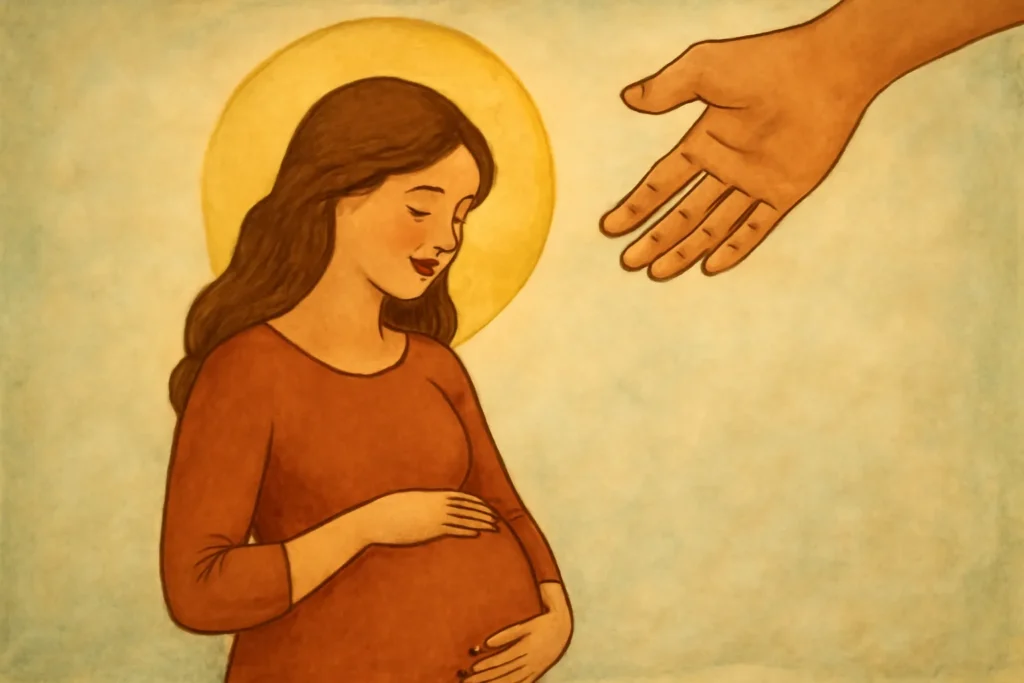
Some of life’s deepest questions rise before us in moments of stillness: Why am I here? What is my true purpose? If you have ever sensed a longing for meaning that feels connected to something greater than yourself, you are not alone. Across cultures and traditions, many people encounter a conviction that goes beyond circumstance or achievement: the belief that you are known by a Creator who saw you even before you took your first breath. This conviction is often framed in the simple, transformative statement: God knew you before you were born.
The idea that God knew you before you were formed in the womb invites a hopeful perspective on life. It shifts the center of gravity from mere self-duff to divine intention. When someone says, you were on God’s mind before you entered the world, the claim points toward a personal and intimate design—one that gives dignity to every life, every personality, and every capacity for love, work, and service.
Theological Foundations: Why the Belief Emerges
The conviction that you were known before birth is not a single doctrine but a related set of truths found in various scriptural and spiritual traditions. While the language differs across faith communities, the core idea remains consistent: life has a divine origin and a redemptive trajectory that precedes visible circumstances.
On a theological level, the claim touches two broad claims:
Human identity is rooted in creation by a personal, knowing God who loves each person individually.
Divine purpose precedes human experience, meaning that there is a designed path for each life to walk in alignment with goodness, truth, and love.
When we say God knew you before you were born, we are not diminishing the mystery of free will or the real choices people make. Rather, we are highlighting a moral confidence: that even when life feels accidental or chaotic, there is a larger framework in which you exist—and within that framework a meaningful purpose awaits discovery.
Foundations in Scripture and Tradition: A Map for Understanding
Across illuminated texts and sacred stories, believers find anchor points for the notion that the Creator has a plan for each life from its earliest moments.
In many traditions, verses such as the voice that says, “Before I formed you in the womb I knew you” or “I have etched you on the palms of my hands” are cited to express intimate knowledge and steadfast commitment. While exact wording varies, the underlying message is consistent: the life you live has significance long before you recognize it in your own heart.
This section offers a concise, non-denominational orientation to the scriptural and spiritual sense of being known in advance:
Psalm 139 portrays a person as known in intimate detail even before birth, emphasizing that God’s thoughts toward a person are precious and numerous.
Jeremiah 1:5 speaks of an election of vocation—before you were formed, a purpose was declared, and a mission was assigned.
Isaiah 49:1 and related passages remind us that a life is foreknown by the God who calls us by name and invites a future shaped by that calling.
In addition to these texts, many spiritual traditions speak of a pre-birth awareness, a sense that one’s talents, temperament, and temperament are part of a grander design.
Beyond scripture, the Christian, Jewish, and Muslim traditions—all of which place emphasis on the sanctity of life—encourage readers to seek alignment with a divine purpose. Even when explanations differ on how this purpose unfolds, the shared center remains the conviction that your life matters in the eyes of God.
To say that you have a divine purpose is to affirm that your talents, relationships, and work contribute to something larger than personal success. It is not a rigid blueprint that leaves no room for growth or change; rather, it is a dependable orientation that helps you interpret your experiences, good or challenging, as part of a larger narrative.
When we use phrases like “divine purpose” or “calling”, we are pointing toward a holistic sense of purpose that includes:
Identity — knowing who you are as a beloved child or creation, deeply loved and uniquely equipped.
Vocation — the work, role, or service to which you feel drawn and that benefits others.
Alignment — choosing actions, relationships, and priorities that fit with a larger good rather than fleeting gain.
Growth — a lifelong process of learning to become more faithful, compassionate, resilient, and honest.
Impact — contributing to families, communities, and nations in ways that honor life and sustain hope.
The idea that you were known by God before birth strengthens a sense of intrinsic value that does not depend on external achievement alone. It invites readers to interpret success not simply as outcomes, but as fidelity to a purpose that moves in harmony with truth, justice, and mercy.
The journey to discover your purpose is both inward and outward, involving reflection, community, and action. It is not a one-time breakthrough but a steady practice of discerning, testing, and growing into a life that reflects a larger design.
Prayer and Quiet Reflection — Begin with listening: set aside regular times to listen for the voice that sustains you. Prayer is not only about asking for needs but about creating space for alignment with the divine intention that knew you before you were born. In moments of stillness, many people sense themes that recur—compassion, leadership, teaching, healing, creativity, or advocacy—that point toward your unique calling.
Structured Scripture Study — Read passages that speak of identity and purpose, and notice how they resonate with your life. Consider journaling prompts such as: What patterns emerge in the stories I am drawn to? Where do I feel most energized to help others? How does my past shape my future in constructive ways?
Community and Mentorship — Surround yourself with people who see your gifts and challenge you to grow. A trusted mentor can identify talents you may overlook and help you discern whether a passion is a calling or a passing interest. In many faith communities, elders and spiritual directors offer guidance that “reads” your life through the lens of a larger plan—one that began long before you recognized it.
Experimentation with Purposeful Service — Try different forms of service and work that align with your values. Volunteer, take on a project at church or in your neighborhood, or start a small initiative. Observing what resonates and what drains your energy helps refine what you’re meant to pursue—without losing the sense that your life is already known and valued by God.
Integration of Giftedness and Character — Your unique combination of talents, temperament, and character is a map toward your calling. Some people discover a natural fit in leadership, others in healing, teaching, or the arts. The key is to see how your gifts can serve others in ways that honor truth, kindness, and justice.
Step-by-Step Framework: A Practical Path to Alignment
Below is a simple framework you can adapt. It is designed to honor the belief that you were known before birth while helping you live out that knowledge in tangible ways.
Clarify core values: Identify the non-negotiables that guide your decisions—compassion, integrity, generosity, courage, and humility often surface as foundational values in living out a divine purpose.
Diagnose gifts and passions: Reflect on activities that bring energy and moments when time seems to disappear because you are fully engaged. These are clues to your gifts.
Test in service: Translate your gifts into concrete acts of service that meet real needs—whether in family life, work, community, or church.
Seek confirmation: Invite trusted voices to affirm what you sense. A network of supportive friends and mentors can help you see patterns you might miss alone.
Refine and repeat: The journey toward alignment is ongoing. Revisit your reflections, tests, and commitments periodically to ensure you remain on a path that honors the idea that you were known before birth.
Identity, Calling, and Daily Life: How These Pieces Fit
The awareness that God knew you before you were born has practical implications for everyday existence. It reframes ordinary decisions—like career moves, relationships, and personal growth—within the larger story of your life’s purpose.
Consider how this perspective affects the way you approach several domains:
Career: Rather than pursuing a job you think will bring status, you might pursue roles that align with your deepest commitments and the ways you can serve others. Your work becomes a channel through which your pre-birth purpose can be expressed.
Relationships: Your friendships and family ties can reflect a divine design, where love, forgiveness, and sacrifice model the intention God had when you were known in advance. Relationships become laboratories for growth and mutual discernment.
Creativity and Art: If you feel drawn toward creative expression, your art can become a form of listening—a way of participating in the world’s healing and wonder as part of your sacred calling.
Service and Justice: For many, the sense of purpose moves through acts of service to the vulnerable, the marginalized, and the voiceless. The conviction that you were known before birth can fuel courage to work for systems that honor every life’s dignity.
Common Misconceptions, Clarifications, and Encouragement
As with any profound spiritual conviction, it’s easy to slip into misunderstandings. Here are some common myths and clarifications to help keep the path clear.
Misconception: If God knew me before birth, everything is fixed and I have no freedom. Clarification: Knowing that you are known by God doesn’t abolish free will. It offers a reliable anchor for discernment while inviting you to cooperate with grace and truth.
Misconception: Purpose means a dramatic, whole-life vocation. Clarification: Purpose often expresses itself in small, faithful choices made consistently over time—care for a family, a commitment to honesty at work, or a gift you share with your community.
Misconception: If I don’t have a clear calling yet, I must be failing. Clarification: Discovery is a process. Many people experience seasons of learning, testing, and waiting that ultimately lead to a meaningful vocation.
Misconception: This belief discounts pain and failure. Clarification: Even deep pain can be braided into a larger purpose, shaping resilience, empathy, and wisdom necessary for future contributions.
To bring the concept to life, here are practical exercises you can begin today. They are designed to honor the central idea that you were known by God before you were born and to translate that knowledge into everyday action.
Daily reflection prompts:
What activities without effort or time pressure bring me deepest joy and sense of contribution?
Which relationships feel most restorative and most challenging, and why?
What recurring themes emerge in my dreams, aspirations, or conversations?
Weekly discernment session — Set aside 20–30 minutes to review the week: where did you feel most aligned with your values? Where did you feel tension between desire and duty? What small steps could move you closer to alignment?
Gifts inventory — Create a catalog of your talents, skills, and learned abilities. Note how each gift could serve others in practical ways and think about one concrete project you could begin in the coming month.
Mentor conversations — Schedule brief check-ins with mentors or peers who can listen for patterns and offer constructive feedback about your sense of calling.
Action steps — Each week, commit to one tangible action that aligns with your sense of purpose, whether it’s teaching a class, volunteering, starting a project, or offering care to someone in need.
While it’s important to respect the mystery at the heart of this belief, it can be encouraging to hear how people translate the conviction that God knew you before you were born into real life. Consider these short, illustrative snapshots that are designed to inspire—not to prescribe a single path.
“I was a quiet student with a knack for listening, yet I kept finding myself drawn to helping others in crisis. Through prayer and guidance from mentors, I came to see how my sensitivity could become a lifeline for people at critical moments. In that sense, I understood that before I was born, there was a plan for me to serve with compassion—a plan that unfolded as I walked into community work and learned to lead with mercy.”
“Music was always a tender thread in my life. I didn’t know if it would become a career, but I discovered that my melodies carried healing for others who felt broken. I began to share songs in local shelters, and a larger calling emerged: to use art as a bridge between pain and hope, a practical way to respond to the conviction that you were known by God in your earliest days and entrusted with the gift of expression.”
These stories illustrate a broader pattern: when a person aligns with the sense that you were known ahead of time, daily life becomes a canvas for living out that knowledge. The path isn’t a single script but a series of meaningful choices that honor one’s gifts and the needs of others.
Living in the light of the belief that God knew you before you were born invites a distinctive posture toward life—one that blends humility, courage, and perseverance. Here are some principles to guide daily living:
Humility before the mystery: Recognize that your best understanding of purpose will evolve. Be teachable and grateful for guidance from others and from the inner life of faith or reflection you cultivate.
Curiosity and flexibility: Your calling may develop in stages. Allow space for new passions to emerge and for old ones to adapt as you grow.
Compassion in action: Purpose often reveals itself through how you treat others, particularly when it costs you something—time, resources, or comfort.
Regular worship and gratitude: A rhythm of gratitude helps you stay attuned to the sense that your life is more than personal achievement—that it participates in a larger, benevolent design.
Responsible freedom: Freedom is not a license to pursue self-interest alone but the capacity to choose in ways that honor life and uphold the dignity of others.
A central insight of the belief that you were known before birth is the intimate link between identity and calling. When you know who you are in the eyes of God, your decisions about career, relationships, and service begin to feel less arbitrary and more rooted in a coherent narrative.
Identity provides a compass; calling provides a direction. If you know that your life is precious in itself, you may feel invited to pursue work that reflects that value. If you know that your gifts are meant to bless others, you may more readily choose roles that involve mentoring, healing, educating, or creating. The two—the sense of being known and the sense of vocation—work together to foster a life that matters beyond yourself.
Some readers bring particular questions to this topic. Here are a few that commonly arise, with concise responses that center on practical faithfulness and growth.
Question: If God knew me before birth, does that mean my life is predetermined? Answer: Not necessarily. The belief about pre-birth knowledge often accompanies the idea of free will and ongoing discernment. You are invited to cooperate with a purpose that invites you to choose love, truth, and integrity, day by day.
Question: How can I be sure I am following my true calling? Answer: Clarity rarely comes all at once. Look for alignment between your deepest joys, your consistent gifts, and opportunities that serve others. Seek mentors, engage in small experiments, and listen for external confirmation.
Question: What if my path changes later in life? Answer: It is common for purposes to evolve as circumstances change. The core conviction remains: you are known, loved, and invited to respond to the needs of your time with courage and integrity.
The journey of discovering your divine purpose is a lifelong practice, not a one-time discovery. It is filled with moments of insight, quiet doubt, and steady growth. The belief that God knew you before you were born can be a steady source of encouragement in difficult seasons. It reminds you that your life is not accidental and that your contributions, in whatever form they take, are part of a larger good.
As you walk this path, you may find it helpful to remember several guiding truths:
Every life has intrinsic worth, and your purpose begins with being loved and cherished as you are today.
Purpose is expressed in daily faithfulness—showing up with honesty, courage, and generosity in ordinary moments often reveals extraordinary meaning.
Community supports discernment—a circle of friends, mentors, and faith communities can help you hear the truth about your life more clearly.
Growth invites humility—the more you learn, the more you realize how much there is to understand about your unique calling.
The conviction that God knew you before you were born offers a theological and practical center for a life of meaning. It invites a posture of reverent curiosity, patient discernment, and courageous action in service of others. The truth that you were known by God in the womb is not merely an ancient phrase but a living invitation: to accept your identity, to pursue your calling, and to live with a sense of sacred responsibility toward your neighbors and the world.
In the end, discovering your divine purpose is not about finding a perfect map laid out in advance. It is about listening for the still, small voice that calls you toward truth and love, and about choosing to step forward into a life that reflects the dignity of being known before birth. When you embrace this truth, your days can become a steady outward sign of an inward assurance: that you are known, cherished, and called to contribute in ways that heal, uplift, and inspire.
The idea that God knew you before you were born locates each person within a larger tapestry of creation, history, and redemption. It encourages humility before mystery, gratitude for gifts, and responsibility toward others. Whether you are drawn to leadership, teaching, care, art, entrepreneurship, or quiet service, your life carries a significance that is broader than personal achievement. You are part of a long arc toward goodness—a arc in which your unique gifts can contribute to the flourishing of others.
As you continue, you might revisit the core phrase that began this journey: God knew you before you were born. Let that truth season your decisions, steady your heart during trial, and open your eyes to the everyday opportunities to live out your divine purpose. The path may wind, but the destination remains: a life that honors the God who formed you, a neighbor whom you are called to love, and a world that awaits the good you can bring into it.








Leave a Reply